

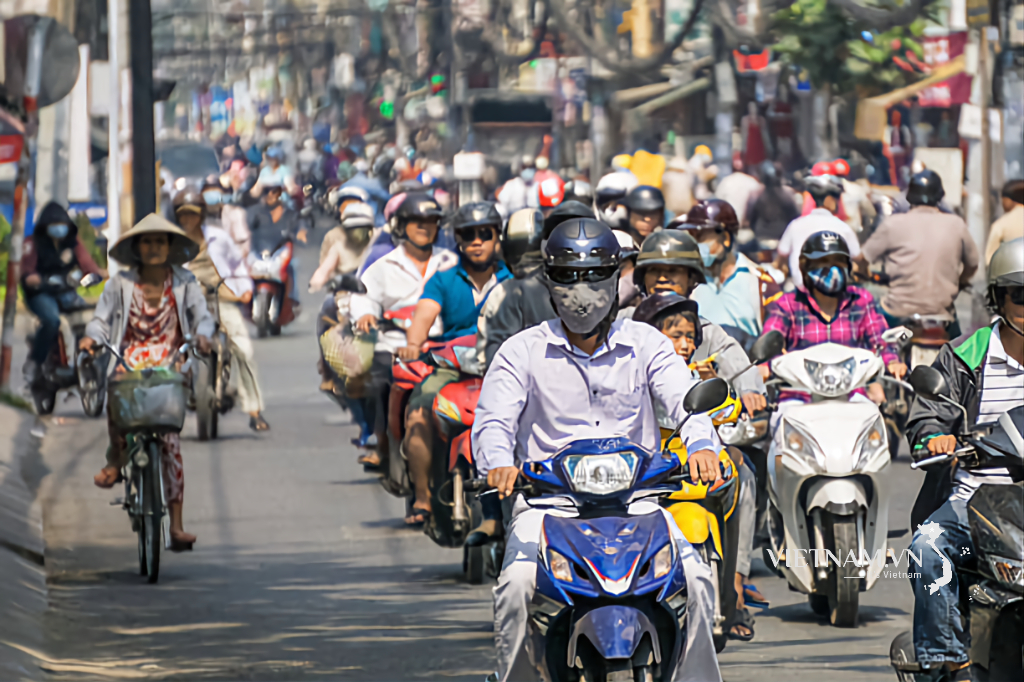
The area within Hanoi 's Ring Road 1 always faces the greatest pressure due to its high population density and constant traffic of motorized vehicles. Therefore, implementing low-emission zones here to control pollution sources is considered an essential choice to protect public health, in line with the spirit of the Capital City Law (amended) of 2026 and the resolutions of the City People's Council. From July 1st, Hanoi will begin piloting low-emission zones in several areas within Ring Road 1, demonstrating the clear determination of the capital's government in its journey to build a green city.
The challenge lies in achieving environmental goals while simultaneously stabilizing people's lives. Establishing low-emission zones is a major policy, directly impacting people's transportation and livelihoods, as well as the production and business activities of enterprises. If implemented hastily, the policy could easily backfire. The report on the "Low-Emission Zone within Ring Road 1, Hanoi City," recently submitted by the Hanoi Department of Agriculture and Environment, shows that the project chooses a cautious approach: not immediately banning gasoline-powered vehicles, but controlling them step by step based on emission standards, traffic hours, vehicle classification, and alternative infrastructure conditions. This is the right direction. Because green transition cannot rely solely on administrative orders; it must begin with the trust of the people, bringing benefits to them rather than adding burdens.
However, to make the low-emission zone within Ring Road 1 a reality, Hanoi needs strong determination and the simultaneous implementation of many groups of solutions. The most important thing is to adhere to the roadmap: starting July 1, 2026, a pilot program will be implemented on several central streets around Hoan Kiem Lake such as Trang Tien, Le Thai To, Ma May, etc., prioritizing the Hoan Kiem ward area. From January 1, 2027, the pilot program will be expanded to 14 streets with an area of approximately 3.6 km² ; from January 1, 2028, it will be applied to the entire Ring Road 1, including 9 inner-city wards; and from 2030, it will be expanded to Ring Road 3.
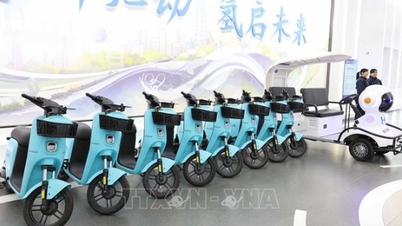
Furthermore, public transportation must be one step ahead. It's impossible to restrict private vehicles if people don't have convenient alternatives. The city needs to accelerate investment in electric buses and clean buses, expand metro connections, improve transfer parking, parking facilities, and charging stations for electric vehicles. When public transportation is strong enough, people will voluntarily change their habits.
Alongside infrastructure development, the city needs policies to support residents and businesses in transitioning to green transportation. The reality is that many workers still earn their living using gasoline-powered motorcycles; many transportation and logistics businesses depend on traditional vehicles. Simply requiring a change without appropriate support will struggle to gain consensus. The key is to concretize this with clear and easily accessible incentive mechanisms.
To ensure that the implementation of low-emission zones does not become merely a formality, the application of technology in monitoring and management must be strengthened. Low-emission zone implementation will be ineffective without an accurate data system and transparent control tools. The city needs to invest in a comprehensive system of vehicle recognition cameras, an emissions data management platform, and inter-sectoral connectivity between transportation, environment, police, and local authorities. At the same time, the city needs to publicly disclose the implementation roadmap, regularly engage in dialogue, and listen to feedback from the grassroots level to adjust policies to better suit practical realities.
Establishing low-emission zones within Ring Road 1 is not just about reducing air pollution, but also a test of Hanoi's urban governance capacity and its determination not to sacrifice the environment for short-term growth. A green, smart, and livable capital city must begin with decisive policies and strong solutions to turn that determination into reality.
Source: https://hanoimoi.vn/quyet-tam-xanh-hoa-vanh-dai-1-748102.html

































































































Comment (0)