

Many people have looked in the mirror and noticed a small protrusion on their front teeth or molars, which looks like part of the tooth, is painless and not swollen, so it is often ignored. Only when this protrusion is chipped, the tooth begins to ache or ache, the patient goes to the doctor and discovers that it is not a normal tooth structure, but an anatomical abnormality - called an accessory bud.
At first glance, the accessory bud may seem harmless, just an extra enamel-dentin growth, but in fact, it can cause a series of dental problems: it can interfere with the bite, accumulate plaque causing tooth decay, and can even expose the pulp, causing pulpitis and severe pain if broken or worn. This is because the accessory bud is not only composed of enamel-dentin structure, but also contains real pulp tissue inside.
It is worth mentioning that many people have extra teeth without knowing it, until they have complications or prolonged pain. Even when going to the dentist, the doctor often misses it. Therefore, understanding correctly, detecting early and treating promptly is extremely important to preserve real teeth and prevent complications.
What is a tooth's accessory bud?
The accessory cusps are a part of the enamel-dentin tissue that develops excessively during tooth formation, creating an abnormal protrusion or cusp on the tooth surface. This structure is often shiny like enamel, making many people mistakenly think it is the natural shape of the tooth. However, the structure of the accessory cusps is not only enamel, but can also contain real dentin and pulp tissue, making it very sensitive and vulnerable.
Depending on location and morphology, accessory nipples can appear in many different forms:
● Secondary incisor: is a common type found on the inside of the upper incisors, shaped like a claw, like a tooth cusp growing in the middle of the inside of the tooth. Some rare cases can be found on the outside of the incisors.
● Secondary buds on premolars: this is a very common type, causing many diseases especially on the lower premolars, often found in Asians. The buds grow on the chewing surface, have a sharper shape than normal, easily causing difficulty when chewing and can break when subjected to biting force.
● Molar accessory cusps: usually located on the inside of the upper molar, called Carabelli cusps, may be just a slightly raised enamel ridge.
Most of the time, the extra buds appear alone, but there are also cases where multiple teeth have extra buds or appear symmetrically on both sides. Although they may not seem to affect anything, due to their abnormal structure, these teeth are prone to wear or breakage, especially when subjected to strong chewing force. In such cases, if the buds contain pulp, the tooth may be severely painful and have acute pulpitis, requiring immediate treatment to preserve the tooth.
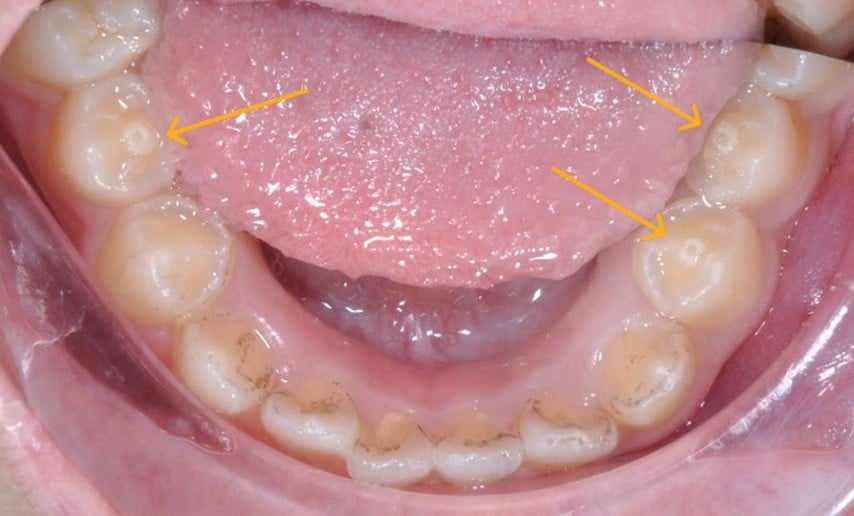
Accessory teeth are not widely known, and often not treated promptly.
Why do secondary teeth appear?
Supernumerary bud is not a disease but an abnormality in the process of tooth formation. It is caused by abnormalities in the tooth development process, the interaction between genetic factors and environmental factors. Disturbances in the morphological differentiation of teeth contribute significantly to these abnormalities. When the tooth germ is developing in the jawbone, the tooth germ and the precursors of the enamel organ sometimes become overactive, proliferate abnormally or evert, causing a part of the tooth tissue to protrude from its normal shape - creating an extra bud.
The exact cause is not yet fully understood, but research suggests that genetics plays a role. Children whose parents have had extra nipples are at increased risk of developing the condition themselves. Other factors, such as hormonal disturbances during pregnancy, trauma to the jaw during tooth formation, and the effects of medications and the environment, may also contribute to the development of this deformity.
Potential harm if left untreated
Previously, the impact of the extra tooth was not widely known, and often not intervened promptly. But in fact, the complications it causes can be very serious if not detected and treated promptly.
First of all, the accessory crown often has a fragile enamel-dentin structure, which is easily worn or broken when chewing. At that time, the inner pulp tissue is exposed, leading to acute pulpitis with symptoms of severe pain, especially at night. If left for a long time, this condition can progress to pulp necrosis and periapical inflammation, requiring complex root canal treatment. Sometimes, rapidly progressing infection can cause root resorption, eventually requiring tooth extraction.
Second, the groove between the accessory nipple and the tooth body is where plaque and food easily accumulate, creating conditions for bacteria to grow, these locations will be very difficult to clean by yourself. As a result, teeth are susceptible to cavities in the grooves around the accessory nipple, at the same time causing gingivitis and bad breath.
In addition, the accessory cusps can interfere with the bite when the tooth grows higher. In particular, incisors with accessory cusps are susceptible to occlusal trauma, which can cause pulp necrosis and periapical inflammation. In children, large or pointed accessory cusps can cause trauma to the soft tissues of the tongue or cheek.
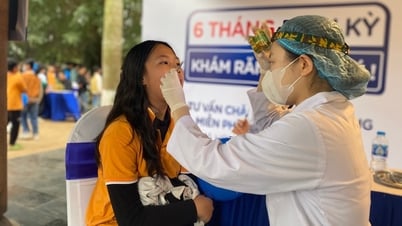
When should I see a dentist?
Early and regular dental check-ups are essential to properly assess your condition. You should see a dentist if you have any of the following symptoms:
● Detect teeth with strange knobs, protrusions or a feeling of being stuck when biting, especially in the front teeth or premolars.
● Teeth are sensitive when eating hot or cold foods, even though they did not have cavities before.
● Chipped, discolored, or pitted crown areas may be signs of tooth decay or exposed pulp.
● Dull or sharp pain when chewing, especially in teeth that have been ground down or filled.
● Teeth that have been "ground down" but still have pain or persistent ache - this could be a sign of underlying pulpitis.
Early examination not only helps doctors detect and treat complications promptly before they occur, but also helps preserve real teeth to the maximum extent possible, avoiding the need for root canal treatment or complicated restorations later.
Source: https://suckhoedoisong.vn/rang-co-num-phu-nguy-co-bien-chung-neu-khong-dieu-tri-kip-thoi-169251205152158672.htm

























































































Comment (0)