

Amidst the towering mountains, Sam Pun – a border region in Son Vi commune, Tuyen Quang province, bordering Vietnam and China – appears both harsh and majestic. From a remote border area once marked by the smoke and fire of war, this land is changing day by day. On the mountain slopes where the sounds of gunfire once echoed, new houses can now be seen, children's voices can be heard in classrooms, and the silent footsteps of soldiers in green uniforms patrol the nation's frontier.
Few people know that, behind the peaceful appearance of the border region today, Sam Pun was once one of the most fiercely contested areas during the 1979 battle to defend the northern border.
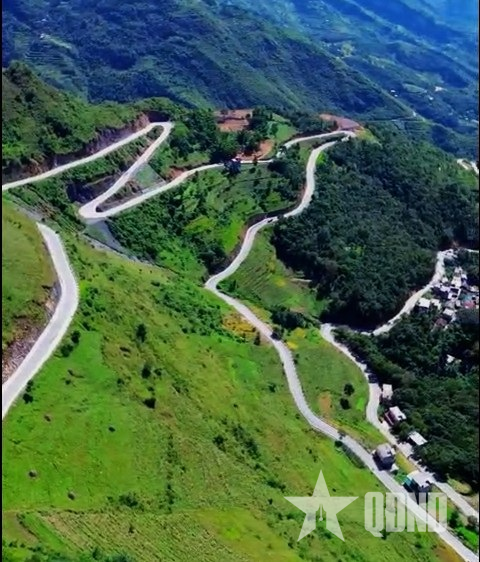 |
| The road to Sam Pun winds through treacherous rocky mountains. |
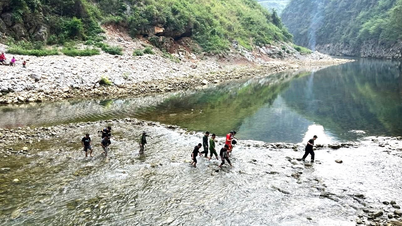
The steep rocky slopes along the Nho Que River were once where soldiers held their positions amidst the freezing cold and hail of bullets. Many rocky outcrops and ravines here still bear the marks of those fierce days of war.
Nearly half a century has passed, but for many people in the border region, the memories of those years have never faded. Because the peace in the far north today was bought with the blood and bones of countless soldiers who fell on the rocky, mountainous border.
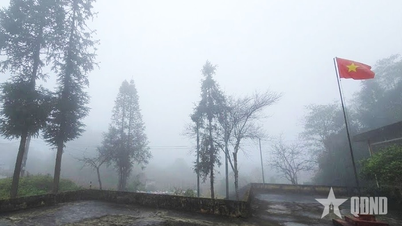
Sam Pun still retains the harshness of the northernmost rocky region. In winter, the wind from the Nho Que River in the deep valley whips up the mountain slopes, stinging the face. On some mornings, frost covers the edges of the jagged rocks in white, and water collects in the drainage ditches in a thin layer.
People in the highlands still pass down the saying: "Yellow flies, dog ticks, and the winds of Thuong Phung," as if to sum up the hardships of the border region.
Amidst such harsh conditions, the people of Sam Pun quietly cling to their land and their village, like the cypress trees growing from the rocky mountains.
In Mo Phang village, Mr. Luu Van Leng has spent almost his entire life connected to this remote borderland. He knows every rocky crevice, every mist-covered slope, and even the long winters when the corn sprouts wither in the cold wind.
By the smoky fire in his small house nestled among the rocky mountains, he slowly recounted the bitterly cold winters when buffaloes and cows had to be kept warm in their sheds, with fires burning all night long. Farmland was scarce, consisting only of small, precarious rocky crevices on the mountainside, forcing the people to carefully conserve every handful of soil and every bucketful of water from distant streams for cultivation.
Having said that, he quietly added more firewood to the stove. The firelight illuminated the sun-tanned face of the man who had spent almost his entire life living amidst the rocky mountains and cold winds of the borderland.
"Despite the hardships, I've never once thought about leaving the village," Mr. Leng said, gazing out at the mist-shrouded mountain slopes in the distance. "This isn't just a place to live, but also a place to protect the village and the borderland."
 |
| Officers and soldiers of the Sam Pun Border Gate Border Guard Station patrol and protect the border amidst the freezing cold in the far north of the country. |
The harshness of the rocky mountains, the cold winds, and the frosty winters have forged the resilient and tenacious character of the people here. And it is from within these hardships that the Sam Pun border region is gradually transforming.
New roads have been built through the rocky mountains. The national power grid has reached many villages. Schools and health centers are becoming more modern and well-equipped.
Along with newly opened roads through the rocky mountains and schools gradually emerging amidst the cold mist, the border region of Son Vi is also changing day by day in its management and administration at the grassroots level.
Many policies on poverty reduction, infrastructure development, improving the lives of ethnic minorities, and maintaining border security have been implemented more comprehensively, creating further motivation for people to feel secure in staying in their villages and protecting their land in the far north.
Comrade Nguyen Huy Sac, Secretary of the Party Committee of Son Vi commune, said: "The locality is focusing on developing border trade economy associated with commercial agriculture and tourism; while maintaining national defense and security, aiming for sustainable poverty reduction for people in border areas."
Amidst the windswept gray mountains, a boarding school encompassing primary and secondary levels is gradually taking shape on an area of over 3.7 hectares, with 31 classrooms for more than 1,000 students.
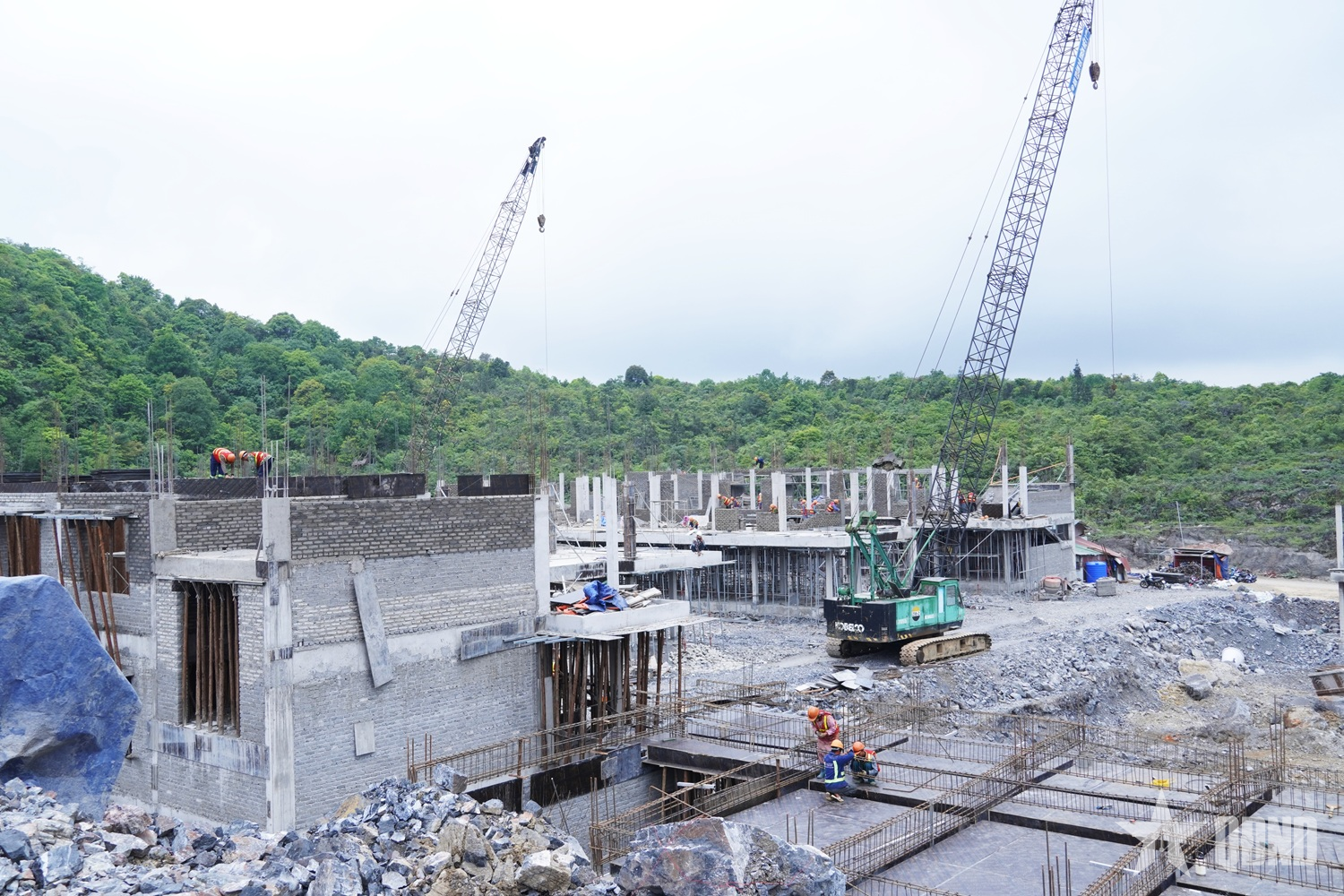 |
| A multi-level boarding school is gradually taking shape in the rocky Sam Pun region, opening up more educational opportunities for students in the border area. |
To create the construction site, thousands of cubic meters of hard rock were drilled and broken, paving the way for sturdy rows of classrooms to rise amidst the mountains.
In the morning at Mo Phang school, amidst the lingering mist on the mountainside, small children huddled in warm coats, clutching their schoolbags as they walked along the rough, rocky path to class. Their voices, chanting their lessons, echoed through the cold mountains, warming the entire border region.
Some children, their shoes still covered in mud and stones, their hands purple and red from the cold, still clutched their worn-out notebooks. In the small classroom nestled halfway up the mountain, the children's voices faded into the biting cold.
For teacher Thào Thị Dợ, it's not just a school building, but also the dream of many generations of students here.
"The new school will help gradually eliminate makeshift classrooms in remote areas, so that students can have better learning conditions. From here, they will have more opportunities to escape the difficulties of this mountainous region," she said emotionally.
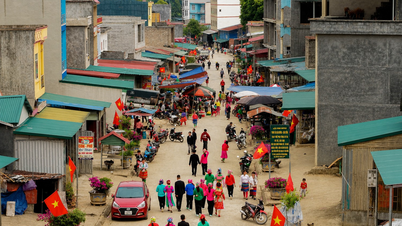
Sam Pun is different today. On the rocky slopes once stained with the smoke of war, the sounds of children studying can be heard amidst the cold winds. New houses are gradually emerging from the white mist of the far north.
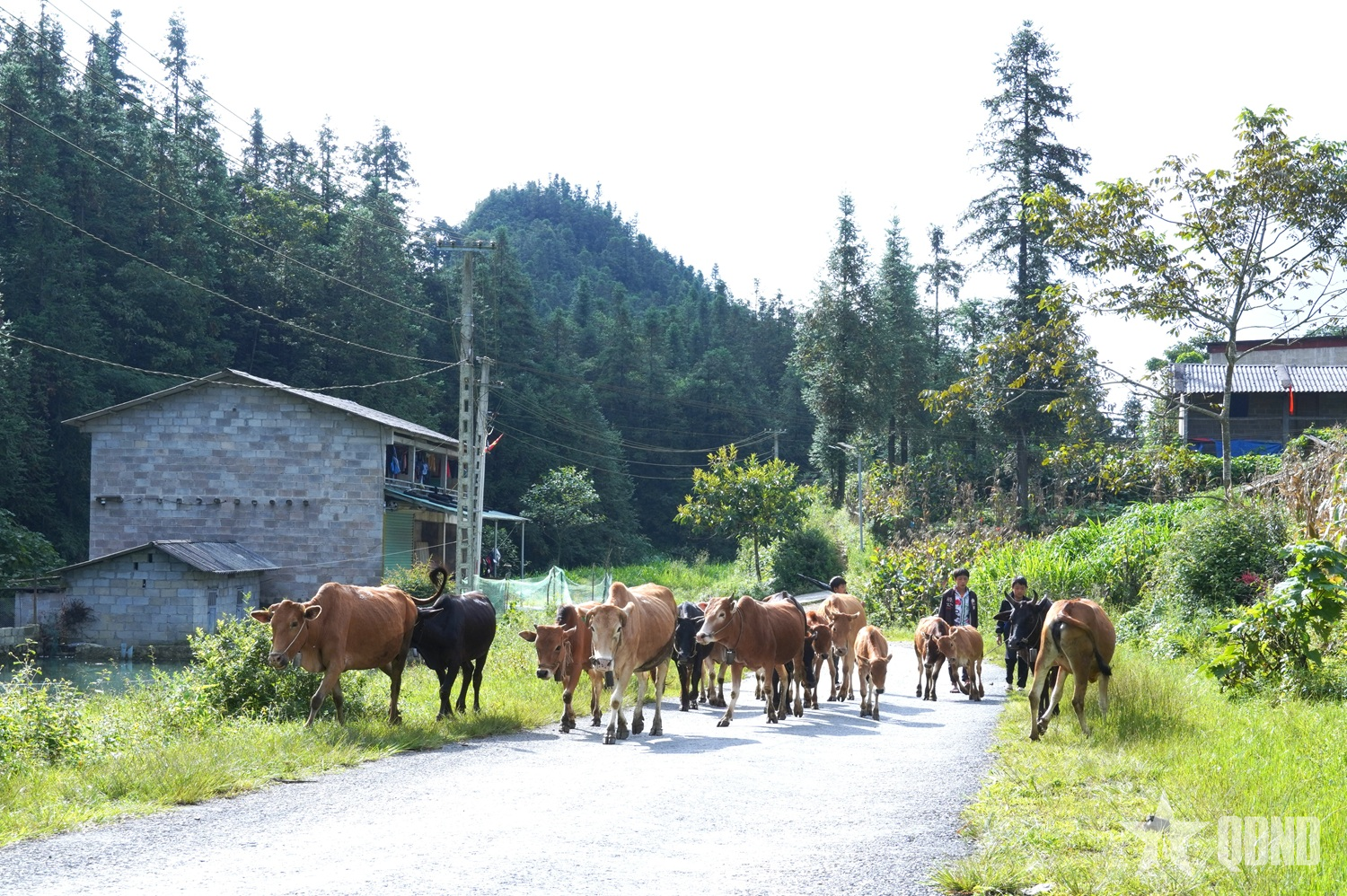 |
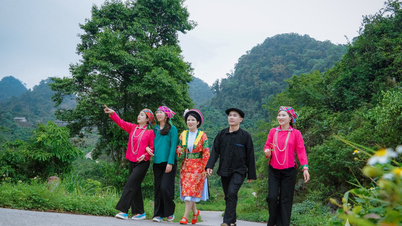
| The lives of the people in Sam Pun today are gradually changing thanks to policies aimed at economic development and population stabilization. |
But peace on the border has never come naturally.
Behind this transformation are the silent patrol footsteps of soldiers in green uniforms on the front lines of the border.
The Sam Pun Border Guard Post (under the Tuyen Quang Provincial Border Guard Command) currently manages over 23km of border. The terrain here is mainly rugged mountainous, with many steep sections. In winter, dense fog often appears, and at times the temperature drops below 0°C.
Following the patrol team to milestone 462, the trail winding along the mountainside presented a challenging path. On one side was a sheer cliff, on the other a deep abyss.
The path was shrouded in mist. In some sections, the sharp, jagged rocks were slippery due to the freezing temperatures, forcing the soldiers to cling to the cliff face to cross. The wind from the deep valley below blew up in icy gusts.
Amidst the cold, the patrol's footsteps continued silently across the rocky mountains.
Major Nguyen Xuan Giang, Commander of the Sam Pun Border Gate Border Guard Station, shared: “We always remember and are deeply grateful to the previous generations who spared no blood and sacrifice to defend every inch of our borderland. That is also the motivation for today's officers and soldiers to continue to stay at the border, guard the markers, and firmly protect our territorial sovereignty.”
Not only are they skilled marksmen on the front lines, but the border guards here are also a pillar of support for the people in the border region.
Over the years, alongside the task of managing and protecting territorial sovereignty, the unit's officers and soldiers have actively participated in civilian outreach work, supporting people in developing their economy and stabilizing their lives. Through specific guidance in farming and livestock raising, many household economic models have gradually emerged, creating sustainable livelihoods for people in border areas.
Ms. Gia Thi Lia, from Trang Huong village, happily shared: "Thanks to the Border Guard's guidance on farming methods, many families in the village have learned to cultivate crops and raise livestock better, and their lives are gradually becoming more stable."
In the courtyard of the Sam Pun Border Guard Post, the old border marker No. 476 - a relic erected according to the 1887 Franco-Qing Treaty - is still preserved as a historical witness.
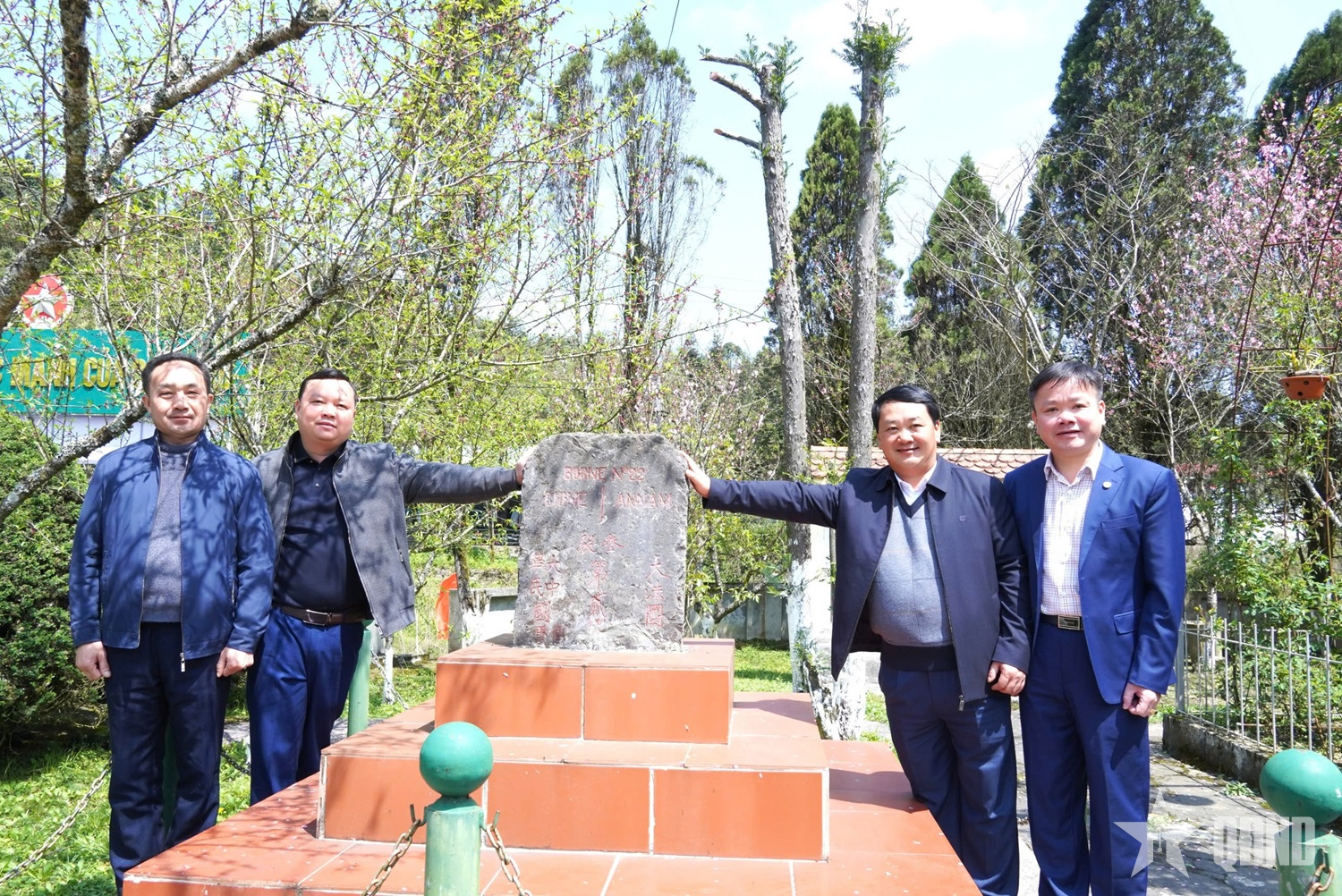 |
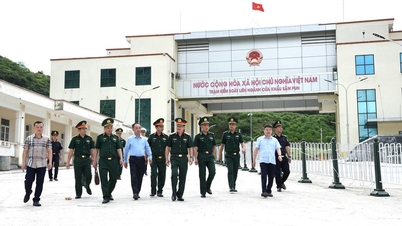
Comrade Hau A Lenh, Member of the Central Committee of the Party, Secretary of the Tuyen Quang Provincial Party Committee (second from the right), visits the historical landmark at the Sam Pun Border Gate Border Guard Station. |
During his visit to the unit, Comrade Hau A Lenh, Secretary of the Tuyen Quang Provincial Party Committee, paused for quite a while in front of the border marker. He emphasized: "Maintaining border sovereignty is not only the responsibility of the armed forces, but also requires the involvement of the entire political system and the consensus of the people. We must retain the people and improve their living standards for the border to be truly secure."
As evening falls over Sam Pun, the wind still howls along the rocky slopes, as it has for generations. In the white mist of the far north, the sounds of children studying still echo by the new school building, while the footsteps of patrolmen silently pass by the border marker amidst the biting cold.
Amidst the rugged, jagged mountains on the border of our homeland, today's peace is maintained by the silent footsteps of soldiers in green uniforms, by the persistent involvement of local authorities, and by the unwavering loyalty of the people who cling to the mountains, villages, and borderlands.
Source: https://www.qdnd.vn/phong-su-dieu-tra/phong-su/sam-pun-mien-gio-nui-vung-bien-cuong-1039403























































































Comment (0)