Mars reveals image of butterfly through special impact crater
Images from the ESA show a butterfly-shaped impact crater, opening up the possibility of water and volcanic activity in the red planet's past.
Báo Khoa học và Đời sống•09/12/2025
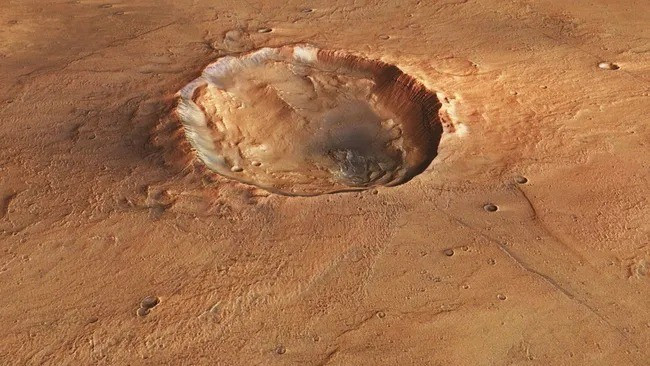
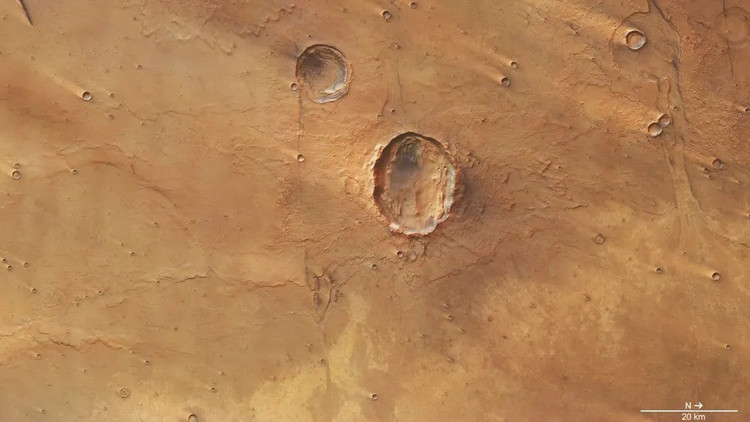
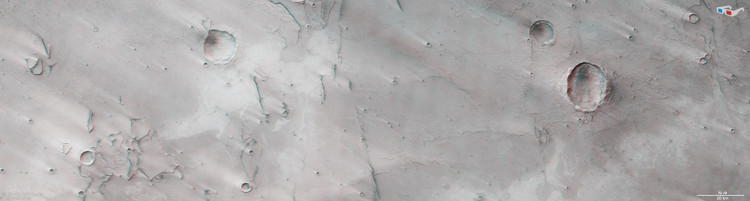
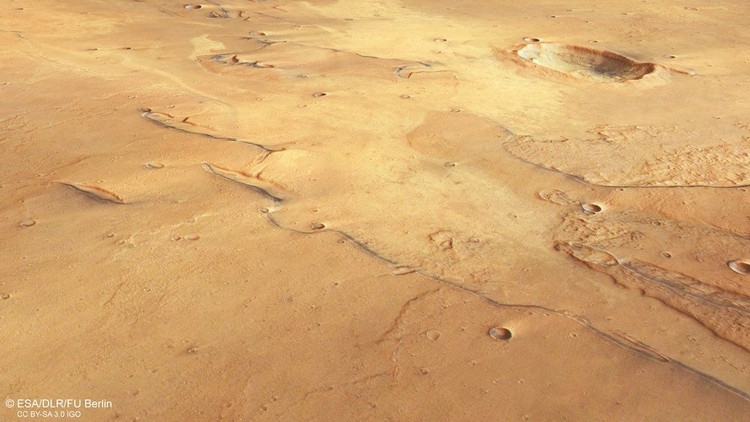
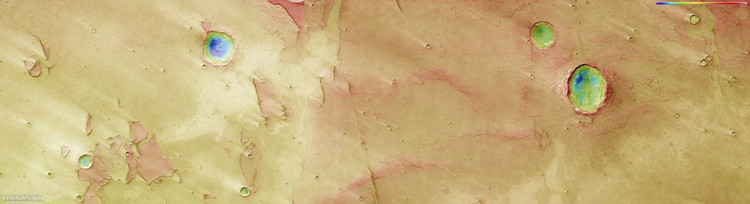
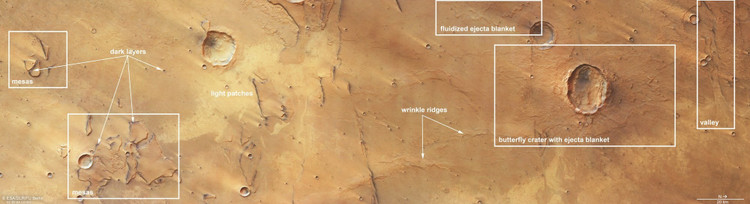
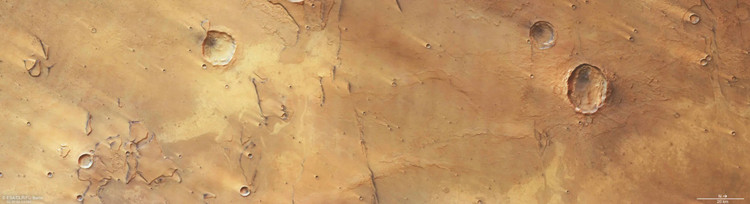
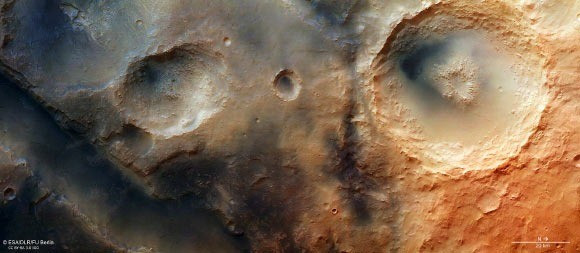
This “Mars butterfly” was captured by the Mars Express spacecraft in the Idaeus Fossae region, where the impact from the asteroid collision threw rocks in two opposite directions, creating an image that resembles a butterfly in flight. This unique image was released by ESA on December 3. Photo: ESA/DLR/FU Berlin. This is unusual, according to the Mars Express team, because most impacts throw rocks in all directions. But with shallow impact angles, material is thrown off in two distinct bands, creating the distinctive shape. Image: ESA/DLR/FU Berlin.
The giant crater is about 20 km wide from east to west and about 15 km long from north to south. The crater is surrounded by two lobes of material radiating north and south, evoking the delicate symmetry of butterfly wings. The size and unique structure of the crater suggest that the meteorite that hit the Martian surface was of considerable size. Image: ESA/DLR/FU Berlin (CC BY-SA3.0 IGO). One of the crater's surprising features is the presence of liquefied material, which scientists believe may have mixed with rock, as there was once water or ice beneath the surface of Mars. Image: Credit: ESA/DLR/FU Berlin (CC BY-SA3.0 IGO). Some of the debris that makes up the wing appears smoother and rounder, like a mudslide. Image: ESA/DLR/FU Berlin (CC BY-SA3.0 IGO).
According to ESA, based on the shape and size of the crater, experts believe the impact may have melted the ice layer under the surface of Mars, causing the material to flow. Photo: ESA/DLR/FU Berlin (CC BY-SA3.0 IGO). The ESA added that the space rock that created the “Mars butterfly” fell at a low, shallow angle, resulting in the interesting and unusual shape seen here: the butterfly’s “body” – the impact crater – has an unusual oval shape and uneven wings. Image: ESA/DLR/FU Berlin (CC BY-SA3.0 IGO). Experts say the possibility of liquid water forming the Idaeus Fossae region is particularly important because it could be a clue to the elements that could have once created life. The presence of water, even in the form of ice, has always been a focus of Mars exploration missions that several countries have deployed and are deploying. Photo: ESA/DLR/FU Berlin (CC BY-SA3.0 IGO).
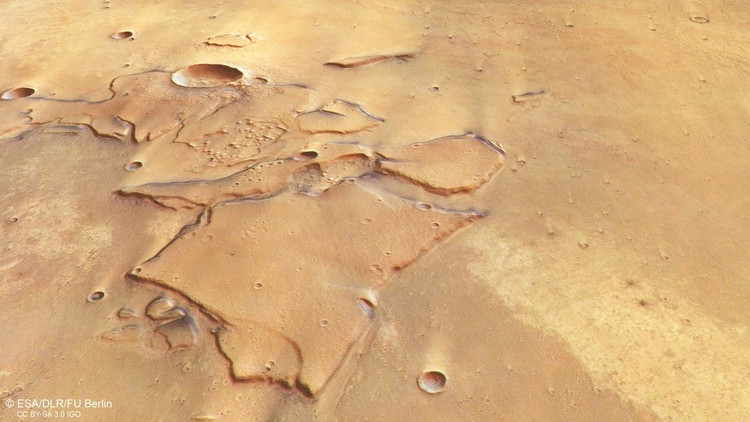
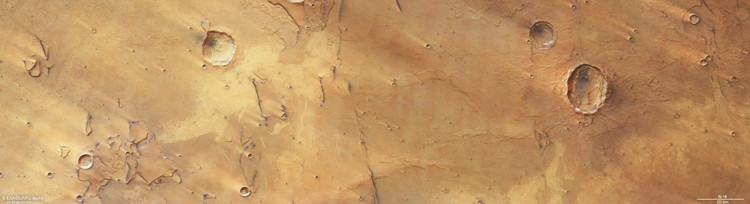
On the left side of the crater, the landscape is dominated by steep, flat-topped rock shelves – remnants of volcanic activity. The ESA says the area likely experienced a fair amount of volcanic activity, with layers of lava and ash accreting over time and then being buried under other layers of material. Image: ESA / DLR / FU Berlin. The surrounding area also shows wrinkled bands, formed when lava cooled and contracted. This finding supports the idea that the landscape in this area was once predominantly volcanic, suggesting that Mars was once more geologically active than it is today. Image: ESA / DLR / FU Berlin / CC BY-SA 3.0 IGO.
Readers are invited to watch the video : Universe map with more than 900,000 stars, galaxies and black holes. Source: THĐT1.

 Báo Khoa học và Đời sống•09/12/2025





![[INFOGRAPHIC] Little known facts about Benin President Patrice Talon](https://vphoto.vietnam.vn/thumb/402x226/vietnam/resource/IMAGE/2025/12/09/1765286018308_thumb-tong-thong-benin-jpg.webp)








![[Photo] Urgently help people soon have a place to live and stabilize their lives](/_next/image?url=https%3A%2F%2Fvphoto.vietnam.vn%2Fthumb%2F1200x675%2Fvietnam%2Fresource%2FIMAGE%2F2025%2F12%2F09%2F1765248230297_c-jpg.webp&w=3840&q=75)













































![[Photo] General Secretary To Lam works with the Standing Committees of the 14th Party Congress Subcommittees](https://vphoto.vietnam.vn/thumb/402x226/vietnam/resource/IMAGE/2025/12/09/1765265023554_image.jpeg)

























Comment (0)