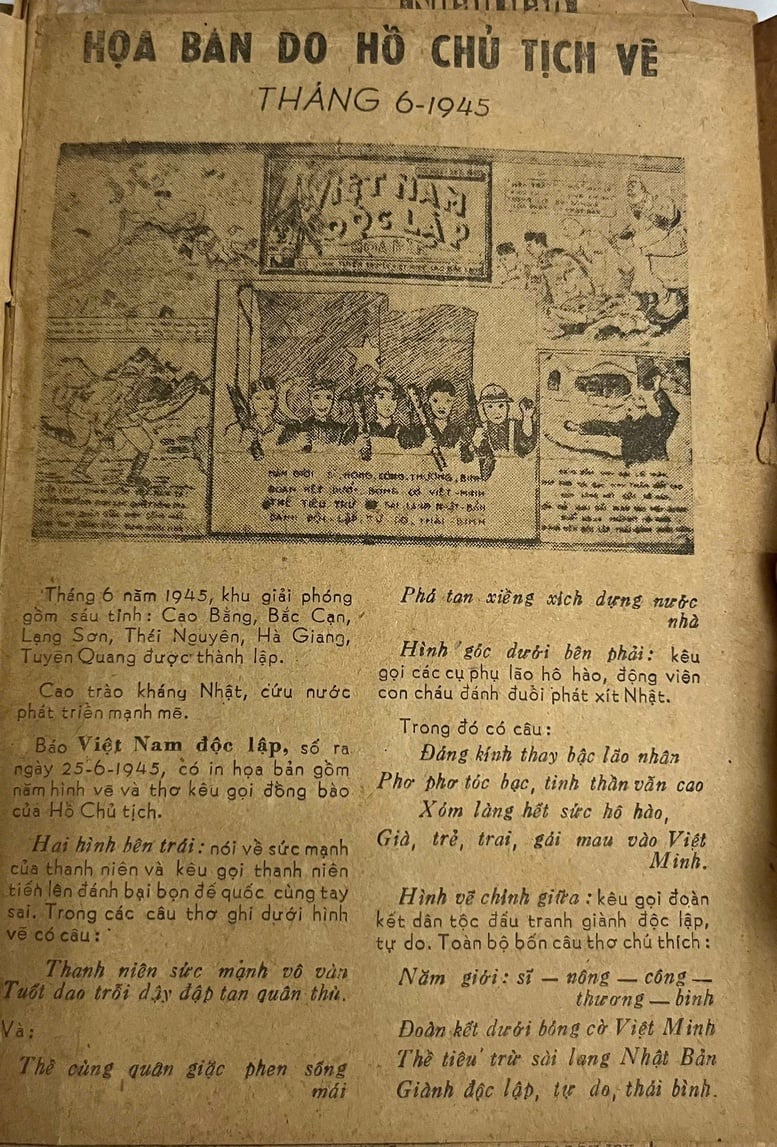
The Nhan Dan newspaper published an article titled "Paintings drawn by President Ho Chi Minh," in June 1945.
The song pierces through the prison cell.
In places known as "hell on earth," the enemy could imprison the bodies, but they could not stop the hearts of the soldiers from turning towards President Ho Chi Minh. This is the sentiment shared by Ms. Nguyen Ngoc Anh, a revolutionary cadre from the steel land of Cu Chi and a former political prisoner of Con Dao.
For her, the image of President Ho Chi Minh was a great source of spiritual encouragement, helping her maintain her integrity in the face of the enemy's brutal torture. Her love and respect for Uncle Ho were transformed into strength to overcome the shackles. In her memory, she still vividly retains the funeral ceremony of Uncle Ho at Chi Hoa prison.
In September 1969, news of President Ho Chi Minh's death reached Mrs. Anh and other political prisoners through small newspaper clippings hidden by their families in jars of shrimp paste or wrapped in coffee bags to evade the guards. Upon confirming the news of his passing, a profound shock and grief enveloped the prison cells. In the dark prison, amidst countless hardships, the female political prisoners at Chi Hoa prison prepared the most solemn funeral possible: rolls of medical bandages, stockpiled for a long time, became mourning cloths; backpacks of clothes were used as an altar, covered with a white blanket, and above it, the words "Long live President Ho Chi Minh" were carefully written.
Despite strict surveillance, early in the morning, over 300 female prisoners simultaneously sang the national anthem and the song "Song of the Fallen Soldiers ." Their voices echoed throughout the prison cells, forcing the guards to resort to violence to suppress them. Faced with the enemy's aggression, Ms. Ánh and her comrades used strong reasoning to fight back: " Uncle Ho is our father . When our father dies, we must mourn..." The unwavering resolve of the entire group, united as one, forced the guards to relent, no longer daring to use force, and only requesting the women to sing more quietly.
The mourning ceremony, which lasted for five consecutive days and nights, was not only to commemorate Uncle Ho but also a show of force, a direct confrontation with the enemy, and a reinforcement of faith and fighting spirit for the political prisoners, with the unwavering affirmation: Wherever they are, whatever the circumstances, their fighting spirit remains steadfast, and their hearts always turn towards the Party and Uncle Ho.
The affection for President Ho Chi Minh has also been crystallized into timeless works of art, including the song " Uncle Ho, whom we respect and love immensely" by composer Le Bach.
In his memoir, musician Le Bach shared: In 1969, while working in the My Tho battlefield (Tien Giang province), during a raid, he heard a loudspeaker from an enemy reconnaissance plane announcing the death of President Ho Chi Minh.
At first, he and his comrades were half-believing, half-doubting, thinking it was a psychological warfare tactic by the enemy. That night, when the enemy withdrew, he and his comrades verified that it was true.
In that moment of sorrow, recalling the honorable memories of meeting Uncle Ho at Chu Van An School, where he once taught, at the Presidential Palace when he led children to visit Uncle Ho, and the image of him waving at Ba Dinh Square…, he wrote the song "Uncle Ho, My Beloved One".
In a surge of emotion and profound sorrow, the melody and lyrics rise with heartfelt emotion: " The vast waters of the Mekong River. The fragrant lotus blossoms of Dong Thap. For so many years we have awaited the arrival of our beloved Father. Farewell, Uncle Ho... We will forever follow in his footsteps. Ho Chi Minh, whom we revere and love immensely. His heart remains, Uncle Ho. He is a living torch. Ho Chi Minh, whom we revere and love immensely. In millions of souls, in millions of hearts. He lives on forever. In millions of souls. Ho Chi Minh, our beloved Father, forever revered. The South will forever remember his kindness. The teacher who guided us. All the love and affection for the South is in his heart. A life for the nation. His life is like a lotus blossom. Shining brightly forever. In millions of souls. Ho Chi Minh, whom we revere and love immensely. His heart shines brightly forever. In millions of souls. Ho Chi Minh, our beloved Father, forever revered."
Immediately after its completion, the song was sent to the Arts and Culture Subcommittee of the Central Propaganda Department of the Southern Region. To ensure secrecy, the music was encoded into numbers by cryptographers and sent to Hanoi via the B5 radio. Shortly afterward, the song was broadcast on the Voice of Vietnam and Liberation Radio.
This song is not just a musical work, but also the heartfelt expression of millions of compatriots and soldiers in the South for their beloved Father - the man who dedicated his entire life to the cause of national liberation.
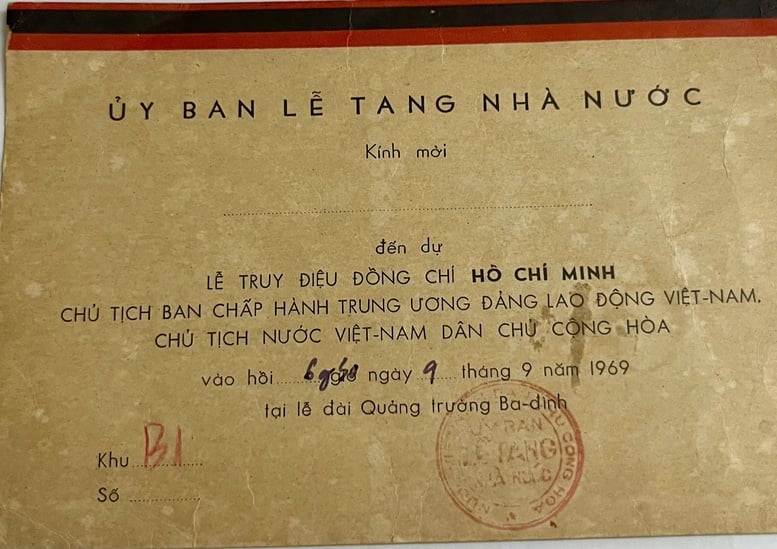
Invitation to the memorial service for President Ho Chi Minh, 1969
Mr. Ho Xuan Son's recollections of the "historic flight" in 1969 are deeply moving. After President Ho Chi Minh's death on September 2, 1969, the Central Committee of the Southern Region and the National Liberation Front of South Vietnam decided to send a high-level delegation led by Chairman Nguyen Huu Tho to the capital to attend the funeral of President Ho Chi Minh. He was honored to accompany the delegation. To ensure safety from the enemy's blockade and attacks, the plane could not fly directly to Hanoi but had to detour through Cambodia. The DC.6 aircraft of the Kingdom of Cambodia Airlines flew over South Vietnam for about an hour before heading to Quy Nhon to Guangzhou, China, and finally landed safely. This was a "breathtaking" journey because it had to fly through areas controlled by the enemy air force. If the plane had been detected, instead of reaching Ba Dinh Square, the entire delegation might have faced the Saigon Central Prison.
Visiting President Ho Chi Minh's grave, the delegates from the South were deeply moved to see him in his old khaki uniform, lying in a glass coffin. They were even more moved when, in the historic Ba Dinh Square, even after the funeral ceremony had ended, tens of thousands of compatriots and soldiers continued to stand there weeping! Prime Minister Pham Van Dong and several other leaders had to go and comfort them before they would leave.
Amidst the fierce resistance war against the US, the journey of the Southern delegation to the North to attend President Ho Chi Minh's funeral was not only a gesture of affection but also a particularly important political mission, carried out under extremely secret and dangerous conditions. The breathtaking flight is a testament to the unwavering devotion of the people of the South: ready to overcome bombs and bullets, accepting all dangers to bid farewell to their beloved Father, who dedicated his entire life to the nation and its people.
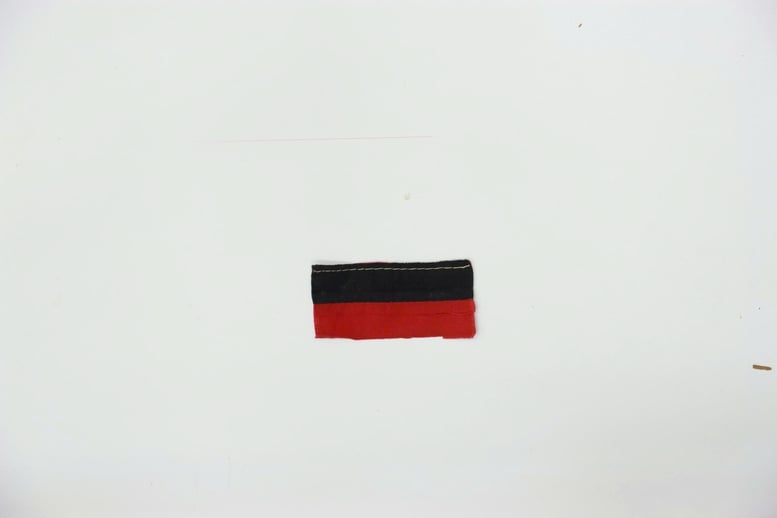
The mourning band worn by martyr Le Quang Loc during the memorial service for President Ho Chi Minh in 1969.
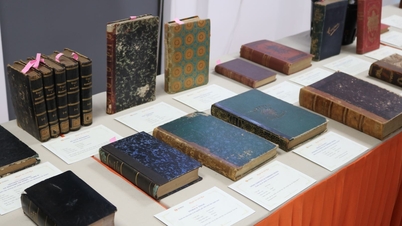
These simple yet historically significant artifacts were treasured by revolutionary fighters. With deep respect and love for President Ho Chi Minh, writer Thien Giang-Tran Kim Bang meticulously collected and preserved copies of the Nhan Dan newspaper containing illustrations for the Vietnam Independence newspaper drawn by President Ho Chi Minh in 1945, as well as other valuable literary works by him. This patriotic intellectual and steadfast communist fighter has passed away, but these time-worn pages of newspapers remain carefully preserved, retaining their original value and the sentiment of the writer's devotion to President Ho Chi Minh.
It was also a small, handcrafted red and black cloth mourning band that Mr. Le Quang Loc, an officer of the Alliance of National, Democratic and Peaceful Forces of Vietnam, wore during the memorial service for President Ho Chi Minh in the Tay Ninh war zone. That mourning band accompanied him through years of tenacious fighting until the day he bravely sacrificed his life at the gates of Saigon before the dawn of the great victory of Spring 1975. After the country was reunified, his family continued to carefully preserve the mourning band before donating it to the museum.
For Mr. Ho Xuan Son, a "witness to history," his affection for President Ho Chi Minh remains deeply etched in his heart. Through the years, amidst the ups and downs and changes of life, he and his family have preserved a sacred memento: the invitation to the funeral ceremony for President Ho Chi Minh at Ba Dinh Square on September 9, 1969. The back of the invitation bears the note: "In case of an air raid alert, please remain calm and follow the instructions of the Organizing Committee," recalling a tragic historical moment when the entire nation suppressed its grief under the watchful eyes of enemy aircraft to bid farewell to their beloved Father. This small detail shows that even during President Ho Chi Minh's funeral, danger constantly threatened, but nothing could deter the reverence of the people, soldiers of the South, and the entire nation for him.
More than half a century has passed since Uncle Ho's passing, but stories and mementos about President Ho Chi Minh retain their inspiring power. From the handmade mourning band in the Tay Ninh war zone, the invitation to a memorial service amidst fierce warfare, to the song written with tears in the mangrove forest of My Tho, all bear witness to one truth: Uncle Ho will always be in the hearts of the people and soldiers of the South in particular, and the Vietnamese nation in general.
These sacred memories and historical relics are not only testaments to the past, but also invaluable lessons about loyalty and self-sacrifice, reminding future generations to continue preserving and developing the spiritual legacy that He left for the nation. Uncle Ho lives on in millions of souls, in millions of hearts, and together with the country, we will move forward on the path to the future.
Thu Hoan
Source: https://baochinhphu.vn/sat-son-mot-long-huong-ve-bac-102260517211807259.htm

















































![[Photo] Hue: Admire the 2.4 trillion VND sea bridge, the longest in Central Vietnam.](https://vphoto.vietnam.vn/thumb/402x226/vietnam/resource/IMAGE/2026/05/24/1779614018347_anh-man-hinh-2026-05-24-luc-16-13-29.png)



























Comment (0)