

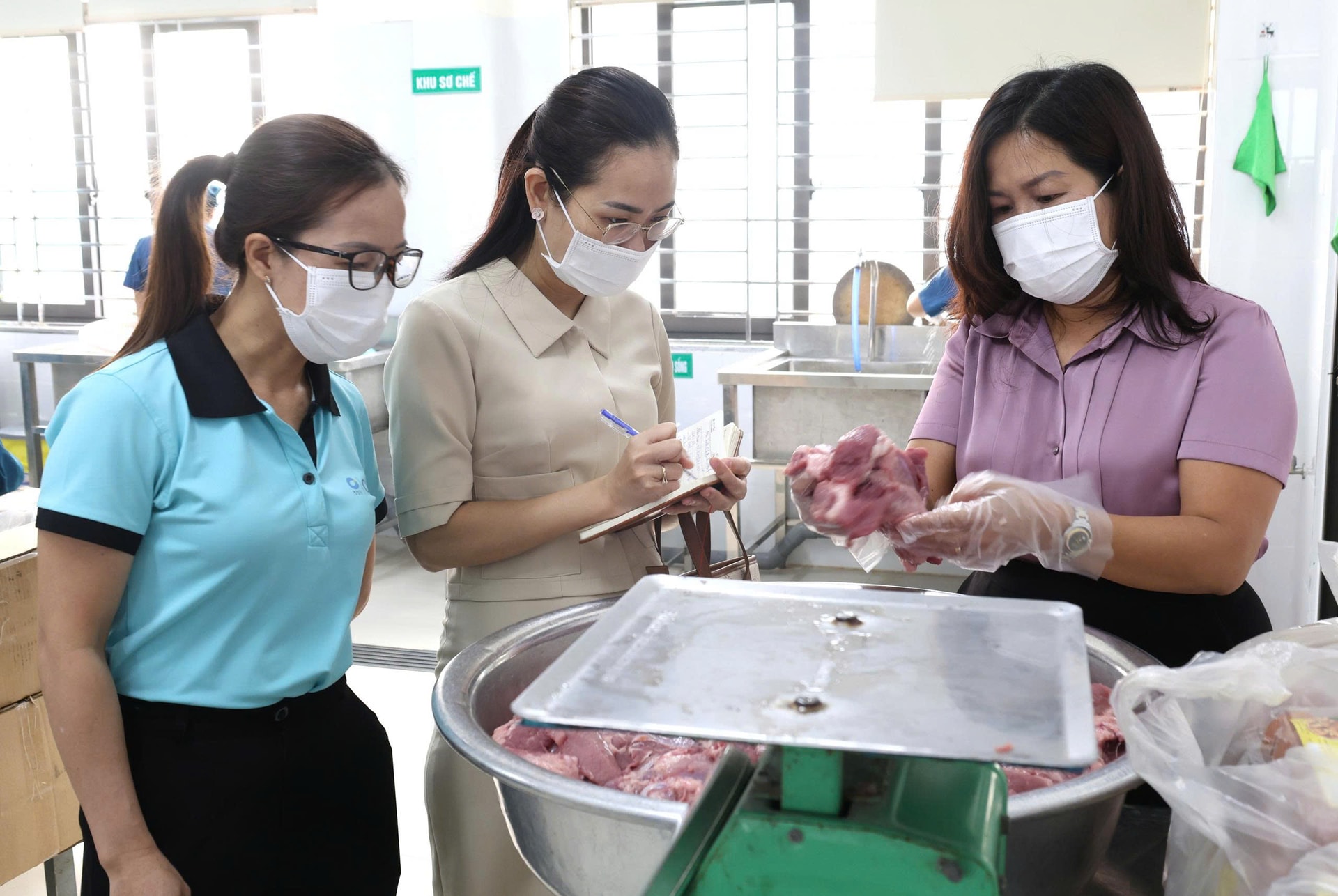
The increased inspections of school meal services by relevant authorities in the area contribute to building trust among parents and tightening food safety standards in schools.
Proactive schools
Every morning, Ms. Nguyen Thi Ai Lanh (parent of a student in class 5/4, Hoang Du Khuong Primary School, Cam Le Ward) is present at the school to supervise the school lunch program. Ms. Lanh said that parents usually observe two key times: the time food is delivered and the time meals are distributed. Regarding food delivery, parents directly observe the freshness, quantity, and origin of the food. By scanning the QR code, parents can trace the product's origin. After checking the entire school lunch process, parents take photos and videos and send them to the class group to share with all parents.
"Besides the parent representatives assigned to supervise, any parent can conduct surprise inspections because the school publicly announces the schedules for receiving, processing, and distributing meals. Nowadays, with the availability of social media and other media, updating and monitoring the school lunch program for children is much more reliable than before," Ms. Lanh shared.
Ms. Pham Thi Thanh Thuy, Deputy Principal of Hoang Du Khuong Primary School, said that every day, representatives from the school's management board and parents are present at the school to inspect the entire process, from receiving raw materials to supervising the food preparation and processing. The school emphasizes to the kitchen staff the importance of maintaining food safety and hygiene at all stages.
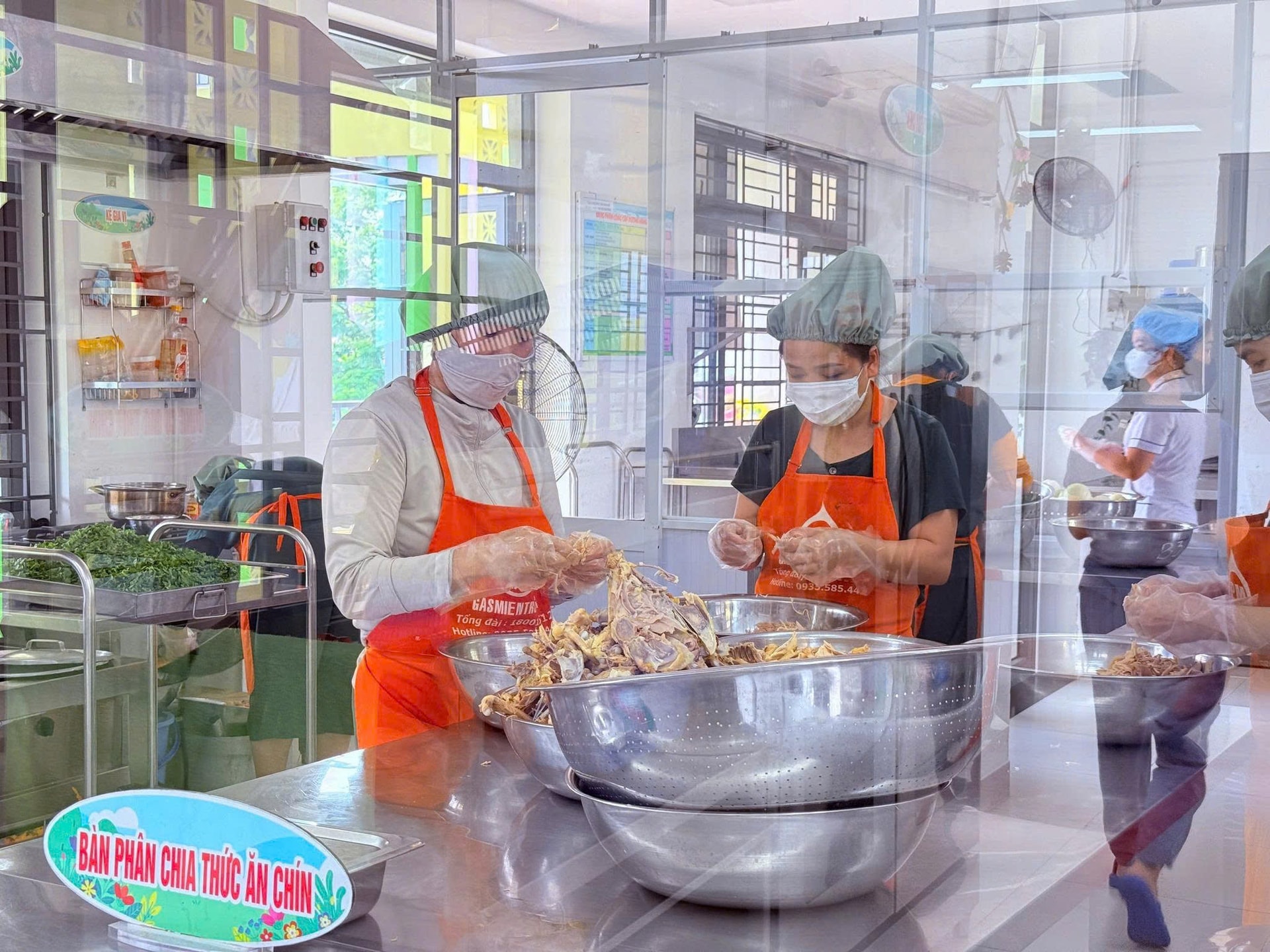
“We publicly display food information and daily menus. We post the menu and portion sizes on a public board and send information and images of the meals to the class's Zalo group so parents can monitor them. A three-step food inspection process, food sample retention, and daily delivery log are also strictly implemented to ensure tight control from the smallest detail,” Ms. Thuy explained.
Ms. Ngo Thi Xuan, Deputy Principal of Le Kim Lang Primary School in Hoa Xuan Ward, said that the school's food safety assurance process is carried out in several steps. In particular, emphasis is placed on ensuring the freshness of incoming food is visually assessed, meaning the freshness of the food is directly checked with the naked eye. If the food is not fresh, the school returns it and requests the supplier to replace it with another product.
At the same time, the school's kitchen is built to ensure a one-way kitchen process, with separate stages for preparing raw food, cooking, and distributing food; ensuring that the processing of raw and cooked food is completely separate.
School equipment and supplies are regularly cleaned to ensure food safety. After food preparation, before distributing meals to students, the school takes food samples for safekeeping. This process is closely monitored by the school and samples are stored for exactly 24 hours, in accordance with regulations from the relevant authorities.
Strengthen supervision
According to the Department of Education and Training's report, the entire sector currently has 476 preschools (out of a total of 480 schools) that offer boarding services, accounting for 99.2%; of which 98% of preschools and kindergartens offering boarding services use software to calculate nutritional content for cooking meals for children, ensuring compliance with regulations. The total number of preschools that have traceable food sources is 340 out of 480 schools, accounting for 70.83%.
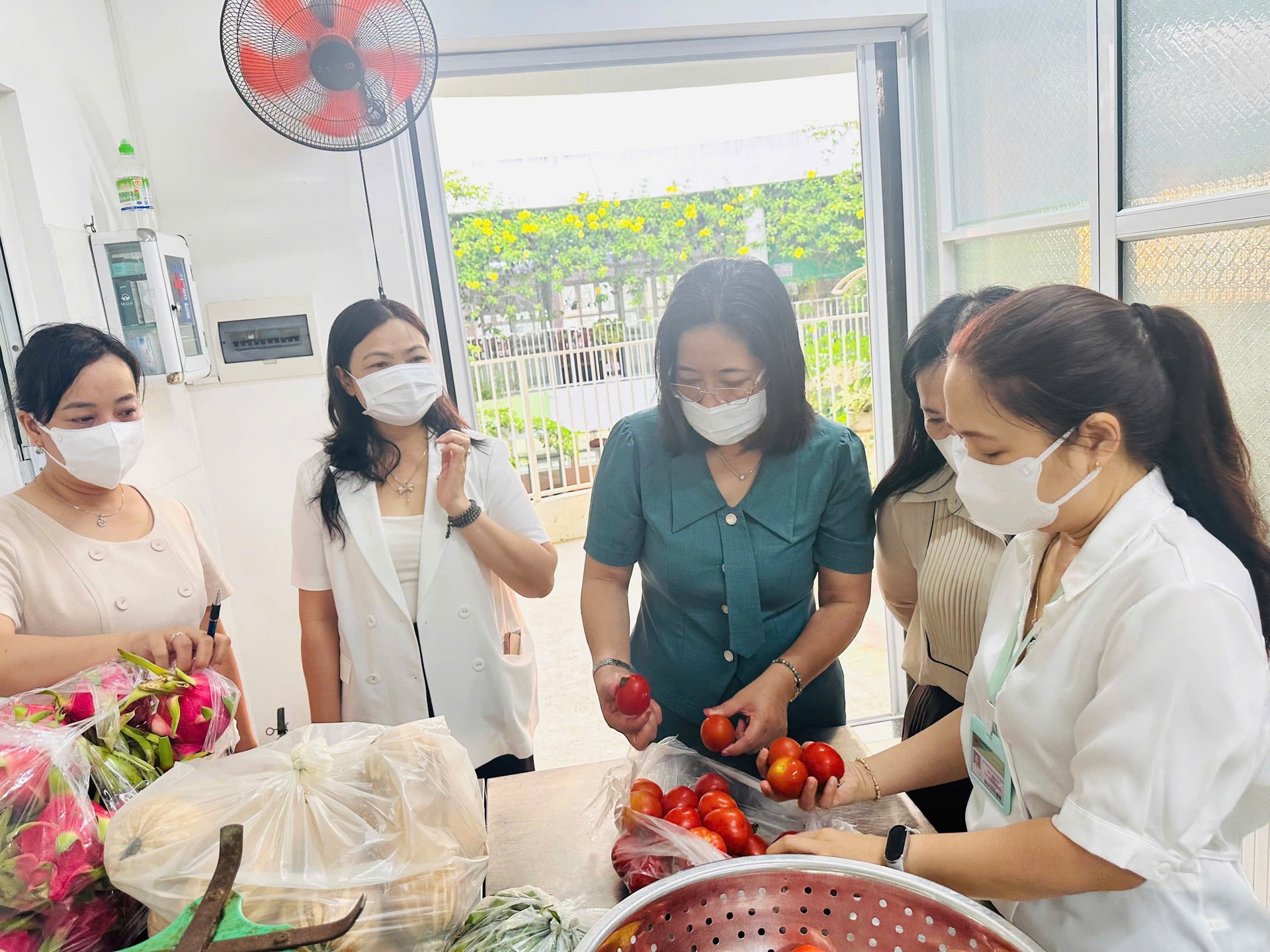
For the 232 primary schools with boarding facilities (out of a total of 326 primary schools), schools proactively developed plans for managing boarding kitchens, integrating them with the annual school year plan. Responsibilities were clearly assigned to school administrators, boarding staff, school health staff, and catering staff. Many schools proactively developed plans for preventing and handling food poisoning incidents, strictly adhering to reporting procedures and promptly addressing any incidents that occurred.
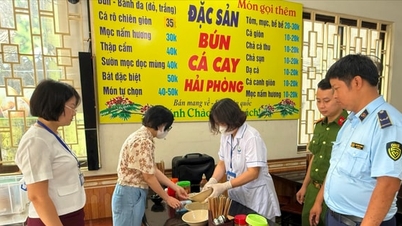
In April and May, relevant authorities simultaneously intensified inspections and tightened control over the entire food supply and processing process at school canteens. This was in accordance with Decision No. 720 dated April 15, 2026, of the Department of Education and Training on the establishment of an inspection team for the organization of school canteens in educational institutions in the city for the 2025-2026 school year. The inspection focused on school canteen management, records and documentation, facilities, food processing and preservation procedures, nutrition, environmental hygiene, and internal self-inspection.
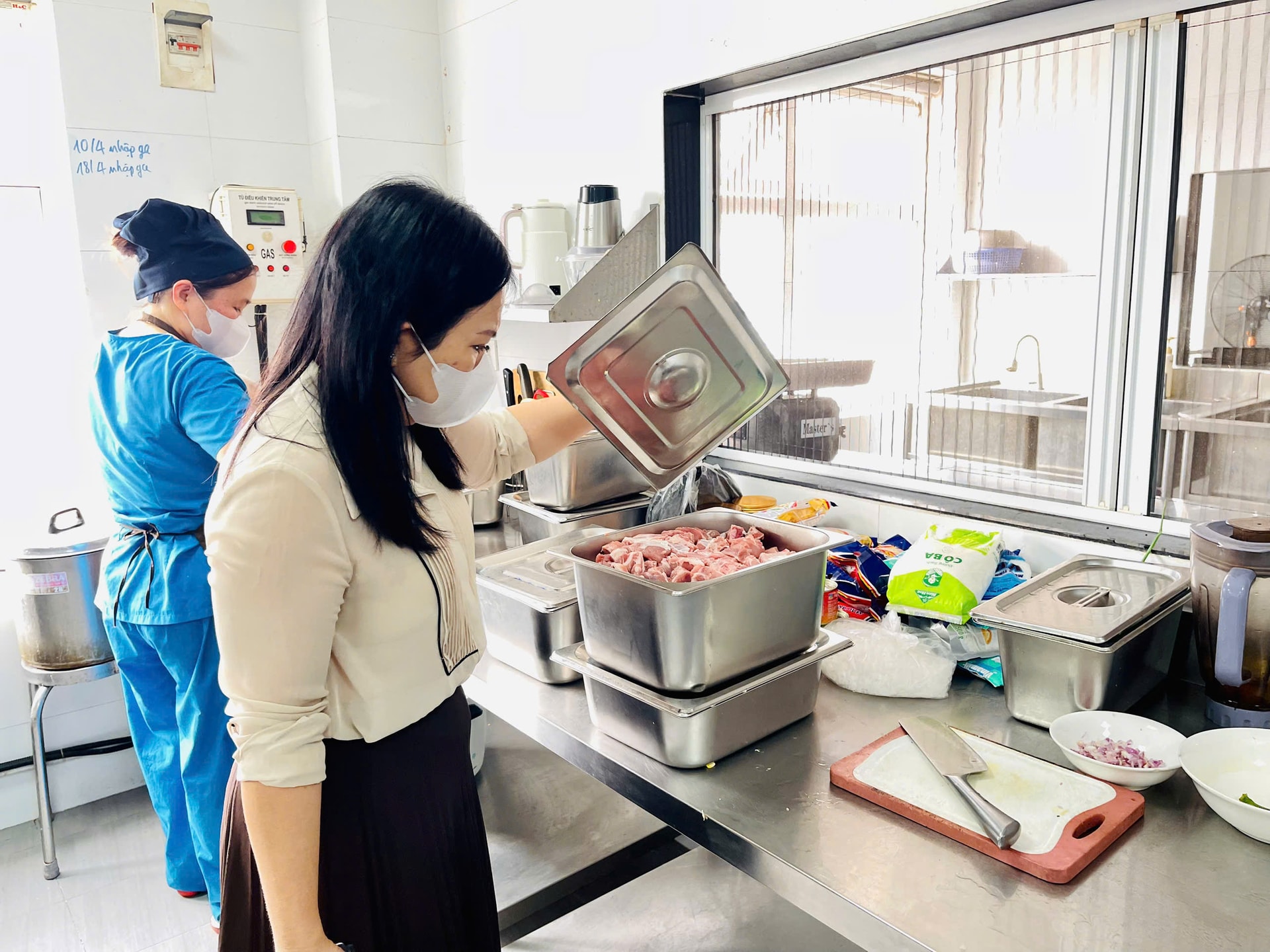
Upon inspection, most facilities have implemented relatively good practices in organizing boarding school meals; basic records are complete; meal and sleeping procedures are scientifically arranged; kitchens are hygienic; food sources have clear origins; menus meet nutritional requirements; and childcare is given due attention. Alongside these achievements, there are still limitations that need to be addressed, such as some kitchens not ensuring a one-way workflow; the arrangement of food preparation areas not being truly neat and efficient; and the documentation for receiving and disbursing boarding school meal fees not being fully updated. In light of this, the inspection team requested that the facilities promptly rectify and standardize the one-way kitchen workflow, strengthen record and financial management, and improve the quality of internal self-inspection.
According to Le Thi Bich Thuan, Director of the Department of Education and Training, the department has issued specific guidelines on ensuring food safety and organizing school meals since the beginning of the year. The inspection campaign from mid-April was considered a peak period, aiming to thoroughly review the entire process. Inspection teams paid particular attention to the one-way processing principle, and food sample retention was strictly checked to ensure traceability when needed. In addition, the department reviewed all aspects of organizing school meals, from supply contracts to operational procedures. The police force will be involved to detect and strictly handle fraudulent activities regarding the origin of food, falsification of documents, and the introduction of unsafe food into schools…
Source: https://baodanang.vn/siet-chat-giam-sat-bua-an-ban-tru-3333993.html






















































































Comment (0)