


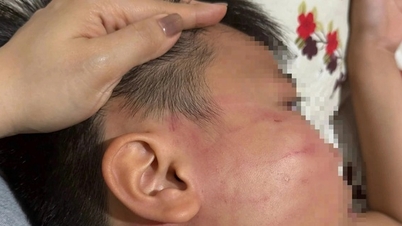
A 4-year-old child was beaten, starved, forced to wear a 5-liter water bottle around his neck, and died in a small 10-square- meter rented room in Hanoi . Details from the investigation file sent shivers down the public's spine, not only because of the cruelty, but also because the abuse took place secretly over several days.
In that cramped rented room, the child lived amidst violence, yet almost no one noticed, or no one spoke up soon enough to save her.
It's no longer a tragedy confined to one family.
Vietnam has a Law on Children, with regulations imposing administrative penalties and many severe criminal sanctions for acts of child abuse, ranging from torturing others and intentionally inflicting injury to murder. However, reality shows that the law often only appears after the child has suffered numerous injuries, or even has no chance of survival.
Many recent cases of child abuse share a common characteristic: the behavior occurred over a long period, with clear signs, but went undetected or unaddressed in a timely manner.
Frequent bruising, constant screaming, being locked in a room, or being starved are not difficult signs to recognize. However, in many cases, the community chooses to remain silent due to the mentality that "it's their family's problem."
Even more worrying, corporal punishment is still considered a way to "discipline children" by some adults. The defendant in the case even confessed to hitting the child because he considered him "disrespectful" and "disobedient." This distorted thinking shows that domestic violence is sometimes being normalized.
Following each incident, authorities have called for stricter child protection, increased hotlines, and greater local accountability. However, the actual effectiveness remains limited, as many cases are only discovered when victims are admitted to the hospital for emergency treatment.
UNICEF has warned that nearly three-quarters of abused children occur at home, and that child abuse is often masked by silence. Many countries now view this not as a private family matter, but as a social security issue, requiring teachers, doctors, neighbors, or social workers to raise the alarm when they detect unusual signs.
Meanwhile, in Vietnam, many children are still being left behind closed doors.
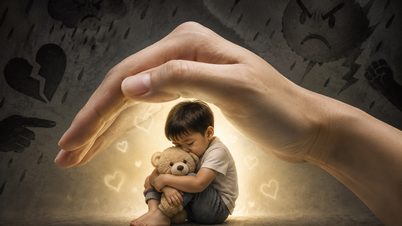
A society cannot simply react with outrage after each case and then quickly forget about it. Because child abuse doesn't begin with the final blow, but with the ignored cries, the unspoken bruises, and the prolonged indifference of adults.
Source: https://baovanhoa.vn/gia-dinh/so-phan-nhung-dua-tre-sau-canh-cua-dong-kin-225857.html































































































Comment (0)