

The 79th Cannes Film Festival returns to the French Riviera on May 12th. Besides the films competing for the Palme d'Or, the film industry is focusing its attention on the red carpet battle. While stars seek attention with daring fashion , the organizers aim to establish a refined and elegant image for the most prestigious film festival on the planet.
Bring the red carpet back to its true purpose.
Just a few years ago, the Cannes red carpet was considered the ultimate showcase of the "naked dress" trend, designs that were so revealing, cut-out, and body-hugging that they almost gave the impression of nudity.
Cannes wants to put an end to that era after enacting new regulations starting in 2025. This year, the film festival continues to maintain strict rules, including a ban on nudity on the red carpet and restrictions on oversized dresses with long trains that hinder movement.
In the official regulations for guests attending the film festival, the organizers stated: "For reasons of maintaining decorum, nudity is prohibited on the red carpet as well as in all other areas of the film festival."
The rules emphasize that oversized attire, especially dresses with long trains that obstruct guest flow or complicate seating arrangements in the cinema, will not be accepted.
Cannes' reception and security staff have the right to refuse entry to anyone violating the dress code on the red carpet.
However, after the rules were first announced last year, many argued that Cannes was trying to "control women's bodies" or interfering too deeply with fashion freedom. In response to this reaction, a representative from the festival's press office told Hollywood Reporter that the new provisions actually reflect long-standing rules.
Cannes responded, stating unequivocally that the rule's purpose was not to regulate fashion styles or ban revealing designs, but to prevent "complete nudity" on the red carpet, while ensuring the event conformed to the film festival's institutional framework and French law.
This means that Cannes, in theory, still allows see-through or sexy designs, as long as they don't cross the line into what is considered offensive. However, this ambiguity sparks curiosity in the fashion world: what boundary would be considered acceptable?
The viral battleground of fashion.
Over the past decade or so, Cannes has changed almost unrecognizably. While the red carpet used to be primarily a space for directors, actors, and filmmakers, it is now a stage for supermodels, influencers, TikTokers, and ambassadors for global luxury brands.
The explosion of social media has transformed the Cannes red carpet from a purely film promotion event. Every appearance can become a trending topic on TikTok, Instagram, or X within minutes. This creates a subtle competition for attention among the guests.
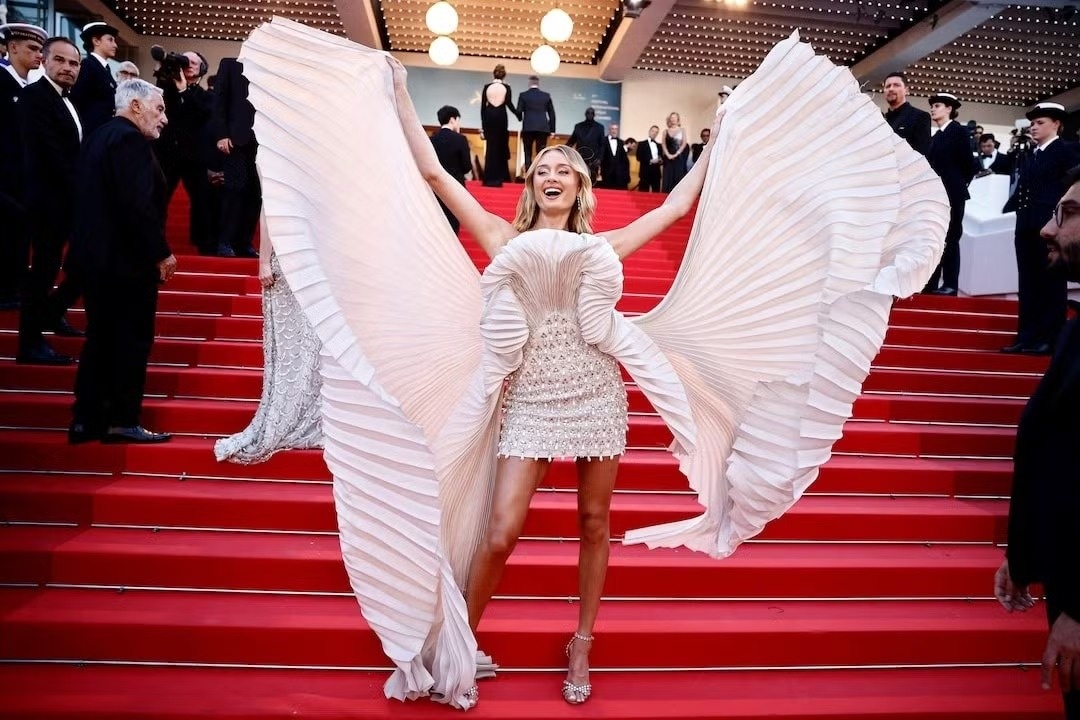 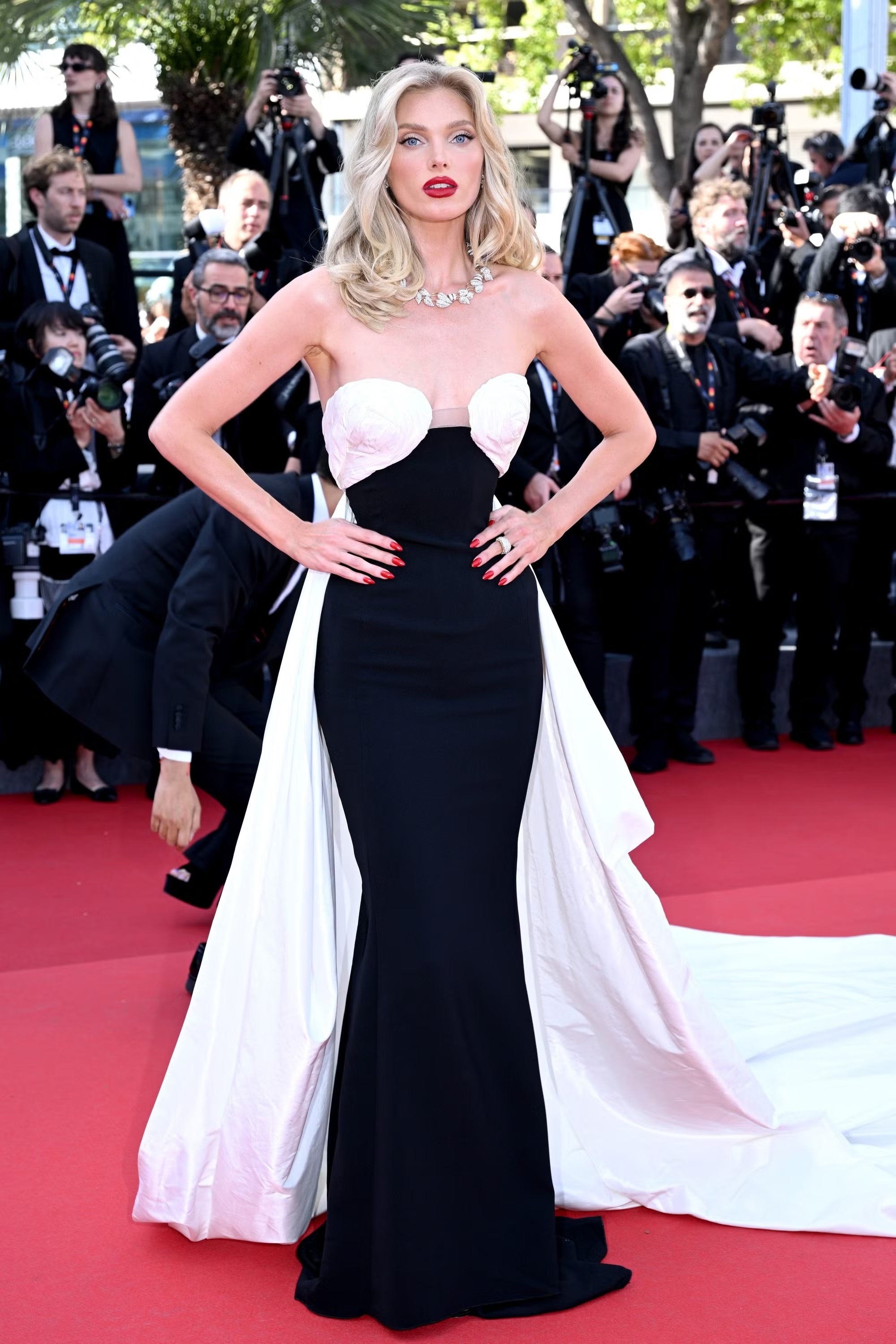 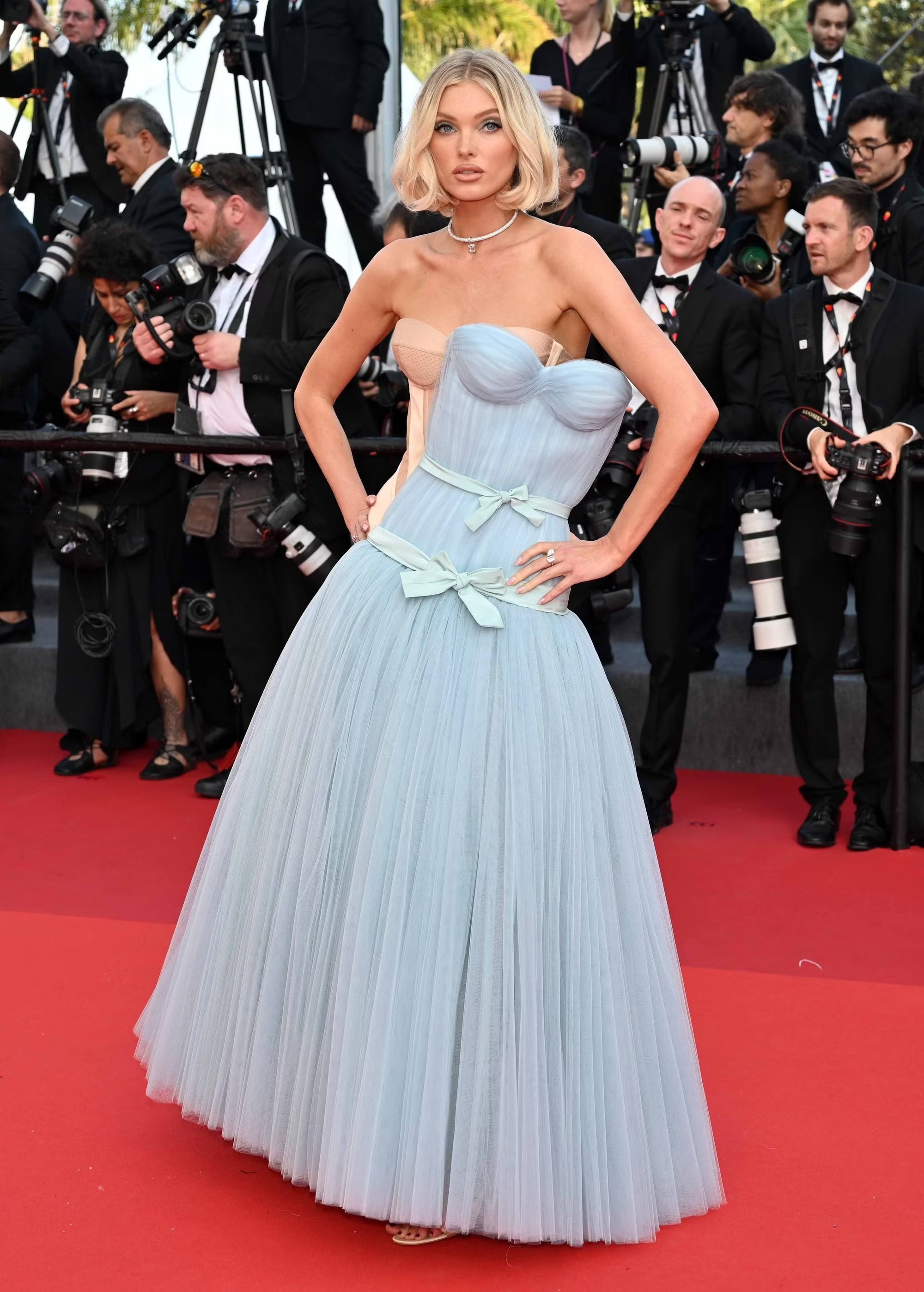 |
The Cannes Film Festival red carpet is a fashion showdown featuring unique and unconventional outfits. |
Many dresses at Cannes are now designed with the goal of creating a media buzz rather than pure aesthetic value. See-through dresses revealing almost the entire body, daring cut-out designs, and enormous voluminous gowns are constantly appearing on the Palais steps.
Bella Hadid once created one of the most famous moments in Cannes history with her Schiaparelli dress that revealed almost her entire bust. Kendall Jenner has appeared numerous times in daring see-through designs, while Elle Fanning also frequently wears sheer dresses on the red carpet.
This trend has led many critics to argue that Cannes is becoming overly "fashion-centric." At times, debates about dress have even garnered more attention than the films competing for the Palme d'Or.
Cannes' tightening of regulations is seen as an attempt to bring the film festival back to its original cinematic spirit, rather than becoming a giant fashion show catering to social media.
Cannes is no longer lenient.
The Cannes organizers haven't publicly stated that any specific incident led to the decision to tighten the rules, but in reality, the red carpet has witnessed a series of controversial situations in recent years.
In 2022, a woman protesting in support of Ukraine unexpectedly stripped off her shirt on the red carpet to protest the war before being escorted away by security forces. This image went viral worldwide and made nudity on the red carpet a sensitive topic.
In 2024, Cannes faced another chaotic situation involving Massiel Taveras. The beauty queen appeared in a dress with a long train printed with an image of Jesus. As she ascended the Palais steps, she repeatedly stopped to spread out the train of her dress and pose for the media.
Security personnel repeatedly asked guests to move because the dress was causing a traffic jam. A video showing security intervening quickly went viral on social media, sparking heated debate about whether guests were using Cannes to create a spectacle and attract attention.
Observers believe that it is moments like these that make Cannes realize they need tighter control over the red carpet if they want to maintain their image of elegance and professionalism.
Furthermore, Cannes' move also comes amidst the global surge in "naked fashion." The shocking appearances of Bianca Censori, Kanye West's wife, in nearly naked outfits have sparked intense international debate recently.
It's not hard to understand why Cannes wants to avoid its red carpet becoming a competition for shocking and offensive displays. Cannes has long been one of the film festivals with the strictest red carpet standards.
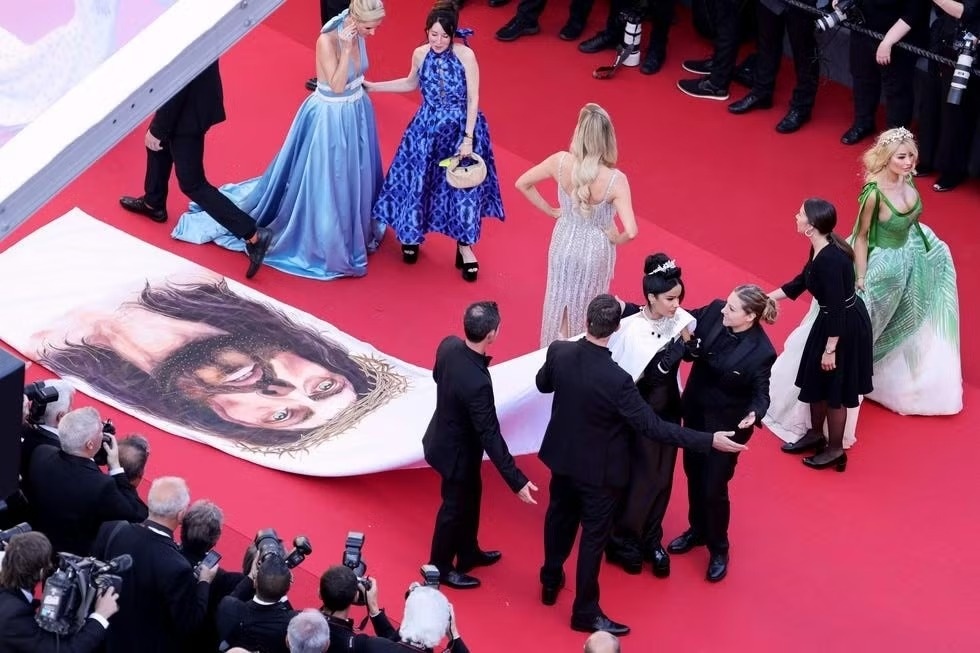 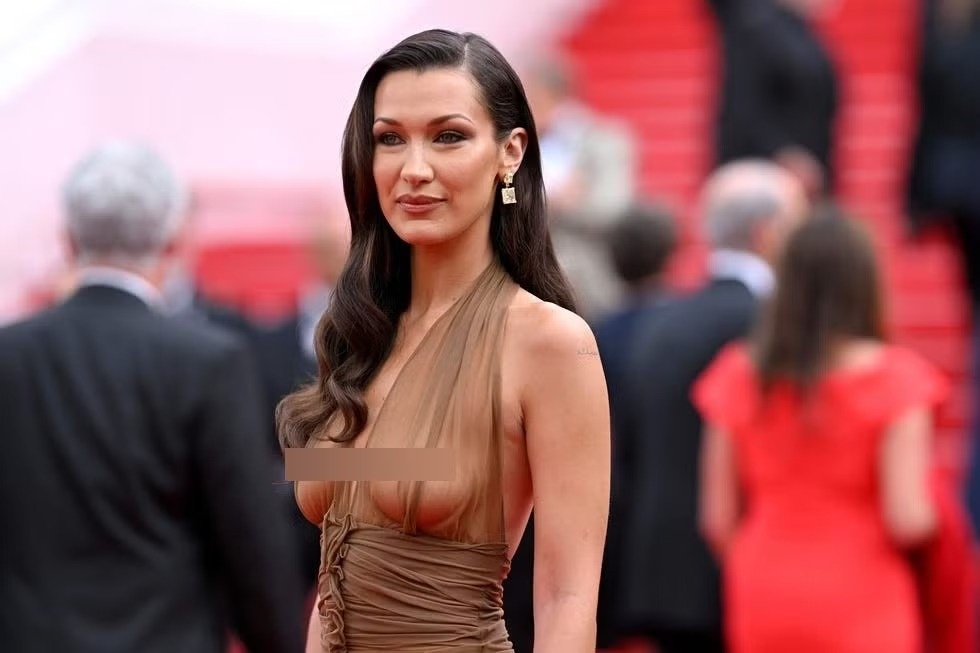 |
Outrageous dresses and daring nudity are taking over Cannes. |
Evening screenings at the Grand Théâtre Lumière require guests to wear tuxedos, evening gowns, or formal cocktail attire. Official guidelines encourage men to wear black or navy suits with dark bow ties or neckties, while women may opt for long dresses, cocktail dresses, or a “little black dress.” Large handbags, backpacks, and other bulky items are not permitted in the screening area.
Cannes has even been the subject of intense controversy due to its unwritten rules regarding high heels. In 2015, many female audience members were denied entry to the Palais for wearing flat shoes before the screening of Cate Blanchett's Carol.
The incident prompted Emily Blunt to publicly criticize Cannes, calling the rule "very disappointing." Public pressure subsequently forced the film festival to relax its footwear rules, allowing guests to wear elegant shoes with or without heels.
Nevertheless, Cannes has never given up its desire to control the image on the red carpet. The festival's longtime director, Thierry Frémaux, once called taking selfies on the red carpet "ridiculous and bizarre" before officially banning selfies in 2015 to ensure the smooth flow and solemnity of the event.
Cannes security personnel are also known for being among the strictest in the entertainment world. Protesters, disruptive guests, or anyone deliberately prolonging their time posing for photos can be asked to leave immediately.
However, the biggest question now remains whether Cannes is tough enough to enforce the new rules on its most powerful stars.
Many guests on the red carpet were ambassadors or VIPs of luxury corporations sponsoring the film festival, such as L'Oréal, Chopard, and Kering. Over the years, these brand ambassadors have been the most daringly dressed. Numerous see-through designs or enormous, voluminous dresses have made a striking appearance on the Palais steps without any objection.
This has led observers to believe that the new rule could be applied flexibly depending on the level of fame and commercial value of the guests.
Source: https://znews.vn/so-phan-vay-khoa-than-bi-cam-o-cannes-post1652130.html































































































Comment (0)