

In the long term, this pressure will intensify even more. According to development guidelines, by 2030, Hanoi 's commercial electricity output is expected to reach approximately 52.2 billion kWh, with a peak capacity of about 9,400 MW, and an average growth rate of about 8.5% per year. Simultaneously, according to the Power Development Plan VIII, the national electricity load is expected to maintain a high growth rate of about 7-8% per year throughout this decade. If considered within the broader context of the Capital Region, the total power demand could exceed 20,000 MW by 2030.
These figures show that Hanoi's electricity problem is no longer a short-term security issue, but a long-term structural pressure. If it continues to rely primarily on expanding supply sources, the city will face enormous investment requirements, while land availability, infrastructure, and environmental constraints are becoming increasingly stringent. Clearly, the old approach is gradually reaching its limits.
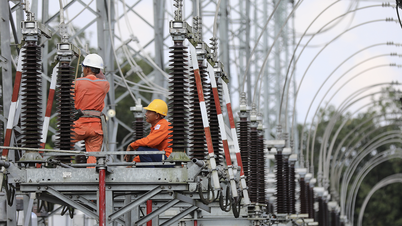
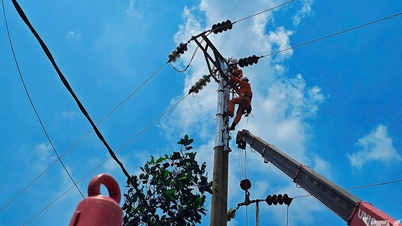
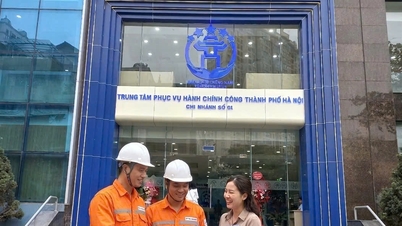
Over the past period, Hanoi has proactively implemented many solutions to ensure electricity supply. The power grid system has been invested in and upgraded towards modernization, gradually improving reliability and minimizing localized overloads. The capital's electricity sector is promoting digital transformation in operation, from remote control and grid automation to real-time load monitoring. Online electricity services have been expanded, helping to improve the quality of service for people and businesses.
In particular, electricity conservation and demand management have seen significant progress. Programs for efficient and economical electricity use have been widely implemented; load adjustments during peak periods have become more flexible. From focusing solely on "meeting demand," the system has begun to shift towards "regulating demand"—a crucial change in mindset.
However, that is not enough. Clearly, Hanoi's electricity problem cannot continue to be solved in the old way. Shifting from ensuring supply to efficient energy management is no longer an option, but a mandatory requirement if the capital wants to maintain its growth momentum and move towards sustainable development.
Effective energy management first needs to be integrated into smart city operating systems. When electricity consumption data from residential areas, buildings, and industrial zones is connected to urban management platforms, authorities can monitor, analyze, and manage in real time, thereby optimizing system operation and reducing energy losses.
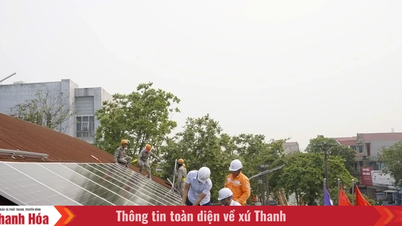
Another important direction is to promote the development of renewable energy in a distributed model. Hanoi has ample room for developing rooftop solar power in industrial zones, commercial buildings, government offices, and especially in apartment complexes and new urban areas – "hot spots" for electricity consumption. When combined with energy storage solutions and on-site consumption models, the power system will become more flexible, reducing pressure on the centralized grid.
From a management perspective, it is necessary to improve mechanisms and policies to encourage the use of energy efficiently and effectively, and to promote energy management models in businesses and buildings. The application of energy efficiency standards to construction projects and electrical equipment needs to be implemented seriously and effectively.
Shifting from ensuring sufficient electricity supply to efficient energy management is not just an adjustment in approach, but a transformation in development thinking. When electricity is used intelligently, economically, and sustainably, the energy problem will no longer be a bottleneck, but an advantage, contributing to shaping a green and modern capital city in the future.
Source: https://hanoimoi.vn/su-dung-dien-thong-minh-tiet-kiem-ben-vung-748663.html






























































































Comment (0)