

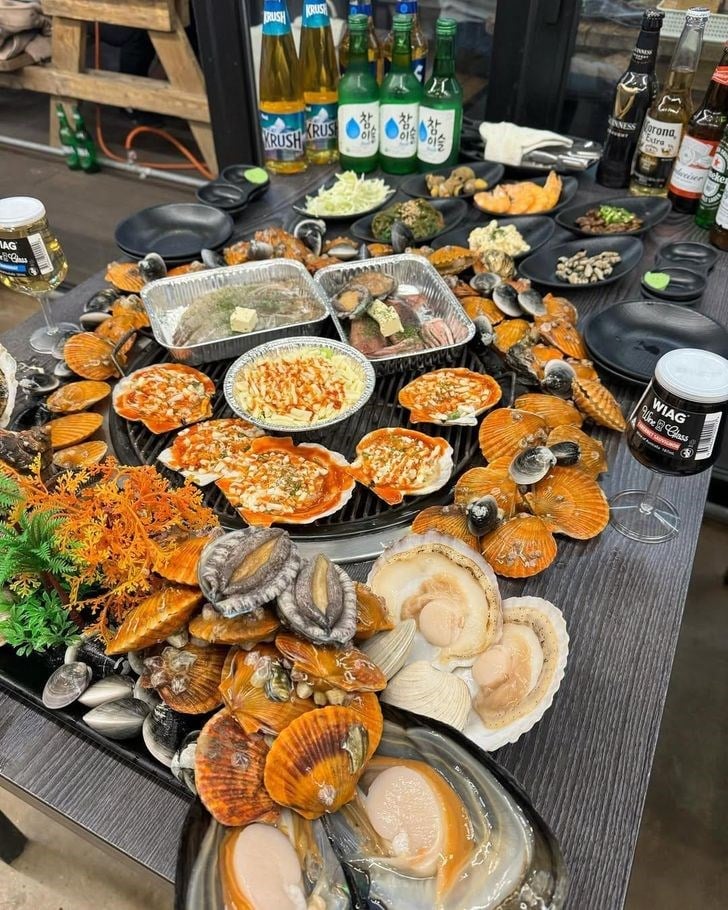
In coastal towns from Tongyeong and Geoje to Busan and Incheon, the smell of the sea permeates the winter air. Fishmongers drag buckets of seawater-soaked seafood to market before the sun has even risen.
Small barbecue restaurants nestled under the eaves began to light charcoal in the afternoon, letting the heat dissipate into the cold wind, inviting customers who happened to pass by. In the dim light, the sound of seashells popping mixed with the distant waves, creating a unique sound that only winter in coastal areas can produce.
For many Koreans, this is the most anticipated time of the year. Not only because winter seafood is tastier and fattier, but also because it marks a culinary ritual tied to memory and culture.
The cold season sea seems to distill the essence of the whole year, making the shellfish firm and the cold water fish strangely flavorful. And so every winter, people plan short trips to the sea, just to enjoy dishes that they believe “are best eaten in season”.
Oysters: The Soul of the Winter Sea
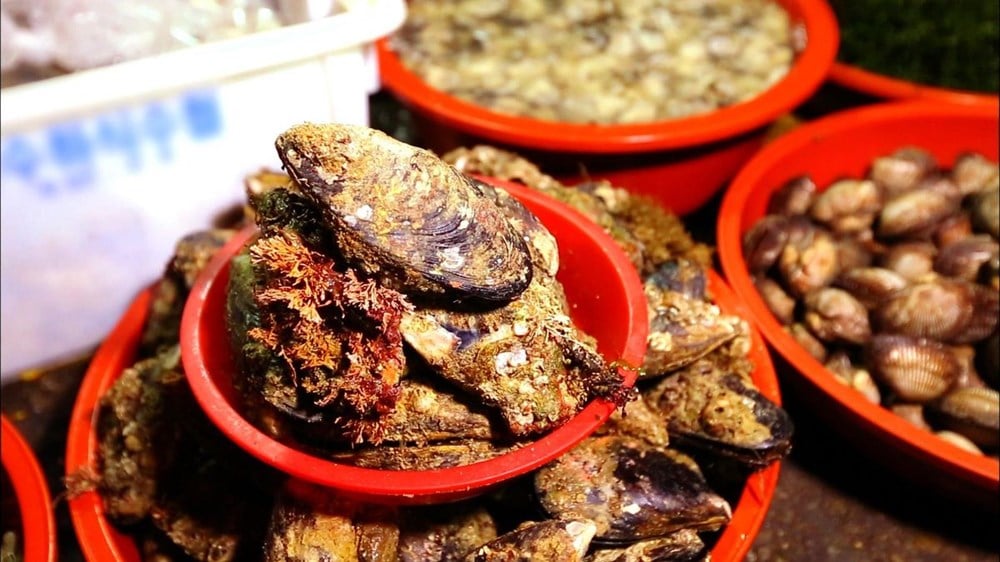
Of all the winter produce, oysters (“gul” in Korean) hold a special place. The oyster farms of Tongyeong and Geoje, usually quiet in the warmer months, become bustling in December. The cracked oysters are harvested continuously, carrying the salty scent of the sea and the freshness of winter.
In small shops around the port, visitors can see bowls of freshly shucked oysters, sparkling under the lights, placed next to bowls of bright red chojang.
Just a light dip, the sour and spicy taste of chili vinegar gradually dissolves into the fatty, sweet and slightly chewy taste of oysters, leaving a salty aftertaste that makes people close their eyes to enjoy.
Oysters in Korean cuisine are not limited to the traditional raw or grilled form. People also turn them into gul-jeon, a soft, fragrant, golden oyster pancake served in a hot pan; or gul-gukbap, a hot oyster rice soup, considered by coastal people as the most effective warming dish after a cold day.
A steaming bowl of soup, with plump oysters hidden under a bed of vegetables, is a dish that makes many visitors to Tongyeong in winter stay longer than intended.
Yellow grouper
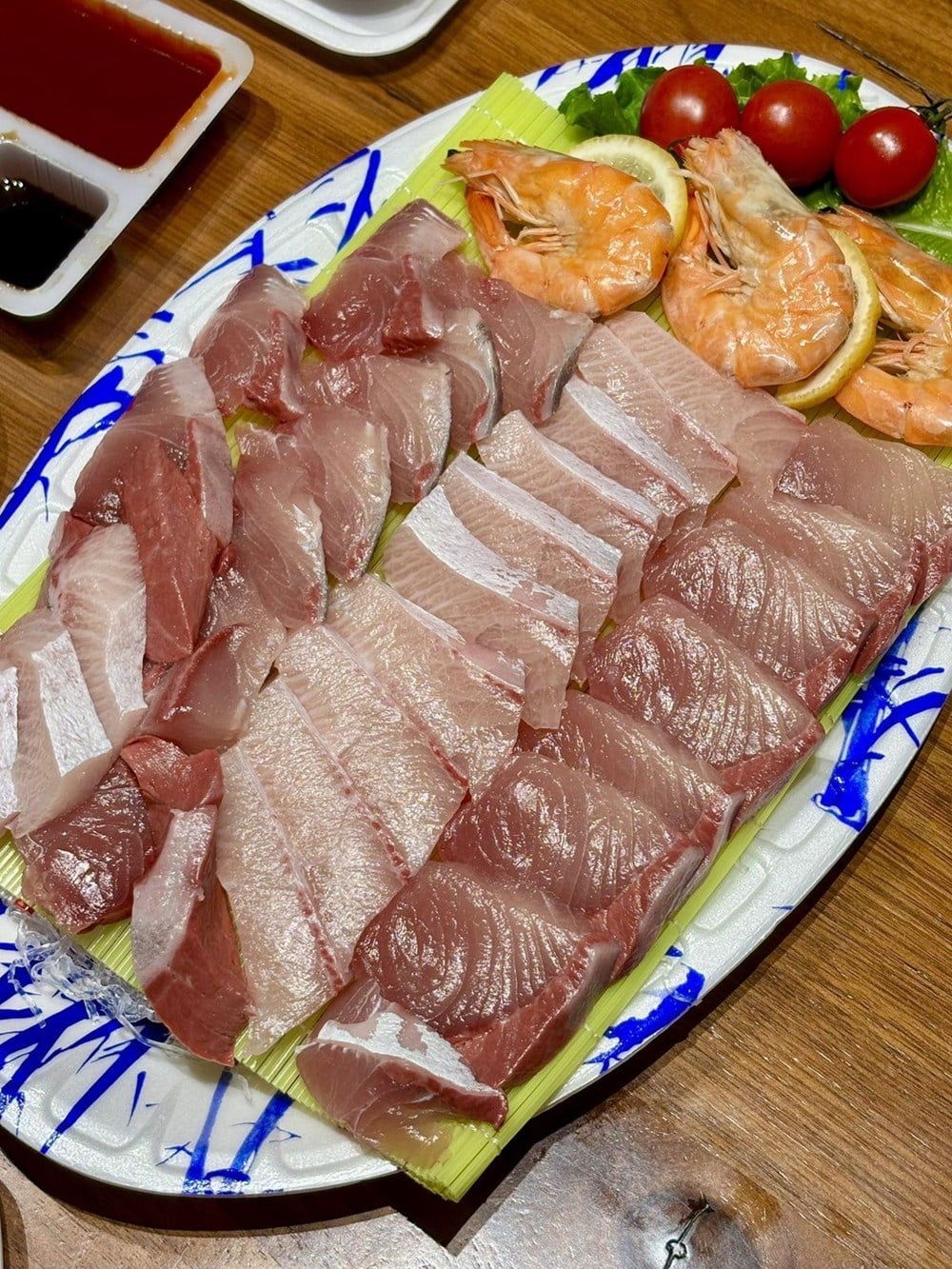
If oysters are a dish of warmth, then yellow grouper – daebangeo – is a symbol of anticipation. When the sea water turns cold, this fish reaches its fattest and firmest state. Fishermen often say that winter yellow grouper has a taste “so rich that it spreads as soon as it reaches the mouth.”
Therefore, every year in December, sashimi restaurants in Seoul, Busan and coastal areas are crowded with customers, many places are so crowded that reservations must be made a week in advance.
Enjoying yellowtail grouper sashimi is a delicate experience. People often choose the belly if they love the softness, or the neck if they like the sweet, firm taste. Each slice of fish is thinly sliced, placed on a cold plate with wasabi, shredded radish and grilled seaweed.
Diners eat not only with their taste buds but also with their senses: the coolness when the fish slices touch their lips, the richness that melts quickly on the tip of their tongue, then the slight spiciness of wasabi lifts the flavor a notch higher.
Young Koreans today have even turned eating yellow grouper into a “winter ritual”. On social media, everyone has their own “yellow grouper day”, and they share the joy as if sharing the start of a new season. This makes the traditional dish more lively, closer to the young urban generation.
Grilled Scallops: Warmth by the Fire in the Winter
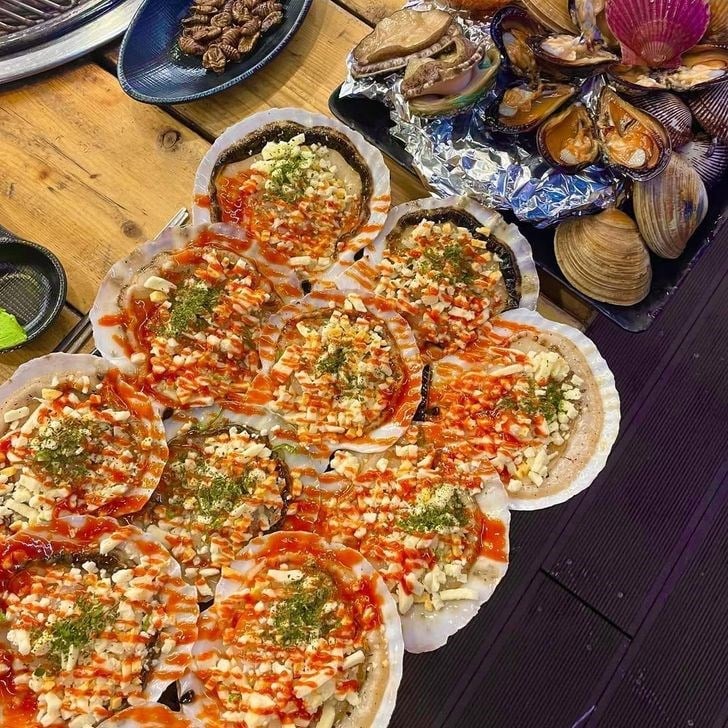
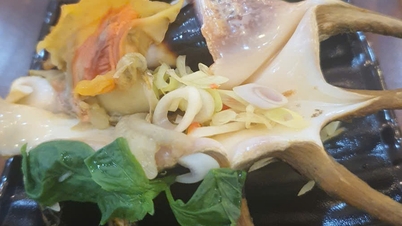
Winter is also the season for coastal charcoal grills, where scallops, clams and conch become the soul of reunion evenings.
In Incheon, Busan and Gangneung, beachside barbecues light up at night. Around simple wooden tables, diners wearing cotton gloves place each clam on the glowing charcoal grill.
As the shells begin to split gently, the aroma rises, mixed with charcoal smoke, sea breeze and the cold of the winter night, creating an experience that is both simple and full of warmth.
Some clams are already coated with minced garlic or cheese. As the heat melts the cheese, the broth inside the clams bubbles and the aroma rises, making it hard to resist.
This dish is not only delicious in taste, but also delicious in the feeling of gathering, sharing, and touching the fire on a cold day.
In Eulwang-ri, famous for its barbecue stalls along the coast, locals often say, “When customers start gathering around the charcoal stove, we know winter has truly arrived.”
Many families choose this place to have a full dinner, and couples come to enjoy the romantic atmosphere, grilling clams and chatting by the gentle firelight.
Besides the familiar dishes, many other types of seafood are also at their best when winter comes. Mussels are put into honghap-tang pots. piping hot; pufferfish becomes the highlight of clear soups and delicate sashimi.
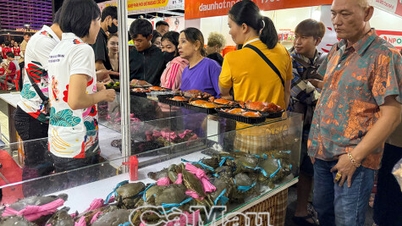
Small clams like blood cockles and Manila clams are abundant in the markets, turned into rich stews or mixed with steaming ramen noodles.
From the southern coast, fresh abalone is cut raw or cooked into porridge, bringing a deep sweetness very unique to the cold season.
Each coastal region has its own specialty, inviting visitors to stroll through winter markets and discover the subtle variations of flavors along Korea's coastline.
For many tourists, each Korean coastal region in the cold season is like a separate chapter in a culinary book. Each place has a different story, a different flavor and a different way of welcoming winter. From there, the winter culinary journey becomes a walk through culture, memory and life.
According to Korea Times
Source: https://baovanhoa.vn/du-lich/tai-sao-hai-san-mua-dong-o-han-quoc-lai-lam-say-long-du-khach-186385.html











































































Comment (0)