

Flexible response
On the night of March 13th, the Ministry of Industry and Trade announced the continued use of the Fuel Price Stabilization Fund (Stabilization Fund) to help stabilize and mitigate the impact of fuel prices on socio-economic activities. After utilizing the Stabilization Fund, the prices of commonly consumed fuel on the market remained unchanged, with RON 95 gasoline not exceeding 25,575 VND/liter; diesel not exceeding 27,025 VND/liter; and mazut not exceeding 18,661 VND/kg… Thus, after four consecutive large-scale expenditures from the Stabilization Fund, coupled with the reduction of preferential import tax rates on gasoline, fuels, and some petrochemical raw materials to 0% (previously, preferential import tax rates for these items ranged from 2-10%), we have temporarily curbed the rise in fuel prices, easing the pressure on domestic goods and the operations of businesses.

Vietnam is promoting the development of a self-reliant and resilient economy , increasing its ability to withstand global fluctuations. (In the photo : Production activities at the Duy Khanh precision engineering factory in the Ho Chi Minh City High-Tech Park.)
PHOTO: HOANG QUAN
This is not the first time Vietnam has responded to significant external economic fluctuations. In 2025, the US's retaliatory tariff policy also had a major impact on exports – one of the drivers of Vietnam's economic growth. However, the results for 2025 show Vietnam's GDP growth for the whole year exceeding 8%, among the highest in Asia and among the top growth rates globally . The country's GDP is estimated to reach $510 billion, and per capita income will surpass $5,000 for the first time, a 1.4-fold increase compared to 2020, placing Vietnam in the group of upper-middle-income countries… This result is thanks to Vietnam's outstanding efforts, with the consistent management of the Government in renewing traditional growth drivers and promoting new growth drivers such as the digital economy, green economy, and creative economy…
Associate Professor Tran Hoang Ngan, a member of the National Assembly and Chairman of the Development Breakthrough Advisory Council of Saigon University, noted that over the past five years, Vietnam has faced many major "shocks" from the world. These include the Covid-19 pandemic, which affected many aspects; the military conflict between Russia and Ukraine, which caused a temporary surge in global oil prices, impacting the global supply chain; and more recently, the US's retaliatory tariffs on several countries. However, overcoming these difficult challenges, especially the economic growth results at the end of 2025, demonstrates Vietnam's increasingly strong resilience. The high GDP growth rate last year also shows the Vietnamese economy's ability to withstand and adapt to increasing global uncertainty.

Vietnam is promoting the development of a self-reliant and resilient economy, increasing its ability to withstand global fluctuations. (In the photo: Production activities at the Duy Khanh precision engineering factory in the Ho Chi Minh City High-Tech Park.)
PHOTO: HOANG QUAN
Strengthening internal capabilities
Dr. Nguyen Van Dien, Head of the Department of Political Economy, Academy of Politics Region II, assessed: Vietnam's first stroke of luck in the context of this Middle East conflict is having a government that acted very quickly and decisively. As soon as the conflict escalated, Prime Minister Pham Minh Chinh directly telephoned and worked with leaders of leading oil-producing nations to seek long-term supply commitments. With its relationships and prestige, Vietnam also received signals of support from these countries. This is a positive development from the outside that helps us ensure the supply of raw materials and fuel for industries related to oil and gas.
Domestically, the entire political system is determined to make institutional breakthroughs, creating a truly more favorable business environment, supporting businesses, and listening to them more. For businesses, the most important thing now is not the issue of receiving injections of money, but rather having a favorable and transparent business environment. Therefore, the close cooperation of the state is a huge psychological boost, providing crucial moral support to businesses amidst increasing external shocks. These are effective "shock absorbers" to increase the resilience of the economy in the short term.

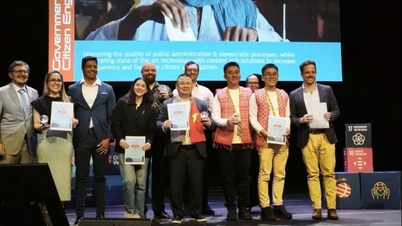
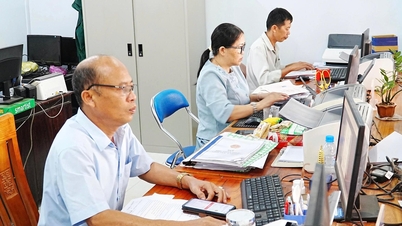
Continue to promote digital transformation, improve the efficiency of public administration services, and create a favorable investment and business environment.
PHOTO: NHAT THINH
However, in the context of an uncertain world, with increasing external impacts and growing influence, Vietnam's greatest need is to strengthen its internal capabilities and build sufficient "resilience" to ensure high growth targets. To build internal strength and self-reliance, the most important thing is to change the institutional framework, create a friendly business environment, and simplify administrative procedures so that businesses have ample space to innovate and fully utilize their capabilities. In addition, the government needs to accelerate the disbursement of public investment, considering this one of the most powerful levers for creating a ripple effect, driving strong growth in the industrial and construction sectors. Simultaneously, activating institutional sandboxes for the digital economy and circular economy will pave the way for Vietnam's sustainable development.
"Both the government and businesses must work together and adapt flexibly. Usually, in major shocks like the present, actions from the government and leaders at all levels will play a more important role. Based on that momentum and the spirit of spreading it, the business community will feel secure and strongly embrace digital transformation and green transformation; thereby overcoming supply shocks from outside," this economic expert emphasized.
Dr. Nguyen Quoc Viet, Head of the Macroeconomic Research Group at the University of Economics, Vietnam National University, Hanoi, analyzed: Vietnam is a highly open economy, therefore its GDP growth depends significantly on exports and cross-border flows such as tourism, sectors that will be directly impacted by external shocks. For example, if the current conflict in the Middle East continues, air transport will be affected, and international tourism will decline, which will be a significant obstacle. To minimize these negative impacts, Vietnam must strengthen its internal capacity, improve productivity, and increase the resilience of its economy. The Party's policies and resolutions in recent years to develop the private economy, promote science and technology, innovation, and build a strong state-owned economy and state-owned enterprises are aimed at building a self-reliant and self-sufficient economy for Vietnam.
Dr. Nguyen Quoc Viet emphasized that in the process of promoting economic development and building a self-reliant economy, short-term solutions are still needed to respond flexibly and effectively to unpredictable fluctuations. For example, with the high price of gasoline due to the conflict in the Middle East, coordination between ministries and agencies, as well as the involvement of the Government with various policies to minimize this impact, is necessary. Coordination between sectors needs to continue with a proactive mindset and early decision-making. Failure to respond promptly could lead to significant impacts, causing inflation and other macroeconomic factors that would harm the economy.

Building a self-reliant and resilient economy to better withstand global fluctuations. (In the photo: Production activities at Hoa Phat Group.)
PHOTO: DAO NGOC THACH
Favorable conditions for high growth.
Despite facing difficulties and challenges, experts assess that Vietnam still has advantages to achieve its set high growth targets. Dr. Nguyen Van Dien observes: similar to the Covid-19 pandemic, the 2008 economic crisis, and the current global fuel price fluctuations, Vietnam's economy can still stand firm and gain momentum thanks to the solid foundation of the agricultural sector. Even with conflicts, people still need to consume food, buy food, vegetables, and fruits… Most recently, Vietnam has exported fresh pomelos to Australia, becoming the sixth fruit officially allowed for import into this market. Previously, Vietnam imported all its fruit from Australia; now it has products exported in the opposite direction. If Vietnam can continue to leverage agriculture as a pillar of the economy through continued digital transformation, green transformation, and achieving Global Gap standards to expand markets and enhance the value of agricultural products, then it will maintain sustainable resilience in the face of strong global fluctuations.
Regarding the import-export pillar, Vietnam is currently an open economy, having signed 17 new-generation trade agreements, and is recognized by friends and partners worldwide as a reliable and highly reputable destination. This serves as a "highway" for Vietnam to export goods globally. The Politburo also plans to soon issue a separate resolution on foreign direct investment (FDI), advocating for attracting FDI into sectors that align with planning and strategies for each stage and period. A particularly advantageous factor is that Vietnam is currently in a phase of determined transformation, turning institutional bottlenecks into driving forces. By removing these bottlenecks, Vietnam will attract foreign experts and a high-quality workforce.
"However, this also shows that the biggest limitation remains the institutional framework and the people implementing it. If we cannot dismantle the mindset and procedures remain cumbersome, it will be very difficult to take advantage of the potential and opportunities. Political and government leaders are highly determined, but in reality, there is still a situation where the top is enthusiastic but the bottom is indifferent, preventing the lower levels of the system from truly moving. Therefore, besides clearly decentralizing power, each official must also change their mindset and proactively propose solutions for immediate implementation. In the state administrative management system, anyone who refuses to change or act should be replaced and set aside. Only with decisive action from top to bottom will the system truly move and produce results," Dr. Nguyen Van Dien pointed out.
Associate Professor Tran Hoang Ngan noted that, based on past experiences in overcoming challenges, Vietnam needs to continue leveraging its advantages, such as maintaining macroeconomic stability and controlling inflation. Besides short-term solutions to address immediate fluctuations, the long-term solution is to build a self-reliant, self-sufficient, and transformative economy; while continuing to remove infrastructure bottlenecks and improve public investment. If public investment disbursement this year reaches nearly 100% of the target, it will create a catalyst for private investment, efficient use of public land and assets, etc. Similarly, it is necessary to promote new drivers, especially in major cities and economic regions like Ho Chi Minh City and Hanoi, shifting from a labor-intensive economy to a knowledge-based economy. Another issue is to continue improving the efficiency of administrative services, reducing overlapping procedures, and providing maximum support to domestic and foreign investors.
"Since overcoming the shock of the Covid-19 pandemic, Vietnam has maintained macroeconomic stability and its economy has grown steadily. This demonstrates a flexible and effective response to the challenging changes in the global environment, instilling confidence in the general public, businesses, and foreign investors. This will be the greatest advantage for Vietnam to achieve its high growth target in the new era," Associate Professor Tran Hoang Ngan shared.
Businesses need to proactively restructure.
Vietnamese businesses are inherently adaptable, but they need to build a digital transformation roadmap and data systems, combined with government forecasting of markets, to be more proactive in responding to challenges. Simultaneously, they must identify new markets, services, and products that meet the current context. This is a crucial time to maximize innovation. Diversifying the economy, reducing dependence on a few key industries or export markets, and investing heavily in science and technology and innovation are the only ways to improve labor productivity, increase domestic value, and enhance national competitiveness in the long term.
Dr. Nguyen Van Dien , Regional Political Academy II
Upgrading Vietnamese businesses
The government has been building a self-reliant and efficient economy, supporting the development of domestic businesses. Even the establishment of an international financial center in Vietnam is aimed at attracting strategic investors and promoting sustainable capital flows to help businesses, and the economy as a whole, reduce their over-reliance on bank credit or the stock market. Similarly, attracting FDI focuses on key production stages rather than just assembly; encouraging domestic businesses to participate deeply in global supply chains, including linking with foreign businesses right in Vietnam; thereby creating sustainable production chains that are more resistant to change, regardless of global fluctuations. To achieve this goal, in addition to macroeconomic policies, the government needs to implement policies that focus on upgrading businesses in their operations. Financial and credit support policies, channeling capital into production and business development, as well as fiscal policies focused on activating businesses to innovate technology and promote the development of supporting industries, are crucial for deeper participation in global supply chains.
Dr. Nguyen Quoc Viet, Vietnam National University, Hanoi
Source: https://thanhnien.vn/tang-suc-chong-chiu-cho-nen-kinh-te-185260314192522019.htm















































































Comment (0)