

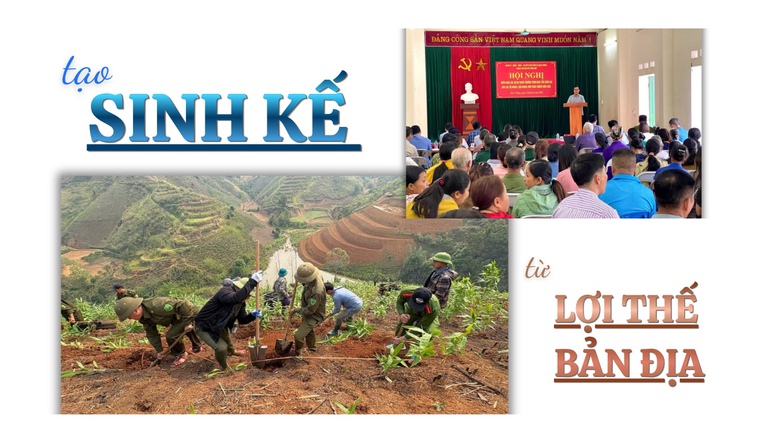
Expanding coffee plantations by approximately 450 hectares.
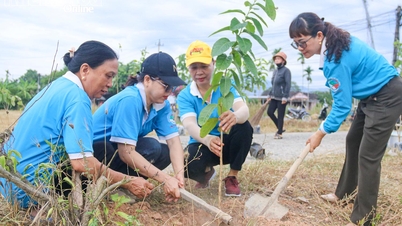
Visiting Xa Dung commune (Dien Bien province) at this time, a bustling atmosphere of labor prevails across the hillsides. More than 200 officials, teachers, armed forces personnel, and political organizations are simultaneously deployed to assist people in digging holes for planting coffee and macadamia nuts. Working groups are assigned to each village and household, prioritizing support for poor households and those lacking labor.
According to the plan for 2026, the commune aims to plant approximately 16.7 hectares of macadamia trees (over 2,300 trees); expand coffee cultivation by about 450 hectares while maintaining the existing area; and develop an additional 15 hectares of passion fruit.
According to Mr. Pham Duc Minh, Secretary of the Party Committee and Chairman of the People's Council of Xa Dung commune, coffee and macadamia nuts are suitable crops for the local climate and soil conditions, and also bring much higher economic value compared to traditional farming.
"Despite the hilly terrain, hard soil, and hot weather, the commune still organized a mass mobilization to dig holes for planting trees to ensure timely progress, while also demonstrating the solidarity and determination of all the people in economic development," Mr. Minh said.


Over 200 officials, teachers, armed forces personnel, and political organizations from Bach Thong commune ( Thai Nguyen province ) joined forces to assist local people in digging holes for planting coffee and macadamia nuts.
Shan Tuyet tea – a poverty alleviation crop in border areas.
Having just finished digging the first furrows to prepare for planting new tea seedlings, Mr. Mua A Tang, from Pha Don village, Long Sap commune (Son La province), said that his family used to mainly work on hillside farms, with unstable income, but seeing many households in the commune growing tea and earning a steady monthly income, they decided to switch.
"Thanks to the support from the commune in providing Shan Tuyet tea seedlings and the dedicated guidance from technical staff, I feel very reassured. I believe that in just a few years, the tea plants will thrive and bring in a stable income," Mr. Tang shared.
Long Sap is a border commune with 22 villages and over 4,000 households belonging to five ethnic groups. It is gradually transforming barren hills into lush green tea plantations. Currently, the commune cultivates approximately 170 hectares of tea, of which more than 100 hectares are yielding stable harvests with an average yield of over 7 tons of fresh tea leaves per hectare per year. Tea cultivation is becoming a "bridge" helping many households escape poverty.
Chairman of the People's Committee of Tran Xuan Thanh commune emphasized: "We expect that expanding the Shan Tuyet tea plantation by an additional 40 hectares in 2026 will create a new economic turning point for the locality. This is also an important solution to stabilize the population in the border area. The commune government is actively encouraging people to register for new planting, while closely monitoring the quality of seedlings and technical procedures to ensure long-term effectiveness."

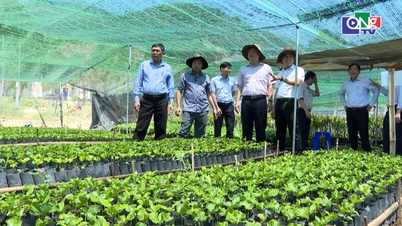
Tea plants have become a 'bridge' helping many households in Long Sap commune (Son La province) overcome difficulties and gradually escape poverty.
Aiming for clean, high-quality agricultural products.
The combination of hybrid crop farming and livestock breeding is the chosen approach in Bach Thong commune (Thai Nguyen province).
Recently, the People's Committee of the commune organized a conference to implement projects under the National Target Program for poor, near-poor, and newly-escaped-from-poverty households. The models include: cucumber cultivation with a stable guaranteed market; pink banana cultivation that can be harvested continuously for three years; citrus fruit cultivation such as tangerines and oranges utilizing land with geographical indication certification; commercial breeding of green-necked Muscovy ducks based on the advantages of the Cau River; and commercial chicken farming following biosafety practices.
According to Ms. Ma Thi Man, Secretary of the Party Committee and Chairwoman of the People's Council of Bach Thong commune, the models promise to create clean, high-quality agricultural products, helping people have stable livelihoods and improve their living standards. In particular, the projects all aim for easy implementation, moderate investment capital, quick turnover, and suitability to the production conditions of people in mountainous areas.
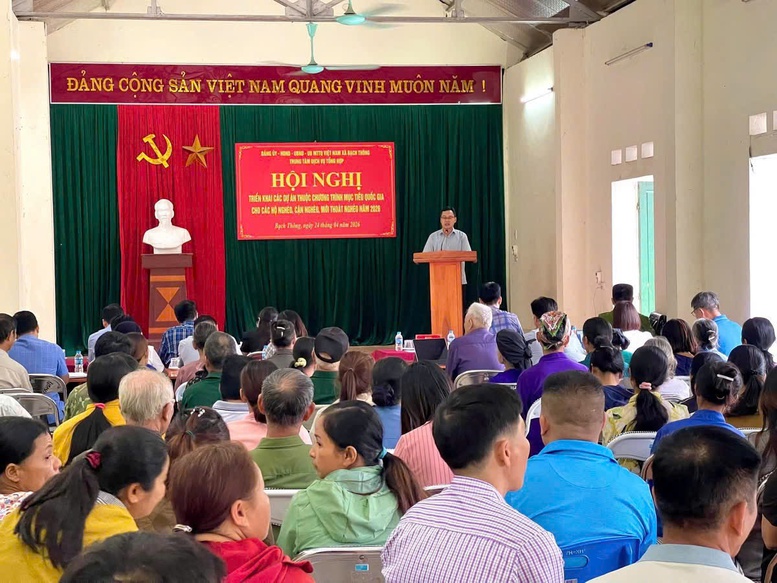


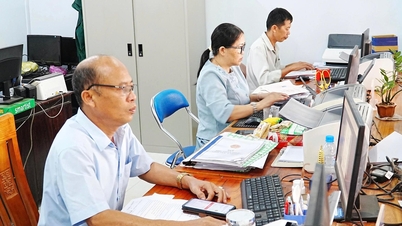
The People's Committee of Bach Thong commune (Thai Nguyen province) organized a conference to implement projects under the National Target Program for poor, near-poor, and newly-escaped-from-poverty households.
The strong growth potential of a well-organized commercial agricultural economy.

Mr. Hoang Xuan Luong, former Deputy Minister and Vice Chairman of the Committee for Ethnic Minorities (now the Ministry of Ethnic Minorities and Religions)
Looking at the positive changes in many mountainous localities today, Mr. Hoang Xuan Luong, former Deputy Minister and Vice Chairman of the Committee for Ethnic Minorities (now the Ministry of Ethnic Minorities and Religion), believes that this is clear evidence of the correctness and consistency of the Party and State's ethnic policy over the past decades.
He recounted the story of the Central Highlands people in Ia Blăng, Chư Sê area (formerly Gia Lai province). In 2015, when he arrived, the people mainly lived by traditional slash-and-burn agriculture, with over 70% of households living in poverty. But after 10 years, the village's appearance has completely changed.
"When I return in 2025, I won't recognize Ia Blang anymore. The people have developed pepper, coffee, and rubber cultivation; many households own 3 to 4 hectares. The poverty rate in Ia Blang is now below 2%, showing the strong growth of a well-organized commercial agricultural economy. Currently, from Muong Long and Ky Son (Nghe An) to many highland villages in the Northwest, more and more effective economic models based on key crops and market linkages are emerging," Mr. Hoang Xuan Luong shared.
In the coming period, under the direction of the Ministry of Ethnic Minorities and Religion, the policy for developing ethnic minority areas will shift strongly from a "support" mindset to a "self-driven" development approach, placing the people at the center.
Localities are also being guided to maximize the unique advantages of each region, promoting sustainable livelihoods based on forestry, medicinal plants, specialty agricultural products, OCOP products, community tourism, and preferential credit linked to market demand. Simultaneously, the State will continue to prioritize mechanisms and resources for particularly disadvantaged villages and communes to create a foundation for long-term development and narrow the gap between mountainous and lowland areas.
According to Report No. 812/BC-BDTTG dated March 31, 2026, from the Ministry of Ethnic Minorities and Religions, during the 2021-2025 period, the economy of ethnic minority and mountainous regions maintained relatively high growth, with many areas achieving higher growth than the national average: the Northwest region over 8%/year, the Central Highlands approximately 7.5%/year, and the Southwest region over 7%/year (compared to the national GDP growth rate of 7.09% in 2024). Poverty reduction efforts achieved outstanding results; the multidimensional poverty rate decreased by an average of 1.03%/year, and in ethnic minority regions it decreased by 3.4%/year; by 2024, the poverty and near-poverty rate was 22.36%, and average income reached 43.4 million VND/person/year, a 3.1-fold increase compared to 2020.
Son Hao
Source: https://baochinhphu.vn/tao-sinh-ke-tu-loi-the-ban-dia-102260513191727046.htm



























































































Comment (0)