


There are people who pass through time to become history. But there are also people who transcend history to become emotions, beliefs, and guiding lights for an entire nation. President Ho Chi Minh was one such person.
Every May 19th, the hearts of Vietnamese people are filled with very special emotions. It's not just respect for a brilliant leader and a cultural icon, but also deep affection for a man who dedicated his life to his country and people.
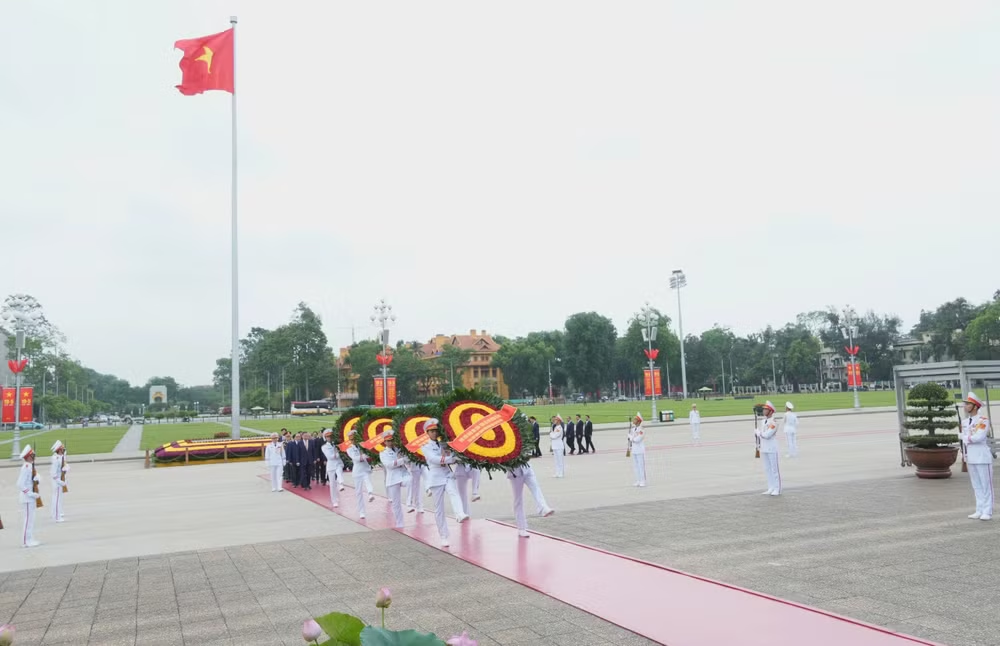
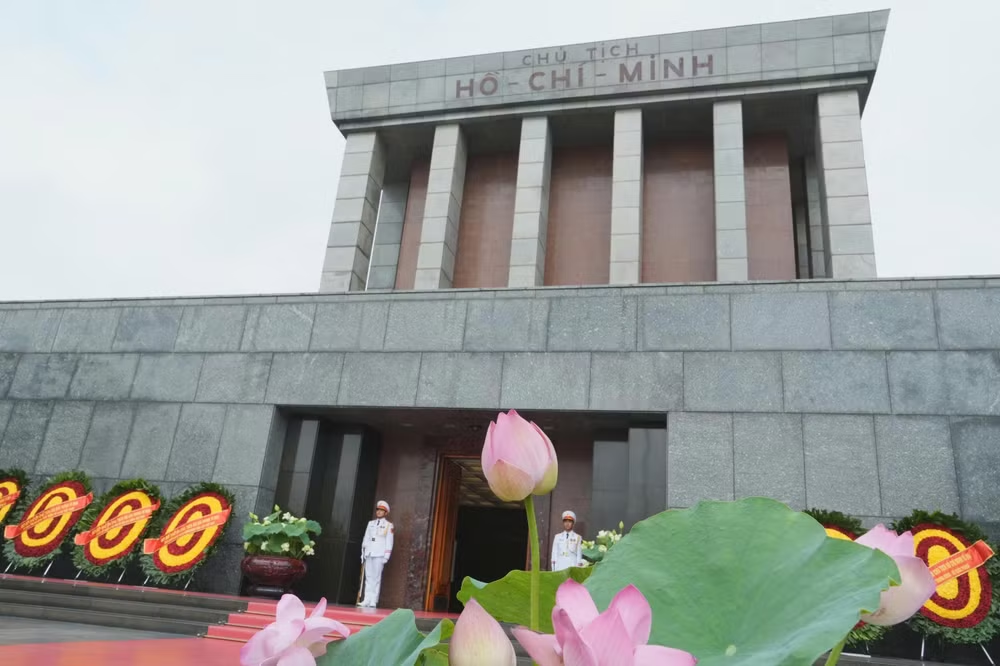
When Uncle Ho passed away in the autumn of 1969, the entire nation was plunged into tears. Millions wept as if they had lost a close relative. And even today, decades later, people from all over the country still quietly flock to the Ho Chi Minh Mausoleum to pay their respects to Uncle Ho.
According to data from the Ho Chi Minh Mausoleum Command, nearly 70 million visitors have come to the mausoleum to pay their respects to President Ho Chi Minh, including nearly 11 million international visitors from almost all countries and territories around the world . And today, May 19th, in just the morning, nearly 7,000 people, including nearly 1,500 foreign friends, made a pilgrimage to the mausoleum. In the sacred space of Ba Dinh Square, at exactly 6:30 AM, the sound of the national anthem and the red flag with a yellow star fluttering before the Ho Chi Minh Mausoleum has become a sacred image, deeply ingrained in the minds of many generations of Vietnamese people.
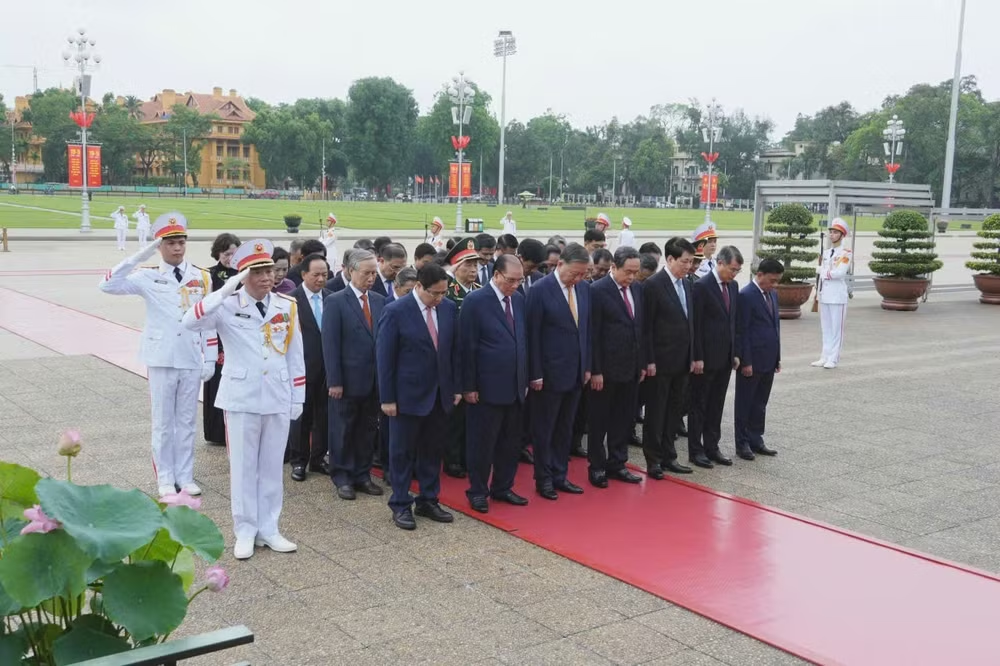
Slow footsteps, tearful eyes, vibrant bouquets of flowers… all imbued with boundless gratitude and remembrance. His name has entered mothers' lullabies, the pages of childhood books, and the heartfelt songs of generations: "Oh people of Vietnam, we are forever grateful to Uncle Ho," or "Day after day, people walk in remembrance…". This is not simply music; it is the voice of the Vietnamese people's hearts for Him.
Born into a country under foreign occupation and enslavement, the young Nguyen Tat Thanh always carried in his heart a burning question: What is the path to saving the people and the nation? At the beginning of the 20th century, he decided to leave to find a way to save the country with nothing but his bare hands and a burning desire for his people.
On June 5, 1911, from Nha Rong Port, that patriotic young man boarded the Admiral Latouche-Tréville ship, beginning a 30-year journey across the globe. It was an incredibly arduous journey. He worked as a ship's kitchen assistant, shoveled snow, stoked furnaces, swept floors, and did all kinds of jobs to survive and carry out his revolutionary activities. Those years were not only a difficult struggle for survival for someone far from home, but also a journey to find a path to national liberation.
Amidst the splendor of Paris, the foggy atmosphere of London, or the distant lands of America, his heart never ceased to yearn for his homeland. He felt the pain of his compatriots who had lost their country. He understood the plight of oppressed nations. And it was from this very reality that he found the light of Marxism-Leninism, the path of proletarian revolution – the correct path to national salvation for the Vietnamese people.
In 1930, the Communist Party of Vietnam was founded under the leadership of President Ho Chi Minh. This was a major turning point in the nation's history. From then on, the Vietnamese revolution had a correct line and a pioneering organization to guide it. However, the revolutionary path was still full of bloodshed and sacrifice.
He was repeatedly hunted, arrested, and imprisoned. His time in the prisons of Chiang Kai-shek's regime was a series of agonizing hardships. Chains, hunger, cold, and disease could not break the will of this communist fighter. It was in these circumstances that he wrote the immortal "Prison Diary," with the steely spirit and great soul of a great revolutionary. Even in the darkness of prison, he still looked towards the light, towards the day of national independence.
In the spring of 1941, after 30 years away from his homeland, he returned to Pac Bo. The image of Uncle Ho living in a cave, eating "corn porridge and bamboo shoots," and working by the Lenin stream became a sacred symbol of the spirit of sacrifice for the country and its people. His life was movingly simple, but his thoughts and aspirations were immeasurably great.
Then the historic autumn of 1945 arrived. At the historic Ba Dinh Square, President Ho Chi Minh, on behalf of the Provisional Government, read the "Declaration of Independence," giving birth to the Democratic Republic of Vietnam. At that moment, millions of Vietnamese hearts wept. After 80 years of slavery, our nation had regained its right to life, its freedom, and its humanity.
But independence did not last long before the country entered a long and arduous period of resistance. During those years of fierce bombing and shelling, the image of President Ho Chi Minh was always a great source of spiritual encouragement for the entire nation. From the Viet Bac war zone to the Southern plains, from the smoke-filled Truong Son Mountains to the imperialist prisons, everywhere the people and soldiers looked to President Ho Chi Minh with unwavering faith.
Uncle Ho loved the people with boundless affection. He felt the pain of every citizen who lost their homes, their fields, and their loved ones because of the war. He had a special affection for children, mothers, soldiers, the elderly, and the poor. Throughout his life, Uncle Ho never thought of himself. He lived a remarkably simple and modest life. His humble stilt house, his faded khaki clothes, and his simple rubber sandals have become the most beautiful symbols of a leader who dedicated his life to the people.
What makes the Vietnamese people love and respect Uncle Ho is not only his great stature, but also his lofty and approachable personality. He was a leader, but also like a father or grandfather in every Vietnamese family. His warm voice, gentle smile, and simple demeanor have become indelible in the nation's memory as a sacred and unforgettable part of it.
Because he dedicated his entire life to the nation. He passed away so that the country could be reborn. He endured all hardships so that the people could be happy. His whole life is the most beautiful epic of patriotism, self-sacrifice, and the aspiration for independence and freedom.
Today, the country is at peace, developing and innovating day by day. But every step forward of the nation is deeply marked by the thoughts and legacy of President Ho Chi Minh. From the task of building the country, developing the economy, protecting maritime sovereignty to caring for the people's lives, all carry the aspiration that he always hoped for: "Everyone has food to eat, clothes to wear, and access to education."
On the anniversary of President Ho Chi Minh's birth, every Vietnamese person feels even more deeply the value of independence and freedom; and understands more profoundly the responsibility to preserve the achievements of the revolution that countless generations have sacrificed to obtain. Studying and following Ho Chi Minh's thoughts, ethics, and style today is not just a slogan, but a continuation of the path that he chose for the nation.
Amidst the changes of the times, the name of Ho Chi Minh remains a guiding banner, a source of faith and spiritual strength for the Vietnamese people. And every May, in the solemn and heartfelt melodies, in the sweet fragrance of lotus flowers of our homeland, millions of Vietnamese people respectfully call out his name with all their love and profound gratitude: Loving Uncle Ho makes our hearts purer.
Source: https://nhandan.vn/thang-5-biet-on-tu-hao-va-nho-thuong-vo-han-post963226.html









































































Comment (0)