

However, in many traditional markets and individual businesses, the habit of paying with cash is still creating worrying data gaps. Transactions without a trace not only put buyers at a disadvantage legally when disputes arise, but also indirectly facilitate violations of regulations regarding invoices and tax obligations. For digital payments to truly spread, a strong synergy is needed, from secure technological infrastructure to a profound shift in individual awareness, making transparency a core value for sustainable development.
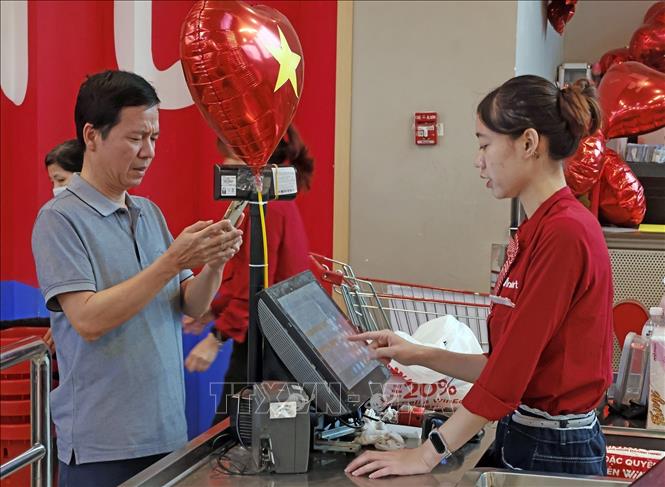
Reporters from the Vietnam News Agency (VNA) have produced a series of articles reflecting the shift from traditional consumption habits to a digital mindset; while also analyzing the barriers, practical benefits, and responsibilities of stakeholders in building an honest business environment through the lens of cashless payments.
Lesson 1: Consumer Protection Layer
In everyday transactions, consumers can pay with cash, bank transfers, e-wallets, or QR codes. Each method takes only a few seconds to complete, but creates different levels of transparency for the transaction. When paying via bank or electronic platform, transaction information is recorded in the payment system. Conversely, when paying with cash without a receipt or documentation, the transaction has almost no data for verification if a dispute arises.
According to the law, citizens have the right to choose their payment method, either cash or bank transfer. However, this choice also has different impacts on the rights of consumers. When transactions are conducted through banking systems or electronic payment platforms, each payment leaves a data trace. Conversely, when paying in cash without a receipt or documentation, the transaction leaves almost no trace. In the event of a dispute, it is very difficult for the buyer to prove that the purchase took place.
According to the Vietnam Consumer Protection Association, in many complaint cases, resolution is difficult because consumers do not have invoices or payment data for verification. When transactions are not recorded in the banking system and there are no sales documents, it is very difficult for authorities to determine the seller's responsibility.
Notably, according to current regulations, sellers of goods and services are responsible for issuing invoices and receipts to buyers as required; failure to issue invoices and receipts as required constitutes a violation of legal policies and, in some cases, may lead to legal violations. However, in practice, many cash transactions are still circumventing this regulation, leaving consumer rights in limbo.
Ms. Nguyen Viet Ha, an office worker in Hanoi , said that she used to pay cash when buying goods at small shops. Only after encountering a problem with an electronic product purchased from a private store did she realize the risks of not having transaction receipts.
"When I went back to complain, the store said they had no evidence that I had made a purchase there. That's when I realized that if I had made a bank transfer, at least there would be a transaction history in my bank," Ms. Ha recounted.
In sales transactions, proof of payment is crucial in case of disputes. If payment is made via bank transfer or QR code, information about the time, amount, and recipient account is stored in the bank's or payment intermediary's system.
Conversely, when paying in cash and without a receipt or documentation, the transaction leaves virtually no trace. When disputes arise, it is very difficult for the buyer to prove that the transaction existed. In many cases, consumers are put at a disadvantage in the legal system.
Mr. Bui Hong Nguyen, a customer in Ho Chi Minh City, said he habitually pays by bank transfer or QR code scanning for most of his shopping transactions.
"After payment, the phone immediately displays the amount and time. If verification is needed, simply check the transaction history," Mr. Nguyen said.
The increase in electronic payments reflects the rapid expansion of digital payment infrastructure in Vietnam. According to the State Bank of Vietnam, in the first three months of 2026, the number of cashless payment transactions increased by nearly 38% compared to the same period last year, while the transaction value increased by over 14%. In particular, transactions via the Internet and mobile phones account for an increasingly large proportion of total payment transactions, indicating that electronic payments are becoming a common method in economic life.
In addition, the banking system has also implemented many risk control tools in transactions. One of the tools currently being applied is the Simultaneous Payment Information Management, Monitoring and Fraud Prevention System (SIMO).
This system allows credit institutions to report suspicious accounts and share alerts throughout the banking system. When an unusual transaction is detected, the bank can send an alert to the customer before the transaction is completed.
According to reports from units using the SIMO system, as of April 12, 2026, more than 3.7 million customers had received transaction risk alerts. Of these, more than 1.2 million customers temporarily suspended or canceled transactions after receiving the alert, with the total value of related transactions amounting to approximately VND 4.17 trillion.
According to Mr. Dinh Trong Thinh, a banking and finance expert, every electronic transaction creates a data footprint within the financial system.
According to Mr. Thinh, when making payments through banks or electronic platforms, transaction information is fully recorded, including the time, amount, and recipient account. This data helps users cross-check when necessary and also assists the financial system in detecting risks.
"In the digital economy, transaction data is a layer of protection for consumers and the financial system. Bank transactions allow the system to track and manage risks, something that cash transactions cannot do," Mr. Thinh stated.
However, for electronic payment transactions to truly become a tool for protecting consumer rights, the role of the banking system is crucial. Banks not only provide payment infrastructure but also must ensure the security of funds through security measures such as biometric authentication, transaction risk alert systems, and fraud prevention data sharing throughout the system.
Expanding digital payment services, reducing transaction costs, and enhancing the security of payment systems are considered crucial factors in helping people feel confident using modern payment methods.
With secure banking infrastructure and increasingly reasonable transaction costs, paying through bank accounts is no longer a complicated option but a practical benefit for consumers.
From another perspective, choosing bank payments is not only a sign of civilized consumption but also supports the governance and transparency of taxpayers. Each transfer or QR code scan must be recorded in the system. This means the seller must acknowledge the existence of the transaction, thereby indirectly encouraging more transparent business practices and greater awareness of fulfilling obligations to the state budget.
The shift in consumer payment behavior is therefore creating positive pressure on the market. As buyers increasingly prioritize transactions with a data trace, businesses that only accept cash may be perceived as lacking transparency or security in transactions.
In this context, refusing a transfer is not simply a matter of choosing a payment method. For many customers, it's also a sign that risk may be shifting from the seller to the buyer. And in a competitive market, when customer trust is questioned, they are perfectly capable of choosing a more transparent and secure store.
In the digital economy, transaction transparency is not only a regulatory requirement but also directly linked to the rights of buyers. Each electronic transaction is essentially a 'digital receipt' establishing the transaction's existence before the law. This forms the basis for protecting customer trust and is also an essential requirement for building a transparent and sustainable market.
Lesson 2: Data Gaps
Source: https://baotintuc.vn/kinh-te/thanh-toan-so-minh-bach-thue-bai-1-20260429170646736.htm






































































































Comment (0)