

Lesson 3: Refusing a transfer can do more harm than good.

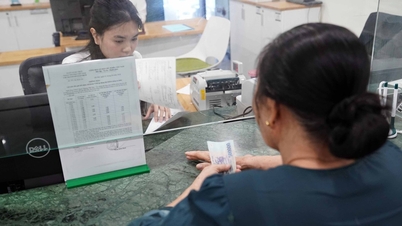
Currently, a segment of vendors are actively refusing bank transfers and requesting cash payments. Based on the government's policy on cashless payments, this phenomenon is creating significant difficulties in the liquidity of the banking system and fostering a less transparent business environment. What is the representative's opinion on this matter?
First and foremost, it must be affirmed that the policy of developing cashless payments is a major and consistent direction of the Party and the State aimed at modernizing the economy , enhancing transparency, and improving management efficiency. In this context, the fact that some vendors proactively refuse to accept bank transfers and require cash payments is a manifestation that goes against the general trend. While this phenomenon may outwardly stem from concerns about tax obligations or worries about the disclosure of private transactions or business secrets, it fundamentally creates significant negative consequences.
Firstly, it disrupts the flow of liquidity in the financial and banking system, preventing money from circulating through official channels, thereby reducing the effectiveness of monetary policy management.
Secondly, maintaining cash transactions undermines the transparency of the business environment, hindering state management, especially in managing the origin of goods, combating budget revenue losses, and preventing trade fraud. From a broader perspective, this is not just a matter of payment technology but also a matter of market discipline. A modern economy cannot operate efficiently if there are large "grey areas" in transactions. Therefore, a comprehensive approach is needed: strengthening communication to change perceptions, improving the legal framework, and even considering appropriate sanctions for deliberately avoiding cashless payments in sectors where implementation is already feasible.
There is currently a misconception that promoting cashless payments is solely the responsibility of the Tax Department, while the Tax Department can only effectively manage taxes when other "links" such as banking infrastructure are secure and goods are transparent from the source. From a supervisory perspective, how do representatives view the need to redefine the leading roles and responsibilities of relevant ministries and agencies so that the cashless payment scheme is not automatically considered the responsibility of the Tax Department?
To realize this goal, it is crucial to avoid a simplistic approach where inter-agency tasks are "pushed" to a single agency, in this case, the Tax Department. Cashless payment is essentially an ecosystem, not a standalone tool. It requires the synchronized operation of many "links": a secure and convenient banking and financial infrastructure; a secure technology system; a transparent goods market; and a sufficiently clear legal framework to build trust between buyers and sellers.
If we place the responsibility solely on the tax authorities, that's a superficial approach that doesn't address the root cause.
From a supervisory perspective, I believe it's necessary to clearly redefine the leading role, with the Government coordinating the overall process. The State Bank of Vietnam would play a central role in payment infrastructure; the Ministry of Industry and Trade and market management agencies would be responsible for product transparency; and the tax authorities would be one link in the management chain, not the sole point of contact. Only when responsibilities are clearly assigned and an effective inter-agency coordination mechanism is in place will the cashless payment promotion scheme truly become substantive, avoiding mere formality or being misinterpreted as the sole responsibility of a single sector.
For businesses that still prefer cash transactions to avoid transparency, how do you view the actual long-term losses they face? Will this "refusal to accept bank transfers" cause them to lose their transaction history, hindering their access to bank loans, and putting them at risk of loss or theft of assets?
While some businesses may still prefer cash transactions to avoid transparency, this could offer short-term benefits, but in the long term, it poses significant risks and even limits their own growth opportunities. First, by refusing bank transfers, these businesses are essentially depriving themselves of a crucial asset in the digital economy: their transaction history. Meanwhile, the banking system increasingly relies on data for credit assessment. Without a clear cash flow and transparent revenue records, access to formal loans is severely limited. This makes it difficult for them to expand production and business, and they risk becoming trapped in small-scale operations.
Secondly, holding large amounts of cash also increases the risk of financial loss: from loss and theft to difficulty controlling cash flow. Meanwhile, today's electronic payment methods are not only convenient but also more secure if used correctly.
More importantly, in the trend of economic digitalization, consumers increasingly prioritize convenience and transparency. Businesses that fail to adapt will gradually lose their competitive advantage, and may even be eliminated from the market. Therefore, instead of viewing cashless payments as a "risk," businesses should see this as an opportunity to upgrade their management methods, expand their market, and integrate sustainably into the modern economic ecosystem.
Thank you, delegates!
Final lesson: Shaping digital payment behavior
Source: https://baotintuc.vn/kinh-te/thanh-toan-so-minh-bach-thue-bai-3-20260429171310476.htm































































































Comment (0)