

In Decision No. 1520/QD-TTg of the Prime Minister approving the Livestock Development Strategy for the period 2021 - 2030, with a vision to 2045, dairy cows are identified as a key industry to proactively source raw materials for the dairy processing industry, improve the health and nutrition of the community. However, in recent years, the picture of the Vietnamese dairy cow industry has shown many "dark colors" when the total herd has grown slowly, even declining sharply in many traditional localities.

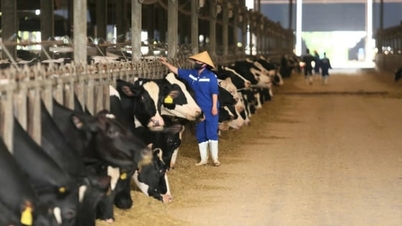
Mr. Nguyen Xuan Duong, Chairman of the Vietnam Animal Husbandry Association, said that after a period of strong growth, the total dairy herd in the country is now only increasing by about 0.4% per year. Photo: Duy Hoc.
Mr. Nguyen Xuan Duong, Chairman of the Vietnam Livestock Association, said that after a period of strong growth, the total dairy herd in the country is now only increasing by about 0.4% per year. Worryingly, many former dairy cow "capitals" such as Ho Chi Minh City and Ba Vi ( Hanoi ) have seen their total herd decline by over 60%.
“The overall picture of Vietnam’s dairy industry is slowing down significantly, with both the number of cows and milk production decreasing. At this rate, it will be difficult for us to achieve the goals of the livestock development strategy in general and the dairy industry strategy in particular that the Government has approved,” Mr. Duong frankly stated.
The Chairman of the Vietnam Animal Husbandry Association analyzed that the number of cows in the farm and industrial farming areas still tends to increase, but this increase is not enough to offset the rapid decline of the household farming area - which used to be the "backbone" of the dairy industry.
In Ho Chi Minh City alone, where there used to be 119,000 dairy cows, accounting for more than 60% of the country’s total herd, the number has now decreased by 70%. Other traditional dairy farming areas such as Ba Vi, Moc Chau, Lam Dong, and Vinh Tuong have also recorded a significant decline.
This shows that the imbalance between the two livestock sectors is becoming increasingly evident. As households reduce their scale and withdraw from the profession, while industrial farms cannot develop fast enough and widely enough, the gap in domestic raw milk sources is becoming increasingly apparent.
According to Mr. Duong, the decline in dairy cow herds has both objective and subjective causes. The biggest objective cause is the disruption of the global supply chain after the Covid-19 pandemic.
“When the epidemic occurred, the animal feed supply chain was disrupted, and world feed prices increased. Vietnam is a major raw material importer, so domestic livestock production costs were pushed up sharply,” Mr. Duong analyzed.
Not only that, when the supply chain is gradually reconnected, the amount of milk in stock from major milk-producing countries is still very large, causing imported milk and dairy products to Vietnam to increase sharply, creating direct competitive pressure with domestic fresh milk.
Besides objective factors, subjective causes are the decisive factors and there are currently at least 3 major problems.
First, the inadequacy in milk market management. “The Vietnamese market has never been as chaotic as it has been recently. Even Milo is called milk, even bath soap has the word milk attached to it. Even experts have difficulty distinguishing, let alone consumers,” said Mr. Duong.
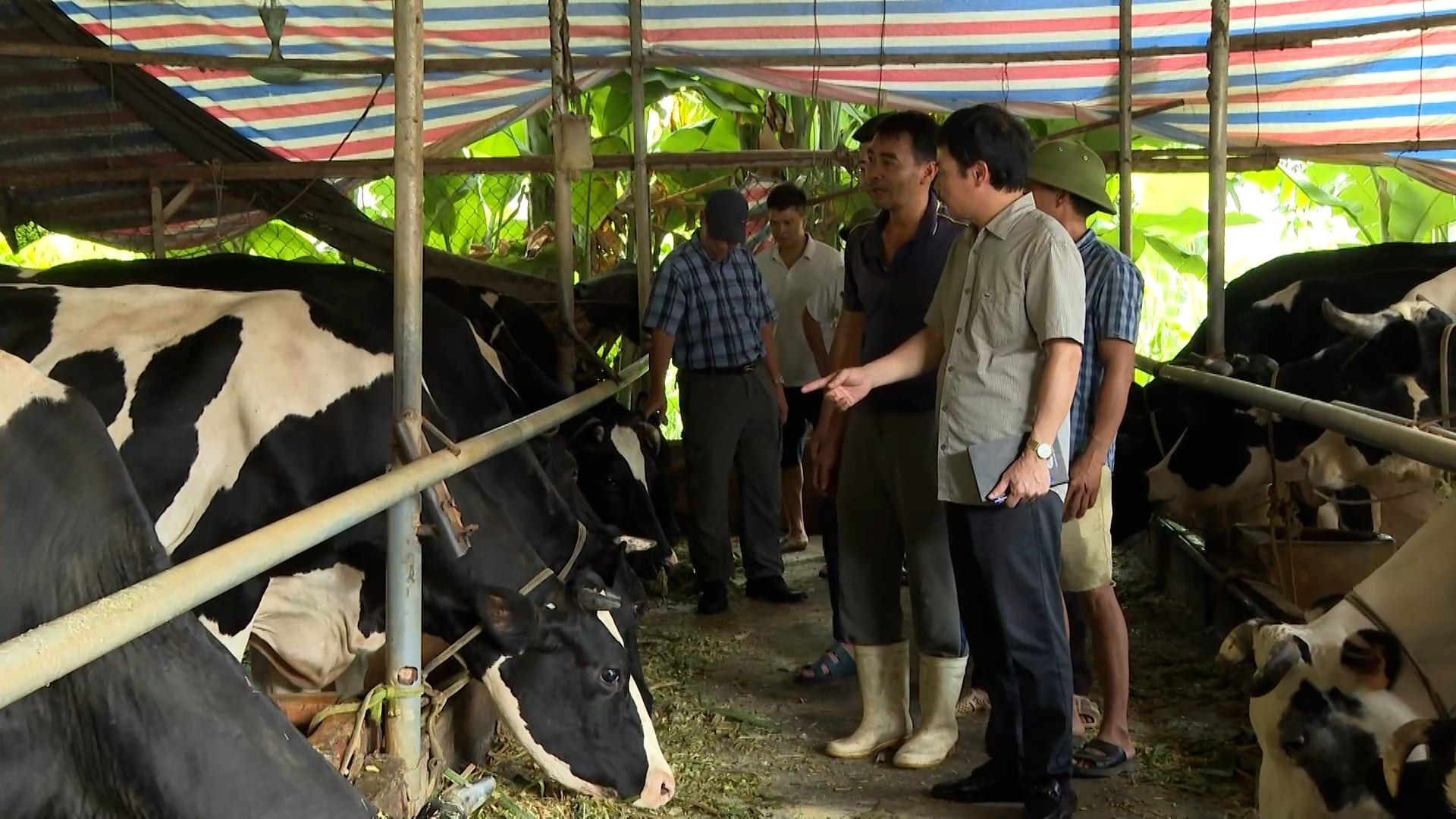
In recent years, the picture of Vietnam’s dairy industry has shown many “dark colors” as the total herd has grown slowly, even declining sharply in many traditional localities. Photo: Duy Hoc.
According to him, instead of focusing on competing with the real nutritional value of milk, many businesses add flavors, tastes, and colors to their products to “trick the senses”, especially for children and teenagers – the group that needs milk the most. As a result, the consumption of “real” fresh milk by Vietnamese people has not increased, while “milk-like” products have exploded strongly.
“I think that dairy products must start from milk. We must clearly define the ratio of what is considered milk so that consumers can differentiate,” Mr. Duong emphasized.
Second, the attention of ministries, branches and localities to the dairy cow development program is not commensurate. Policies on land, planning, credit and agricultural extension for the household dairy farming sector are still slow and unsynchronized. Disease control and support for farming space are also limited, making the household sector the most vulnerable group.
Third, the pressure from urbanization and increasingly strict environmental control requirements. Tightening is necessary, but without a roadmap and appropriate support solutions, it will be difficult for smallholder farmers to adapt and they will be forced to downsize or leave the profession.
From the above analysis, it can be seen that with the current rate of decline in the total dairy herd, especially the "free fall" of the farming sector, the goal of the dairy farming development strategy is facing the risk of being difficult to achieve.
Source: https://nongnghiepmoitruong.vn/thi-truong-sua-viet-nam-chua-bao-gio-loan-thuong-hieu-nhu-vua-qua-d788170.html




![[Photo] Urgently help people soon have a place to live and stabilize their lives](/_next/image?url=https%3A%2F%2Fvphoto.vietnam.vn%2Fthumb%2F1200x675%2Fvietnam%2Fresource%2FIMAGE%2F2025%2F12%2F09%2F1765248230297_c-jpg.webp&w=3840&q=75)











































![[Photo] General Secretary To Lam works with the Standing Committees of the 14th Party Congress Subcommittees](https://vphoto.vietnam.vn/thumb/402x226/vietnam/resource/IMAGE/2025/12/09/1765265023554_image.jpeg)





























Comment (0)