

For example, before weather forecasting, people relied entirely on nature to know whether it was raining or sunny, from the sounds of birds, wind direction to the sounds coming from deep forests...
Those sediments have become cultural depth, enriching and making Vietnamese culture more diverse and rich.
Rely on and harmonize with nature
Village elder Dinh Top (Mo Hra-Dap village, To Tung commune) recalls: "In the past, when going to the forest, whenever we heard the sound of a tree falling from the deep forest, everyone immediately turned back because that was a sign of a heavy rain.
Usually, these are old trees that fall down to predict the upcoming change of seasons. This experience is passed down from generation to generation to help people avoid risks when entering the forest...
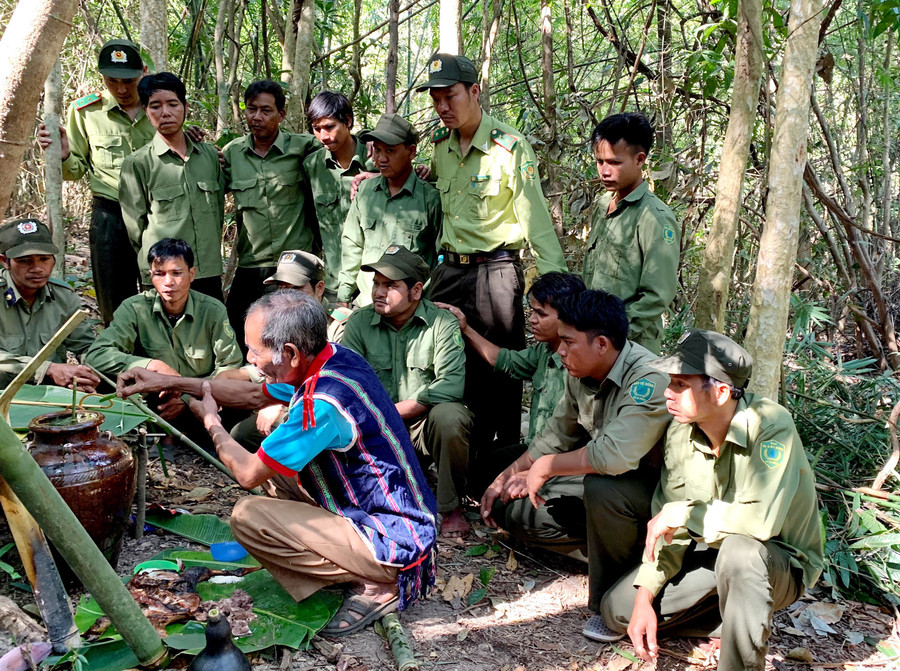
In the concept of the Central Highlands people, old trees fall to make way for young trees to grow, that is the law of the forest. With the philosophy of "all things have animism", the Bahnar and Jrai people believe that all things in nature have their own souls, with governing gods such as mountain gods, forest gods, water gods, and rice gods.
Thus, the harmony of weather is not only a physical phenomenon, but also reflects the consensus between humans and the supernatural world .
In agricultural rituals such as pruning rice at the beginning of the year, celebrating the new rice crop, closing the warehouse door or praying for rain, the village elder's prayers always have the same wish: "Please, gods, give favorable weather, good rice fields, healthy villagers, and peaceful years".
It is not only a spiritual wish but also an aspiration for a full life, with crops not threatened by natural disasters.
During the recent victory celebration of the Bahnar people, village elder Ayo (Piơm village, Đắk Đoa commune) still kept that tradition: “Oh god of rain on R'Pang mountain, oh god of Po Nam (thunder), oh god of H'Rông mountain, please invite the gods to attend the ceremony and bless the crops to grow well and the livestock to be healthy.”
According to village elder Ayo, in ancient societies, the victory celebration was to honor the community after defeating invaders. But over time, the meaning of this ritual expanded: It was the joy when people overcame the challenges of nature and had a prosperous harvest.
“Nowadays, people can rely on weather forecasts on the media to proactively respond to droughts or floods, avoiding crop damage. But in the past, erratic weather was explained by experience observing nature and spiritual beliefs.
Therefore, people only hope for harmony between heaven and earth so that rice, cassava and coffee plants can grow. And we send that wish through rituals in life that have become traditional cultural identity" - said village elder Ayo.
Respect the forest
Not only praying, ethnic minorities in the Central Highlands also show their respect for nature through concrete actions. They believe that to receive the favor of heaven and earth, people must know how to protect forests, protect water sources and not arbitrarily encroach on nature.
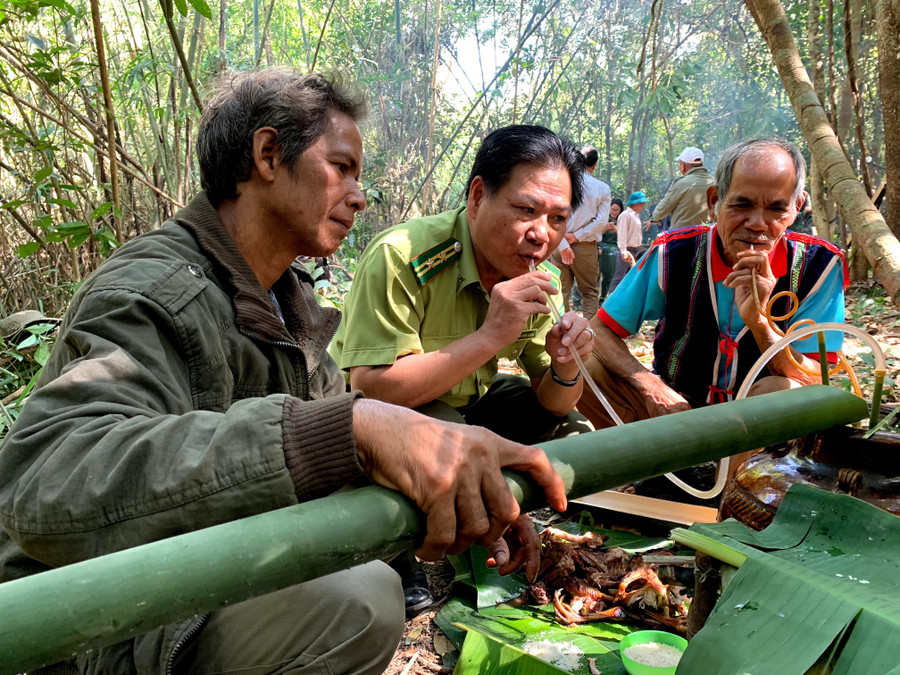
Artisan Kpa Rik (Cho Tung village, Ia Hdreh commune), famous for his drum-making craft in the lower reaches of the Ba River, said that cutting trees to make drums is always accompanied by a ritual asking permission from the forest god.
In the past, the biggest drum in the region, which his father and grandfather had crafted together for two years, was made from an ancient tree trunk. It could only be taken down after the village elder and shaman had chosen a good day and performed a ritual.
Mr. Rik remembers a time when he was about to cut down a tree to make a drum for his son's wedding: "While preparing for the ceremony, a turtle suddenly crawled out of the tree hole, so everyone had to leave empty-handed. That was a sign from the forest god, that the tree was not ready to be cut down, we had to go find another tree."
Not only Mr. Rik, the artisans who make dugout canoes in the border areas of Ia O and Ia Khai also follow similar rituals. Along with not violating the State's regulations on forest protection, they consider each forest tree a part of life, and must ask permission from the forest god before using it.
This ritual shows respect and a commitment not to indiscriminately encroach, contributing to protecting Mother Nature who always protects the village. This belief has formed the awareness of protecting forests and water resources, helping the community live in harmony with the environment and contributing to limiting the negative impacts of natural disasters.
From the wish for "favorable weather", we can see that the spiritual life of the Central Highlands people contains a profound philosophy of life: Nature is a friend, is life, is something sacred that cannot be violated.
It is the foundation for the community to preserve forests, protect the environment and live in harmony with nature in the context of increasingly complex climate change.
Source: https://baogialai.com.vn/thien-nhien-trong-van-hoa-tam-linh-nguoi-tay-nguyen-post574315.html




































































Comment (0)