

Associate Professor Dr. Nguyen Thi Viet Huong (Faculty of Social Sciences and Humanities, Vietnam National University, Hanoi) shared her insights on the "design" of the "Spiritual River" tourism route at the workshop "Heritage Economics : From Theory to Policy and Sustainable Development Practice " (organized by the Faculty of Social Sciences and Humanities on May 19th in Hanoi ). The design is based on the fact that the area along the Red River in Hanoi and its surroundings has many sites where water worship practices (worshiping rain gods, river gods, and heroes who slay water monsters) are practiced, with over 113 festivals. Connecting these heritage sites could create a more flexible and attractive "cultural tourism route".
According to Associate Professor Dr. Viet Huong, the shift from a heritage site perspective to a heritage linkage perspective has long been emphasized by UNESCO. She cited the Silk Road as an example, where the value lies in the entire network of trade and cultural exchange spanning multiple periods and countries. More recently, the dossier submitted to UNESCO for the Yen Tu - Vinh Nghiem - Con Son - Kiet Bac complex of historical sites and scenic spots is also a similar cultural route.
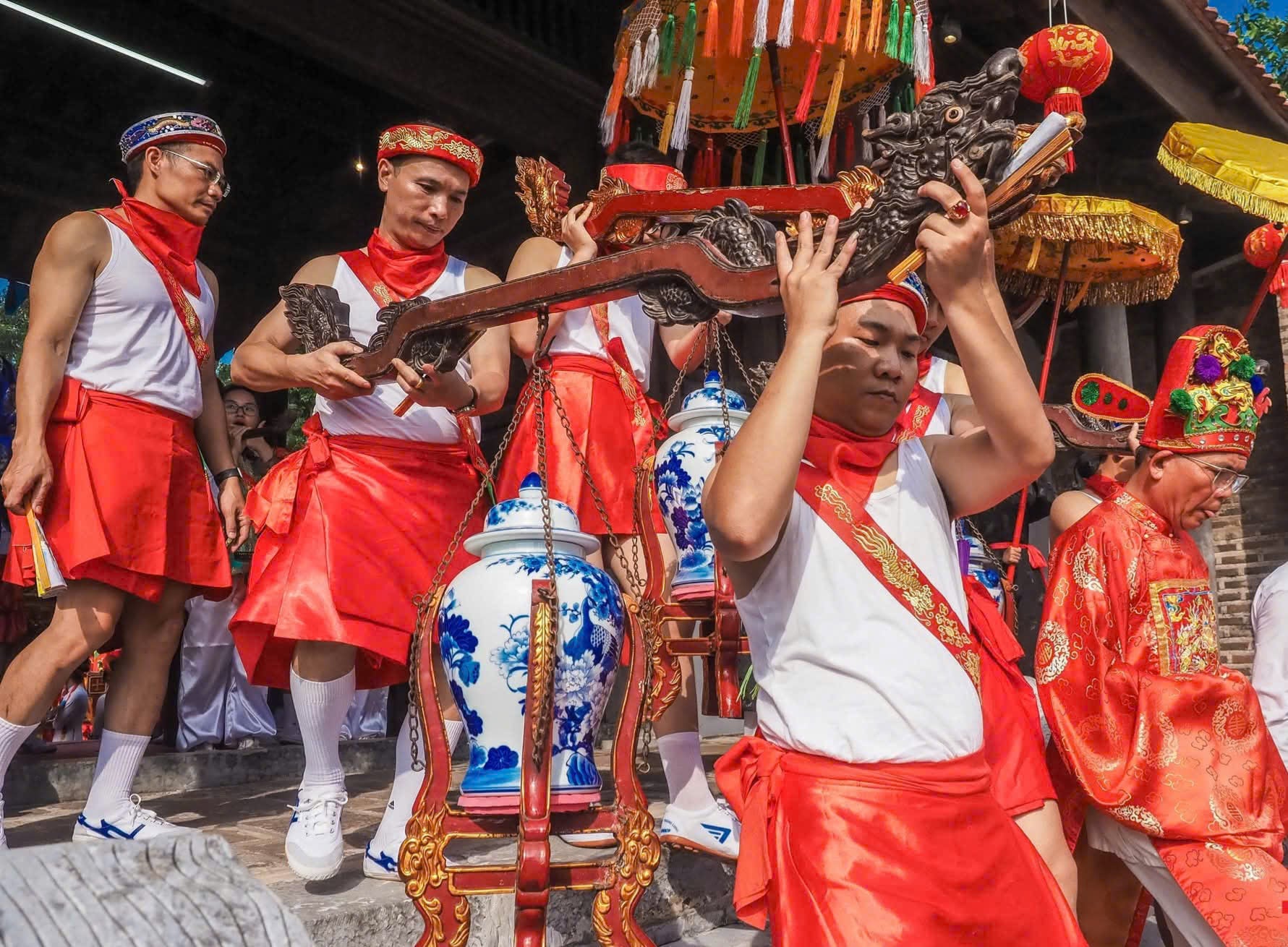
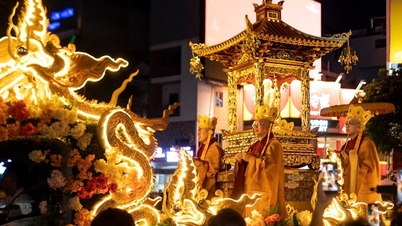
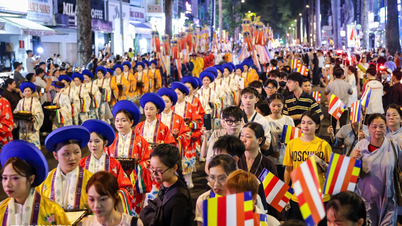
The Red River water procession festival at Chem Temple, Hanoi.
PHOTO: NAM NGUYEN
Author Nguyen Thi Vinh Ha (University of Economics, Vietnam National University, Hanoi) shared a method for quantifying the value of cultural heritage using the case of the King Dinh - King Le temples in the Trang An scenic complex. According to her calculations, domestic tourists are willing to spend an average of 750,000 VND per visit, while international tourists are willing to spend 15.5 USD per visit. Over 85% of visitors are also willing to contribute to the heritage conservation fund with community oversight. The study also showed a higher willingness to spend if tourists are familiar with or have visited the site before, experienced traditional rituals, and participated in virtual reality experiences.
A study by Dr. Pham Hong Long (Faculty of Social Sciences and Humanities, Vietnam National University, Hanoi) addresses the risks to the economic development of heritage sites if tourism overload, excessive commercialization, erosion of identity, and the "Disneyfication" of heritage occur. This expert proposes developing tools to manage the carrying capacity of each heritage site to distribute visitor numbers and flows appropriately over time and space. He also notes the need to limit commercial activities that may distort cultural values, while prioritizing cultural practices closely linked to the local community.
Dr. Pham Cao Quy pointed out the limitations affecting the heritage economy, including the prevailing administrative management mindset. As a result, heritage is "managed" but not "operated" as an economic asset. Dr. Quy also mentioned that the community is not truly the beneficiary. Accordingly, tourism businesses and the government are the main beneficiaries of exploiting the heritage economy, while artisans and practitioners often receive inadequate compensation, leading to a gradual loss of engagement with heritage practices, especially among the younger generation…
Associate Professor Bui Hoai Son, a full-time member of the National Assembly's Committee on Culture and Society, emphasized: "The center of the heritage economy must be the community and people, not just the market." Accordingly, if commercialization is too rapid, heritage sites may still attract many visitors, but they will gradually become impoverished in cultural depth, lose their authenticity, and suffer from a decline in sustainability. Associate Professor Son also proposed the early development of a national policy framework on the heritage economy as a component of Vietnam's cultural development strategy, as well as promoting the digital transformation of heritage.
Source: https://thanhnien.vn/thiet-design-nhung-dong-song-tam-linh-185260519214242681.htm
























































































Comment (0)