

Journey to affirm capacity and courage
Speaking at the Conference on Training and Development for the 2021-2025 period and the directions and tasks for the 2026-2030 period, Deputy Minister Nguyen Sinh Nhat Tan said that the 2021-2025 period is considered a particularly important period, when the Ministry's training institutions have made three strategic breakthroughs: perfecting institutions, developing infrastructure and improving the quality of staff. From autonomy, quality assessment to scientific research, business and international cooperation, all fields have recorded remarkable progress. In particular, many schools have demonstrated outstanding capacity in autonomy, contributing to the formation of a modern, transparent and effective governance model.
“ We have come a long way, full of challenges but full of pride. Behind every step forward is the sense of responsibility, perseverance and dedication of thousands of teachers in the system ,” Deputy Minister Nguyen Sinh Nhat Tan emphasized.
According to Deputy Minister Nguyen Sinh Nhat Tan, these achievements are the result of the Ministry's accompaniment and unified direction, the efforts of each school, lecturer and student. However, the Deputy Minister also frankly pointed out the shortcomings that need to be overcome: the progress of quality assessment is still slow; digital transformation is not synchronized; research and innovation activities in some schools have not received due attention; some new training majors are not closely linked to market needs. Some facilities still have internal problems or are slow to change their organizational models, and need to stabilize soon for sustainable development.
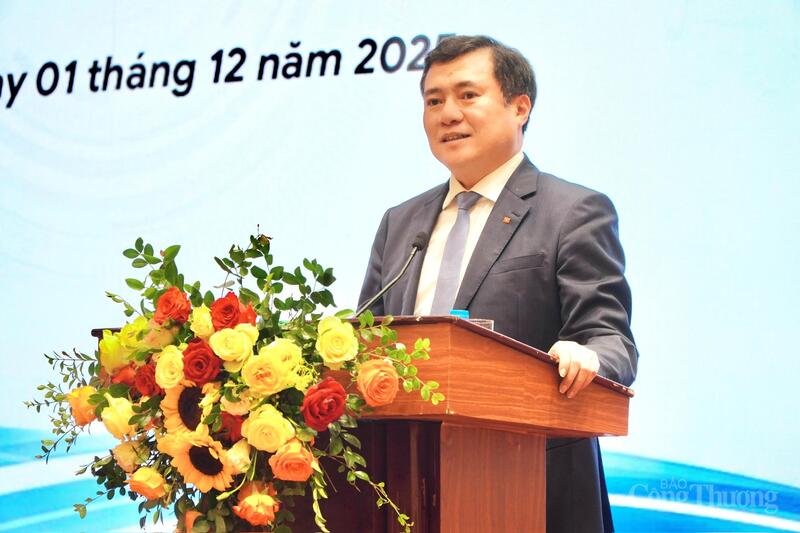
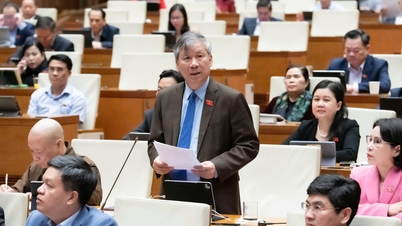
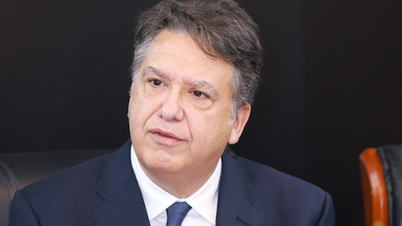
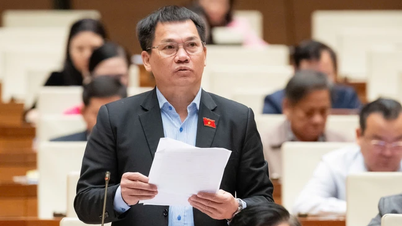
Deputy Minister of Industry and Trade Nguyen Sinh Nhat Tan speaks at the Conference. Photo: Minh Trang
Towards autonomous, creative and integrated education
Speaking at the conference, Deputy Minister Nguyen Sinh Nhat Tan said that the 2026 - 2030 period is a pivotal period, when Vietnamese education enters a new development stage in the spirit of Resolution 71-NQ/TW of the Politburo on breakthroughs in education and training development, and Resolution 57-NQ/TW on science and technology development, innovation and digital transformation.
These are key orientations that the training institutions of the Ministry of Industry and Trade need to specify in their development strategies. “ Education in the Industry and Trade sector must transform comprehensively, taking autonomy as the driving force, innovation as the method and international integration as the development goal ,” the Deputy Minister emphasized.
From that orientation, the Deputy Minister requested training institutions to synchronously carry out eight key tasks. First of all , continue to thoroughly grasp and innovate thinking and action, considering educational innovation as a political responsibility and driving force for development.
Second , schools need to perfect internal institutions, implement autonomy associated with accountability, and ensure publicity, transparency, and efficiency in all administrative activities.
Third , focus on comprehensive education, linking knowledge with moral values, skills, aesthetics and physical fitness, building a safe and humane educational environment, nurturing the spirit of new-age citizens.
At the same time, the Deputy Minister emphasized that digital transformation in education is a strategic task that requires systematic investment. Schools must build digital infrastructure, electronic learning database, apply artificial intelligence and virtual reality technology in teaching, testing and assessment. In particular, it is necessary to train digital skills for lecturers, students and managers, considering digital capacity as a mandatory standard in the new period.
“ Digital transformation is not just about using technology in teaching. It is about changing management thinking, the way we organize and create knowledge in an open, flexible and creative way, ” said the Deputy Minister.
Along with digital transformation, the Deputy Minister suggested that schools continue to modernize vocational education, innovate training programs linked to businesses and the labor market, and consider vocational skills as the foundation of national competitiveness. Special attention should be paid to developing a team of qualified lecturers and managers with digital and integration capabilities, while at the same time elevating the Ministry's key universities, towards a model of research, innovation and talent incubation centers for the country.
“ Training must go directly into production life. Graduates have jobs, skills, and career development opportunities, that is the real success of education, ” the Deputy Minister affirmed.
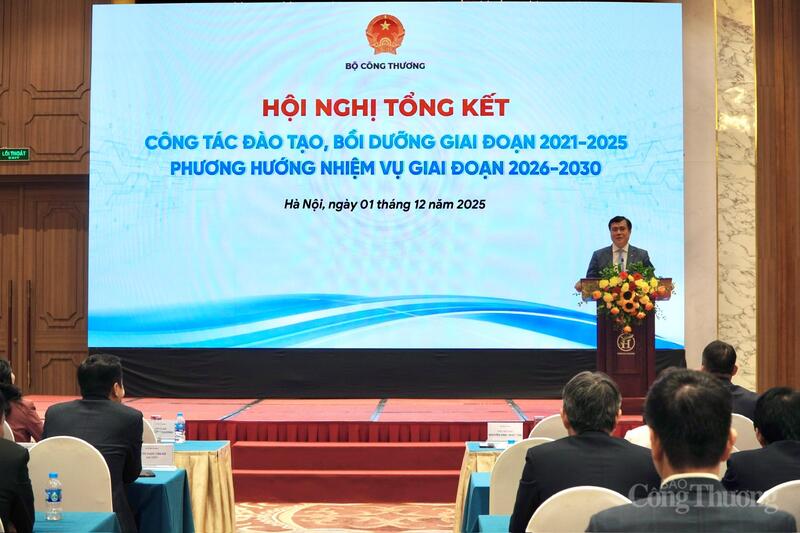
Deputy Minister Nguyen Sinh Nhat Tan emphasized that the education sector of Industry and Trade is facing new development opportunities, as the Party and State have identified education as one of the strategic breakthroughs. Photo: Minh Trang
Creating a breakthrough in training in the Industry and Trade sector: Towards autonomy and integration
One of the contents that the Deputy Minister especially emphasized at the conference was the requirement to promote the connection between the "three houses": the State, schools and businesses, as a pillar of sustainable development. According to him, this is an inevitable model to link training with production practice, research with application, helping to improve the quality of human resources, meeting the requirements of digital transformation and increasingly deep international integration of the Industry and Trade sector.
“ Schools are the place to nurture knowledge, and businesses are the land for that knowledge to blossom and bear fruit into value ,” the Deputy Minister emphasized, affirming that close coordination between the three parties will create an innovative ecosystem and comprehensive human resource development for the industry.
In the orientation for the period 2026 - 2030, the Deputy Minister requested the units under the Ministry to continue reviewing and rearranging the organizational apparatus in the spirit of streamlining and efficiency; at the same time, perfecting the financial mechanism, creating conditions for training institutions to operate autonomously, flexibly and in accordance with the law. The Deputy Minister assigned the Department of Planning, Finance and Enterprise Management to preside over the development of appropriate support mechanisms, removing difficulties and obstacles in implementing autonomy of schools.
In parallel, the Department of Innovation, Green Transformation and Industrial Promotion is assigned the responsibility of supporting training institutions to promote scientific research, innovation, develop institute-school-enterprise cooperation models, as well as promote key science and technology tasks. The Department of E-commerce and Digital Economy will support schools in building a "digital transformation zone" model to serve modern teaching and administration; while the Department of Industry, the Department of Chemicals, and the Department of Electricity will take on the role of connecting training with human resource needs of each field, helping training programs to be close to production practices.
Deputy Minister Nguyen Sinh Nhat Tan emphasized that the tasks have been clearly defined in Decision No. 2871/QD-BCT, but the core is still the determination to innovate and the breakthrough spirit of the entire system, from management units to each training facility to accompany and improve the quality of human resources of the Industry and Trade sector in the new development stage.
According to the Deputy Minister, this cooperation will create a " modern, interconnected and sustainable education ecosystem for the Industry and Trade sector ", where schools not only teach but also research, innovate and create, directly serving the development of national industry and trade.
Concluding his speech, Deputy Minister Nguyen Sinh Nhat Tan emphasized that the education sector of the Industry and Trade sector is facing a new development opportunity, as the Party and the State have identified education as one of the strategic breakthroughs. That requires each school to uphold the spirit of solidarity, responsibility, proactiveness and creativity in action.
“ I believe that, with the tradition of innovation and the spirit of daring to think and dare to do, the team of managers, teachers and students in the system of training institutions of the Ministry of Industry and Trade will continue to promote the achieved results and successfully carry out the tasks in the new period ,” the Deputy Minister affirmed.
From the consistent direction of the Ministry of Industry and Trade, it can be seen that the training and development work of the industry has been and is strongly transforming towards autonomy, digitalization and integration.
Deputy Minister Nguyen Sinh Nhat Tan expressed his hope that schools will continue to be a source of high-quality human resources for the industry and the country, making an important contribution to industrialization, modernization, green transformation and deep international integration.
Every lecturer, student, and education officer of the Ministry of Industry and Trade today is carrying on his/her shoulders a great mission, which is to create knowledge, inspire, and build a generation of Vietnamese workers who are brave, creative, and integrated.
Source: https://congthuong.vn/thu-truong-nguyen-sinh-nhat-tan-nguon-nhan-luc-la-yeu-to-then-chot-de-nganh-cong-thuong-but-pha-432866.html


![[Photo] National Assembly Chairman Tran Thanh Man receives First Vice Chairman of the Federation Council of the Federal Assembly of the Russian Federation](/_next/image?url=https%3A%2F%2Fvphoto.vietnam.vn%2Fthumb%2F1200x675%2Fvietnam%2Fresource%2FIMAGE%2F2025%2F12%2F02%2F1764648408509_ndo_br_bnd-8452-jpg.webp&w=3840&q=75)









































































Comment (0)