

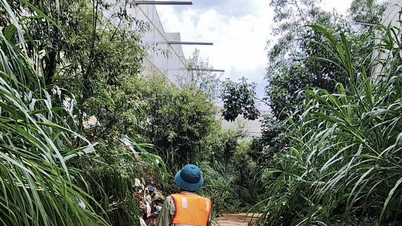
In the days leading up to Tet (Lunar New Year), many families in Tay Ninh province visit cemeteries together to tend to the graves of their deceased relatives. Based on the Vietnamese belief that "a high mound provides warmth in the grave," maintaining and caring for graves is considered a filial duty, expressing respect and gratitude to ancestors.
Amidst the vast expanse of land and sky, the sounds of cleaning tombstones and sweeping grass echo slowly, reminding each person of the principle of "drinking water and remembering the source," a deeply rooted value in the nation's cultural life.
While diligently cleaning the graves of his relatives, Mr. Le Van Binh (residing in Long An ward) shared: "For my family, visiting the graves is an opportunity to remind our children and grandchildren of their roots, the values that our ancestors have painstakingly cultivated over generations."

Amidst the incense smoke, family stories are recounted, evoking memories of grandparents and the difficult times. From these stories, the younger generation gains a deeper understanding and appreciation of the present. Le Nguyen Thien Tai expressed that the stories of his ancestors help him live more responsibly with the values he is currently enjoying.
While visiting ancestral graves marks the complete closure of the old year, the custom of "first foot" (xông đất) signifies the hopeful beginning of the new year. Stemming from the belief that the first person to enter a house on the first day of Tet will bring good fortune and prosperity to the family throughout the year, this custom is still maintained by people today, especially those involved in business.
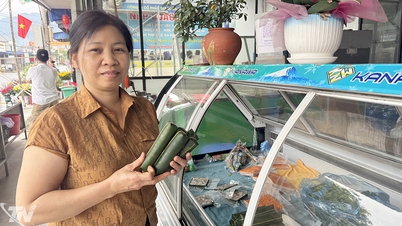
Ms. Luu Thi Nhu Lan (residing in Binh Minh ward) - the owner of a grocery store, said that every year, she chooses someone of a suitable age and asks them to be the first person to enter her store early in the morning. "Besides age, personality is also very important. I choose someone cheerful and sociable, hoping for a smooth and prosperous new year," Ms. Lan shared.
In modern times, the tradition of first-footing has gradually been simplified. Many families no longer place much emphasis on compatibility of birth years, but instead choose family members or people with good character and morals to be the first to enter their homes. According to Mr. Phan Bao Ngoc (residing in Tan An ward), people coming to the house with good wishes is considered a great blessing for the new year.

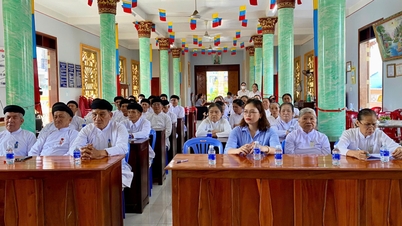
Along with visiting ancestral graves, performing the first-footing ritual, and going on spring excursions, visiting temples at Ba Den Mountain at the beginning of the year has also become a familiar cultural activity for the people of Tay Ninh. From the morning of the first day of Tet, pilgrims stream towards the sacred mountain, entrusting their wishes for the new year through incense sticks, fresh flowers, and heartfelt reverence.
Ms. Nguyen Thi Thanh Thao (residing in Ben Cau commune) said that her family maintains the tradition of visiting temples on the morning of the first day of Tet as a habit, both to remind generations to live virtuously and to preserve good values.

Amidst the hustle and bustle of modern life, the traditional Tet customs of Tay Ninh are quietly and persistently preserved. The active participation of the younger generation in these spring customs not only demonstrates the continuity between generations but also shows a sense of responsibility towards family and community. "Keeping the flame" of traditional Tet customs alive thus becomes a way for the people to move forward confidently in the new spring – developing but not disconnected from their roots.
Source: https://baotayninh.vn/thuong-hoai-nep-tet-xua-137455.html

















































































Comment (0)