

Advantages from border regions
The northern sub-region of An Giang includes parts of the communes of Vinh Thanh Trung, Thanh My Tay, Binh Thanh Dong, Co To, and Nui Cam. This area also encompasses the communes of O Lam, An Phu, Vinh Hau, Nhon Hoi, Khanh Binh, Phu Huu, My Duc, Cho Vam, Hoa Lac, Phu Lam, Tri Ton, Tan An, Chau Phong, Vinh Xuong, and An Cu. Along with these are the wards of Tinh Bien, Thoi Son, Chi Lang, Chau Doc, Vinh Te, Tan Chau, and Long Phu. The total natural area of the sub-region is nearly 1,715 km² , with a population of approximately 820,100 people.

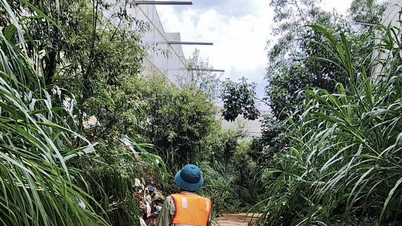
The Tri Ton bypass contributes to connecting transportation in the northern sub-region of An Giang province. Photo: DUC TOAN
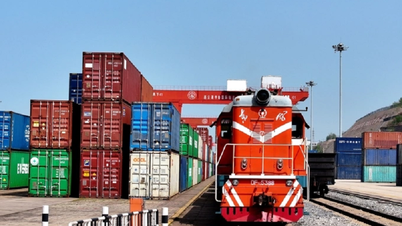
Possessing a strategic geographical location, the border region is home to a system of vital border gates such as the Tinh Bien International Border Gate, the Vinh Xuong International Border Gate, and the Khanh Binh International Border Gate. Over the past period, localities in the region have implemented policies and guidelines in a coordinated manner, achieving positive results. According to the Director of the Department of Finance, Pham Minh Tam, the total budget revenue in the region reached nearly 251/994 billion VND. The volume of land clearance for projects has basically met the set schedule.
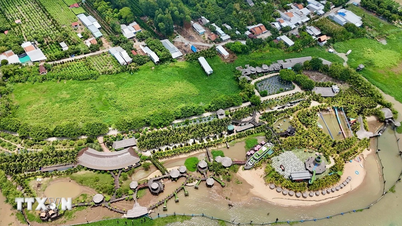
Besides border trade , the northern sub-region also has enormous potential for tourism development, particularly spiritual tourism, ecotourism, and experiential tourism. The area has many advantages in agricultural development, especially rice cultivation, fruit farming, livestock breeding, and large-scale aquaculture. Some localities with large land reserves are facing opportunities to form concentrated production zones, develop high-tech agriculture, organic farming, and value chain linkages…
Removing bottlenecks in development
Despite its significant potential, the northern sub-region faces several major limitations. According to Mr. Pham Minh Tam, the disbursement of public investment capital in the first quarter of 2026 was low, reaching only 0.38%. Budget revenue is not sustainable, relying mainly on household businesses and fees, while revenue from industry and trade is limited. Infrastructure is not yet synchronized, and facilities for education and healthcare are lacking or dilapidated in some areas. Weak transportation infrastructure connecting the region, as well as tourism, trade, and logistics infrastructure, prevents the region from fully exploiting its potential for border trade.
Meanwhile, investment in industrial zones and clusters has been slow, with many new projects still in the planning stage or undergoing procedures, failing to clearly establish large-scale concentrated production areas. The lack of synchronized technical infrastructure reduces the attractiveness to investors. The underdeveloped scale of small businesses and deep processing industries prevents the region from fully exploiting its advantages. According to the Department of Finance, the northern sub-region only has 253 investment projects, accounting for 16.96%; the land area used is approximately 2,050 hectares, accounting for 5.34%; and the total capital reached over VND 28,276.21 billion, accounting for 3.48% of the entire province.
The northern sub-region of the province is oriented towards becoming a center for ecotourism, cultural tourism, spiritual tourism, religious tourism, healthcare, and border trade. At the same time, it is envisioned as the province's key border trade development area, acting as a gateway to lead the specialized tourism and service industries, agricultural trade, and cross-border logistics, directly connecting the province and the Kingdom of Cambodia…
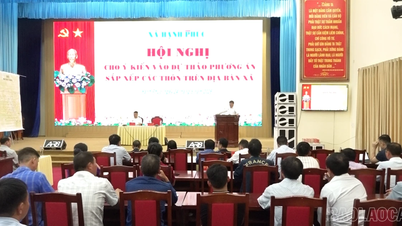
To realize the above goal, Central Committee member, Deputy Secretary of the Provincial Party Committee, and Chairman of the Provincial People's Committee Ho Van Mung requested localities to urgently develop action programs and implementation plans for the Resolution of the 14th National Party Congress, the Provincial Party Congress, and local Party Congresses, along with specific provincial programs and projects. Units must review and implement effective solutions to achieve the 2026 targets, closely linking this to the evaluation of cadre quality.
Another urgent task is to complete all provincial and local master plans. Localities should pay close attention to the provincial plan; the plan must be linked to achieving and exceeding the goals of the current and next phases, ensuring maximum utilization of land resources.
DUC TOAN
Source: https://baoangiang.com.vn/tieu-vung-phia-bac-an-giang-cho-cu-hich-phat-trien-a485147.html





















































































Comment (0)