

THE BITTER DURIAN INCIDENT
In early May 2026, the durian-growing areas in the communes of Ngũ Hiệp, Long Tiên, Hiệp Đức, Cái Bè… in Đồng Tháp province once again bustled into their busiest season of the year.

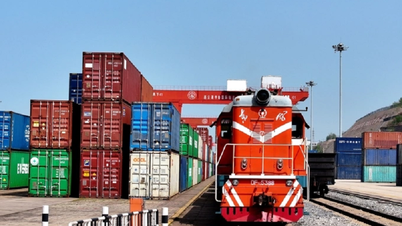
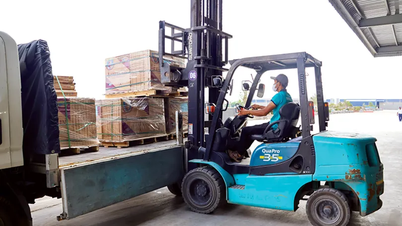
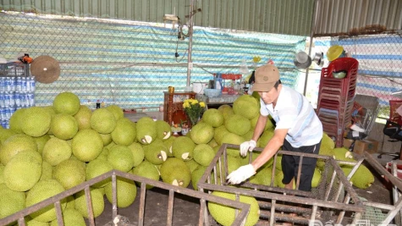
Along provincial roads 864, 868, etc., most durian farms are bustling with activity: transporting, sorting, and packing. Container trucks and other trucks carrying durians are constantly coming and going.
However, all of this cannot alleviate concerns about prices and the consumer market. The cadmium issue remains a looming threat, causing sleepless nights for farmers, traders, and businesses in recent times.
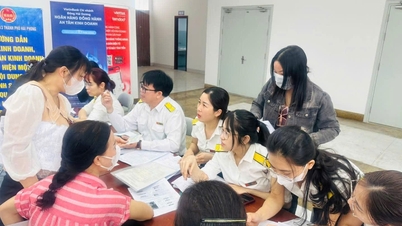
Given the current difficulties in durian consumption, Mr. Vo Tan Loi, Chairman of the Provincial Durian Association, suggested that the leaders of the Provincial People's Committee and relevant departments of Dong Thap province should coordinate with testing laboratories to provide official notice at least 7 days in advance in case of temporary suspension of sample acceptance, in order to help businesses and cooperatives proactively plan production, procurement, and export. At the same time, measures should be taken to rationally allocate testing capacity to avoid the current overload situation. One of the key solutions is transparency of information. The province needs to direct the verification and official announcement of information related to sample collection between regions (Eastern and Western), to avoid misunderstandings and panic among businesses and the public. In addition, local authorities need to promptly inform and update relevant regulations and changes related to testing and export. |
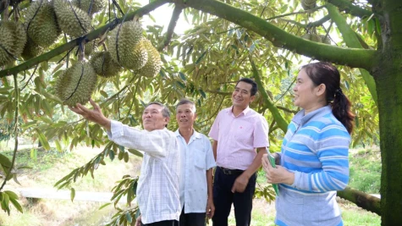
When we arrived, Mrs. Pham Thi Sang's family (An Hoa hamlet, Cai Be commune, Dong Thap province) was harvesting durian. Mrs. Sang's family cultivates 6 acres of Ri 6 durian, of which 3 acres are bearing fruit this season. The durian is being bought in bulk by traders at a price of 20,000 VND/kg.
“Last year, at this time, I sold Ri 6 durian for 37,000 VND/kg. This year, my orchard yielded about 2 tons. This year, the yield is not high, and the price is too low. At this price, my family is suffering heavy losses,” said Mrs. Sang.
Meanwhile, in Hoi Cu commune, Dong Thap province, Mr. Tran Van Hai's family has just finished harvesting over 3 tons of Ri 6 durian from their 4 acres of land. The durian was bought in bulk by traders at 25,000 VND/kg. Mr. Hai said: "Growing durian requires a lot of investment in fertilizer and pesticides."
Therefore, my family suffered losses in this case. Having grown durian for over 10 years, I've never seen prices as low as they are now. I only heard from traders that the durians are heavily contaminated with cadmium, and the testing labs are closed, causing the price drop. Before this, I only sold durians to traders, so I had to sell them at low prices.”
According to Mr. Huynh Thanh Nha, a durian trader in Hoi Cu commune, the current price of Ri 6 durian in bulk at the farm is around 25,000 VND/kg; Monthong (Thai) durian still has a fairly good price, ranging from 75,000 to 80,000 VND/kg.
According to Mr. Nha, the price of Ri 6 durian has remained consistently low in recent days and shows no signs of improvement. Because it is currently the peak season, the supply of durian is abundant.
WHY IS THE PRICE OF DURIAN LOW?
According to Mr. Vo Tan Loi, Chairman of the Durian Association of Dong Thap province, the current difficulties in durian consumption are primarily due to pressure from the Cadmium and Yellow O testing laboratory system.

Many testing laboratories are overloaded, resulting in prolonged sample processing times. Some laboratories have temporarily suspended sample acceptance without prior notice. This leaves businesses and cooperatives unprepared for procurement, packaging, and export.
On the other hand, some information remains unclear, causing confusion within the industry. Specifically, the Association has received feedback from cooperatives and businesses regarding some testing laboratories prioritizing or only accepting samples from the Eastern region, and rejecting samples from the Western region.
This information has not been officially verified, but it has caused concern and affected procurement and production activities in the province.
According to Mr. Vo Tan Loi, the sharp drop in durian prices is the biggest challenge currently. The price of Ri6 durian is currently very low, causing significant losses for farmers.
The main reason is the overlapping harvest season with Thailand's durian harvest, which increases competitive pressure in export markets, especially the Chinese market.
Due to difficulties in testing and sharply falling prices, many businesses are purchasing at a reduced capacity, directly affecting farmers' output. This leads to the risk of goods being stockpiled during the peak season, causing significant economic losses for production and export activities.
According to the leaders of the Department of Agriculture and Environment (NN&MT) of Dong Thap province, the province currently has 32,100 hectares of cultivated land; of which, the area producing fruit is more than 22,100 hectares with a yield of approximately 511,600 tons.
The entire province has 355 durian growing area codes for export to China, covering an area of over 13,985 hectares; and 130 packaging facility codes.
The period from April to June each year is the peak harvesting season. Currently, the Ri6 durian variety is in its harvest season, with relatively high yields. The total harvest is approximately 111,221 tons.
Compared to the beginning of the year, the purchase price of Ri6 seeds has decreased quite sharply due to the peak harvest season in the Mekong Delta and Southeast regions.
In addition, Thailand is also entering the peak durian harvesting season.
This creates certain competitive pressure on Vietnamese durian at the same time. Recent monitoring of testing activities shows that the percentage of durian and jackfruit samples in the Mekong Delta region found to have cadmium levels exceeding the permissible limit is quite high (around 30%).
This has led businesses and packaging facilities to intensify the screening of raw materials before purchasing them for export.
In light of this situation, export businesses and packaging facilities are implementing stricter controls on raw material sources and purchased shipments, resulting in slower procurement activity compared to the same period last year.
FOCUS ON OVERCOMING DIFFICULTIES
According to Le Chi Thien, Deputy Director of the Department of Agriculture and Environment of Dong Thap province, the durian market in China still has enormous potential. To support farmers in selling their main durian crop in May and June 2026, the first solution is to connect with businesses to purchase from farmers who have been granted export permits and have clear cultivation logs to ensure transparency. At the same time, connect with testing centers to register for pre-harvest sample testing…
In the long term, the Department of Agriculture proposes that the Provincial People's Committee review all durian growing areas to create a map of the risk of heavy metal contamination. One of the important solutions is to standardize cultivation processes, keep electronic logs, and control input materials.
The Department of Agriculture has requested the Provincial People's Committee to propose to the Ministry of Agriculture and Environment to soon negotiate with the Chinese Customs authorities to assess and approve qualified testing laboratories (including the Center for Applied Research and Scientific and Technological Services and Green Farm Vina Co., Ltd.) to quickly supplement testing capacity to serve fruit exports in the province. In addition, the province will develop a brand for its durian, segmenting the market to serve export and processing...
According to Vo Phuong Thuy, Director of the Department of Industry and Trade of Dong Thap province, to overcome difficulties in durian export, the province needs to coordinate with Chinese Customs to conduct joint inspection and certification of durian products meeting quality standards right in the growing areas so that subsequent stages can be streamlined.
Specifically, testing facilities in the province need to be jointly certified by Chinese Customs as meeting the required standards in order to gain credibility for testing durian for export.
At a recent meeting on the durian export situation, the Vice Chairman of the People's Committee of Dong Thap province, Nguyen Phuoc Thien, requested the Department of Agriculture to urgently coordinate with local authorities to review and assess which growing areas have the highest risk of cadmium contamination… in order to compile statistics and report to the Provincial People's Committee; a review of the packaging facility codes must also be carried out. The Department of Agriculture must develop a plan to collect soil samples to provide warnings and guidance to farmers on soil improvement.
Simultaneously, solutions and models for addressing cadmium contamination will be implemented. The agricultural sector will develop a plan to strengthen inspections of compliance with regulations at licensed export processing zones, and if violations are detected, will request revocation to reduce export risks…
T. DAT
Source: https://baodongthap.vn/tim-loi-ra-cho-sau-rieng-chinh-vu-a240595.html





















































































Comment (0)