


The scientific conference "Building Socialist Communes and Wards in the New Development Era - Theoretical and Practical Issues," recently organized by the Ho Chi Minh National Political Academy in Hanoi, raised the issue of building a new model of grassroots governance where citizens clearly perceive the quality of administration, public services, living environment, and development opportunities right where they live.
According to Associate Professor, Dr. Doan Minh Huan, Member of the Politburo and Director of the Ho Chi Minh National Academy of Politics, in the context of the entire country operating a two-tiered local government model, along with the requirement to innovate governance towards data-driven, technology-based, results-oriented, and accountability-based approaches, researching and piloting the construction of "socialist communes and wards" is an urgent requirement both theoretically and practically.
Notably, this time, the issue goes beyond mere slogans. Hanoi is developing a plan with a system of 54 specific criteria to quantify the effectiveness of the model. These include two comprehensive indicators: "Citizen Happiness Index" and "Overall Satisfaction Level." The criteria span across the economy, employment, infrastructure, healthcare, education, culture, environment, digital transformation, and the level of citizen participation in social governance. The administrative apparatus is no longer measured solely by the number of departments or the reduction in staff, but by the results of serving the people, by the effectiveness of development, and by the level of satisfaction of citizens and businesses.
Professor, Dr. Nguyen Xuan Thang, Chairman of the Central Theoretical Council, also emphasized that building socialist communes and wards is not about returning to the egalitarian, subsidized model, but rather about building civilized, modern grassroots communities that harmoniously combine modern governance with the positive values of Vietnamese socialism. This means that socialist communes and wards in the new development era need to be built as democratic, rule-of-law, disciplined, safe, green, digital, open, humane, developing, and happy communities. All policies at the grassroots level must be people-centered, aiming to improve the quality of life, strengthen community cohesion, and create conditions for the comprehensive development of the people.
That spirit is also clearly reflected in the central government's demands for improving institutions and organizational structures. Working with the Committee on Law and Justice, National Assembly Chairman Tran Thanh Manh called for a strong shift from the mindset of "making laws for easy management" to "making laws for national development, ensuring the security of citizens and businesses, and enabling the efficient operation of the government apparatus."
Another notable requirement is that all tasks must be managed according to the "six clear principles": clear person, clear task, clear time, clear responsibility, clear output, and clear authority. This is not only a requirement for the National Assembly or central agencies, but also a direct demand for the current two-tiered local government apparatus.
In reality, after restructuring, unclear assignments easily lead to overlapping responsibilities; a lack of individual accountability easily leads to shirking of duties; and simply "digitizing paperwork" without changing processes results in continued slow work. Therefore, along with streamlining the apparatus, the Central Committee particularly emphasizes digital transformation, shared data, and administrative procedure reform. The Chairman of the National Assembly requested that software should not be merely for show, and that processes should not be digitized in an unreasonable way. Processes must be standardized first, then data, before digitization, connection, and exploitation.
This spirit is evident in many localities. For example, in Vinh Long province, after a year of implementing the two-tiered local government model, administrative reform has seen many positive changes. The time taken to process procedures has been gradually shortened; the processing of electronic documents and online public services has been promoted. The province has strengthened the rotation of officials to the grassroots level, supplemented human resources at the commune level, and focused on training in digital skills and modern public administration skills. More importantly, the provincial leadership has requested that the satisfaction of citizens and businesses be used as a measure of service quality; shifting strongly from a "management" mindset to a "service" mindset.
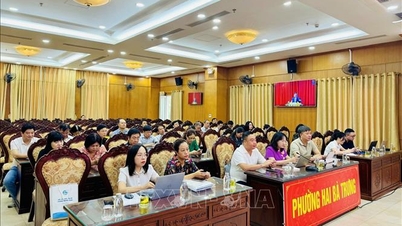
However, Vinh Long also directly acknowledges its limitations. Some areas are still struggling; responsibilities are not clearly defined; some officials still have a hesitant attitude and avoid responsibility; information technology infrastructure is not synchronized; and the rate of online applications in some areas remains low. This is also a situation that many localities are facing. In Khanh Hoa, the Provincial Party Committee had to organize direct dialogues with officials and civil servants of 64 communes and wards to "resolve" obstacles at the grassroots level. In just one conference, 210 opinions and recommendations were raised, focusing on staffing, operating mechanisms, digital transformation, funding, and personnel recruitment. Many opinions reflected very realistic situations. In some places, the population is large and the area is vast, but the allocation of personnel is not rational, leading to an overload of work. Some officials are in charge of the health sector but lack in-depth expertise. In some places, there is confusion in applying regulations for recruiting civil servants at the commune level.

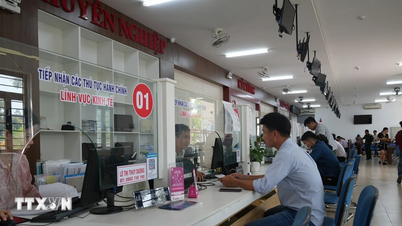
Photo: Xuan Trieu/TTXVN
The good news is that the issues are not being avoided. Khanh Hoa has planned to recruit 417 civil servants, prioritizing information technology, land management, and construction; and at the same time, determined to allocate human resources according to the scale of development of each locality, rather than applying a uniform approach.
That's the necessary approach. For the two levels of local government to operate effectively, simply consolidating departments for the sake of streamlining operations is not enough; they need people with sufficient competence to work in the new conditions.
The human resources challenge is clearly evident in many areas today. The healthcare sector in Dong Nai is a prime example. After restructuring, the grassroots healthcare system remains stable, with 95 health stations and 176 service points transferred to the management of commune and ward People's Committees. All units process documents electronically, and electronic medical records and health files are being gradually implemented. However, significant challenges remain, as Dong Nai is currently short of approximately 1,000 grassroots healthcare personnel; in the first four months of 2026 alone, 123 staff members resigned, including 46 doctors. Furthermore, the information technology infrastructure is still not fully synchronized.
Currently, many localities across the country are shifting their focus from "stabilizing the administrative apparatus" to "creating momentum for development." The new administrative structure is forcing localities to manage more strictly, transparently, and effectively. Where there is a shortage of competent personnel, experts, or technical staff, appropriate mechanisms are being sought to attract, retain, and train suitable talent. Building a two-tiered local government today is not just about organizational restructuring, but also about reforming governance methods, reforming personnel, and reforming the way people are served.
The experience of the past year has shown that many places still face difficulties, delays, and shortcomings. However, the movements at the central and local levels clearly indicate a direction: the administrative apparatus is being reorganized to be closer to the people, with clearer responsibilities and a stronger connection to development requirements.
The crucial task now is to continue removing bottlenecks in institutions, data, human resources, decentralization, and resources; while resolutely overcoming the mentality of working half-heartedly and avoiding responsibility. The administrative apparatus is only truly strong when it serves the people better. Local governments at both levels will only be effective when people see faster procedures, clearer information, improved living standards, and broader opportunities for development right from the commune or ward where they live.
Source: https://baotintuc.vn/thoi-su/tinh-gon-bo-may-tu-quan-ly-sang-phuc-vu-20260524085113523.htm



























































































Comment (0)