

On June 1, Professor Celeste Saulo of Argentina was appointed the first female Secretary-General of the World Meteorological Organization (WMO), taking the helm of an organization that is at the forefront of international efforts to monitor and respond to climate change and increasingly extreme weather.
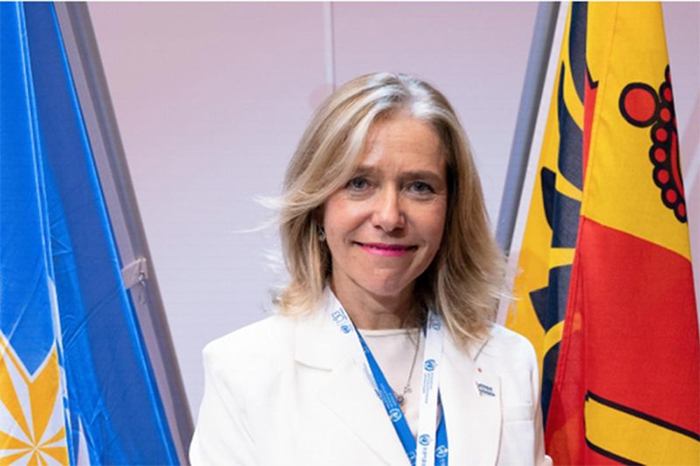
Professor Celeste Saulo. Photo: wmo.int.
Professor Saulo has been Director of the Argentine National Meteorological Service since 2014, after which she served as First Vice-President of WMO.
Professor Saulo was appointed after receiving the required two-thirds majority of votes from delegates at the 193-member World Meteorological Congress held every four years.
The next WMO President is Dr. Abdulla Al Mandous, Director General of the National Meteorological Centre, Permanent Representative of the United Arab Emirates to the UAE and Chair of the WMO Regional Association for Asia.
According to the plan, Ms. Saulo will take office on January 1, 2024 and succeed Professor Petteri Taalas, who has completed his term.
Speaking after the voting results were announced, Ms. Saulo said that at a time when inequality and climate change are the biggest global threats, WMO must contribute to strengthening meteorological and hydrological programs to protect people and economies , providing accurate, timely and effective services, as well as providing early warning systems for natural phenomena.
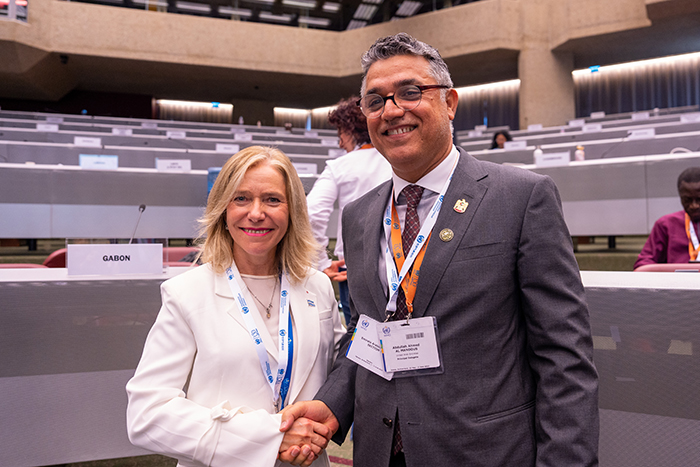
Prior to this, Professor Saulo was a member of several WMO expert scientific committees. In recent years, she has been working extensively on cross-cutting issues such as wind energy production, agricultural applications and early warning systems.
Ms. Saulo is also the author or co-author of more than 60 peer-reviewed scientific papers and books. Ms. Saulo has supervised numerous undergraduate and graduate students and participated in research projects funded by national and international agencies. Her extensive teaching experience mainly concerns numerical weather prediction, atmospheric dynamics and thermodynamics, mesoscale meteorology, cloud dynamics and cloud microphysics.
Huong Giang (According to WMO)
Source

![[Photo] Parade to celebrate the 50th anniversary of Laos' National Day](/_next/image?url=https%3A%2F%2Fvphoto.vietnam.vn%2Fthumb%2F1200x675%2Fvietnam%2Fresource%2FIMAGE%2F2025%2F12%2F02%2F1764691918289_ndo_br_0-jpg.webp&w=3840&q=75)


![[Photo] Worshiping the Tuyet Son statue - a nearly 400-year-old treasure at Keo Pagoda](/_next/image?url=https%3A%2F%2Fvphoto.vietnam.vn%2Fthumb%2F1200x675%2Fvietnam%2Fresource%2FIMAGE%2F2025%2F12%2F02%2F1764679323086_ndo_br_tempimageomw0hi-4884-jpg.webp&w=3840&q=75)
























































Comment (0)