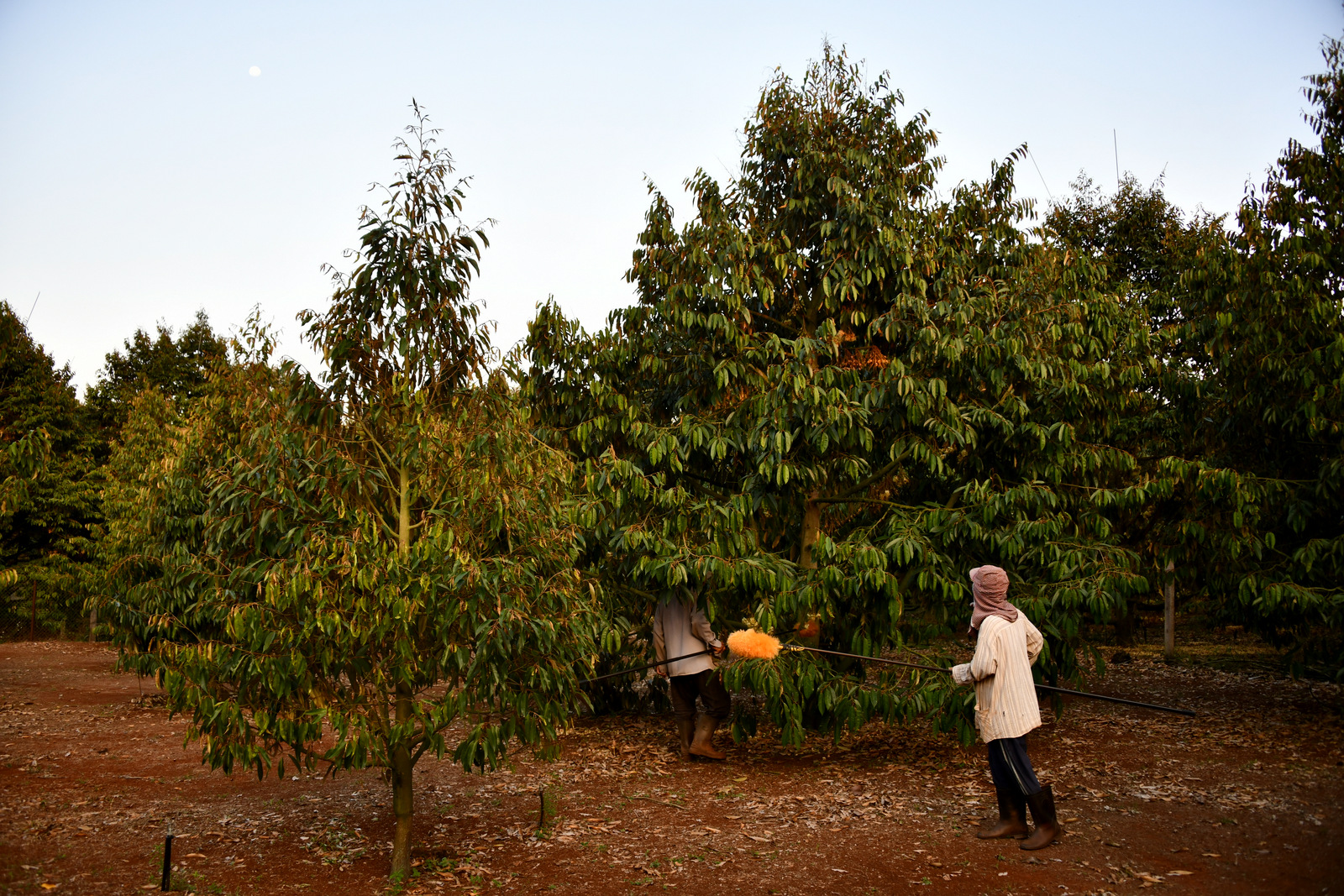
During the durian flowering season , in recent years, orchard owners in Long Khánh have adopted new techniques in caring for their trees, helping the durian trees to pollinate more completely than naturally. The method is quite simple and is simply called "durian painting" by the locals.
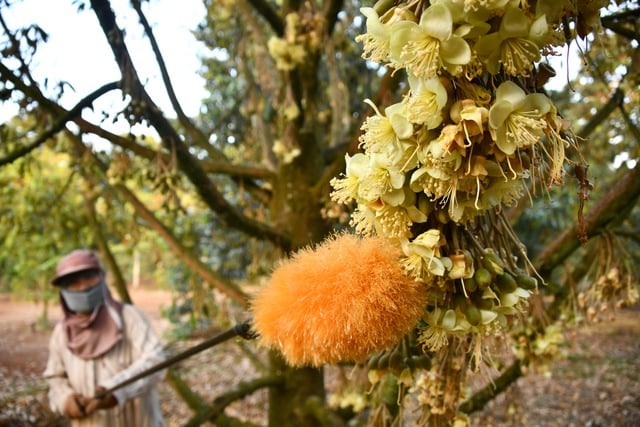
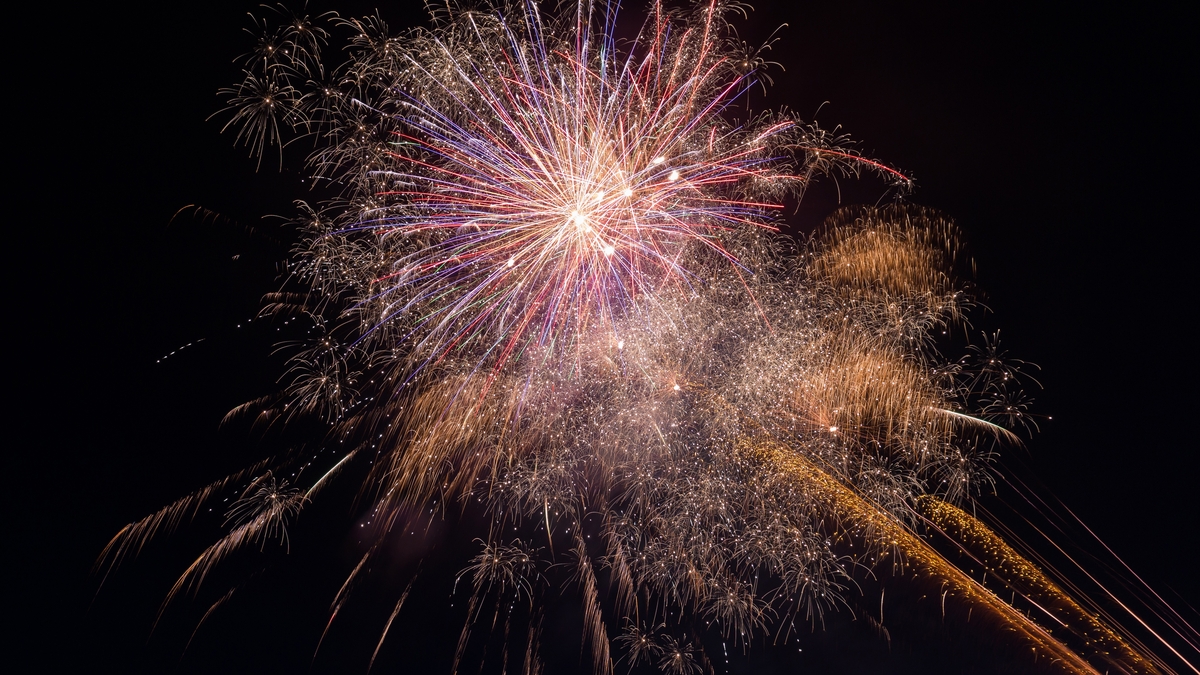
As darkness falls, the durian blossoms are at their most vibrant and fully bloomed.
PHOTO: LAM PHONG
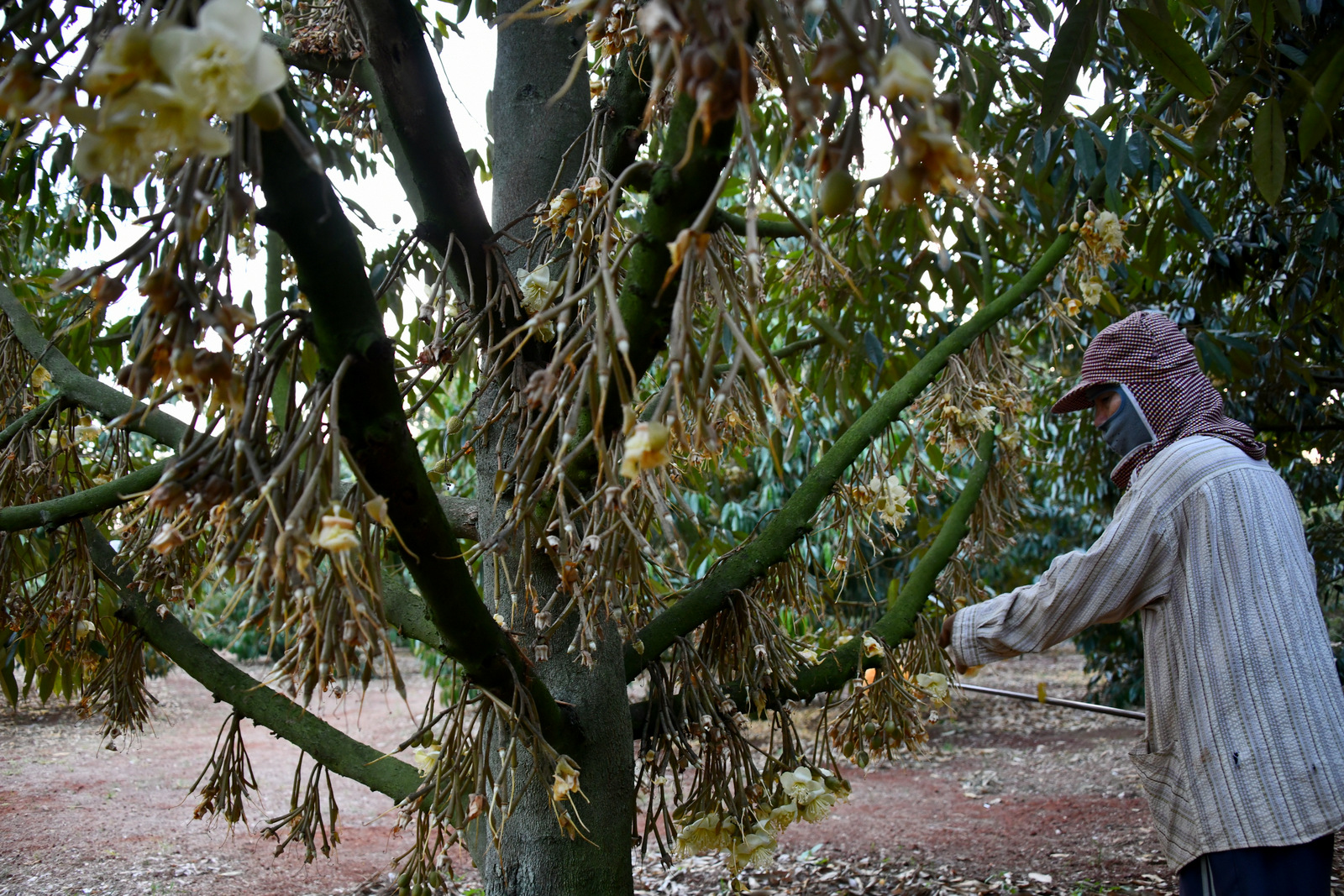
Each durian branch, regardless of the variety (Ri, Thai, Musa King, etc.), will have hundreds or thousands of flowers densely packed together, stretching from the main trunk to the tip of the branch. Out of those hundreds or thousands of flowers, if each branch bears fewer than ten fruits, that's considered a great success. Some seasons, the entire tree is covered in flowers, but when it comes time to bear fruit, there are none left, or the fruits are either round or small – discarded and worthless.
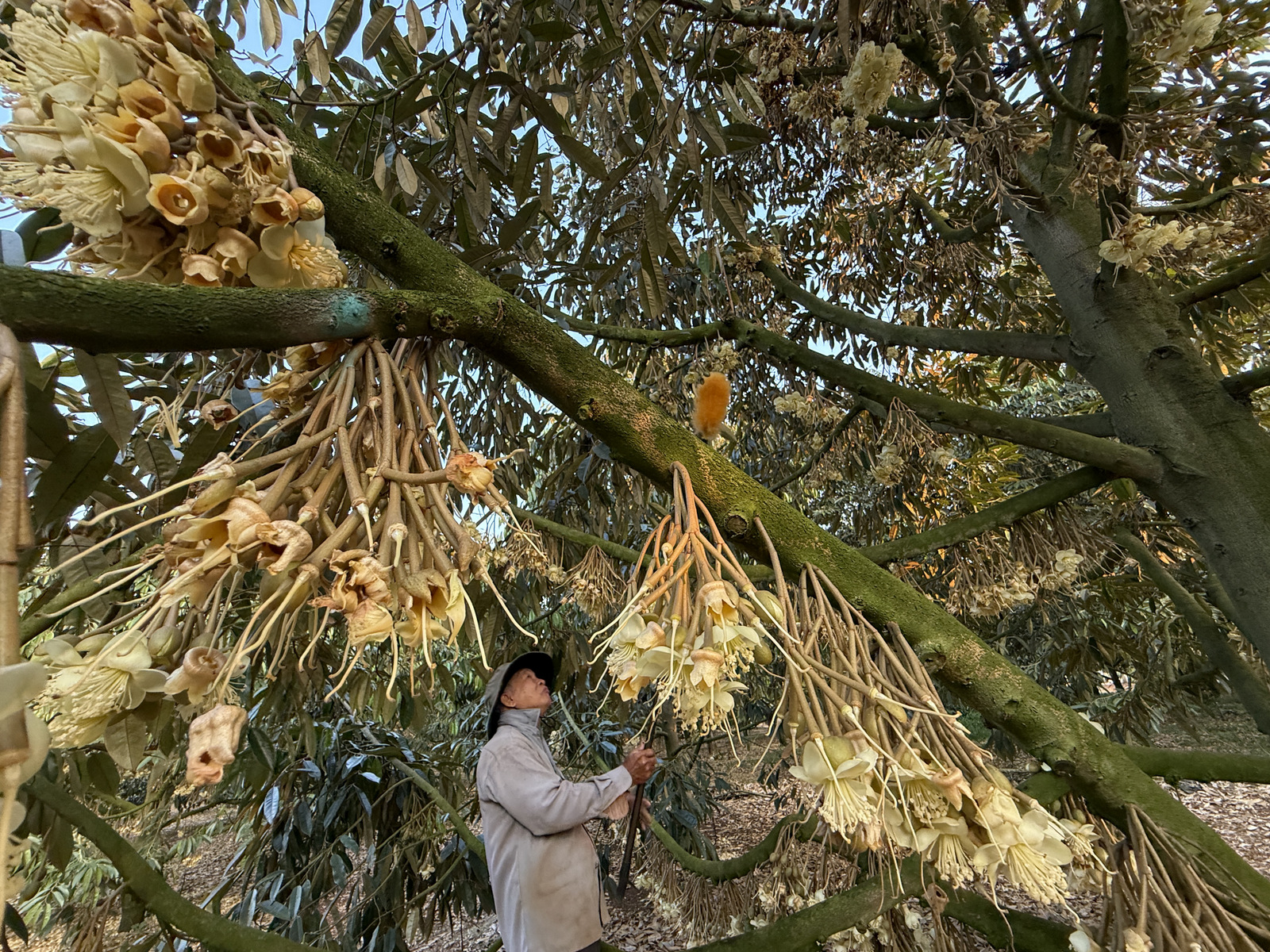
From those failed harvests, farmers in Bao Toan, Bao Thi, Xuan Dinh... (Long Khanh) learned and adopted a different cultivation method than before: waiting until the durian flowers bloomed profusely, then helping the trees pollinate by using a brush to gently rub the blooming flower clusters to ensure even pollination, resulting in round, plump fruits with intact segments, making them both visually appealing and more valuable.
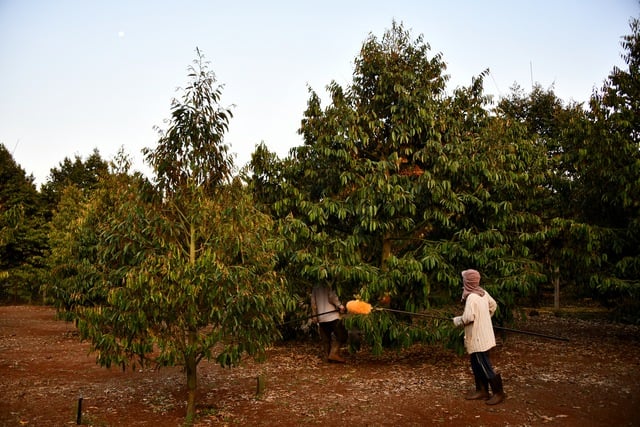
Long Khánh has long been the durian hub of the Southeast region of Vietnam.
PHOTO: LAM PHONG
The ideal time for the "pollination" process is at dusk. At that time, clusters of durian flowers bloom profusely. Depending on the tree and the time, the branches will bloom in turn, sequentially throughout the orchard. Each petal stirs, displaying its fragrance and color, and the pistils secrete nectar to attract pollen carried by the wind. If the wind is unbalanced that day, natural pollination would result in a batch of durians with plump segments on one side and shriveled, unpollinated segments on the other. The "pollination" process solves this physiological problem of the durian fruit.
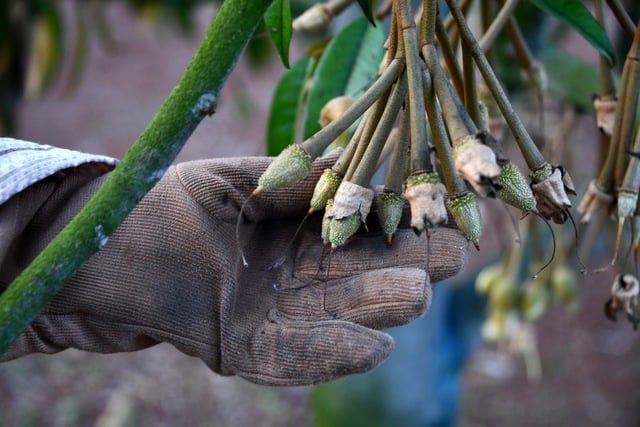
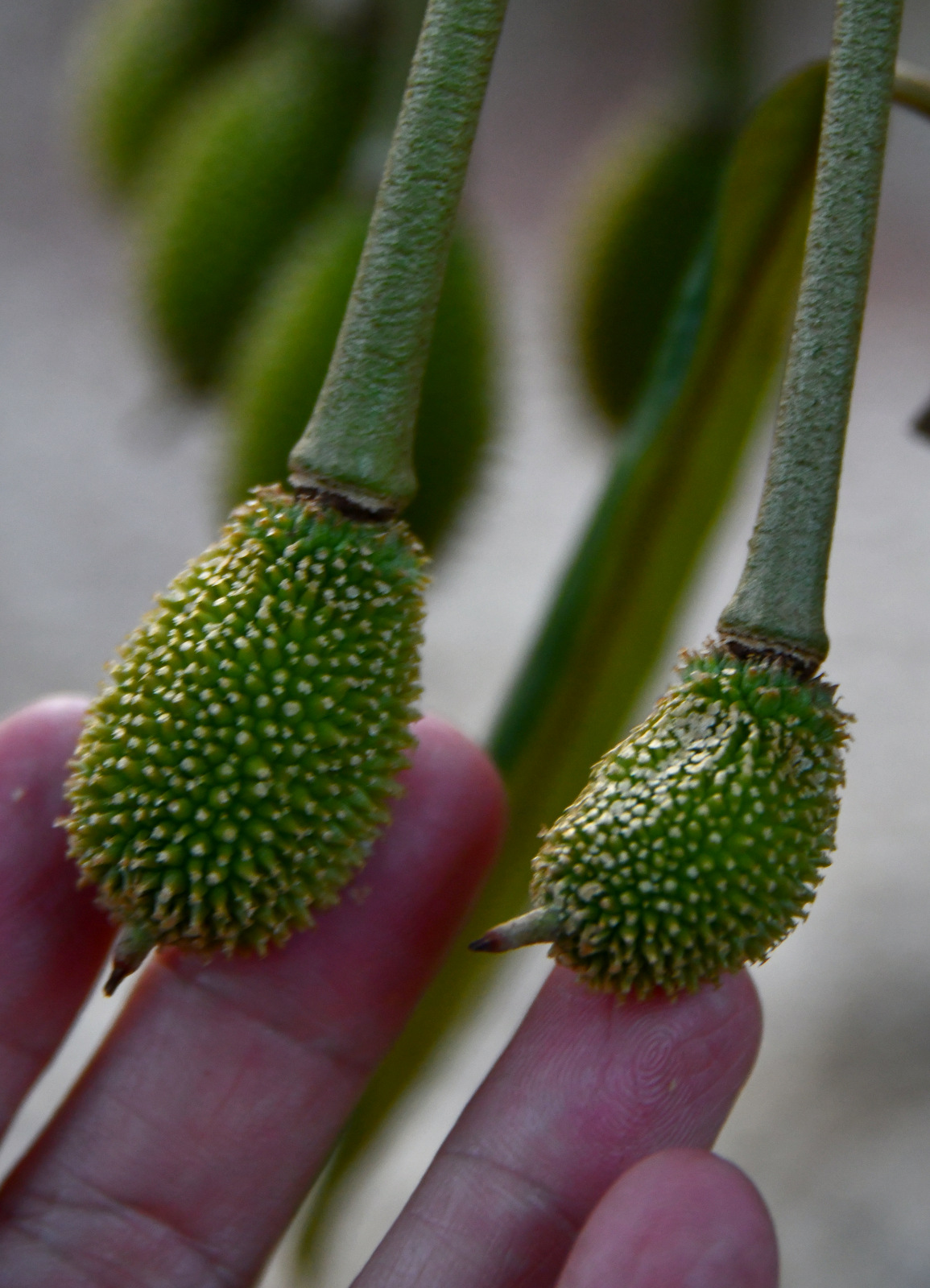
After pollination, the durian fruit begins to form, a structure called the "pencil."
PHOTO: LAM PHONG
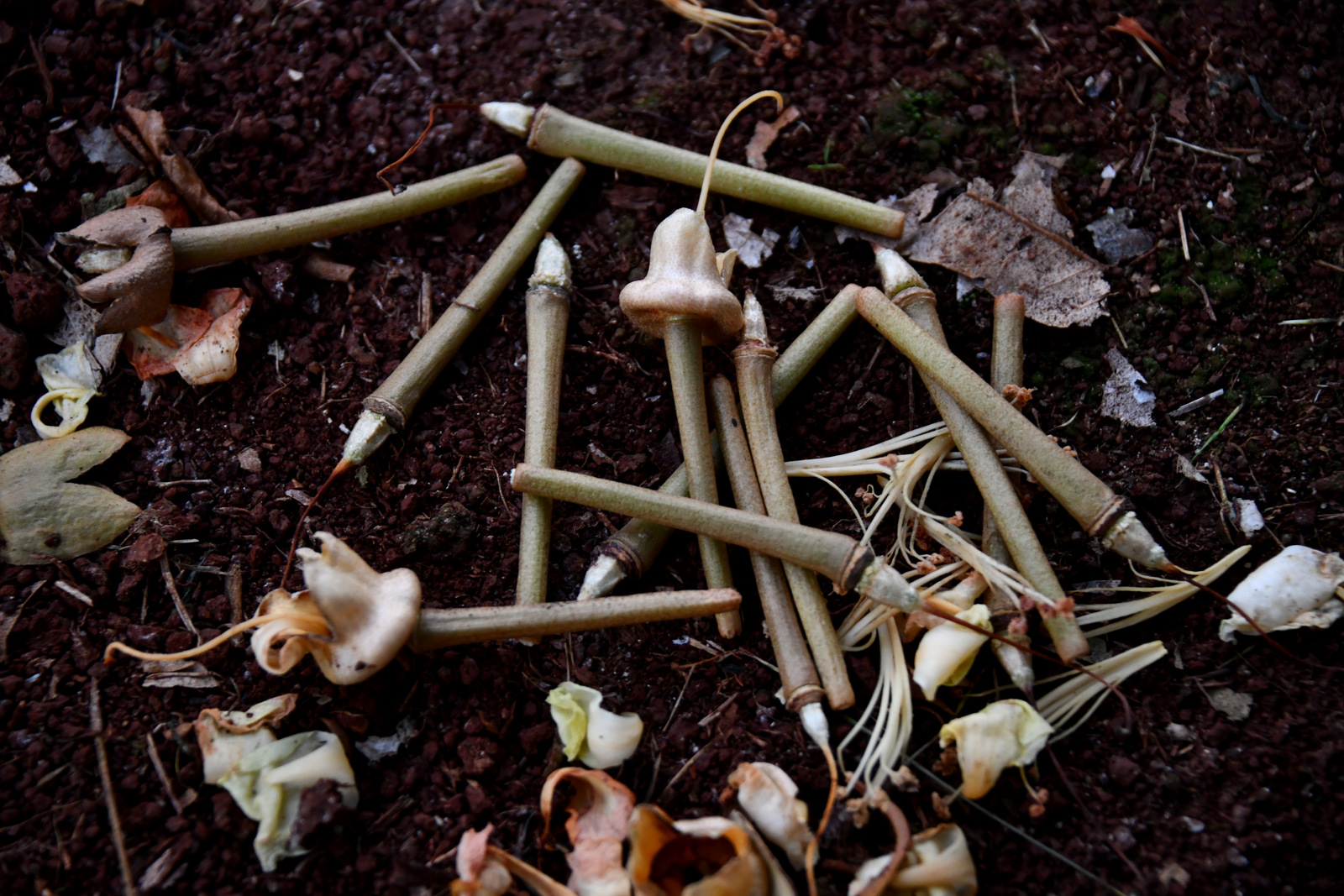
"The first drop" is just the beginning of the journey from flower to fruit. After pollination, the durian fruit is slender and pointed, attached to the flower stalk like a pen. After a few days, it falls off like rain, a phenomenon called "uncoiling." The remaining "pen tips" continue to grow to the size of quail eggs, then crowd together to fall off, until the fruit is over half a kilogram, at which point the competition for nutrients creates the final drop. A mature durian tree over 5 years old bearing around 50-60 fruits is considered a successful harvest, bringing joy to the farmers.
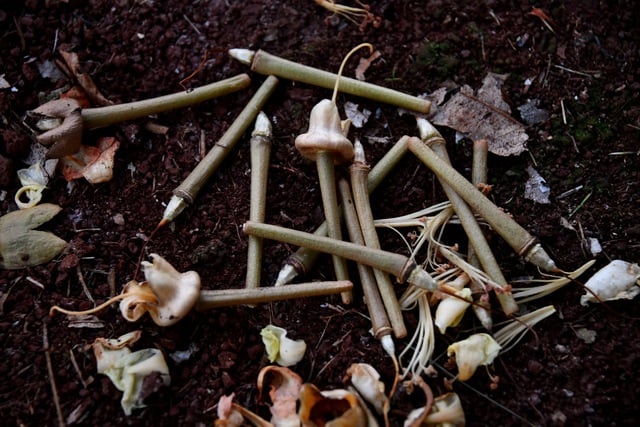
When durian flowers develop into "pen nibs," the first batch of petals will fall off, a phenomenon known as "disjoint shedding."
PHOTO: LAM PHONG
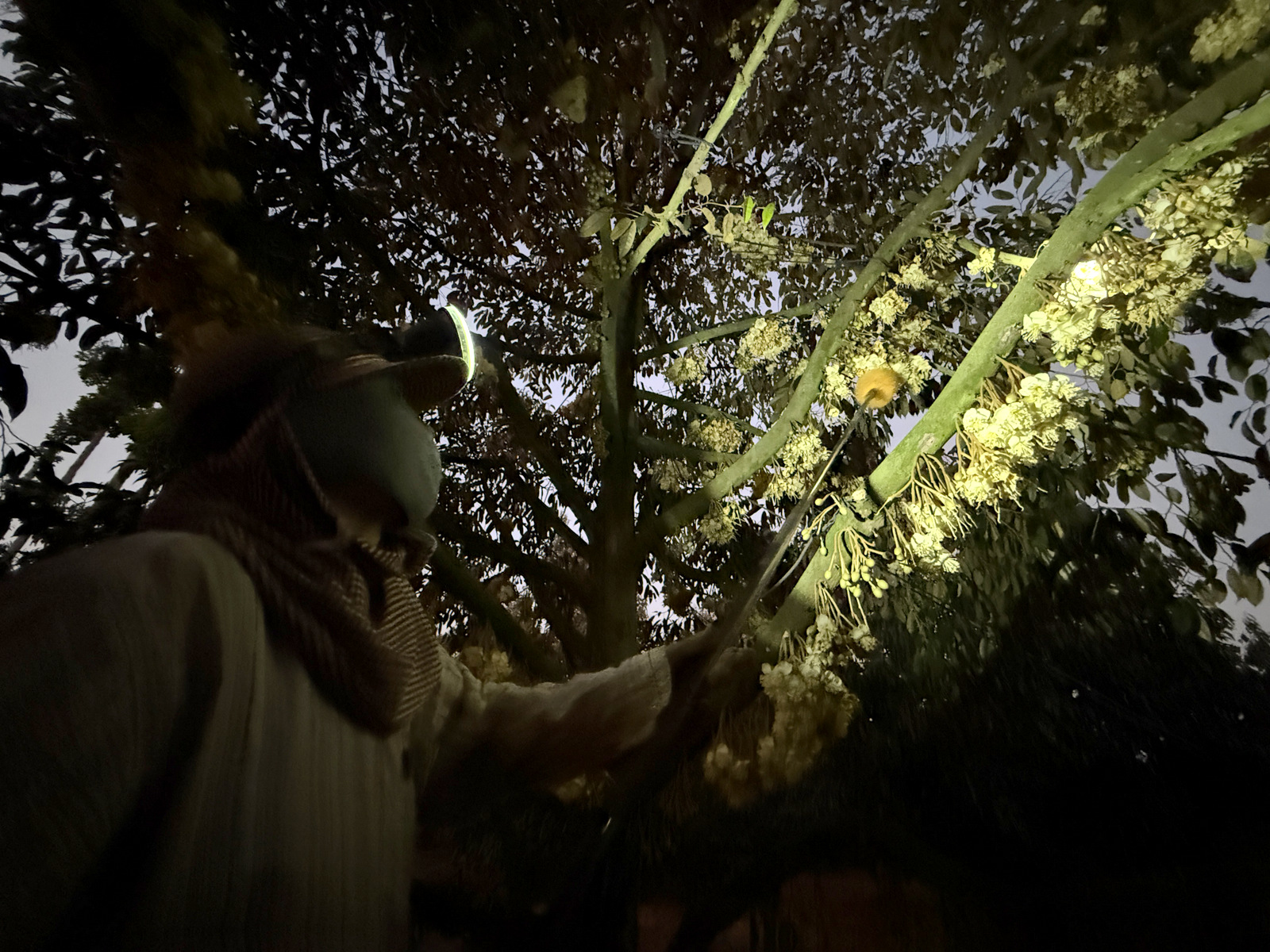
The "durian painting" profession has an interesting aspect: it only takes place for about two or three hours after dark, when the durian flowers are at their most vibrant and fragrant. The entire durian flowering season can last one to two weeks, depending on the weather each year. Farmers follow the flowering cycle to paint the flowers, hoping for a bountiful harvest with round, beautiful, and evenly sized fruits.
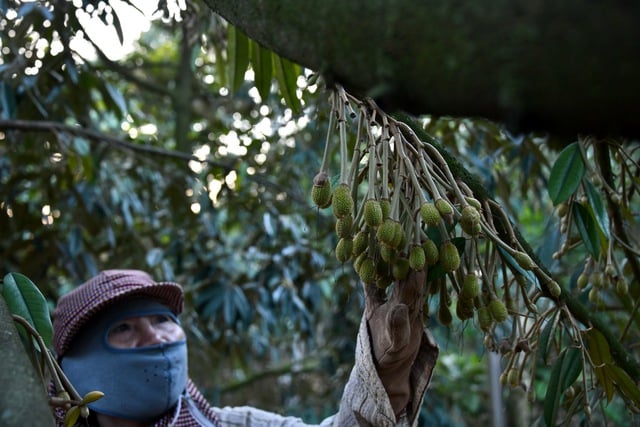
When durian fruits reach the size of a quail egg, they will fall off in a large group, a process called physiological drop.
PHOTO: LAM PHONG
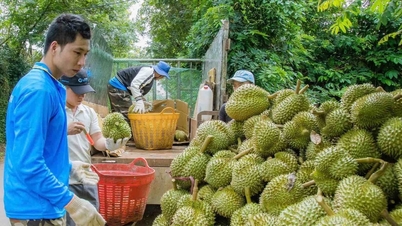
"Picking up the durian" is just the beginning, because ensuring the durian fruit doesn't become misshapen, has a shriveled core, doesn't fall prematurely, or has burnt segments... requires a long process of care afterward. Durian season has begun, but this year's prices for Ri varieties aren't very attractive; currently, buying from orchards in Long Khánh area costs only 26,000 VND/kg.
Farmers explain that the oversupply is due to the same variety as in the western region and Thailand, plus a series of Ri durians grown in acidic soil, where fertilizers and pesticides create high lead residue, causing export disruptions, flooding the domestic market, and driving down prices. This scenario repeats itself every year. The job of "painting" durians to make them more beautiful and eye-catching is a long and arduous journey to alleviate the "sadness" of each harvest season .
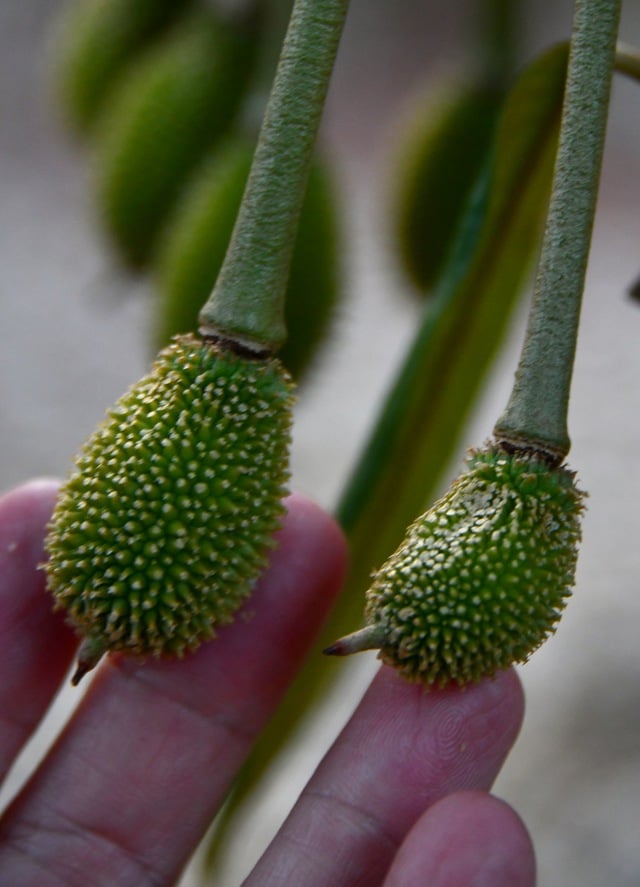
Uneven pollination causes durian fruits to be shriveled, segmented, and not perfectly round.
PHOTO: LAM PHONG
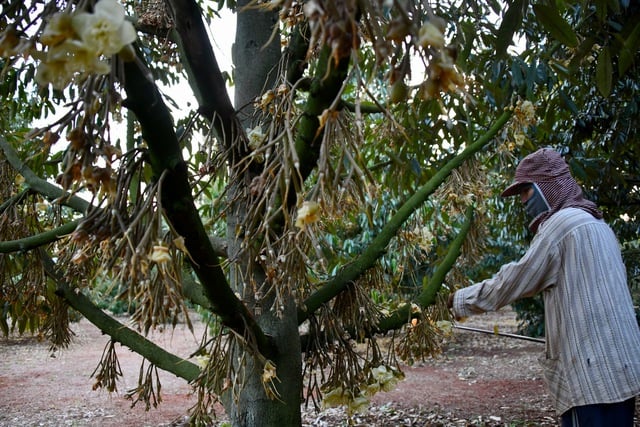
Durian flowers bloom in waves, and gardeners "paint" them according to the flowering season.
PHOTO: LAM PHONG
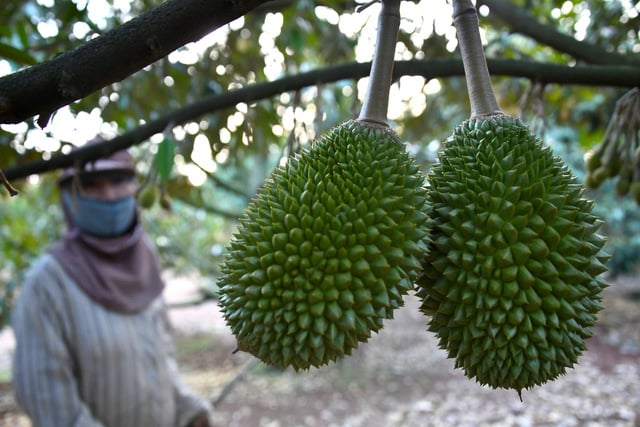
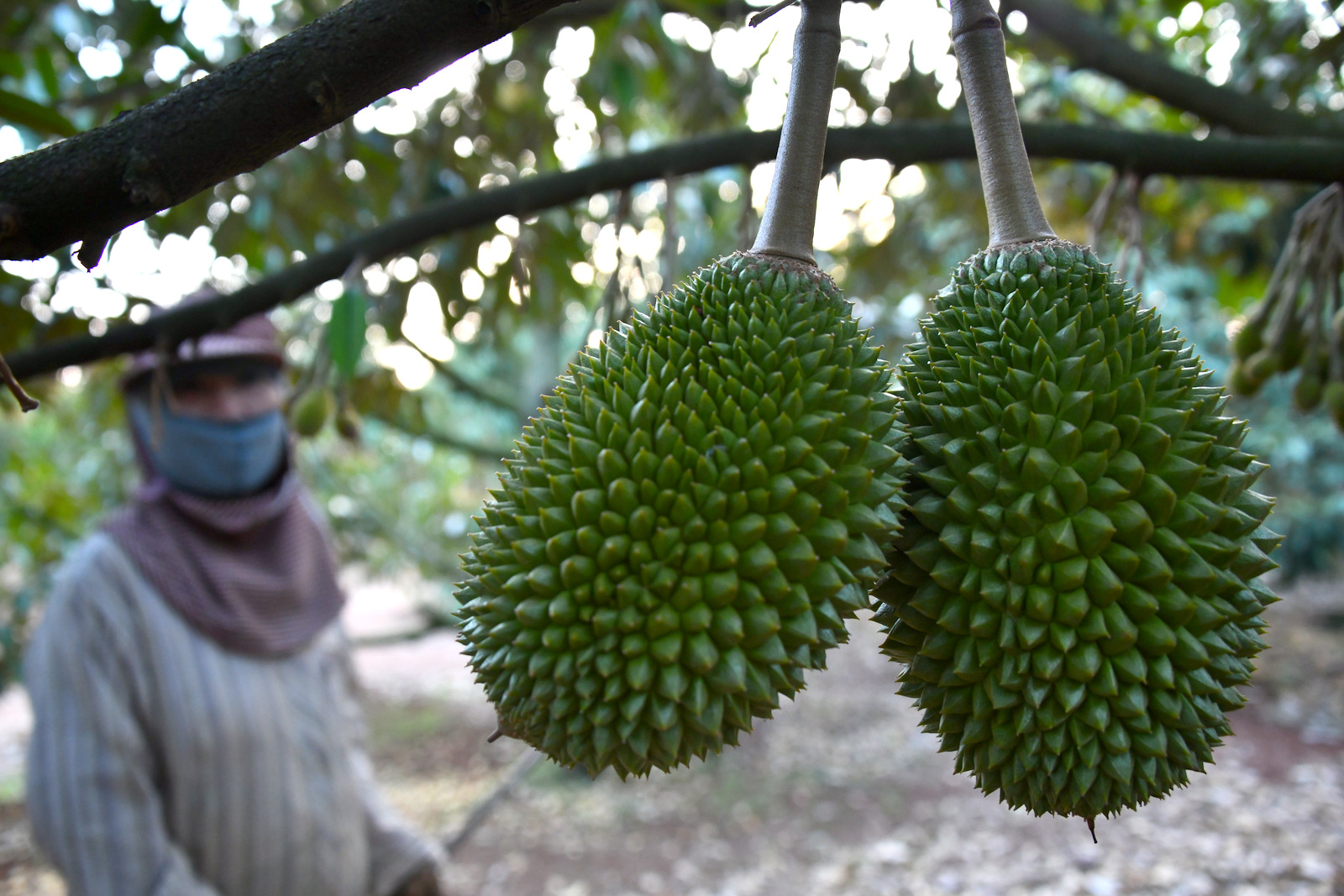
Two Musa King durian fruits, perfectly round and pollinated, are ready for harvest.
PHOTO: LAM PHONG
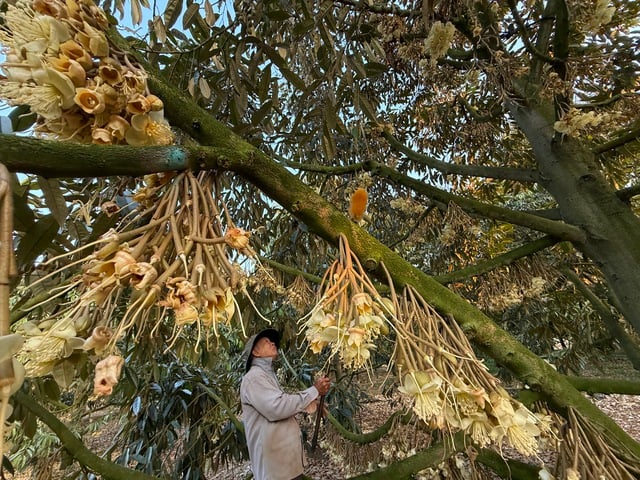
Durian flowers bloom from dusk until 9-10 pm.
PHOTO: LAM PHONG
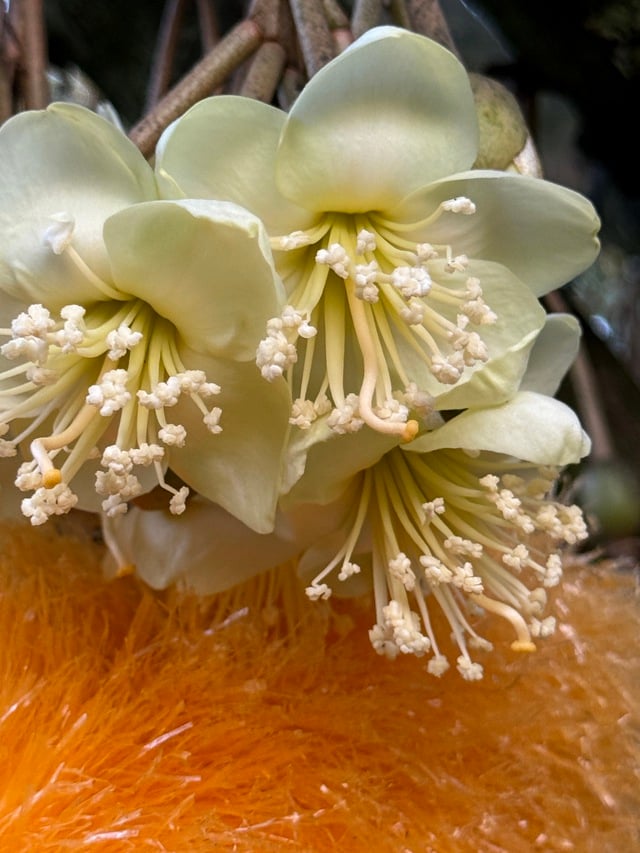
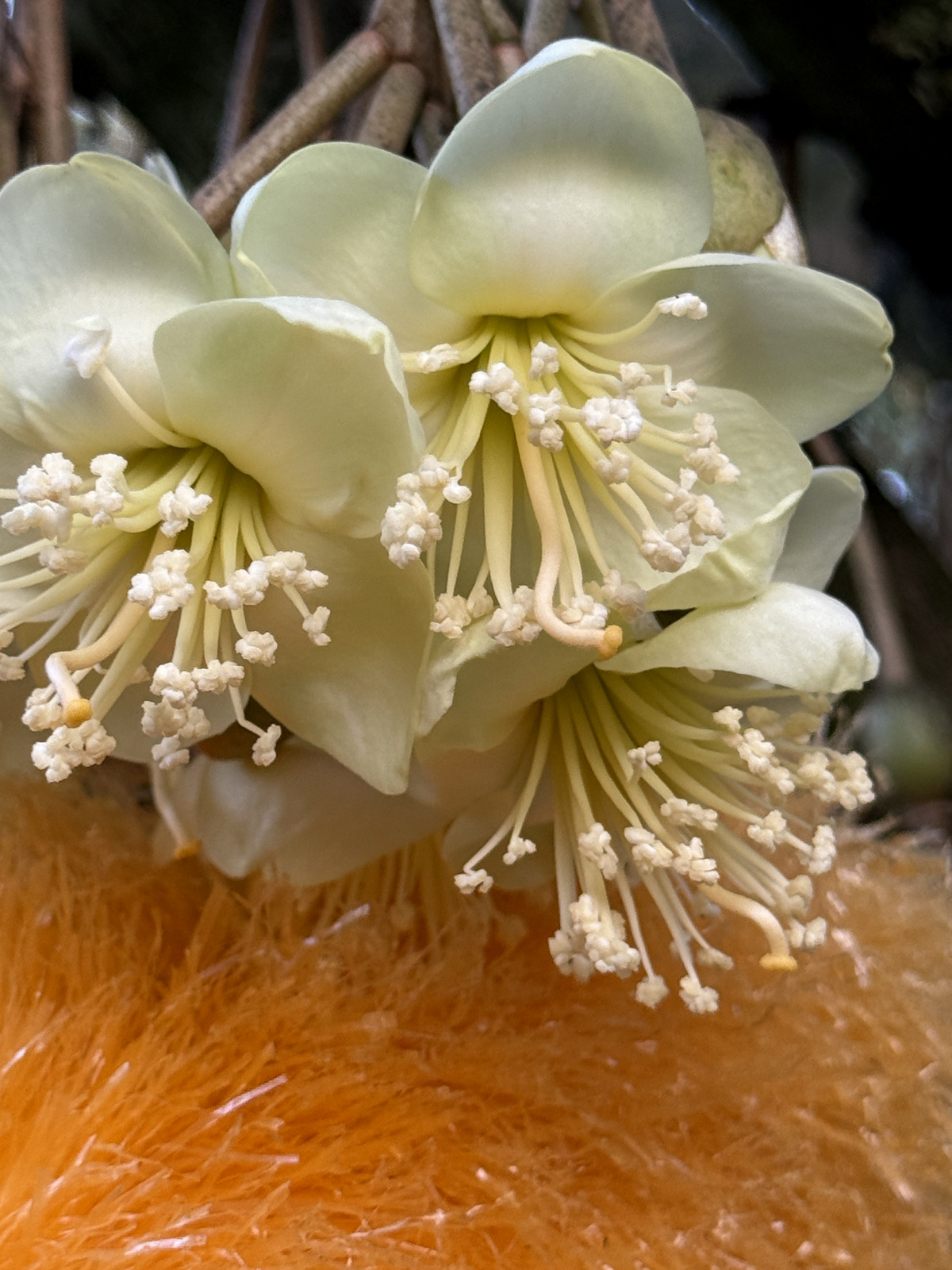
A cluster of durian flowers is in its most vibrant bloom.
PHOTO: LAM PHONG
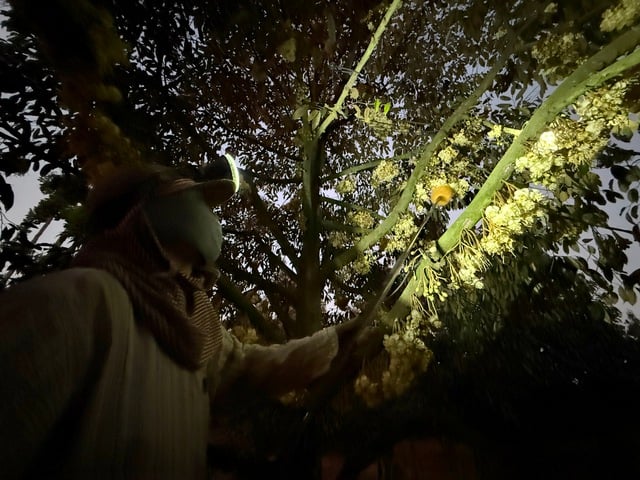
In the "durian painting" profession, the orchard owner does it himself, trusting in his own skills and not daring to hire anyone.
PHOTO: LAM PHONG
Source: https://thanhnien.vn/to-phan-cho-sau-rieng-185260523185756455.htm






















































































Comment (0)