

 |
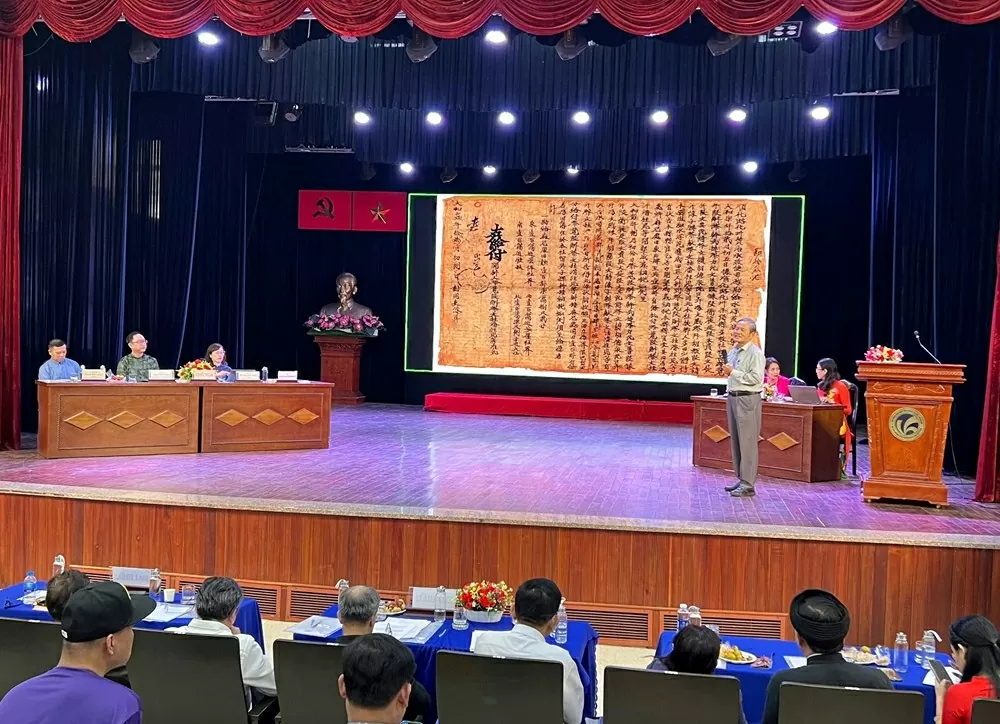
| Speakers present research results at the seminar. (Photo: Thuy Trang) |
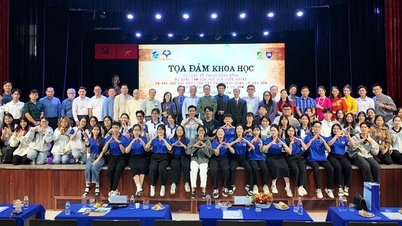
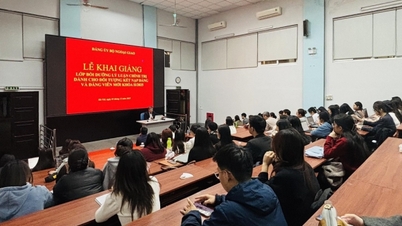
The Faculty of Arts and Culture Management, Ho Chi Minh City University of Culture recently organized a scientific seminar with the theme "Ancient documents in the community - The interest of foreign scholars and lessons for training in cultural management".
The event took place in person at the school and online through Japan, Canada, France, Belgium, Thailand and many provinces and cities in Vietnam.
The discussion aims to identify the role of the community in preserving and telling heritage stories, while strengthening the role of the State in developing policies, legislation and support mechanisms, ensuring community ownership of ancient documents, in accordance with UNESCO standards.
In addition, the discussion also aims to clarify the responsibility of training institutions, including the Faculty of Arts and Culture Management, Ho Chi Minh City University of Culture, in training human resources who know how to appreciate, exploit and use ancient documents as a strategic resource, not just as "reference materials".
The seminar also opens up opportunities for cooperation with international universities and organizations such as Osaka University, EPHE Paris, French School of the Far East, Fulbright University Vietnam, Ben Tre Province Cultural Heritage Association, Southern Culture Research and Honor Club, etc.
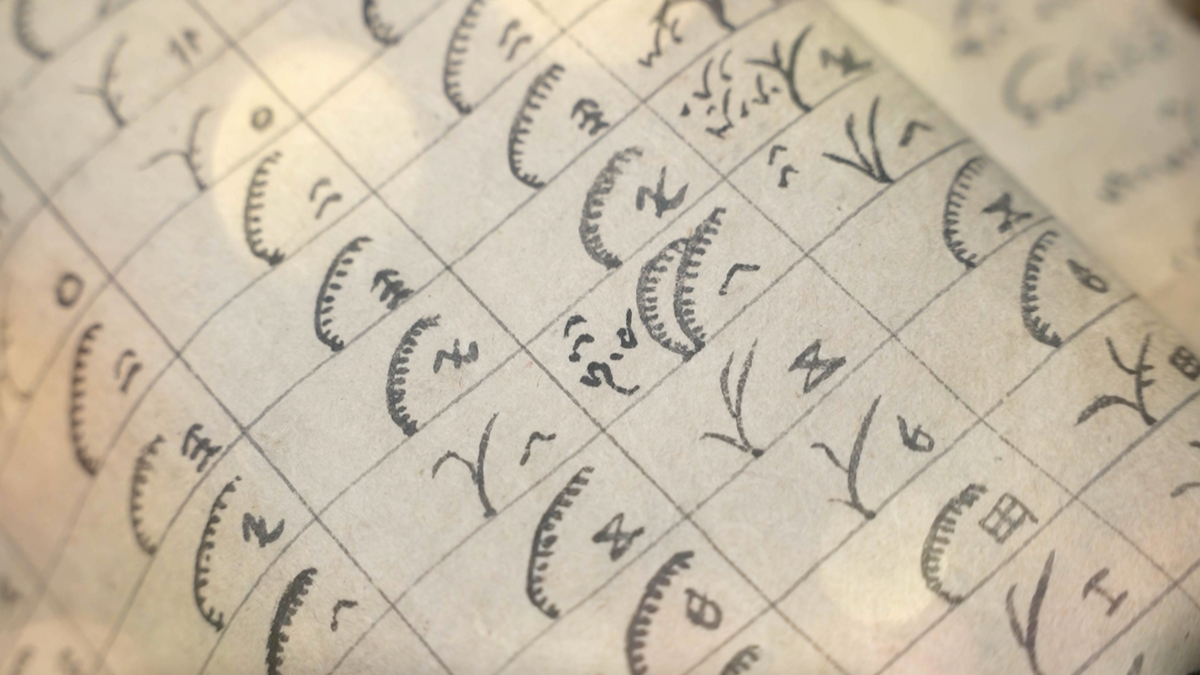
Speaking at the seminar, scholars emphasized that ancient documents in the community, from genealogies, royal decrees, Han Nom manuscripts, diaries, family books to oral memories, are still quietly preserved through many generations, a treasure trove of knowledge that transcends time.
In the context of international integration and development of cultural industries, these "silent archives" are increasingly exploited, becoming a meeting point between many different scientific fields and academic traditions.
From the perspective of Cultural Management, ancient documents today are not only a supplementary source for history, ethnology, and Sino-Nom studies, but also important materials for community culture research, heritage research, communication, digital transformation, and cultural content creation.
Ancient documents can be seen as a special cultural resource, requiring a more systematic and professional approach to management, connection and promotion than before...
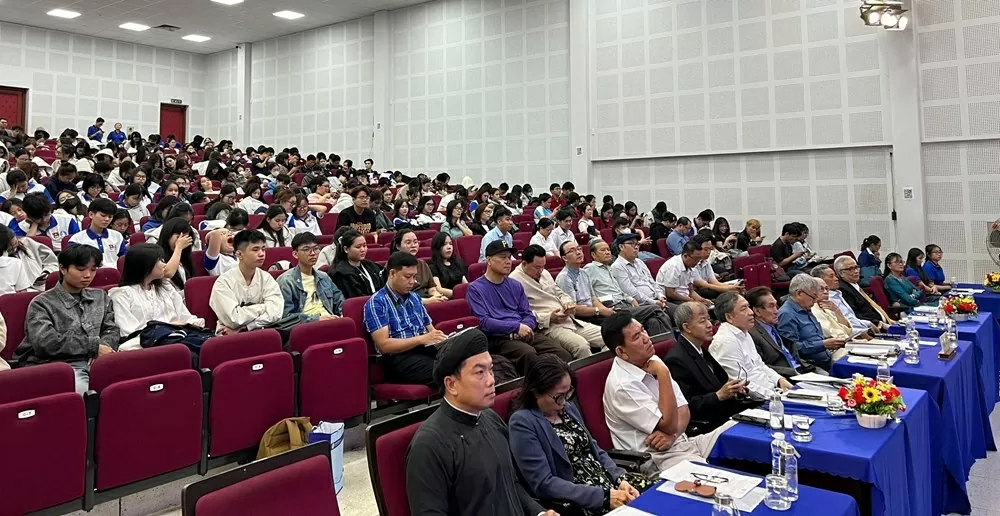 |
| Experts and students interested in the topic of ancient documents in the community. (Photo: Thuy Trang) |
The Organizing Committee said it had received more than 60 submissions, of which 38 were selected for the proceedings, divided into three groups of content: Research - Decoding ancient documents; Preservation - Management - Legality - Risks of ancient documents; and Promoting the value - Application - Education - Communication - Tourism - Digitization of ancient documents.
Some typical presentations have opened up many new perspectives on ancient documents. Professor Vu Gia Hien with “The secret of Nom script in the Le family temple” illustrated the priceless archive of documents that are “living” in the daily life of Vietnamese families.
Scholar Matsuoka Reina presented the role and contribution of Truong Vinh Ky in teaching Annamese language in France, clarifying the value of ancient documents in linguistic history research. Author Bui Thu Hang shared about “Community ownership of ancient documents” connecting UNESCO standards, Vietnamese law and conservation practices.
The 5th generation descendant of Truong Vinh Ky, scholar Nguyen Minh Tien shared about "Autobiography - Diary of Truong Vinh Ky", reminding that each ancient document has its own story and finding that story is sometimes more difficult than searching for treasure.
Scholars Shimizu Masaaki and Mika Kondo introduce the process of compiling Vietnamese textbooks in France based on the works of Truong Vinh Ky, proving that the Vietnamese academic heritage from ancient documents goes beyond the limits of space and time and still has value in current education.
The group of authors Dr. Trinh Dang Khoa and Thai Binh Nguyen presented "Cultural education through Han Nom heritage: The case of Thien Hau Cung (Bac Lieu - Ca Mau)", illustrating how ancient documents become cultural education tools in local communities.
In addition to the presentations, the discussion also received many in-depth exchanges of opinions on ownership, responsibility, comparison, digitalization, the role of universities, etc., expanding the range of thinking and suggesting actions that need to be taken by the interested scholarly community.
Summing up the discussion, Professor Shimzu Masaaki, Osaka University (Japan) expressed: "From Osaka, I am pleased to announce that the discussion program took place in an urgent academic atmosphere with a spirit of responsible work and dedication to the priceless treasure of ancient documents."
He said that from the results presented and discussed at the seminar, three outstanding values could be drawn. First, a new awareness of ancient documents in the community: ancient documents are not only "evidence of the past" but also living cultural capital, which can become an important resource for training, research and international connections.
Second, the important role of training institutions is affirmed. Ho Chi Minh City University of Culture has both the conditions and the responsibility to train generations of cultural managers who can read, understand and bring heritage into modern life.
Third, according to Professor Shimzu Masaaki, opportunities for international cultural cooperation are expanding. With the participation of scholars from Japan, Canada, France, Belgium, Thailand, the Russian Federation... it shows that ancient Vietnamese documents are receiving real attention, and at the same time becoming a natural connection point for interdisciplinary and international research.
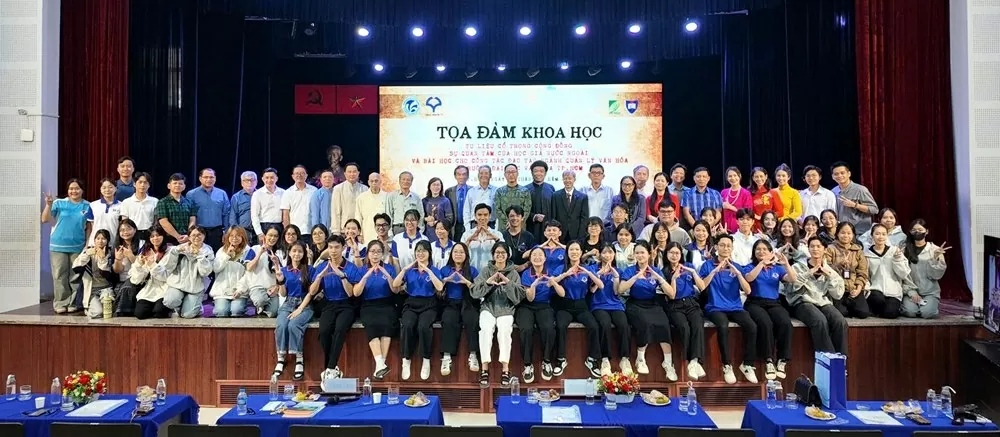 |
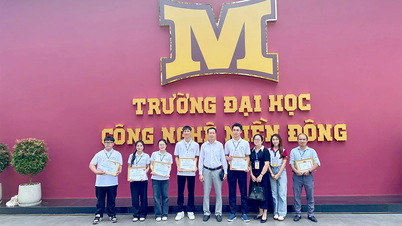
| Delegates and students take souvenir photos at the seminar. (Photo: Thuy Trang) |
“The conference ends but opens a long-term research journey. Ancient documents in the community are inviting us to approach them with responsibility, knowledge and creativity. The Organizing Committee plans to continue to select and supplement the conference proceedings for international publication in Japan. This is the starting point for many new research projects, cooperation and training programs, so that past knowledge becomes energy for the future,” said Professor Shimzu Masaaki.
Source: https://baoquocte.vn/toa-dam-khoa-hoc-ve-tu-lieu-co-nhan-dien-gia-tri-di-san-va-vai-tro-cua-co-so-dao-tao-336108.html


![[Photo] National Assembly Chairman Tran Thanh Man receives First Vice Chairman of the Federation Council of the Federal Assembly of the Russian Federation](/_next/image?url=https%3A%2F%2Fvphoto.vietnam.vn%2Fthumb%2F1200x675%2Fvietnam%2Fresource%2FIMAGE%2F2025%2F12%2F02%2F1764648408509_ndo_br_bnd-8452-jpg.webp&w=3840&q=75)
















































Comment (0)