

This is one of the cultural activities in the "Touching the Crafts of the Old Quarter 2026" series organized by the Hoan Kiem Lake and Hanoi Old Quarter Management Board, lasting until June 30th. In an atmosphere steeped in ancient traditions, the public can directly experience the process of spinning silk and weaving traditional silk fabric. Using a loom for the first time, slowly and carefully threading each silk thread horizontally and vertically, Trinh Quynh Chi (21 years old, from Tay Mo ward, Hanoi) was both amazed and delighted.
After listening to the tour guide introduce the silk production process, from mulberry cultivation, silkworm rearing, cocoon harvesting, silk reeling, weaving, and dyeing, Trinh Quynh Chi shared: “Today’s experience helped me understand that silk is the culmination of a whole process of hard work. Each step is done meticulously and with dedication. I am even more proud and appreciative of the traditional craft of my people.”
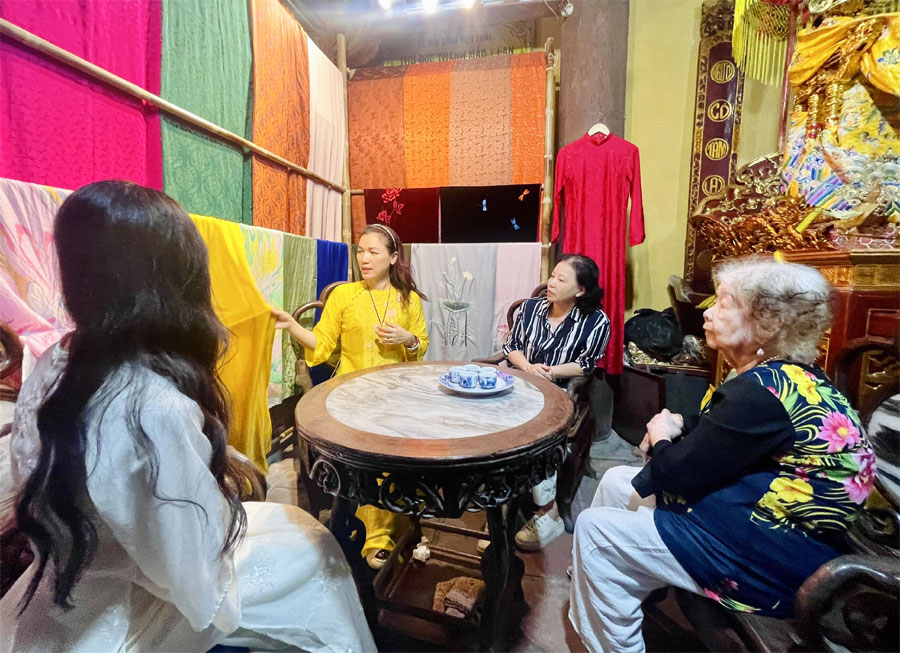 |
| The public learns about Vietnamese silk at the Yen Thai communal house historical site. |
Within the framework of the experience, visitors can feel and learn about the unique characteristics of many types of traditional Vietnamese silk. These include: Nha Xa silk (Ninh Binh province), notable for its rich, subtle patterns, softness, and colorfastness; Van Phuc silk (Ha Dong, Hanoi), known for its lightness, exquisite weaving techniques, and its past status as a premium item offered to the emperor; and Bao Loc silk (Lam Dong province), with its thick threads and natural sheen, an ideal choice for high-end fashion products. Besides familiar silk products such as fabrics, scarves, and ao dai (traditional Vietnamese dress), many other innovative products such as fashion accessories and interior decorations are also introduced to visitors, affirming the adaptability of Vietnamese silk in modern life.
Yen Thai Temple, recognized as a National Historical and Cultural Monument in 1995, is a place of worship dedicated to Empress Dowager Y Lan. She not only twice acted as regent (governing the country on behalf of the king without directly owning the throne), helping the king defeat invaders, but was also revered by the people as the tutelary deity of the ancient Yen Thai village. Empress Y Lan once lived in this village and taught the palace ladies and villagers the famous silk weaving craft of Thang Long (Hanoi).
Through this event, the organizers hope to tell the story of heritage and spread the value of Vietnamese silk weaving to a wide audience both domestically and internationally. Dr. Hoang Hai Yen, founder of the social enterprise Suncraft and in charge of the activity, said: “Experts in business development always encourage introducing traditional craft products along with in-depth cultural and historical stories, using the perspective and language of the modern era. Vietnamese silk is loved by the people for its unique identity, and foreign tourists are impressed by its craftsmanship and high quality. Customers will buy the products because of the cultural value we convey through them.”
Combining the story of preserving and promoting the value of traditional crafts with experiential activities in heritage spaces can be seen as an effective way for products from Vietnamese craft villages to continue to shine and affirm their position in contemporary life.
Source: https://www.qdnd.vn/van-hoa/doi-song/ton-vinh-gia-tri-lua-viet-1040976





































































Comment (0)