

2026 is a pivotal year, ushering in a new phase of development for Gia Lai province within its 2026-2030 five-year plan. With the goal of achieving over 10% growth in Gross Regional Domestic Product (GRDP), the province is implementing a comprehensive range of solutions, from improving institutions and investing in infrastructure to reforming administrative procedures, with a spirit of decisive action to create significant changes in attracting investment.
The overarching operational principle is a strong shift from "management" to "service," with the business at its center.
Rethinking, accelerating reforms
The core of Gia Lai's investment attraction strategy is the shift in the government's role, from administrative management to creating and supporting businesses. This shift lays the foundation for a substantial improvement in the investment environment.
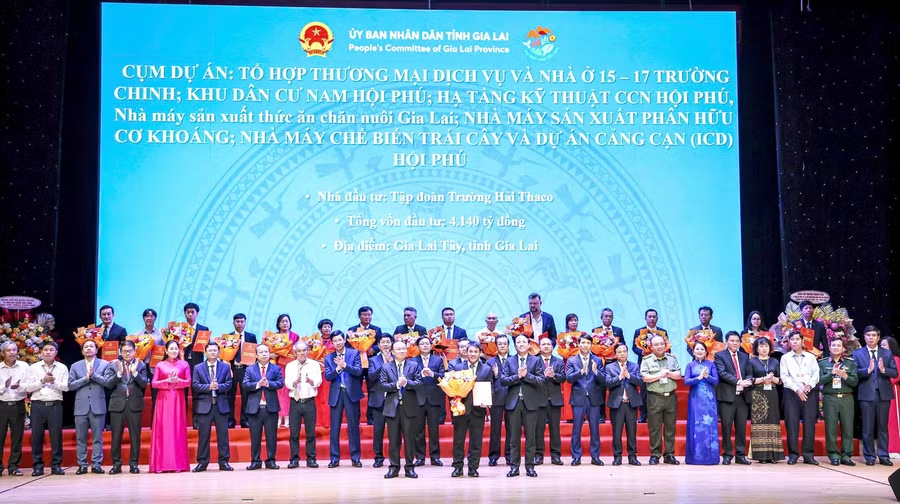
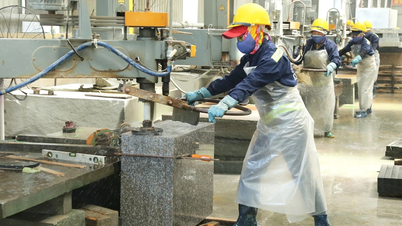
In 2026, the province aims to attract 170 new projects, focusing on high value-added sectors such as processing and manufacturing industries, renewable energy, high-tech agriculture, and the digital economy . Simultaneously, the province is targeting key sectors such as artificial intelligence (AI), semiconductors, and the digital economy, demonstrating a shift in thinking from " attracting quantity" to "optimizing quality," aligning with new development trends.
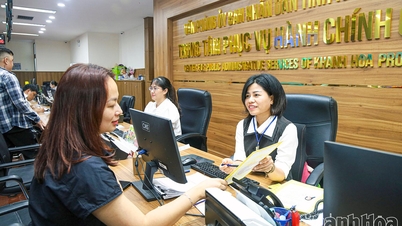
To achieve this goal, administrative procedure reforms have been intensified in a substantive manner, addressing specific bottlenecks. The processing time for applications has been shortened to 60 days for projects outside economic zones and industrial parks, and 38 days for projects within industrial parks.
The "one-stop shop" mechanism and the Task Force for Business Support continue to be maintained, promptly resolving obstacles. A notable point is the Provincial People's Committee's adherence to the "six clear principles" (clear person, clear task, clear time, clear responsibility, clear product, and clear authority), contributing to enhanced accountability and reducing procrastination and delays in procedures.
Along with institutional reforms, the province has been assigning specific targets to each industrial zone and cluster right from the beginning of the year.
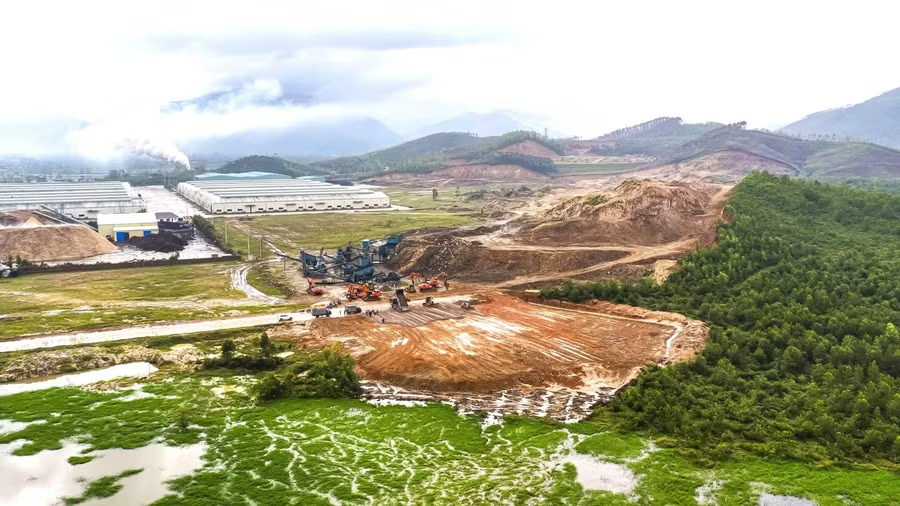
Ten industrial parks have been tasked with attracting 40 projects with a total investment of approximately 20,000 billion VND; 42 industrial clusters aim to attract 27 new projects. Quantifying these targets not only creates pressure for action but also serves as a basis for evaluating implementation effectiveness, avoiding vague and unfocused approaches.
While at the provincial level, the constructive mindset is concretized through mechanisms and policies, at the grassroots level, it is demonstrated through the way implementation is organized. Many communes and wards have proactively developed plans and assigned clear timelines for each project, considering this a key task in local economic development.
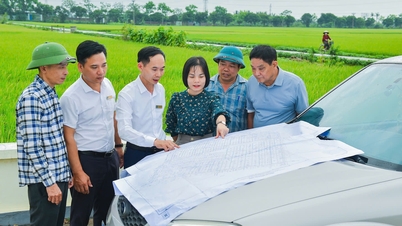
Phu My Dong commune is one of the key areas in the province currently implementing 10 major projects, including the Phu My Industrial Park with a scale of 436.8 hectares, which plays a crucial role. Chairman of the Commune People's Committee Tran Minh Thong stated: Compensation and land clearance are the "bottleneck" affecting the progress of investment projects.
Therefore, the local authorities have mobilized maximum resources and coordinated closely with relevant departments and investors to accelerate this process. As a result, to date, 239.4 out of 436.8 hectares of land belonging to households within the affected area have been reclaimed to facilitate land clearance for the project; and decisions have been issued to lease 225.5 hectares.
Meanwhile, Hoa Hoi commune, with its abundant industrial land of over 385 hectares, including Hoa Hoi Industrial Park (265.5 ha) and two industrial clusters, Cat Hiep (50 ha) and Cat Hanh (70 ha), is opening up significant opportunities to attract investment. According to the Chairman of the Commune People's Committee, Dinh Thanh Tien, instead of relying solely on land advantages, the locality has identified administrative reform and collaboration with businesses as decisive factors. Procedures related to land and investment have been streamlined to the maximum extent; at the same time, the government proactively supports businesses in accessing preferential policies.
Improving infrastructure and developing green industries.
If administrative reform is a necessary condition, then infrastructure is the sufficient condition to attract and retain investors. Infrastructure must "lead the way," creating room for development and enhancing regional connectivity.
Key projects such as the Quy Nhon - Pleiku expressway and the second runway at Phu Cat airport are being accelerated, contributing to shortening connection times and reducing logistics costs - a decisive factor for investors. At the same time, the province is proactively preparing the conditions for connection with the North-South high-speed railway line.
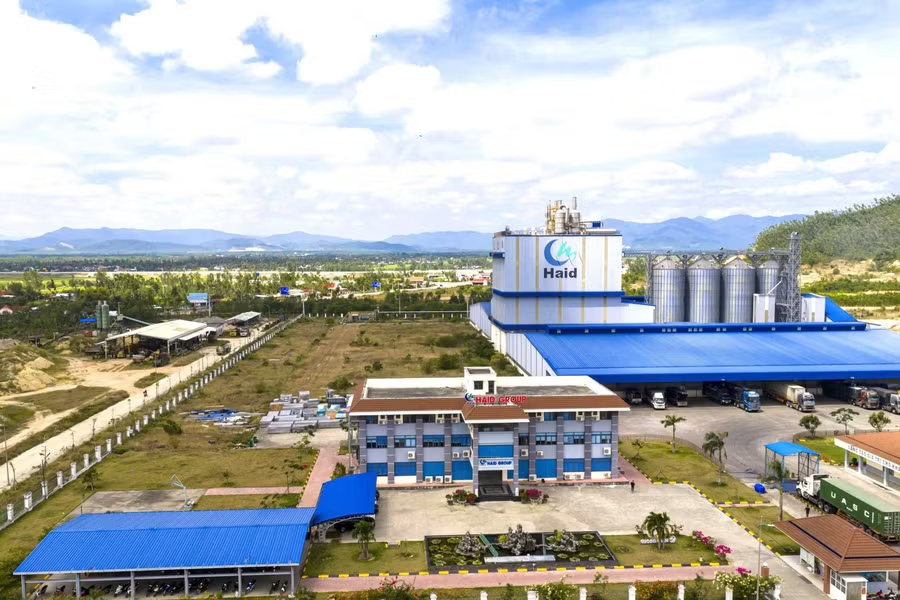
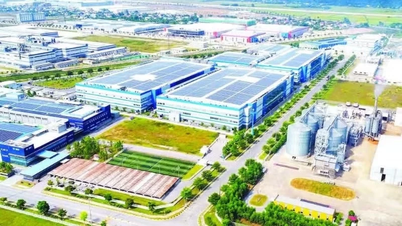
In the industrial sector, the province is shifting from expanding scale to improving quality, promoting eco-industrial parks and smart industrial clusters, linked with the application of digital technology, AI, the Internet of Things (IoT), and the use of renewable energy.
Becamex VSIP Binh Dinh Industrial Park (Nhon Hoi Economic Zone) has been assigned the leading role in attracting investment, aiming for 20 new projects, approximately 100 hectares of land for lease, and a total registered capital of approximately VND 12,000 billion in 2026. Mr. Nguyen Van Lang, General Director of Becamex Binh Dinh Joint Stock Company, the investor of the industrial park, stated: In the context of increasingly fierce competition to attract investment, Becamex VSIP Binh Dinh Industrial Park proactively integrates ESG standards (a set of three standards used to measure the level of sustainable development and the impact of businesses on the community) and digital transformation right from the planning stage. This approach not only creates a competitive advantage but also helps businesses reduce long-term costs and improve production and business efficiency.
In addition, Binh Nghi Industrial Park (Tay Son commune), with an area of 207.7 hectares, is one of two newly operational industrial parks, marking a step in expanding the province's industrial space. Mr. Duong Ngoc Oanh - Director of Binh Nghi Industrial Park Infrastructure Investment and Development Company Limited - informed that this industrial park is oriented towards attracting projects using clean, environmentally friendly, and energy-saving technologies, in line with the green growth strategy that the province is pursuing.
The province is also tightening management and reviewing projects that are behind schedule or using land inefficiently, in order to avoid waste and create land reserves for capable investors. A notable new point is the public disclosure and transparency of land lease prices and infrastructure fees, making it easier for businesses to access information and creating a healthy competitive environment among industrial parks.
Gia Lai is gradually developing a sustainable investment ecosystem, encompassing a transparent institutional framework, synchronized infrastructure, effective governance, and a green development orientation. As bottlenecks are gradually removed and the government truly plays a supportive role, the investment environment will be attractive not only for its incentives but also for its stability and predictability.
Source: https://baogialai.com.vn/tong-luc-thu-hut-dau-tu-tao-da-but-pha-post585624.html



























































































Comment (0)