Accelerate the opening of sea routes.
Today (March 5th) is the deadline for the Ho Chi Minh City Department of Finance to report to the Ho Chi Minh City People's Committee on the detailed step-by-step implementation plan for key PPP investment projects, including the Can Gio Bridge, Phu My 2 Bridge, and the Rach Chiec National Sports Complex. This task was outlined in the concluding notice issued by Vice Chairman of the Ho Chi Minh City People's Committee Nguyen Cong Vinh at a previous meeting on the progress of these projects. Accordingly, the Ho Chi Minh City People's Committee leadership requested relevant departments, localities, and units to resolve all obstacles and accelerate project implementation; thereby ensuring that compensation, land clearance, and resettlement are carried out in accordance with regulations and on schedule.
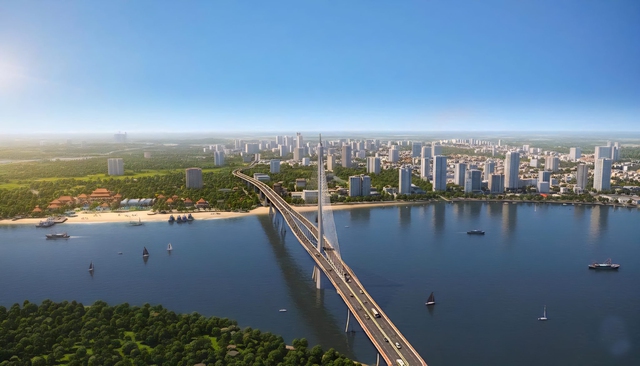
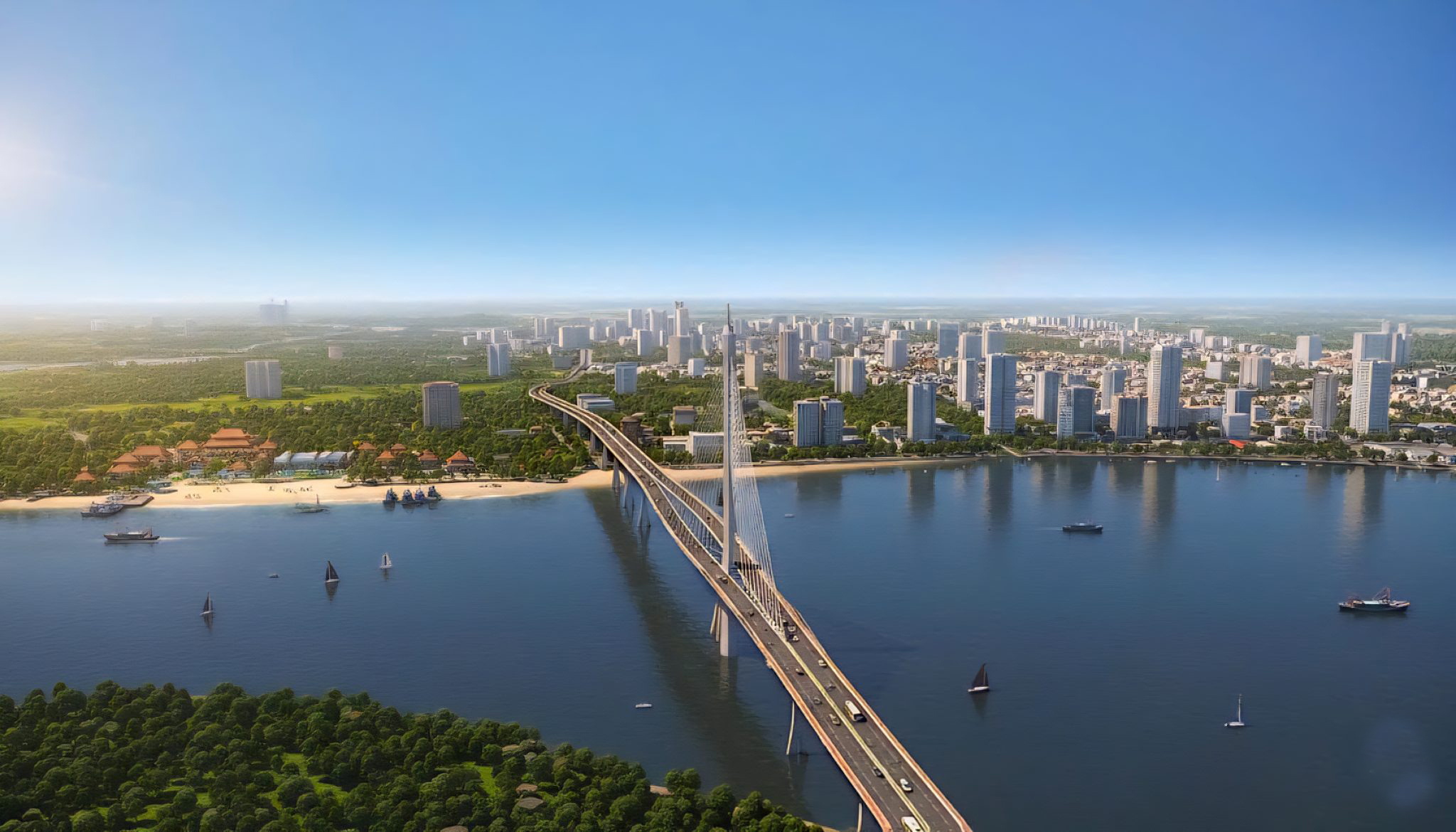
A perspective view of the Can Gio Bridge, a project considered a key to unlocking Ho Chi Minh City's access to the open sea.
SOURCE: HO CHI MINH CITY DEPARTMENT OF CONSTRUCTION
For each project, the leaders of the Ho Chi Minh City People's Committee requested the urgent establishment of a council to appraise the feasibility study report, select a consultant for verification, and organize the appraisal of the dossier in accordance with regulations, ensuring progress within March. They also requested a competition for architectural designs; a review of issues related to national defense land; standards and regulations for construction projects; and a phased investment plan in accordance with the assigned authority and timeline.
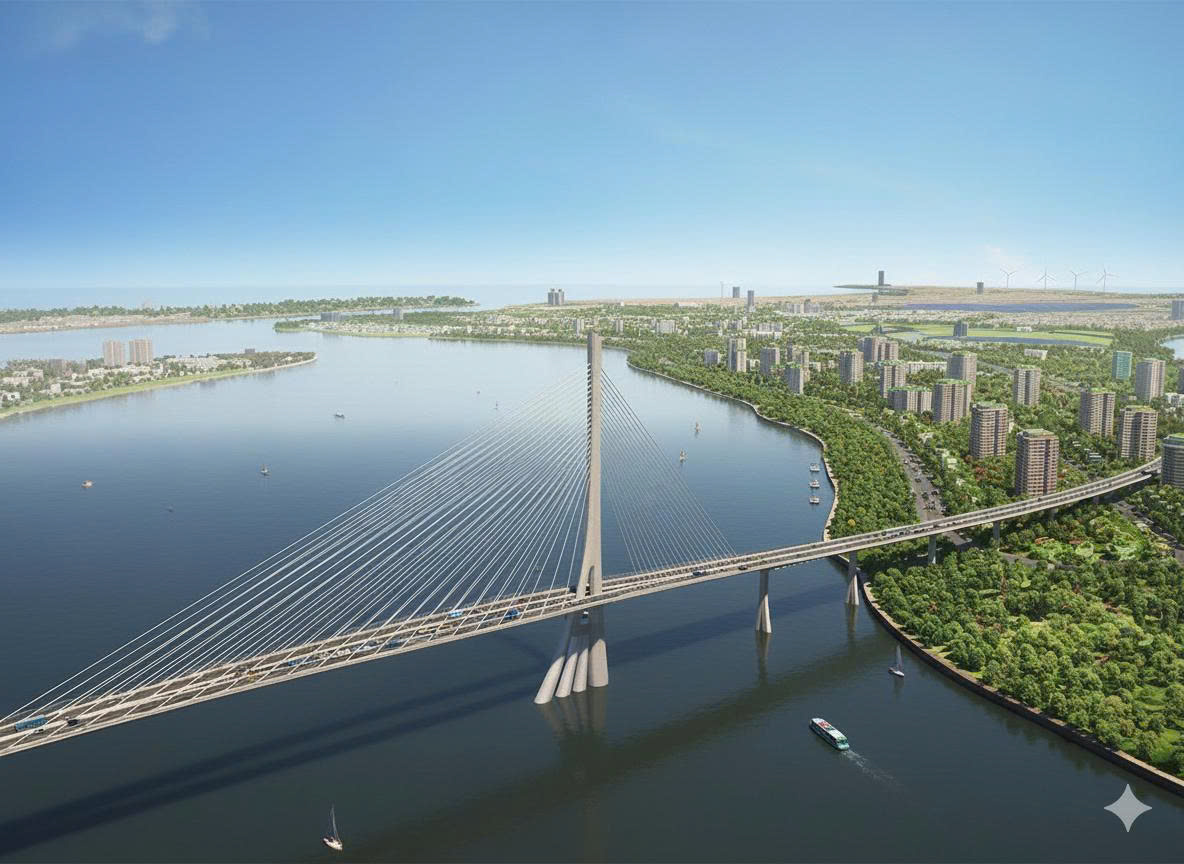
Of the three projects, the Can Gio Bridge is the most anticipated, as it is considered the "key" to unlocking Ho Chi Minh City's access to the open sea. The bridge has a total length of approximately 6.3 km, crossing the Soai Rap River and connecting Can Gio with Nha Be. The project includes a main bridge nearly 3 km long and over 3.3 km of approach roads, along with smaller bridges crossing the Cha River, the Cha River canal, and the Muong Ngang canal. If completed on schedule, in just three years, people traveling from the center of Ho Chi Minh City to Can Gio will no longer have to queue for ferries but can travel at speeds of 80 km/h on the six-lane bridge. Travel time will be shortened to approximately 45-60 minutes.
Although not a project with an extremely large investment scale, the Can Gio Bridge is a project of paramount importance. Simply connecting this bridge will allow Ho Chi Minh City to realize its goal of bringing Can Gio closer to the city's core, creating momentum for maritime development. This strategy has been identified by Ho Chi Minh City leaders as a central focus in its development journey into a new era. Currently, with the city's incorporation of Ba Ria-Vung Tau, this maritime corridor further strengthens the country's largest economic hub's maritime potential.
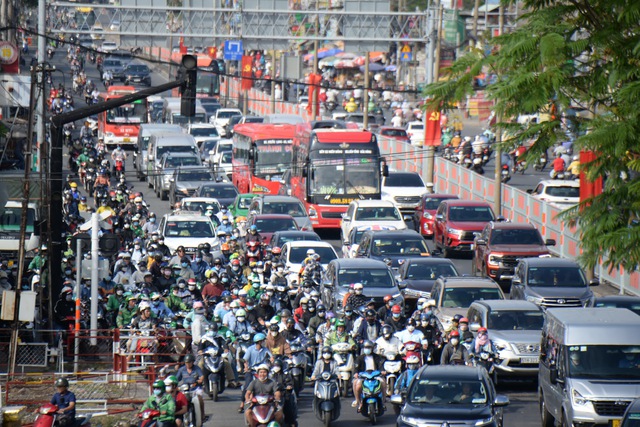
By the end of 2028, the dream of eliminating the bottleneck on National Highway 13 for the people of Ho Chi Minh City will become a reality after 26 years of waiting.
Photo: Ngoc Duong
At the groundbreaking ceremony for the project in mid-January, Vice Chairman of the Ho Chi Minh City People's Committee Nguyen Cong Vinh also pointed out: The Ho Chi Minh City planning for the period 2021-2030, with a vision to 2050, has been approved by the Prime Minister; along with the revised master plan for the city until 2040, with a vision to 2060, both identify the Can Gio area as one of the major growth poles in the southern region. Recently, a series of large projects have been implemented, including: the Can Gio coastal tourism urban area, which commenced construction on April 19, 2025, with a scale of 2,870 hectares, expected to welcome 40 million visitors per year, and is on its way to conquering the title of a world urban wonder; The Can Gio International Transshipment Port, capable of handling 24,000 TEU container ships, 65,000-ton transshipment vessels, and 8,000-ton barges, was approved by the Prime Minister on January 1, 2025. Most recently, Ho Chi Minh City announced a call for strategic investors to register to participate in the Can Gio International Transshipment Port project, with a total estimated capital of approximately 128,000 billion VND.
"Therefore, the Can Gio Bridge is a strategic and important project. Upon completion, it will significantly shorten travel time along with other transportation projects, facilitating trade, tourism, and services, while also improving access to healthcare, education, and cultural services for the people of Can Gio. This is not just a transportation project, but also a new architectural symbol of the city with a highly aesthetic design that has been approved, a place where residents and tourists can admire the beauty of the city," Mr. Nguyen Cong Vinh observed.
Previously, Vingroup also broke ground on the Ben Thanh - Can Gio metro project on December 19, 2025. Along with the Can Gio - Vung Tau sea route connecting two major economic development hubs in the coastal region, which is expected to begin construction this year, within the next five years, residents and tourists from central Ho Chi Minh City or Vung Tau will be able to travel to Can Gio in a flash. This "treasure" of Ho Chi Minh City will officially be unlocked, creating a comprehensive breakthrough in services, tourism, and the coastal economy.
Urgent interregional transportation
Along with accelerating the progress of already commenced PPP projects, the Ho Chi Minh City People's Committee has requested the Department of Construction to review and update the implementation plan for four BOT transportation projects at the city's gateways, including the upgrading and expansion of National Highways 1, 13, and 22, and the North-South arterial road (from Nguyen Van Linh Street to the Ben Luc - Long Thanh Expressway).
In particular, the North-South arterial road upgrade project is currently behind schedule. The Ho Chi Minh City People's Committee has instructed the Project Management Board for Investment and Construction of Transportation Works to urgently review and simultaneously implement related tasks (architectural design competition, adjustment and updating of planning) to shorten the time for completing the Feasibility Study Report; striving to submit it in the second quarter of 2026. "These agencies should also proactively resolve outstanding issues to avoid affecting the overall progress of the projects," stated Vice Chairman of the Ho Chi Minh City People's Committee Nguyen Cong Vinh.
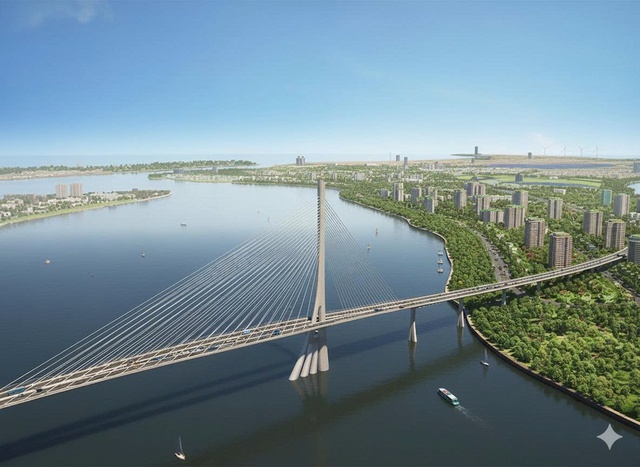
Perspective view of Can Gio Bridge
Source: Ho Chi Minh City Department of Construction
These projects are all located at the city's gateways, with high traffic density, serving as main routes from Ho Chi Minh City to the Western and Eastern provinces; they are also the first "fruits" of Resolution 98 on special development mechanisms and policies for Ho Chi Minh City.
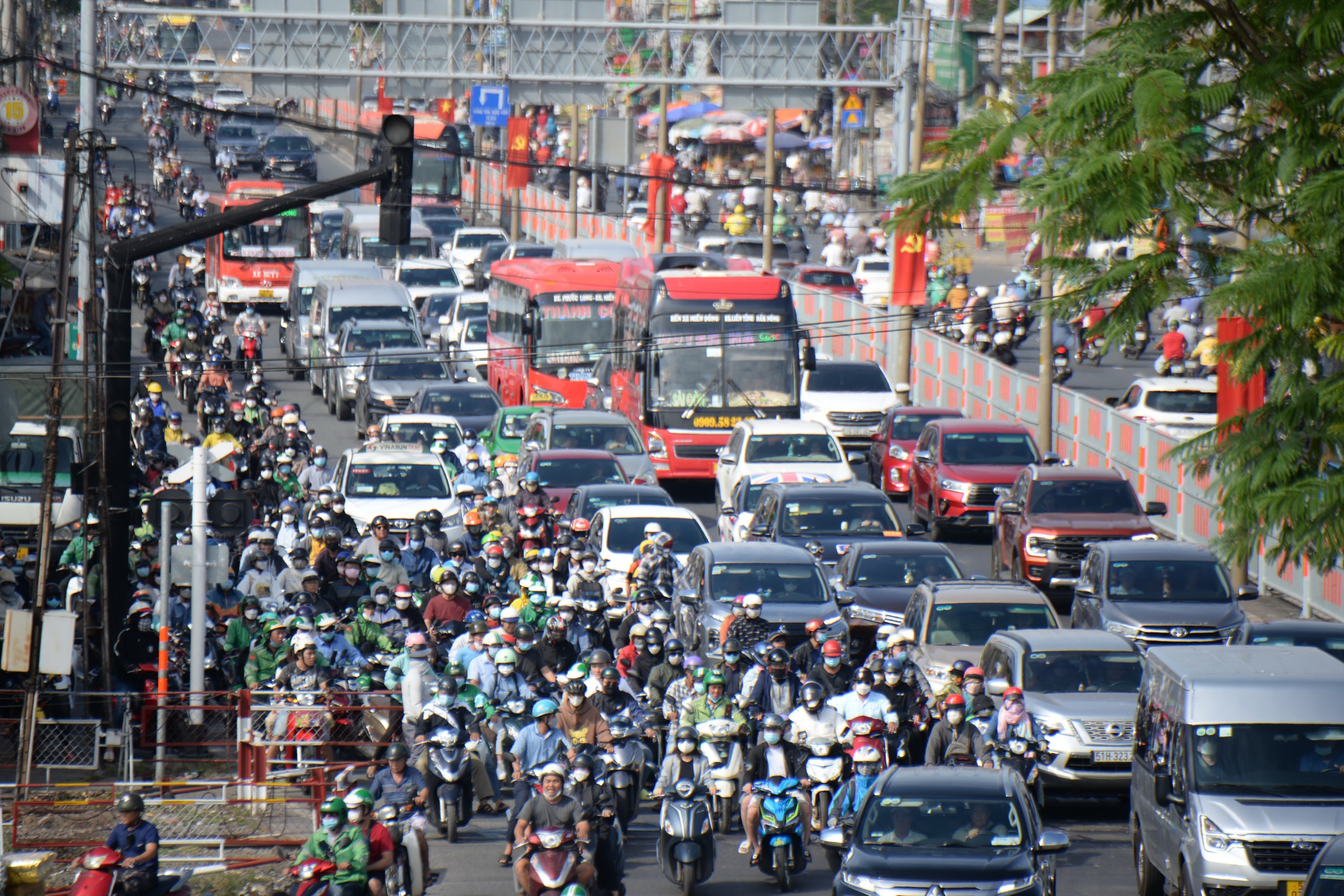
According to the Department of Construction, Ho Chi Minh City is a special urban area, a national economic center, and the leading city in the Southern Key Economic Region. However, three national highways (1, 13, and 22) have been severely overloaded for the past two decades, becoming a major traffic problem and hindering trade between the city and other localities. Among these, the project that has been on paper for the longest time is the expansion of National Highway 13 from Binh Trieu Bridge to Binh Phuoc intersection.
In the plan submitted to the Ho Chi Minh City People's Council, National Highway 13 connecting Ho Chi Minh City with Binh Duong not only expands the road surface from 4-6 lanes to 10 lanes (60 m wide), but also proposes building an elevated road (viaduct) of approximately 3.2 km in the middle of the route with 4 lanes, flanked by parallel roads. According to the plan, construction is expected to begin in the third quarter of 2026, and be completed and operational two years later. Thus, by the end of 2028 at the latest, the dream of eliminating the bottleneck on National Highway 13 for the people of Ho Chi Minh City will become a reality after 26 years of waiting.
Similarly, at the northwestern gateway, National Highway 22, passing through District 12 and the former Hoc Mon District, will also be upgraded along a section of over 8 km, from the An Suong intersection to Ring Road 3, to a 10-lane scale. A large, multi-level interchange will also be constructed on this section to reduce intersections with surrounding roads. Currently, the Trans-Asian Highway connecting Ho Chi Minh City with the Moc Bai - Tay Ninh international border gate is also severely overloaded.
In recent years, Tay Ninh has emerged as an attractive destination, leading to a surge in tourism connectivity between the two localities. The increasing demand for passenger and cargo traffic on the route has resulted in frequent congestion and increased traffic accidents on National Highway 22, particularly at level crossings. Expanding National Highway 22, along with the simultaneous construction and completion of the Ho Chi Minh City - Moc Bai Expressway, Ring Road 3, and Ring Road 4, will pave the way for Ho Chi Minh City to develop Northwest Cu Chi, not only connecting trade and tourism with Tay Ninh but also opening up new development opportunities for the entire Southeast region.
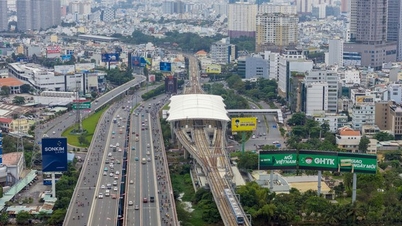
Meanwhile, the route connecting to the former Long An province (now Tay Ninh province) via National Highway 1 (a section nearly 10 km long through the former Binh Tan District and Binh Chanh District) will be expanded from 6 lanes to 10-12 lanes, reaching a width of 60 meters as planned. Along the route, major interchanges will be constructed with different levels (overpasses or underpasses) to reduce conflicts with surrounding roads and ensure smooth traffic flow on the main route. The Binh Dien bridge will also be expanded to match the overall traffic flow.
National Highway 1 (QL1) in the aforementioned area is the main gateway connecting Ho Chi Minh City to the Mekong Delta provinces. It also links several major roads such as Vo Van Kiet Boulevard, Nguyen Van Linh Street, and the Ho Chi Minh City - Trung Luong Expressway, and serves as the access route to the Western Bus Station. For many years, this section has been a "bottleneck," frequently congested and posing a risk of accidents due to its narrow width and the inability of the city to install a median separating the car and motorbike lanes. Both QL1 and QL22 are planned to begin construction this year, concluding at the same time as the expansion of QL13.
The Department of Construction expects that the expansion of the three national highways, as planned, will create a smooth and fast transportation axis between the economic, industrial, and cultural centers of the region, providing impetus for socio-economic development and economic restructuring in Ho Chi Minh City and neighboring provinces.
Metro breakthrough
Entering a new era, Ho Chi Minh City has also identified this as the era of urban rail (metro). Along with the need for urban restructuring after the merger and the crucial "new factor" of Long Thanh Airport (Dong Nai province) soon to be operational, the progress of implementing metro lines according to the plan has become more urgent than ever.
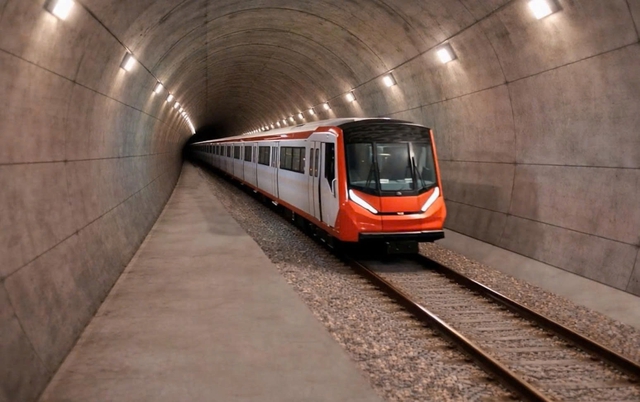
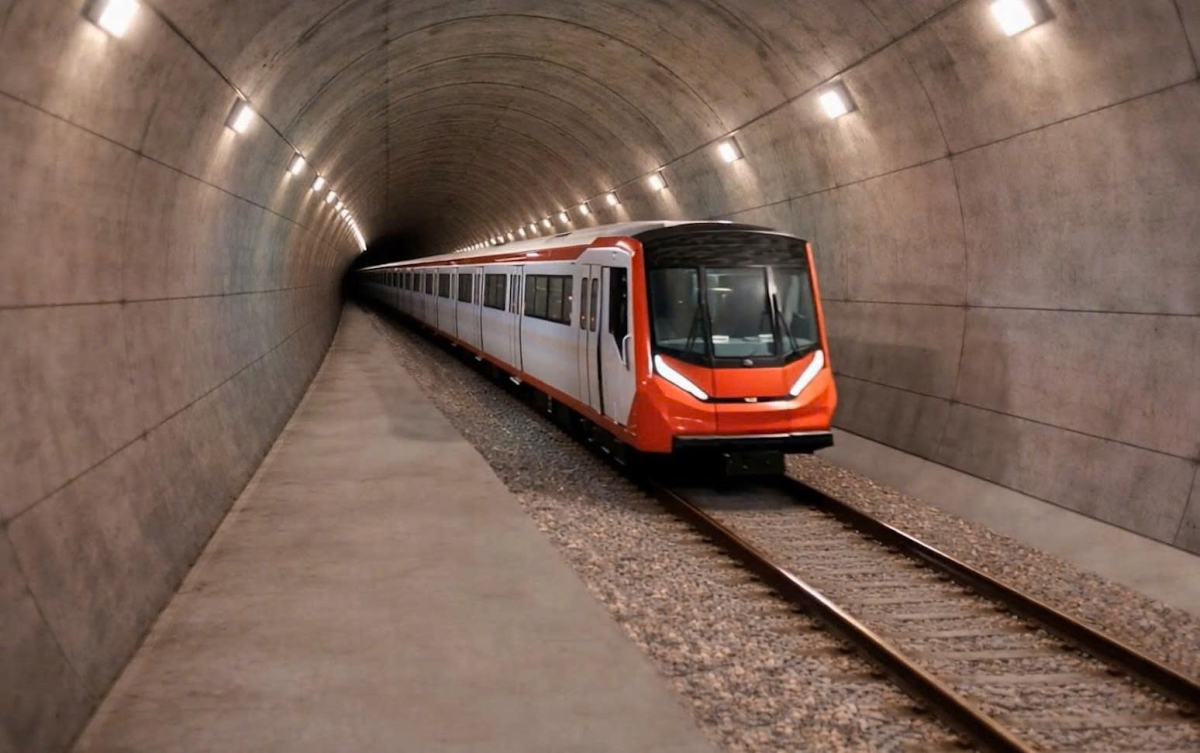
Perspective view of metro line 2.
Source: MAUR
At a recent meeting with constituents on the afternoon of March 2nd, Ho Chi Minh City Party Secretary Tran Luu Quang stated that by the end of the 2025-2030 term, the city aims to complete three key metro lines. These are Metro Line 2 (Ben Thanh - Tham Luong section and Ben Thanh - Thu Thiem section) and the Thu Thiem - Long Thanh line. These are identified as crucial urban railway axes connecting Ho Chi Minh City with Long Thanh International Airport. Currently, Metro Line 2 (Ben Thanh - Tham Luong section), nearly 11.27 km long with a total investment of over 55,000 billion VND, commenced construction on January 15th and is expected to be completed in 2030. For the Ben Thanh - Thu Thiem section of Metro Line 2, Ho Chi Minh City has assigned Truong Hai Group (Thaco) to prepare a feasibility study under the PPP (Public-Private Partnership) and BT (Build-Transfer) contract models. The 5.58 km long line includes 6 underground stations, with a preliminary total investment of approximately 33,000 billion VND; construction is expected to begin before April 30, 2026 and be completed in 2030. Simultaneously, the Ho Chi Minh City People's Committee is considering assigning Thaco to research and implement the Thu Thiem - Long Thanh line under the PPP (BT contract) model, aiming for commencement before June 30 and operation in 2030. The Thu Thiem - Long Thanh railway line is approximately 42 km long, designed as a double track with a 1,435 mm gauge, a design speed of 120 km/hour, and includes 20 stations (16 elevated stations, 4 underground stations), with a preliminary total investment of approximately 84,753 billion VND.
Notably, the City Party Secretary also promised voters that the progress of metro line 2 would certainly be faster than metro line 1 (Ben Thanh - Suoi Tien).
In fact, the promise of the Secretary of the Ho Chi Minh City Party Committee is entirely justified, because the land clearance for Line 2 has now been 100% completed, requiring only focus on construction. Project funding has also been transferred to the city budget and sufficient medium-term capital for 2026-2030 has been allocated, eliminating the situation of ongoing delays and waiting for funding as with Line 1. Furthermore, the project is being implemented with special mechanisms and policies, resolving long-standing obstacles related to investment procedures, funding, design standards, and contractor selection. All these factors facilitate accelerated progress. The investor previously projected that Line 2 would be constructed within 57 months, completing the entire project by the end of 2030, a reduction of more than 2.5 times compared to the 12-year construction time of Line 1.
Not only has Metro Line 2 commenced construction, but the metro lines connecting to Long Thanh Airport, which Ho Chi Minh City is prioritizing for accelerated implementation, have also received the Prime Minister's approval in principle for urgent deployment. Never before have so many multi-billion dollar metro lines been activated simultaneously with such speed, scale, and synchronization. Ho Chi Minh City is determined to utilize special mechanisms, maximize existing resources, and seize this golden opportunity to essentially complete the six connecting metro lines within the next four years.
In 2026, Ho Chi Minh City will be a massive construction site with numerous large-scale, key, and groundbreaking projects implementing the Resolution of the Ho Chi Minh City Party Congress. This is also the main theme of the city in the new year: Unlocking institutions, freeing up resources, breakthroughs in infrastructure, improving service efficiency, and creating substantive changes in the development of Ho Chi Minh City after the merger.
Chairman of the People's Committee of Ho Chi Minh City, Nguyen Van Duoc
At the meeting of the Steering Committee for Key National Railway Projects on March 3rd, from Ho Chi Minh City, Vice Chairman of the Ho Chi Minh City People's Committee Bui Xuan Cuong stated that the city plans to allocate approximately 345,000 billion VND to focus on implementing 10 metro lines, including priority lines to be implemented first and transitional lines to be completed in the 2030-2035 period. However, the current budget only reaches about 125,000 billion VND, equivalent to 40% of the total capital requirement. Based on this, Ho Chi Minh City requested the central government to consider supplementing approximately 220,000 billion VND to ensure the project progresses according to the set schedule.
Source: https://thanhnien.vn/tphcm-but-toc-ha-tang-trong-diem-185260304230911426.htm






























































































Comment (0)