


The official naming of the city after President Ho Chi Minh carries profound significance, first and foremost as an affirmation of the great achievements of the national liberation struggle. The name Ho Chi Minh, associated with this southern city, is also a symbol of unwavering belief in victory, a fitting reward for the immense contributions and sacrifices of the people of the South during the 30 years of protracted resistance. It also represents a special emotional connection between the beloved leader and the land he always cared deeply about.

During his lifetime, President Ho Chi Minh once said: "The South is always in my heart." This city was where he departed in 1911. Although it did not have the opportunity to welcome him back, bearing his name is a great honor and responsibility: it must be a place that embodies the pioneering spirit, humanism, creativity, and compassion – core values closely linked to President Ho Chi Minh's ideology and ethics.
After half a century, Ho Chi Minh City has truly become a symbol of Vietnam's vibrant spirit in the new era. From a city devastated by war, it has risen to become the country's largest economic center, a place where Vietnamese people from all over the country come to study, work, and live. This partly reflects the spirit that President Ho Chi Minh once desired: a unified, developed country where everyone has the opportunity to build a better life.

The pride of bearing President Ho Chi Minh's name has become a powerful intrinsic driving force for the Party Committee, government, and people of Ho Chi Minh City to always persevere through all challenges, shining with a dynamic and creative spirit. This is a precious quality that helps the city not only stand firm against the changes of the times but also pioneer in innovation movements, worthy of the honor and expectations of the people nationwide.

Building the Ho Chi Minh Cultural Space is one of the important, strategic, and long-term decisions of the city's Party Committee aimed at spreading the thoughts, ethics, style, and way of life of President Ho Chi Minh.

To date, the Ho Chi Minh Cultural Space has become a distinct landmark, present throughout schools, hospitals, government agencies, religious institutions, and residential communities. By the end of 2025, the entire city had 5,750 models of Ho Chi Minh Cultural Space. Notably, after the merger of administrative units to expand the development space, many new models have been established.
The unique aspect of these spaces lies in their flexibility and creativity. The city has strongly applied digital technology to bring the image and ideology of President Ho Chi Minh closer to the public. Documents and artifacts are digitized through 3D scanning, virtual reality (VR/AR), and 360-degree tours, allowing people to easily access them anytime, anywhere.

At Nha Rong Wharf – the place where President Ho Chi Minh departed to seek a path to national salvation in 1911 – the Ho Chi Minh Museum (Ho Chi Minh City branch) has long been a prominent historical and cultural landmark of the city. In 2025, it welcomed over 550,000 visitors for research and study. In addition to traditional exhibitions, the museum also organizes numerous mobile programs at schools, provides documentation support to agencies and organizations, and collaborates in building Ho Chi Minh Cultural Spaces at hundreds of different locations. The Ho Chi Minh Museum (Ho Chi Minh City branch) has also completed a project to digitize its museum space through a socialized model and put it into operation on an online platform.
The commencement of the Nha Rong Wharf renovation project in late April by Ho Chi Minh City demonstrates its determination to elevate the status of this historical site. The project aims to connect the entire Nha Rong - Khanh Hoi Port area with Bach Dang Wharf and the Saigon River waterfront park system, forming a unique cultural, historical, and tourism axis along the river.

At the Cu Chi Tunnels, the Ho Chi Minh Cultural Space is centrally located within the tunnel complex. This space, approximately 240 square meters, displays numerous valuable images and documents about the life and revolutionary career of President Ho Chi Minh. The content is organized by theme, ranging from his homeland and family to his journey to find a way to save the country, and the deep affection between him and the people of Southern Vietnam. By June 2025, the Ho Chi Minh City Command will continue to build a memorial space themed " Southern Vietnam with Uncle Ho - Uncle Ho with Southern Vietnam ," depicting the profound bond between President Ho Chi Minh and the people and soldiers of Southern Vietnam during the resistance war. The cultural space at the Cu Chi Tunnels has also become a destination for many tours, traditional education programs, and historical research.
In the eastern part of the city, the planning for the new administrative center in Thu Thiem also allocates land for the construction of the Ho Chi Minh Cultural Space, with various facilities such as a square, an art performance area, and an exhibition space.

Half a century has passed since Saigon - Gia Dinh was officially named after President Ho Chi Minh. The city has undergone dramatic changes in appearance, scale, and status. Its merger with Binh Duong and Ba Ria - Vung Tau has opened up unprecedented opportunities for development. The city is focusing all its resources on rapid and sustainable development, aiming to become a smart city and a regional innovation hub.

To celebrate the historic 50th anniversary of bearing the name of President Ho Chi Minh, Ho Chi Minh City has launched a vibrant emulation movement throughout the entire political system and among all sectors of the population. It is expected that more than 100 infrastructure and social projects will be started or completed during this period. Key national projects such as the Thu Thiem - Long Thanh railway line, the Ho Tram - Long Thanh International Airport expressway, the expansion of Nguyen Tat Thanh road, the Cai Mep Ha seaport complex, and especially the Can Gio - Vung Tau sea bridge or tunnel project are being accelerated. Upon completion, these projects will provide significant further development potential for the transportation and logistics network of the entire Southern key economic region.
Besides infrastructure projects, Ho Chi Minh City also pays special attention to education and social welfare. In the second and third quarters of 2026, the entire city aims to implement at least 200 celebratory projects, focusing on practical areas such as building new rural areas, civilized urban areas, caring for the islands and seas, and protecting national security. In 168 wards, communes, and special zones, people are working together to build a civilized lifestyle, maintain urban order, and improve the living environment so that every alley and canal becomes green, clean, and beautiful.

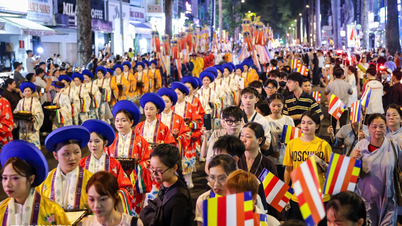
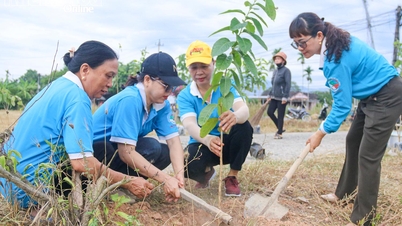
In addition, there will be a series of cultural and artistic events lasting from the end of June to the beginning of July 2026, such as: photo exhibitions, children's book fairs, tree planting ceremonies, etc. An art performance program combined with international 3D mapping will take place nightly from July 1st to July 5th, 2026, in front of the City People's Committee headquarters. On the evening of July 2nd, a special televised program will connect the Reunification Hall with the historic Ba Dinh Square. Immediately afterwards, at exactly 9 PM, the sky over Ho Chi Minh City will light up with artistic fireworks displays at the Saigon River Tunnel (An Khanh Ward), the New City Center (Binh Duong Ward), and Tam Thang Tower Square (Vung Tau Ward).
Fifty glorious years after the name of President Ho Chi Minh, Ho Chi Minh City continues to move forward with aspirations for self-improvement, creativity, and faith in the future of a city that embodies both historical depth and the rhythm of the modern era.

Source: https://vtv.vn/tp-ho-chi-minh-50-nam-ruc-ro-ten-nguoi-100260518144114582.htm






































































Comment (0)