

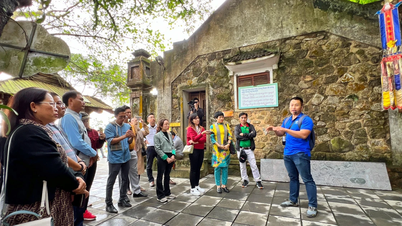
From nearly 100 ancient relics in Hanoi and more than a year of dedicated survey and research by leading experts from France and Vietnam, four heritage journeys associated with four traditional beliefs of the Vietnamese people have just been officially launched, giving visitors the opportunity to experience the most special and profound values of 28 typical relics of the capital.
It is worth mentioning that for the first time, a huge archive of documents in French, Han Nom and Vietnamese has been awakened through the project "Hanoi Heritage Tourism Journey". Then, each relic is vividly recreated through complete records, digitized on an electronic interactive map and integrated into the H-Heritage application. From there, with just a smartphone, visitors can touch history.
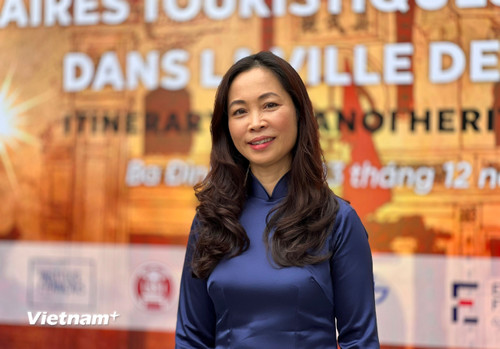
As the main scientific coordinator and involved in the entire research process, Dr. Nguyen Thi Hiep (French Agency for International Technical Cooperation - Expertise France), shared that she was really moved on the project launch day.
Journey to awaken heritage
- As the "leader" of a project to awaken the capital's heritage sponsored by the French Ministry of Europe and Foreign Affairs, how do you evaluate the results of this project?
Dr. Nguyen Thi Hiep: We carried out the project in a short time with a modest budget, but I am very satisfied with the results, because the goals were achieved and especially the project also has training significance.
Firstly, we have the opportunity to train students majoring in tourism, history, culture, and architecture in some survey methods as well as heritage theories.
Second, in terms of research, we have organized a collective research with 10 in-depth contents. Third, in terms of digital technology, we have created a website, an interactive map and an app that guides heritage experience journeys.
However, due to limited time and budget, we have only been able to test four routes. We hope to continue to receive support from relevant Vietnamese agencies so that we can continue to expand these routes into a “train network,” with each stop being a relic. This is also a method to bring heritage to each person, helping heritage interact with the community.
I think the project has ensured all levels, from the usual recreational travel experience to the discovery of Vietnamese culture and beliefs. Because the 4 itineraries that we have implemented are associated with 4 traditional beliefs of the Vietnamese people that I have analyzed very deeply and thoroughly.
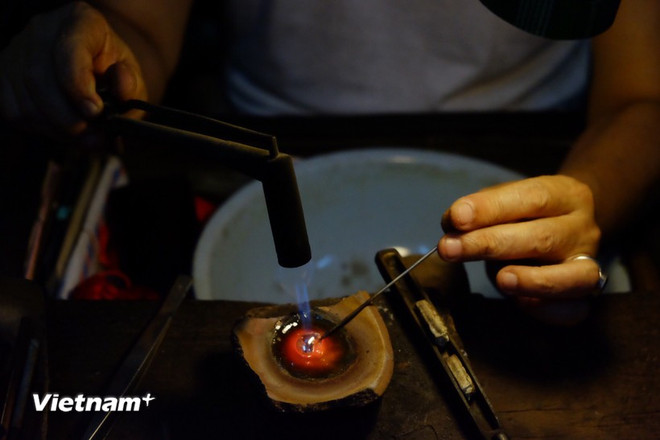
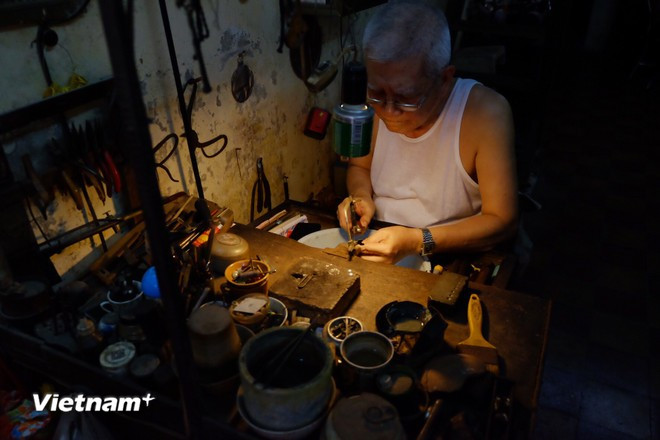
In addition, the project also aims to accompany extracurricular activities in training, becoming a tool for teachers to teach students. Because each journey is linked together by a good story, connecting and easy to remember. For example, the career journey will be 8 locations associated with 8 different professions, deeply connected with the working culture of the ancient capital of Hanoi as well as traditional Vietnamese culture.
However, we still need Vietnamese, French and international experts to continue to join forces to support local agencies and authorities to be able to cover the network like the Hanoi metro network for production and towards expanding it nationwide.
- With the initial results you just mentioned, how do you evaluate the role of scientific units, and especially the participation of universities in this project?
Dr. Nguyen Thi Hiep: In our project, we have the participation of three very important universities, which are the University of Social Sciences and Humanities, with the faculty of history and the faculty of tourism; the School of Interdisciplinary Sciences of the Vietnam National University, Hanoi with the faculty of heritage; and the University of Architecture.
We have collaborated with these 3 universities to send students on field trips and have them participate in presentations. We find it quite effective in training not only in school but also in taking students out into the field to know what knowledge they need to learn in each relic, on a journey.
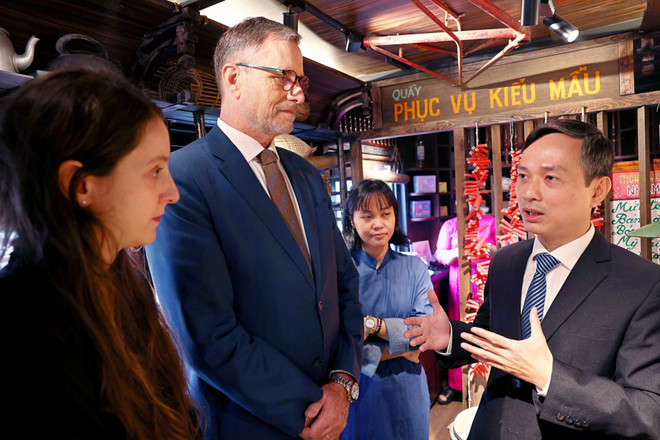
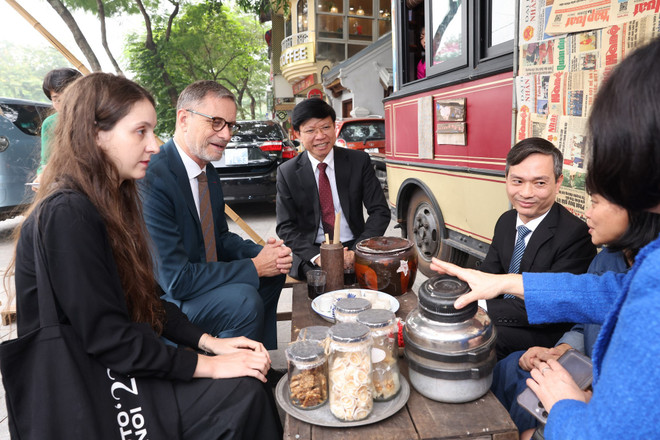
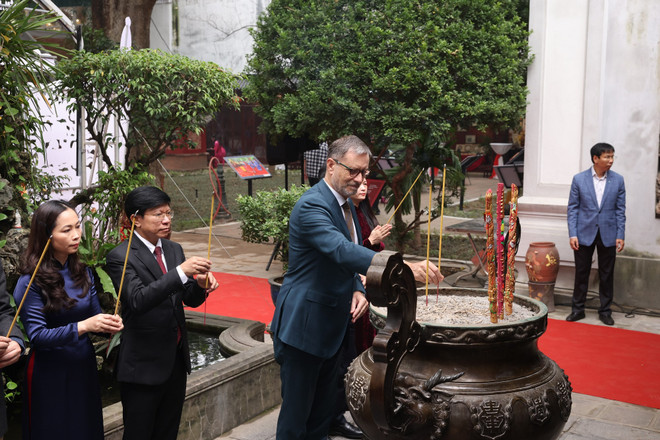
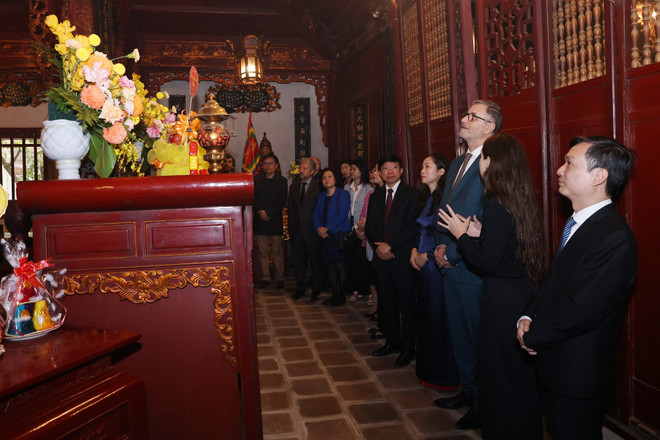
I think that in the future, the project can continue to cooperate with the University of Culture, tourism faculties of universities, Hanoi Department of Tourism, Ministry of Culture, Sports and Tourism to be able to cover the "heritage network" nationwide.
Will continue to expand the journey
- What are the key criteria for building itineraries and are there any difficulties encountered during implementation?
Dr. Nguyen Thi Hiep: These four journeys were chosen to be introduced first because they are associated with the traditional beliefs of the Vietnamese people. The first is to worship the gods who protect the four guardians of Thang Long; the second is the founders of the professions who founded the oldest traditional professions for Hanoi and Vietnam; the third is the journey to worship the Mother Goddess, a belief that has been recognized by UNESCO as a world intangible cultural heritage and is a unique belief of Vietnam; the fourth is the journey to Thien Tong pagoda because it is associated with Monk An Thien, a typical founder of Vietnamese Buddhism, who founded a very special Zen sect.
In the future, we aim to be able to create new itineraries to craft villages, to ancient Vietnamese churches built under the French. Those are the itineraries we will continue to do.
- The project has just been introduced to the public in the capital with 4 heritage experience journeys like this. What will be the expansion plan in the near future, madam?
Dr. Nguyen Thi Hiep: Currently, our website belongs to the European program, based in Switzerland, so all the itineraries that we post will be promoted throughout Europe. Expanding the itineraries is certain, because the current results are a successful experiment and we definitely need to replicate this model.
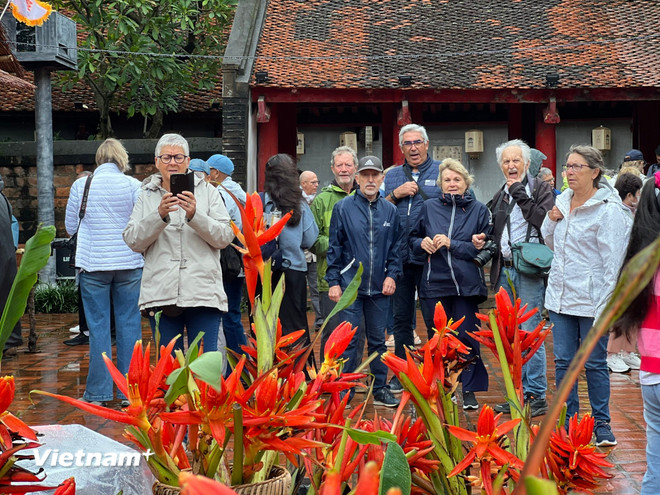
To do this, we will have to work with the City and with the Vietnamese authorities to continue expanding the space of new itineraries. For example, we are researching to be able to connect a French heritage journey with ancient villas; or a journey to Buddhist temples with a branch that is more influenced by India or China. We also want to exploit a journey of craft villages of ancient Hanoi, the suburbs of Hanoi.
Those are the things we are researching and hope to continue to have funding as well as have larger projects to carry out.
- Thank you for sharing./.
The project “Hanoi Heritage Tourism Journey” is an activity within the framework of the FEF-R Patrimoine project, sponsored by the French Ministry for Europe and Foreign Affairs (through the French Embassy and the French Institute in Vietnam - IFV), in coordination with the University of Social Sciences and Humanities - Vietnam National University, Hanoi (USSH - VNU), the French School of the Far East (EFEO) and the Francophone University Organization (AUF).
Source: https://www.vietnamplus.vn/trai-nghiem-di-san-thu-do-voi-nhung-diem-cham-tin-nguong-co-truyen-dac-biet-post1081175.vnp



























































Comment (0)