

A meditation area
South of the Duong River, the Dau - Luy Lau region is historically associated with the early days of Vietnamese Buddhism. When Buddhism arrived in Vietnam from India, accompanied by Buddhist monks, this area became an important stopover point.
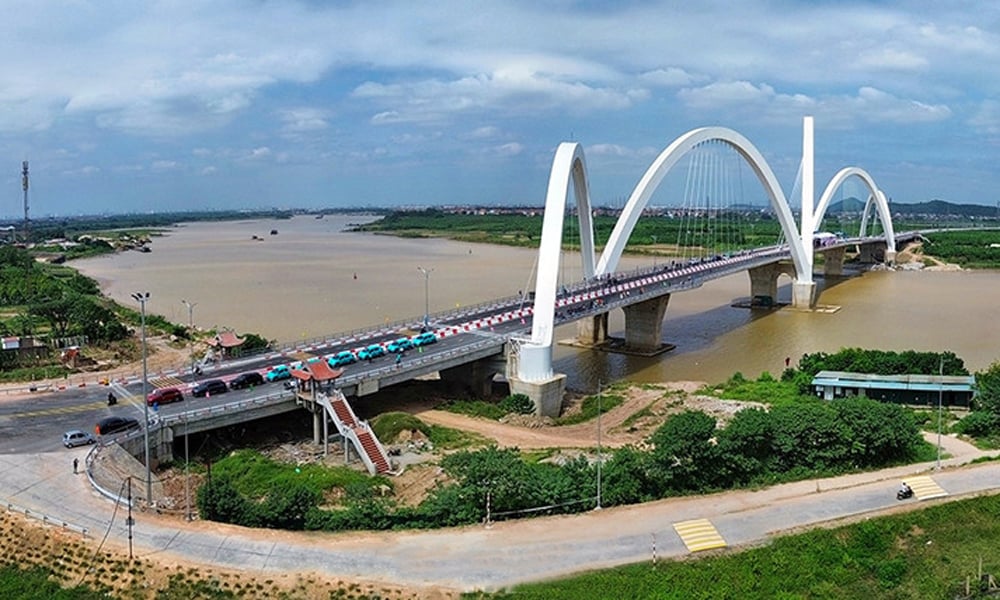 |
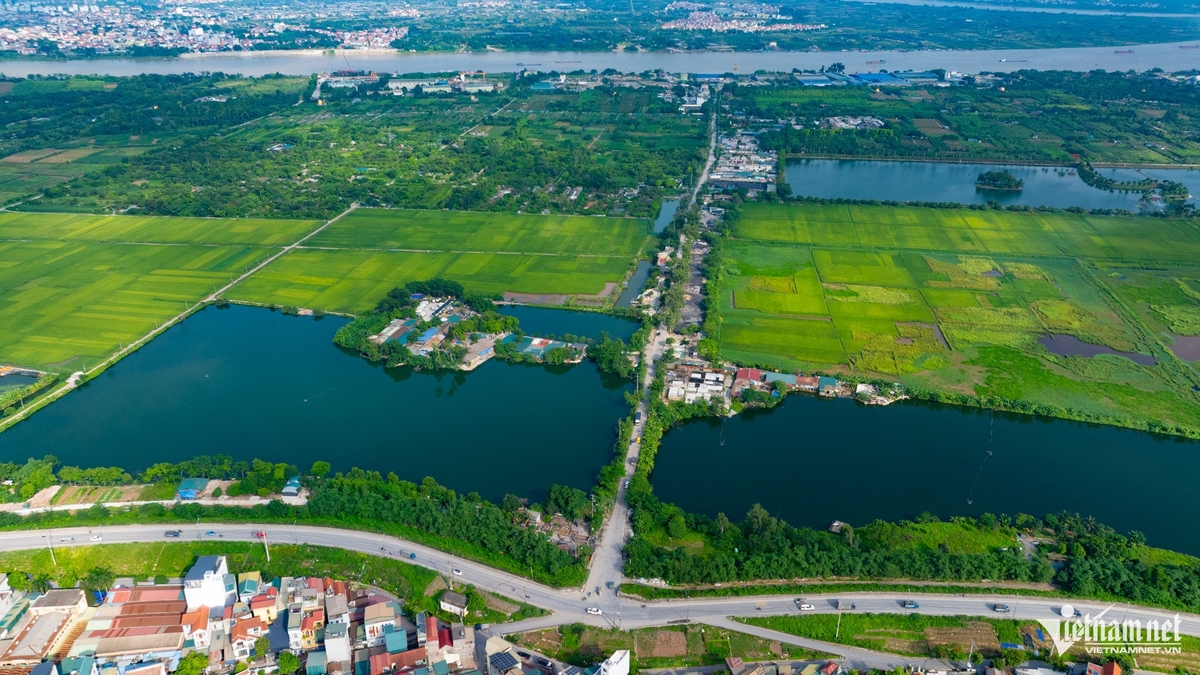
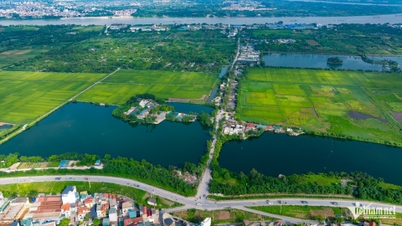
The Kinh Duong Vuong Bridge connects the two banks of the heritage site. |
Legend has it that Man Nuong, a girl from Man Xa village in the Luy Lau region, came to study Buddhism at Dau Pagoda. At the pagoda was Zen Master Khau Da La, the first high-ranking monk to spread Buddhism in Vietnam. Through a miracle, Man Nuong conceived and gave birth to a daughter on the 8th day of the fourth lunar month. The Zen Master used a bamboo stick to tap a mulberry tree near the pagoda; the tree split open, and the Zen Master placed the child inside before closing it again. Khau Da La gave Man Nuong a staff and instructed her to plant it in the ground to save the people during a drought. When Dau region suffered a drought, Man Nuong planted the magical staff, and immediately water gushed forth, and the trees and fields flourished again.
Then came a heavy rain, and the mulberry tree was blown down by the storm into the Thien Duc River (Dau River), then floated to Luy Lau. Governor Si Nhiep ordered his soldiers to retrieve it, but no one could move it. Man Nuong, passing by, easily pulled the tree up from the river. Si Nhiep commissioned craftsmen to sculpt the Four Deities: Phap Van, Phap Vu, Phap Loi, and Phap Dien, representing clouds, rain, thunder, and lightning, for worship. These four Buddha statues were placed in four different temples in the same area: Dau Temple, Dau Temple, Dan Temple, and Tuong Temple. After her death, Man Nuong was bestowed the title of Buddha Mother by the people and worshipped at the ancestral temple, whose official name is "Phuc Nghiem Temple," located in Man Xa village, Ha Man commune, Thuan Thanh district (formerly), now Man Xa neighborhood, Song Lieu ward.
Located north of the Duong River, Phat Tich Pagoda (in Phat Tich commune), nestled against Phat Tich Mountain, also known as Lan Kha Mountain, has long been considered a true meditation space. The mountains, hills, trees, and pagoda create a tranquil realm where people can easily find peace of mind.
According to ancient documents, Phat Tich Pagoda was built during the Ly Dynasty. During the Le Dynasty, the pagoda was rebuilt on a very large scale, possessing high artistic value, and renamed Van Phuc Pagoda. The main hall houses a statue of Amitabha Buddha crafted from green stone, a masterpiece of Ly Dynasty sculpture, which was recognized as a national treasure in 2013. In addition, Phat Tich Pagoda also possesses another national treasure: a set of 10 mythical creature statues dating back to the Ly Dynasty.
Currently, the Phat Tich Pagoda is undergoing restoration with investment from the State and contributions from the people, including the main hall, rear hall, guesthouse, ancestral hall, and mother's hall. Of particular note is the reconstruction of a new 27-meter-tall (30-meter-high including the base) Amitabha Buddha statue placed on the summit of Phat Tich Mountain.
With the outstanding values mentioned above, in 2014 Phat Tich Pagoda was recognized by the Prime Minister as a special national historical and architectural monument.
A land of peace and joy
On October 11, 2023, the Kinh Duong Vuong Bridge was inaugurated, connecting the two banks of the Duong River. From Phat Tich commune, crossing the Kinh Duong Vuong Bridge leads to wards that were formerly part of or near the Dau-Luy Lau area, such as Song Lieu, Tri Qua, and Thuan Thanh.
Right at the foot of the bridge, the mausoleum and temple of King Kinh Duong Vuong stand as a reminder of the nation's origins. A little further away is the solemn and ancient But Thap Pagoda located along the dike. Next are the ancient temples associated with the legend of Man Nuong and Tu Phap, which have been restored and renovated by the government and the people, becoming increasingly magnificent and beautiful.
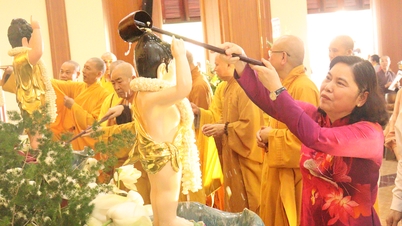
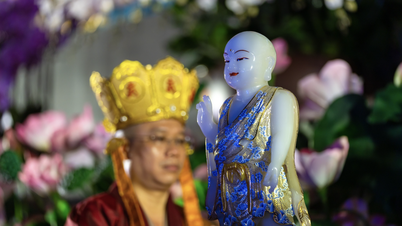
In April 2025 (lunar calendar), the Dau region festival, with its procession of the Four Dharma Buddhas, was revived after nearly 30 years of interruption, marking the return of beautiful aspects of religious beliefs that have been cherished and continued by the community as an indispensable part of their spiritual life. On the main day of the festival, villages belonging to the former Dau district organize processions of the Four Dharma Buddhas from their village temples to the communal hall at Dau Pagoda. The center of the festival is Dau Pagoda (also known as Phap Van Temple) – a historical and cultural religious site marking the origin of Vietnamese Buddhism. The festival vividly recreates the agricultural religious life, reflecting the aspirations of the people of the Northern Delta region for favorable weather and abundant harvests. According to historical sources, the pagoda was built in the 2nd century, representing the culmination of the fusion between Indian Buddhism, upon its introduction to Vietnam, and the indigenous beliefs of the ancient Vietnamese people, who worshipped natural forces. This created a religious center deeply rooted in national identity. In 2013, Dau Pagoda was recognized as a Special National Monument.
In particular, the recognition of the statue of the Mother Buddha Man Nuong as a National Treasure at the end of 2025 made a profound impact. It was not only an acknowledgment of the value of an ancient statue, but also a tribute to a cultural symbol—a symbol of motherhood, nurturing, and the spirit of harmony and tolerance in Vietnamese culture.
Comrade Pham Van Hoi, Secretary of the Party Branch and Head of the Man Xa Tay residential group (Song Lieu ward), said: "The people of Man Xa are deeply moved and proud that the heritage left by their ancestors has been preserved and passed down from generation to generation and recognized by the State. The people will continue to preserve and maximize the value of this heritage because it is the source that nourishes their pure and kind souls."
Every spring, visitors from near and far join the crowds to admire the peony blossoms at Phat Tich Pagoda, then travel along Kinh Duong Vuong Bridge to visit the mausoleum and temple of Kinh Duong Vuong. Next, visitors offer incense and enjoy the scenery at To Pagoda, Dau Pagoda, But Thap Pagoda, and other locations. It's a journey filled with wholesome emotions as they immerse themselves in an atmosphere steeped in Buddhist traditions.
Source: https://baobacninhtv.vn/bg2/dulichbg/tram-tich-ben-dong-song-duong-postid440061.bbg

























































































Comment (0)