

 |
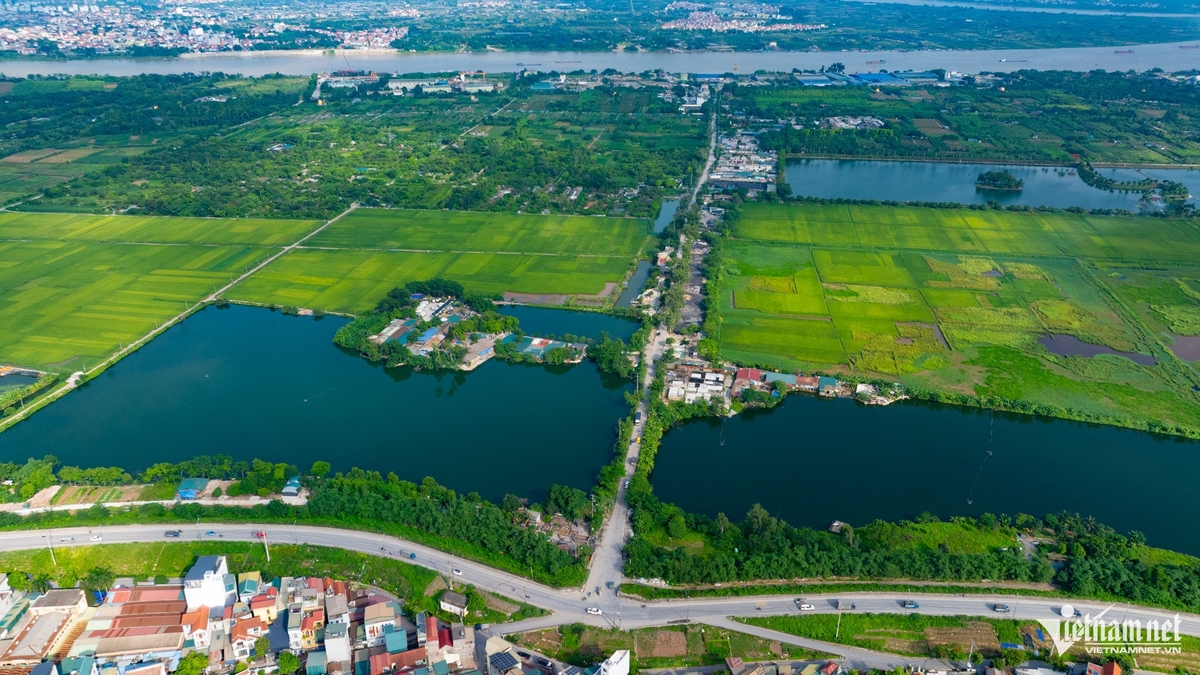
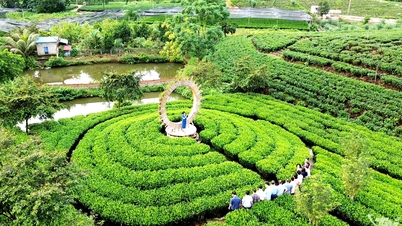
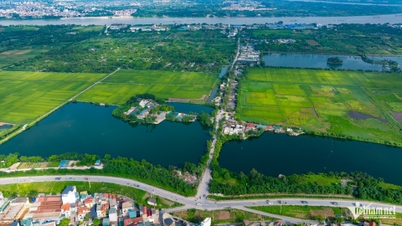
| Thai Nguyen today. |
Returning from evacuation
On the night of October 17, 1965, my family evacuated. The terrible bombing raid by American planes on Gia Bay Bridge at nearly 10 a.m. forced all residents of Ben Than Street (then part of Hoang Van Thu Sub-district, Thai Nguyen City) to immediately leave their homes and move to safe shelters, following orders from the authorities.
That year I was only three years old, dozing in the bamboo basket my mother carried on her shoulder. In the other basket were the most essential items for our family of five. We trudged through the night to avoid detection by enemy aircraft, our faces etched with anxiety.
My family quickly settled into life under the protective embrace of the people of Phuc Triu commune (now Dai Phuc commune). On moonlit nights, the children played hide-and-seek, while the adults diligently dug shelters. The thudding of hoes and shovels, the rustling of earth, the smell of damp soil, fresh bamboo, and sweat mingled in the air.
My parents taught me how to listen for air raid sirens, how to feel my way down the walls to find the tunnel, how to shield the oil lamp so that the light was just enough to illuminate the letters, and how to cover my ears and hug my knees when bombs exploded nearby. My childhood was filled with straw hats, green shirts, ears always perked up listening for any movement in the sky, and feet always ready to run towards the bomb shelter.
Then came the great victory of Spring 1975, reuniting the country, North and South becoming one family. For my family, the long-awaited moment had arrived: returning to the city and rebuilding our house on the old foundation.
The three-year-old girl I was when I left had become a thirteen-year-old girl when I returned. I gazed curiously at the "inverted hanging lamp," at the river flowing in front of my house, at the quiet Gia Bay bridge, at the rustling streets—poor yet endearing.
Although it was called a city, the roads were unpaved, the houses were made of thatch and bamboo, and the main modes of transportation were bicycles or walking. The Nha Trang secondary school where I studied lacked many things; there wasn't enough desks and chairs, so we had to sit on bricks, propping our notebooks on wooden chairs to write our lessons.
Welcome the spring with joy!
Then the first Tet holiday of peace and family reunion arrived. Rice and meat were sold according to ration coupons, yet my mother told the neighbors, "This year we must have a really big Tet celebration!"
For my mother, "celebrating Tet" meant first and foremost having a spotless and clean house. A month before Tet, my father would dig a hole, bring home lumps of lime, and boil them in water. Once the lime was cooked, my mother would mix it with water and use it to whitewash the walls. She would dip a worn straw broom into the thick lime solution and sweep repeatedly, gradually turning the gray earthen walls white and brightening the house. My sisters and I would also busily clean. From the legs of the beds, tables, and chairs to the pots, pans, and trivets, everything was scrubbed clean with ash and sand until it shone.
Back then, every house was decorated in a similar way. Opposite the entrance was a reception table, with a picture of President Ho Chi Minh hanging above it and a vase of paper flowers holding a few sprigs of gladiolus and peonies below. On either side were red couplets with simple wishes: "Peace and prosperity," and "May all your wishes come true."
On the eve of the Lunar New Year, my sisters and I busied ourselves watching over the pot of sticky rice cakes. The firewood brought from our evacuation site burned brightly, the embers glowing red. Mother prepared a pot of water infused with fragrant herbs, and each of us took turns bathing to us, hoping to enter the new year clean and fragrant. The air was filled with the warm scent of sticky rice, banana leaves, and pepper.
As midnight approached, firecrackers exploded loudly throughout the streets. My sister went down to the river to fetch two full buckets of water, bouncing the pole so the water splashed onto the house, laughing as she wished, "May money flow in like water in the new year!"
My biggest anticipation was wearing new clothes for Tet (Lunar New Year). Throughout my childhood, I only wore dark-colored clothes to avoid airplanes, but this Tet I got to wear a white blouse with a lotus-leaf collar, smelling of new fabric – a secret gift from my mother, sewn for her youngest daughter, a loose-fitting blouse "so I can grow bigger."
The city was deserted after the war. The busiest place was the museum. To me, the museum was a world both mysterious and magnificent, with massive buildings connected by long corridors, and glass cases filled with artifacts steeped in history. The narrator's warm, soothing voice captivated me, and I lingered, reluctant to leave.
During the three days of Tet (Lunar New Year), the streets bustled with pleasant words and good wishes. People met, families visited, and greetings intertwined like a loom. Following the greetings were the expressions of plans. Everyone began with a hopeful statement: "Now that there's peace, we can finally focus on our work." And indeed, immediately after Tet, many families reopened restaurants, tailor shops, barbershops, and more. A joyful atmosphere of work permeated the streets.
Gratitude and remembrance
Eleven years after the tragic day of October 17th, that spring, the memories were recalled with calmness. My parents visited families who had lost loved ones and talked at length. Living in peace, the longing for the deceased became even more intense.
The militiamen who sacrificed their lives defending the Gia Bay bridge have been recognized as martyrs. Their children are able to go to school, and their families receive support from the State. My parents also came to share the joy with the families whose loved ones returned from the battlefield. Over cups of "bồm" tea bought according to the standard regulations from the state-run store, the townspeople listened in silence to stories of the place where arrows and bullets flew.
Some were directly involved in combat, others in logistics; all were "heroes" in our eyes. And for the mothers and wives whose husbands and sons returned from the battlefield unharmed, the spring of 1976 was the happiest spring of all.
Half a century has passed since that spring. Today, the city streets are wide and bustling, with tall buildings standing side by side. The newly constructed Gia Bay Bridge promises to be a source of pride for the people of Thai Nguyen. But for me, the spring of the early days of national independence and reunification remains intact. It was the spring of the flickering fire beside the pot of sticky rice cakes, of the fragrant scent of leaves on New Year's Eve, the first spring when we lived fully in freedom and happiness.
Perhaps only those who have experienced war can fully understand the value of peace. For me, the memory of that spring of reunification, independence, and freedom is the source that nourishes my faith and love for life, so that throughout the years that followed, amidst the many changes in life, I cherish every peaceful day, every simple spring in my homeland.
Source: https://baothainguyen.vn/xa-hoi/202605/tran-quy-tung-mua-xuan-thong-nhat-0da4aa1/










































































Comment (0)