

In November 2025, in Notice No. 611/TB-VPCP on the conclusion of Prime Minister Pham Minh Chinh, Head of the National Steering Committee for the implementation of Resolution No. 68-NQ/TW (on private economic development) at the second meeting of the steering committee, the State Bank was assigned to submit to the Government a decree guiding the policy of supporting 2% interest rates for businesses borrowing capital to implement green and circular projects, applying the ESG standard framework, through commercial banks; the Ministry of Finance was assigned to submit to the Government a decree guiding the policy of supporting 2% interest rates through non-budgetary state financial funds...
These directives reflect the reality that Vietnamese enterprises are under pressure: growing but vulnerable to natural disasters and economic fluctuations. Without timely accompanying policies, the number of enterprises withdrawing could increase, affecting overall growth.
In the first 10 months of 2025, the country had 255,900 newly established and re-operated enterprises, an increase of 26.5% over the same period in 2024. This is an optimistic signal about the resilience of the economy, as enterprises continue to contribute an important production force. However, the number of enterprises withdrawing from the market still reached 190,600 enterprises, showing that the market is going through a restructuring and purification phase.
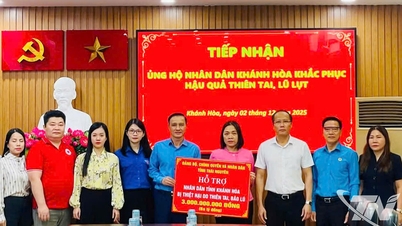
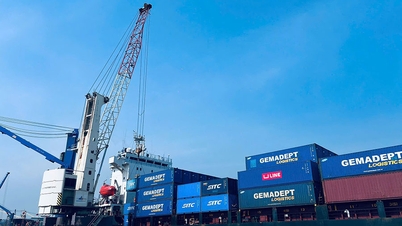
Worryingly, in November, the Central region suffered from natural disasters, severe storms and floods, causing many factories, warehouses, supply chains, logistics, agriculture , etc. of enterprises to be disrupted (before that, there were historic floods in some provinces in the North and Hanoi). Natural disasters caused many newly established small and medium-sized enterprises, without enough financial reserves or recovery capacity, to go bankrupt or withdraw from the market, especially enterprises in the Central region.
Regarding support policy solutions, according to experts, debt reduction, deferral, debt forgiveness, and preferential credit are measures that need to be expanded, not only to save businesses in the short term but also to protect supply chains, jobs, and stabilize production. The support process must be transparent, with clear responsibilities, quick, easy to access, and avoid cumbersome procedures.
In addition, policies should not be just temporary, but need to increase long-term resilience: preferential interest rates for green and circular projects; support for natural disaster and risk insurance... For example, supporting 2% interest rates for businesses implementing green projects is an important step to support both recovery and sustainable development. Along with that, ministries, branches and localities must cut processing time and unnecessary procedures so that businesses, especially small and medium-sized enterprises, can quickly start the recovery process.
Finally, lessons from the recent storms and floods in the Central region show that policymakers need to coordinate with businesses and communities to develop solutions to prevent and adapt to natural disasters; develop flood-proof infrastructure... This is part of a sustainable development strategy.
Source: https://www.sggp.org.vn/tro-luc-doanh-nghiep-dung-day-sau-bao-lu-post826460.html
![[Photo] National Assembly Chairman Tran Thanh Man receives First Vice Chairman of the Federation Council of the Federal Assembly of the Russian Federation](/_next/image?url=https%3A%2F%2Fvphoto.vietnam.vn%2Fthumb%2F1200x675%2Fvietnam%2Fresource%2FIMAGE%2F2025%2F12%2F02%2F1764648408509_ndo_br_bnd-8452-jpg.webp&w=3840&q=75)


















































![[Photo] General Secretary To Lam and his wife attend the 50th Anniversary of Laos National Day](https://vphoto.vietnam.vn/thumb/402x226/vietnam/resource/IMAGE/2025/12/02/1764644139308_1.jpeg)




















Comment (0)