

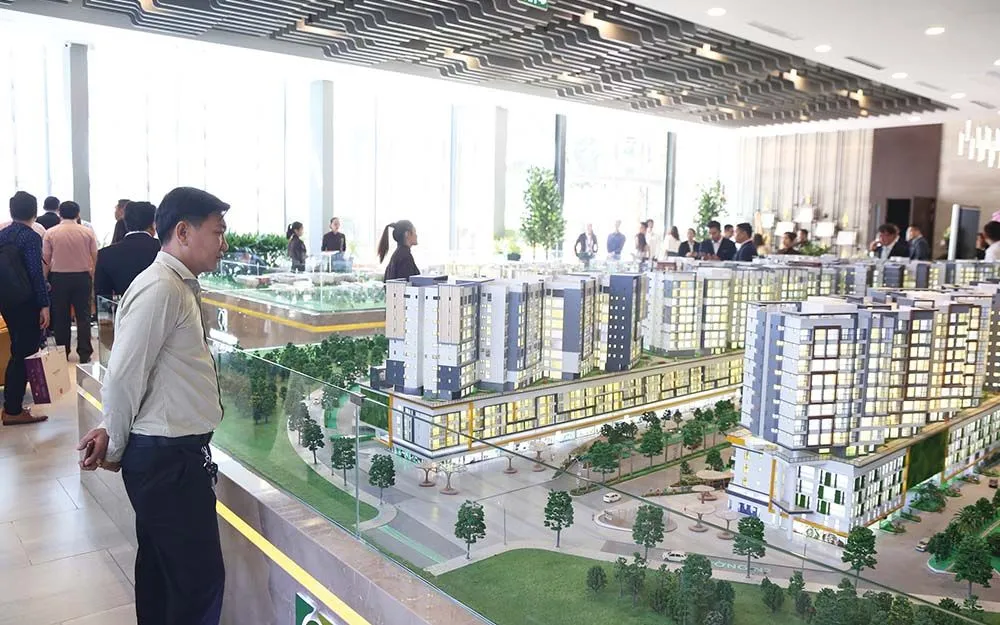
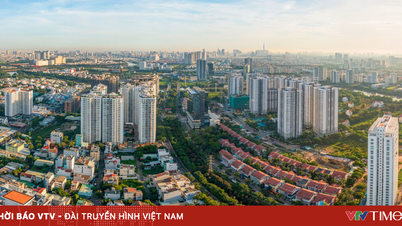
The income-house price gap is widening.
If we compare the growth rate of per capita income and the growth rate of housing prices in the period 2014-2025, we can see that the gap is getting bigger. Average income increased from 4.11 million VND/month to 8.3 million VND/month, which is a doubling, corresponding to an average growth rate of about 6.4%/year.
Meanwhile, the average apartment price increased from 25 million VND/m2 to 75.5 million VND/m2, or 3 times, with an increase rate of more than 12%/year. Even now, the average house price in Hanoi is recorded to have exceeded 80 million VND/m2. Thus, house prices are increasing almost twice as fast as the rate of income growth.
According to statistics in mid-2025, the price of an average apartment is currently 27.3 times higher than a family's annual income. This is the housing price to income index (P/I = 27.3). In other words, if a family spends nothing and uses all their income to buy a house, it will take about 27 years to have enough money; and if they spend 1/3 of their income on installments to buy a house, the time will be extended to nearly 80 years. With the current income level, the dream of settling down for most salary earners, including civil servants, is therefore increasingly out of reach.

Mr. Nguyen Quoc Hiep, Chairman of the Board of Directors of GP.Invest, said that housing prices are skyrocketing.
Speaking at the Forum "For the real estate market to develop healthily and sustainably" on December 4 organized by Hanoi Radio and Television, Mr. Nguyen Quoc Hiep, Chairman of the Board of Directors of GP.Invest, said that skyrocketing housing prices are not only a barrier to buyers but also pose a potential risk to the entire economy . The housing market is only considered "healthy and sustainable" when the selling price remains at a level that middle-income earners can access by installment payments.
Currently, most investors still have to rely on bank credit capital. According to statistics from the State Bank, by the end of September 2025, the amount of credit capital poured into real estate increased by 19%, with outstanding debt of about more than 4 million billion VND, accounting for 24% of the total outstanding debt of the whole system. Meanwhile, data for the third quarter of 2025 showed that the real estate transaction rate decreased by 13%, of which apartments alone decreased by 15%, and inventory is increasing.
Analysts say that if prices are pushed up too high while transactions decline, the risk of bad debt, market "freezing" and investor cash flow disruptions can spread to the banking system. The pressure of a real estate price bubble is therefore not limited to one market, but is closely linked to financial security and macroeconomic stability.
At the Forum, opinions pointed out a series of shortcomings: speculation, price inflation, manipulation of supply, profiteering from social housing policies, and imbalanced segment structure. Many people fall into the situation of "not being rich enough to buy commercial housing, but not being poor enough to buy social housing".
Perfecting institutions, controlling credit, increasing real supply
Mr. Nguyen Quoc Hiep, Chairman of the Board of Directors of GP.Invest, said that for the real estate market to develop healthily, there needs to be synchronous participation of state agencies in adjusting the regime and policies on land, credit and taxes for real estate enterprises.
Recently, the Government has focused on piloting a number of specific mechanisms and policies to promote the development of social housing with the target of 1 million units by 2030. The National Assembly and the Government have had many "open" mechanisms to increase supply and remove obstacles for the renovation of old apartments in big cities. These policies have contributed to improving the supply for the real estate market.
However, implementation in localities is still slow, so closer inspection and supervision by authorities at all levels is needed; in particular, administrative procedures need to be truly shortened, while continuing to address mechanisms to "open" the real estate market in legal aspects.
Another major bottleneck lies in the land price level. Currently, the land price list expected to be issued in some localities is higher, in some places up to several dozen times higher than the price level of 5 years ago. This is one of the direct reasons for the increase in housing prices. According to the Chairman of the Board of Directors of GP.Invest, when building a land price list, it is necessary to specifically define the land price for projects (as a basis for calculating financial obligations and investment plans) and the commercial land price for transactions between people, thereby having an appropriate adjustment mechanism, not pushing land costs to become the final burden for home buyers.
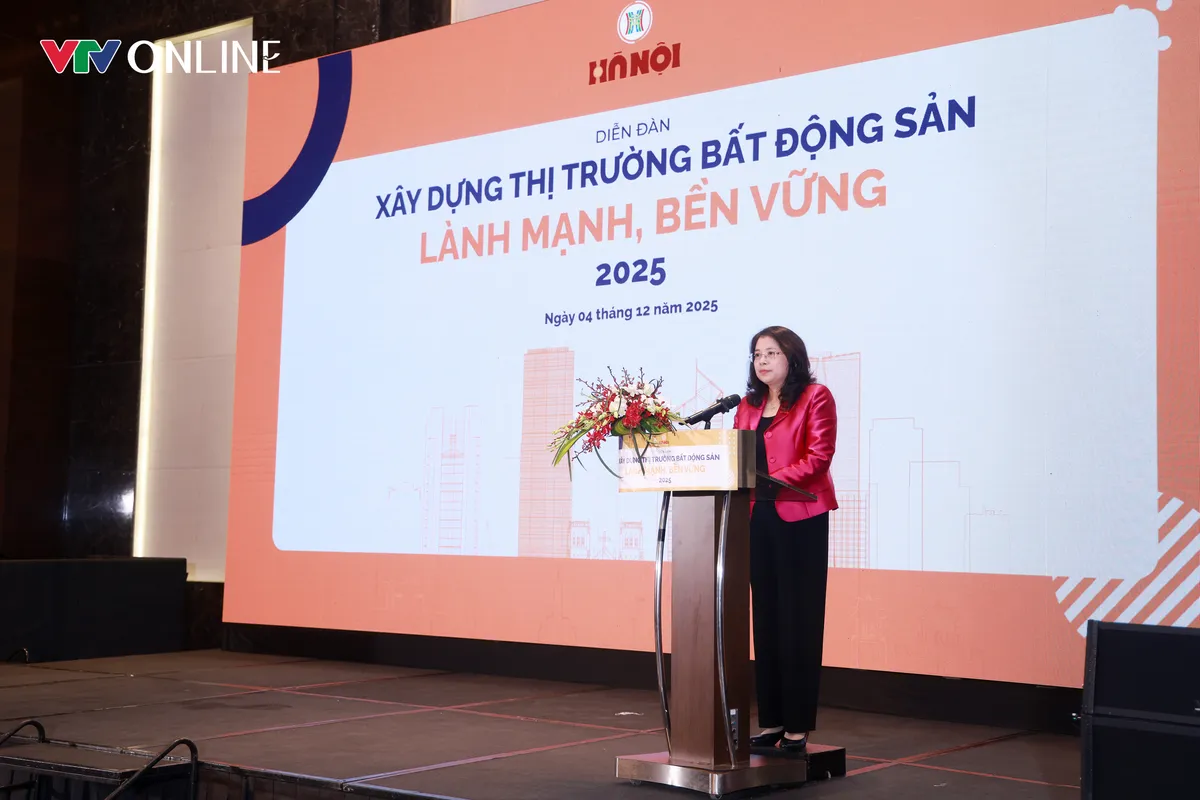
Ms. Tran Hong Nguyen, Vice Chairwoman of the National Assembly's Committee on Law and Justice, said it is necessary to perfect the legal framework on land, housing, and real estate business.
Ms. Tran Hong Nguyen, Vice Chairman of the National Assembly's Committee on Law and Justice, said that to thoroughly handle the unusual developments in the market, it is necessary to start by perfecting the legal framework on land, housing, and real estate business. Currently, we are implementing a series of documents guiding the 2024 Land Law, the Housing Law, and the Real Estate Business Law. This is an opportunity to plug legal gaps in land auctions, project bidding, land subdivision and sale, real estate brokerage, and supply control. The clearer the law, the harder it is to manipulate the market.
The Vice Chairman of the National Assembly’s Committee on Law and Justice emphasized that to clearly identify violations, there must be conclusions from inspection, examination and prosecution agencies if there are signs of law violations. However, large price fluctuations, repeated in a short period of time, concentrated in areas that are about to have planning, infrastructure investment policies or large projects, are signals that force the State to conduct special supervision.
Along with perfecting the law, publicizing planning information, land use plans, project progress, project legality and transaction prices is considered key. Building a national land database, housing database and electronic transaction system will be a tool to help the State manage effectively, while preventing fraud and significantly limiting "wave-making" and price-inflating activities.
Another focus is to develop real supply, especially the segment that meets real housing needs. It is necessary to divide real estate types to suit people's needs in each segment. When the market only relies on speculative demand, real estate can easily become a channel for hoarding assets or a tool for buying and selling to make a difference, creating bubbles and being easily manipulated. Therefore, it is necessary to promote the development of social housing and commercial housing at suitable prices, while reforming investment and land use procedures to shorten project implementation time. When supply increases, the market will have more conditions to stabilize itself.

Delegates discussed and discussed solutions for a healthy and sustainable real estate market.
Regarding credit policy, analysis at the forum said that many banks accept large capital disbursements for projects based on land mortgages with high property valuations, causing land prices to continue to rise. Real estate buyers for investment can borrow at floating interest rates, but because of the rapid increase in prices, they still accept high interest rates, creating a spiral effect: the higher the price, the stronger the speculation, the more credit flows into real estate.
Some credit institutions have not yet clearly distinguished between loans for housing and loans for investment, causing the priority capital source not to really be directed towards real housing needs. Many opinions suggest that banks should separate the criteria for loans for buying houses for living and buying houses for investment; consider the capital safety ratio for real estate enterprises, apply barriers to projects that borrow too much compared to equity capital; at the same time, study more carefully the criteria for issuing corporate bonds to force investors to consider carefully before raising capital.
From the analysis at the forum, it can be seen that handling the "abnormal" phenomenon in the real estate market cannot rely on a single measure. The market is only truly healthy and sustainable when the institutions are clear, credit is allocated reasonably, data is transparent, supply increases substantially and speculation is controlled by strong enough legal and financial tools. At that time, the dream of settling down is no longer out of reach.
Source: https://vtv.vn/trung-binh-mot-gia-dinh-khong-chi-tieu-gi-mat-hon-27-nam-moi-mua-duoc-nha-100251204134836008.htm




























































































Comment (0)