

The Egyptian pound, Philippine peso, South Korean won, and Thai baht all plummeted. Conversely, a few currencies appreciated, including those of oil-exporting countries like Brazil, Kazakhstan, and Nigeria.
This indicates that the current energy crisis is entering a more dangerous phase: shifting from pressure on oil prices to pressure on monetary and fiscal policies.
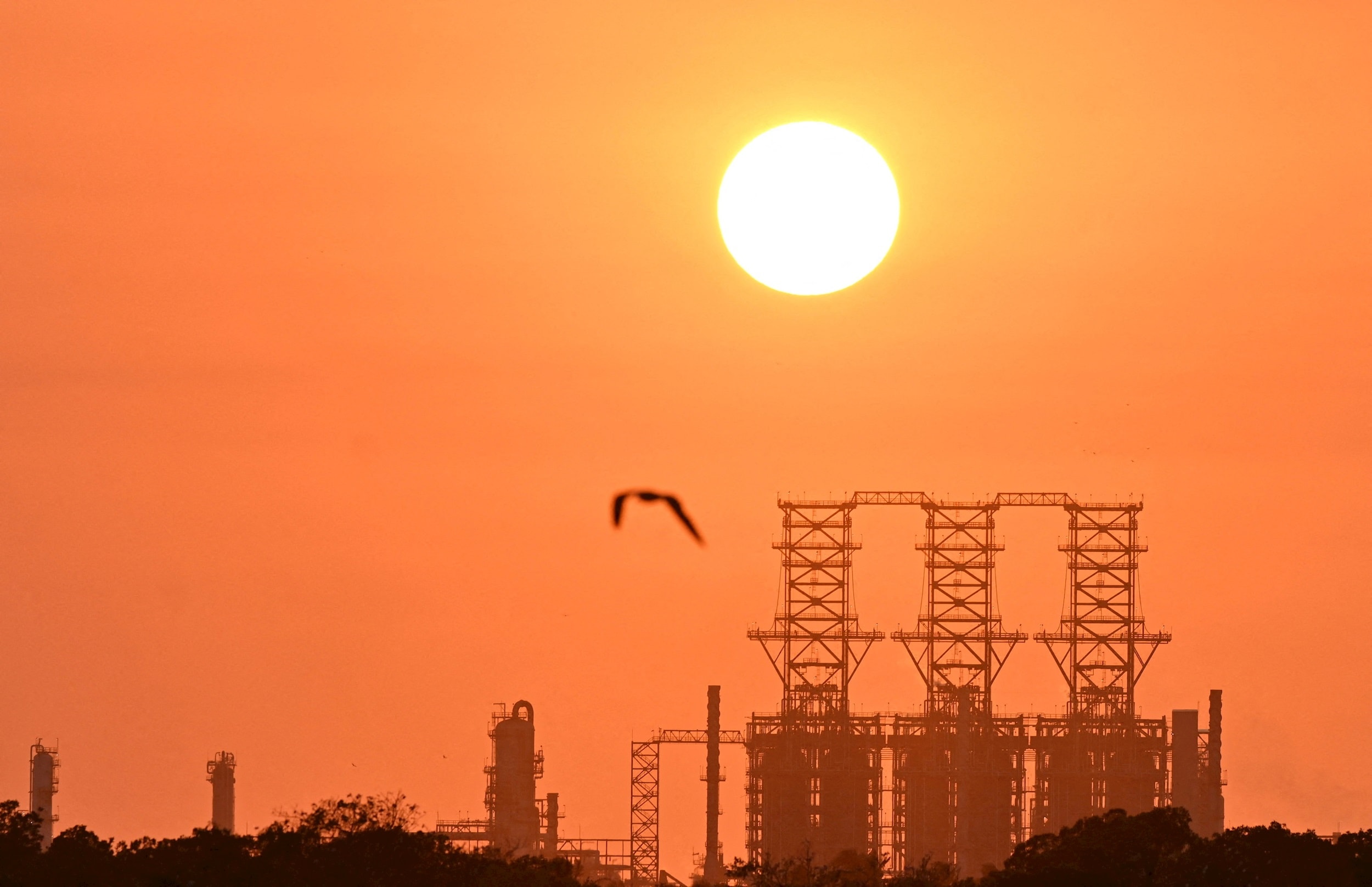
Just as oil-importing countries are gradually depleting their energy reserves after the blockade of the Strait of Hormuz, many nations are now beginning to erode their financial "cushions."
To cool down domestic fuel prices, governments have been forced to cut taxes, increase subsidies, and allocate more budget for oil and gas imports. Foreign exchange reserves have therefore declined rapidly, while export revenues are insufficient to offset increasingly expensive import costs.
In other words, many economies are importing not only oil, but also financial instability.
In India, the world's third-largest oil importer, Prime Minister Narendra Modi has urged citizens to conserve fuel while increasing import taxes on gold and silver to protect the balance of payments.
In Türkiye, a country that relies on imports for more than 70% of its energy needs, foreign exchange reserves in March recorded their sharpest monthly decline ever.
Meanwhile, the Indonesian rupiah has fallen below even the lowest levels recorded during the 1998 Asian financial crisis. It is also one of the economies most vulnerable to shocks from the Iran conflict.
It's worth noting that this crisis isn't just about oil prices, but also about the strength of the US dollar.
In the 1970s, when the U.S. was a net oil importer, the oil shocks of 1973 and 1979 caused Washington's import costs to rise sharply and the dollar to weaken. This somewhat eased the pressure on other countries that had to buy oil in greenbacks.
But this time the situation has reversed.
The US is currently the world's "ultimate supplier of oil and gas." This means the US dollar is likely to strengthen rather than weaken during the crisis, putting even greater pressure on energy-importing nations.
Each increase in oil prices now not only drives up gasoline prices, but also directly erodes the exchange rate, foreign exchange reserves, and the resilience of the national budget.
That is also why the current crisis is becoming a wake-up call for the energy policies of many countries.
For many years, numerous governments have reacted too slowly to clean energy, even as the costs of solar power, wind power, battery storage, and electric vehicles have steadily decreased.
The reality is that clean energy is no longer just a climate issue. For many emerging economies, it's also a matter of financial security and monetary stability.
Indonesia currently has to spend nearly 3% of its GDP on fossil fuel subsidies, mainly for cheap gasoline and diesel, as the country struggles to keep its budget deficit below the mandated 3% of GDP ceiling.
Thailand also forecasts an increase in public debt as the government has to borrow billions of dollars more to cover losses in the Fuel Oil Fund.
In India, state-controlled fuel retailers are losing more than $100 million a day by selling petrol, diesel, and liquefied petroleum gas below cost.
Meanwhile, electric vehicles are gradually expanding their market share thanks to increasingly lower prices.
In Indonesia and Thailand, over 30% of cars sold in February were fully battery-powered. In India, electric vehicle sales in April increased by more than 40% year-on-year, and electric three-wheelers now account for approximately 60% of the market.
This suggests that the energy transition may no longer be driven solely by environmental goals, but is increasingly becoming a necessary economic choice.
With countries still heavily subsidizing fossil fuels, the remaining fiscal space should perhaps be prioritized for electric vehicles, battery storage, and clean energy infrastructure, rather than continuing to "burn money" to keep oil prices stable in the short term.
The cost of that transition may still be high, but it will be far less than the price paid for years of dependence on imported oil and gas and repeated geopolitical shocks.
The same thing is happening with LNG, as electricity is becoming increasingly expensive and unstable, while wind, solar, and battery storage are continuously decreasing in cost.
Clean technology is disrupting the old model in which some major economies built their prosperity on oil and gas exports, while poorer nations had to accept dependence on imported fuels.
If emerging economies can seize this opportunity, the world may be nearing a point where an energy crisis will no longer easily turn into a currency crisis.
Source: https://hanoimoi.vn/tu-cu-soc-dau-mo-den-con-bao-tien-te-750974.html



































































































Comment (0)