

An open art space in a century-old lecture hall.
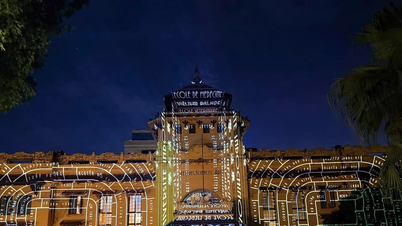
In recent days, building number 19 Le Thanh Tong Street (Hanoi) has attracted a large number of people as its time-worn walls have been "awakened" by vibrant video mapping performances; the corridors and rooms have become visual art installations. The photo-worthy spots, imbued with the Indochine spirit blended with a modern touch, attract many young people, transforming the university space into a cultural meeting point.
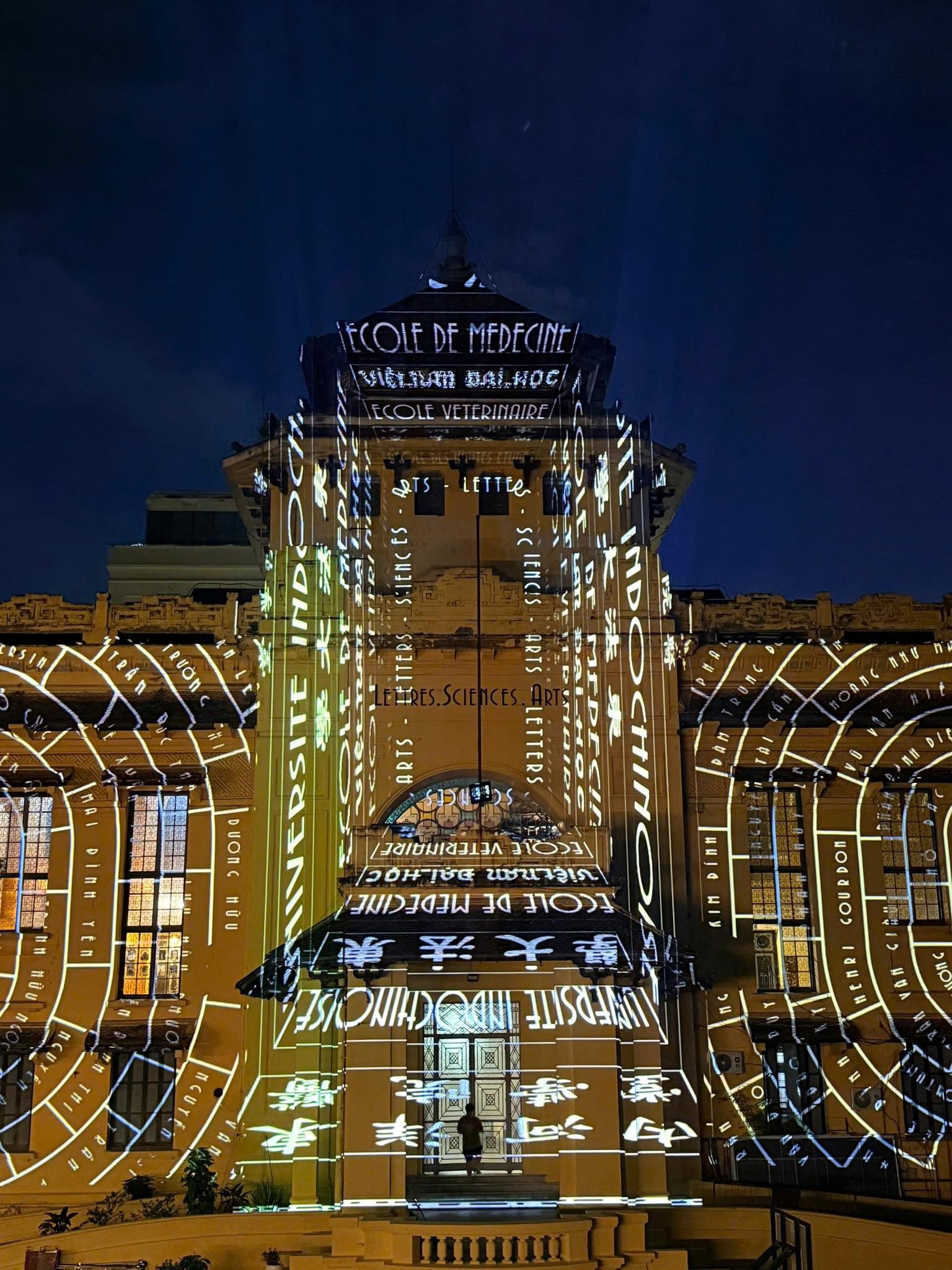
These are glimpses into the exhibition "120 Years of Vietnam National University, Hanoi - A Tradition of Elite and Liberal Education ," which took place from May 16-22. The exhibition was organized by the School of Interdisciplinary Sciences and Arts (VNU-SIS) to commemorate the 120th anniversary of Vietnam National University, Hanoi (1906-2026).
The exhibition is built upon three core values: traditional documentation, contemporary visual art, and interdisciplinary curatorial practice. Through these elements, it transports viewers back to the early days of Indochina University via valuable archival materials and artistic performances.
Interdisciplinary curricula also represent a novel approach, where the past and future interact with the divisions as they evolve within the Vietnam National University, Hanoi.
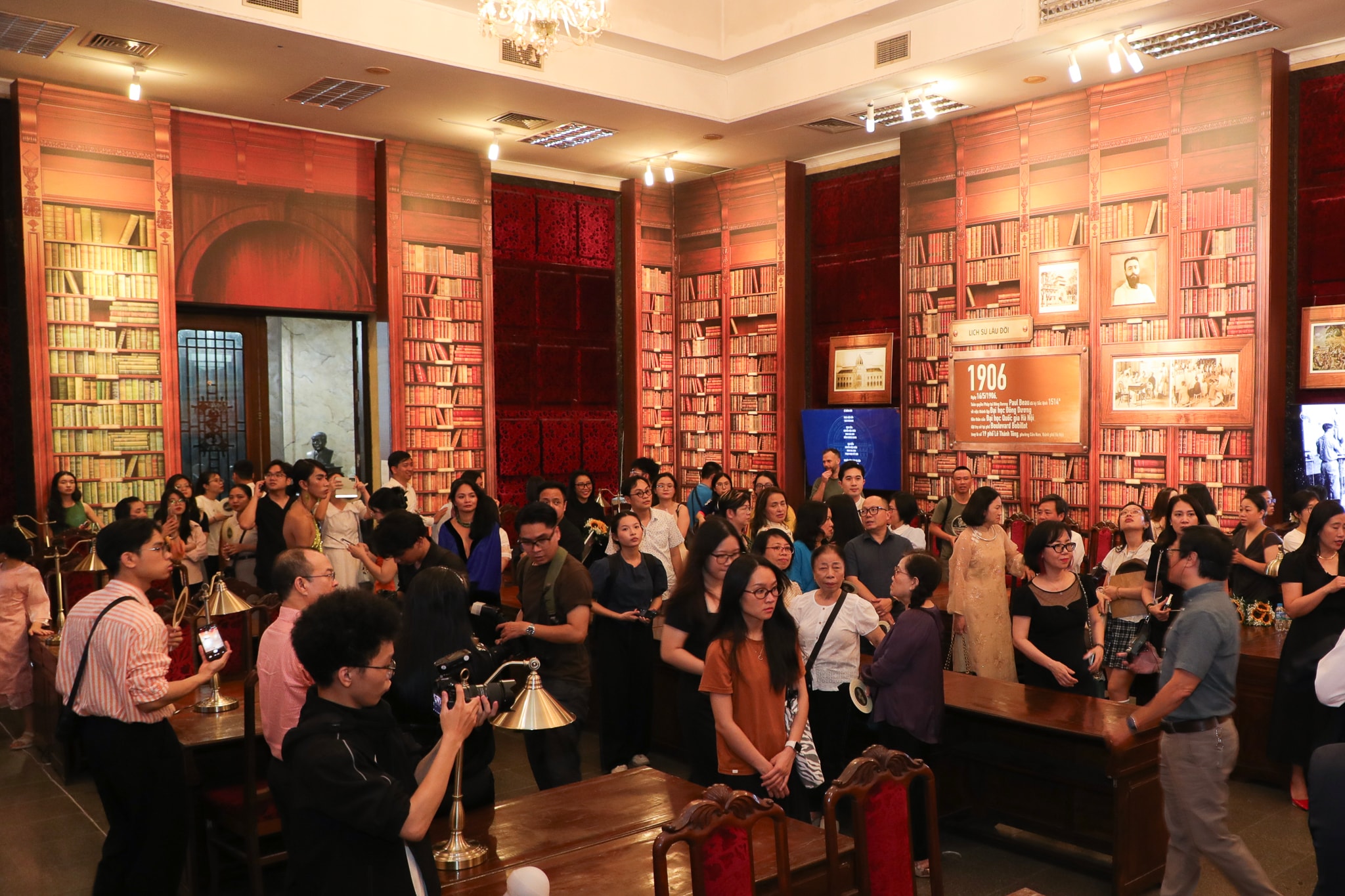
The exhibition's appeal also prompts reflection on the role of universities in contemporary urban life: can universities transcend their primary functions of education and research to become true cultural institutions – places that preserve memories, generate creativity, and nurture the spiritual life of the community?
Creative spaces – the “third classroom”
Associate Professor Dr. Nguyen Thanh Nam, Deputy Head of the Biology Department and Director of the Biology Museum at the University of Natural Sciences, stated: "The building at 19 Le Thanh Tong Street is itself a museum and simultaneously houses a museum within itself."
Few people know that inside that building, constructed in the early 20th century, is the Museum of Biology (established in 1926) with over 110,000 specimens for training and research. For various reasons, these "treasures of knowledge" have not been widely opened to the public.
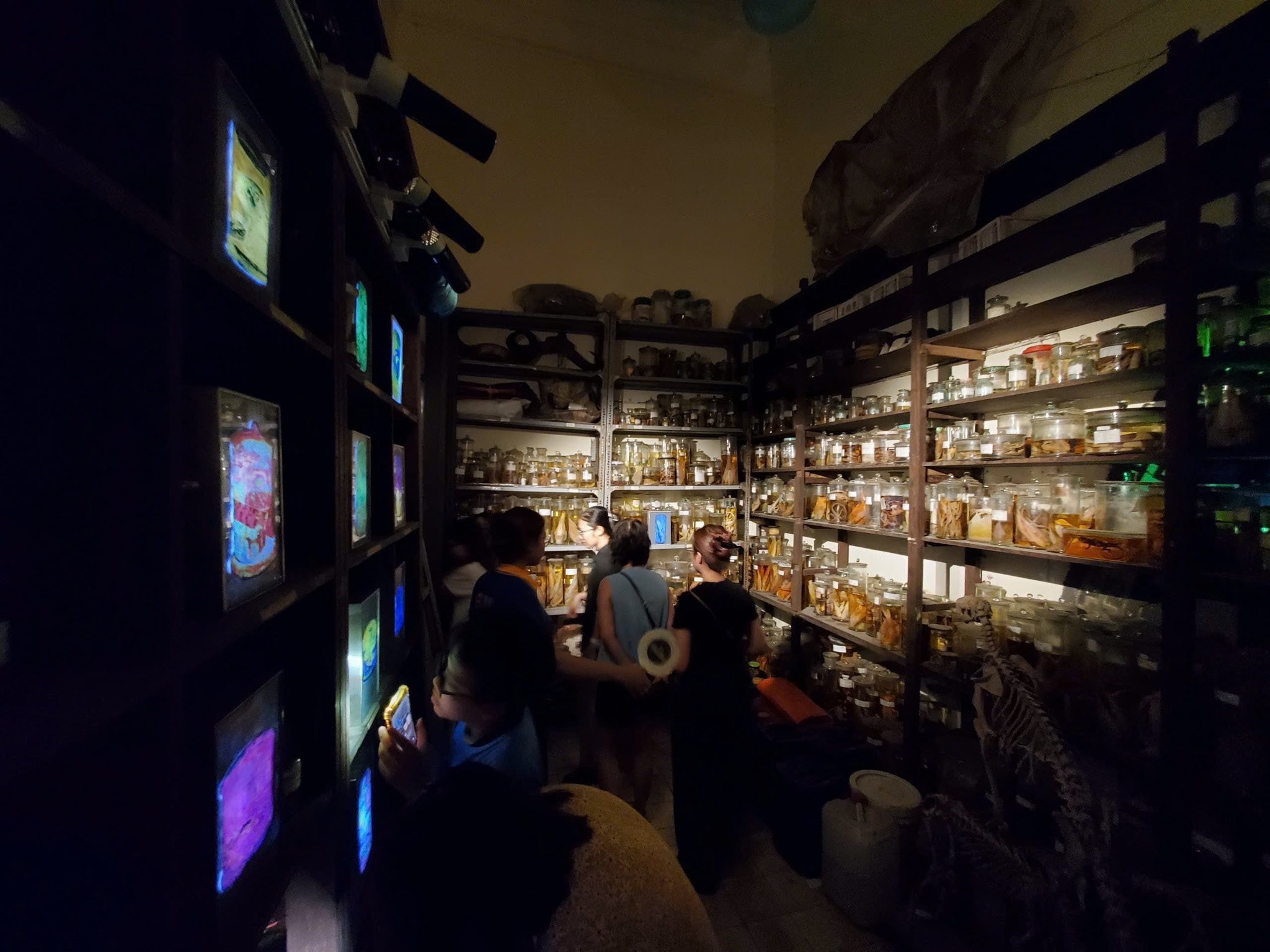
The story of the Biology Museum also reflects a common reality in many Vietnamese universities: they possess historical value, heritage, and artifacts, but lack operational mechanisms. According to Mr. Nguyen The Son, M.Sc., independent art curator and lecturer at VNU-SIS, many major universities around the world in the US, Japan, Singapore, China, Thailand, etc., have museums. These museums not only serve research but also act as cultural centers, connecting academia, art, and the urban community. Many university museums have independent operating mechanisms, educational programs, ticket sales, fundraising, and long-term collection development...
In this context, the exhibition "120 Years of Hanoi National University" serves as a test for the idea of an "open museum"—where corridors, staircases, lecture halls, or even the old architecture itself can all be spaces and materials for storytelling.
According to Master's student Nguyen The Son, the future of Hanoi National University in Hoa Lac could completely envision a museum institution similar to those of major universities worldwide, where there would be mechanisms for collecting, donating, and storing works of art, including those created by students.
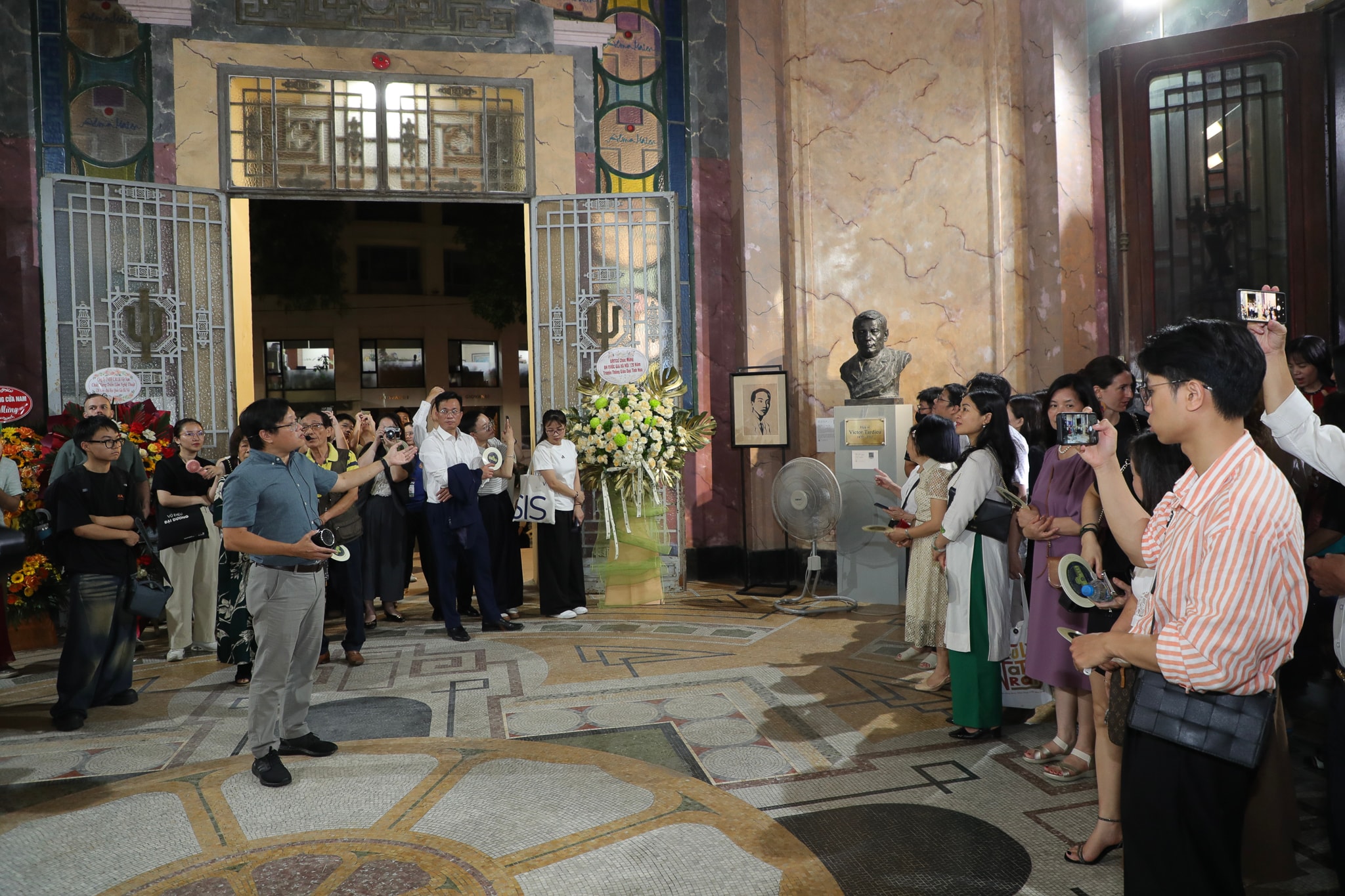
For the Museum of Biology, building a digital museum connected to the story of each exhibit is a necessary direction to expand public accessibility; at the same time, spreading scientific and educational values beyond traditional storage spaces.
Associate Professor Dr. Nguyen Thanh Nam hopes that in the future, Hoa Lac will develop a Natural History and Art Museum based on an ecosystem model, similar to those successfully implemented in many countries. At that time, when mentioning Hanoi National University, the public will not only think of it as a center for training and scientific research, but also as a cultural and artistic space rich in interdisciplinary and cross-disciplinary values.
Sharing that perspective, Ms. Le An Na, co-founder of Stellami Art and Education Center, University of Foreign Languages, and Director of the Vietnam Institute for Innovation in Culture, Education and Entrepreneurship (VICEE), emphasized that creative spaces in universities can become a "third classroom" alongside lecture halls and libraries.
According to Ms. Le An Na, developing creative cultural spaces cannot be solely the effort of the university, but requires the collaboration of cultural funds, research institutes, the scientific community, and entrepreneurs. The synergy of many fields and professions will create a sustainable resource for cultural and creative spaces within universities.
Source: https://daibieunhandan.vn/tu-giang-duong-den-khong-gian-sang-tao-10417403.html




















































































Comment (0)