

Universities in the new era: Shaping the nation's future
Twelve hundred years, from the University of Indochina in 1906 to the Vietnam National University, Hanoi today, is not just the history of a higher education institution. It is also a part of the history of Vietnamese intellect, of the aspiration to enlighten the people, revitalize the country, train talents, and serve the Fatherland.

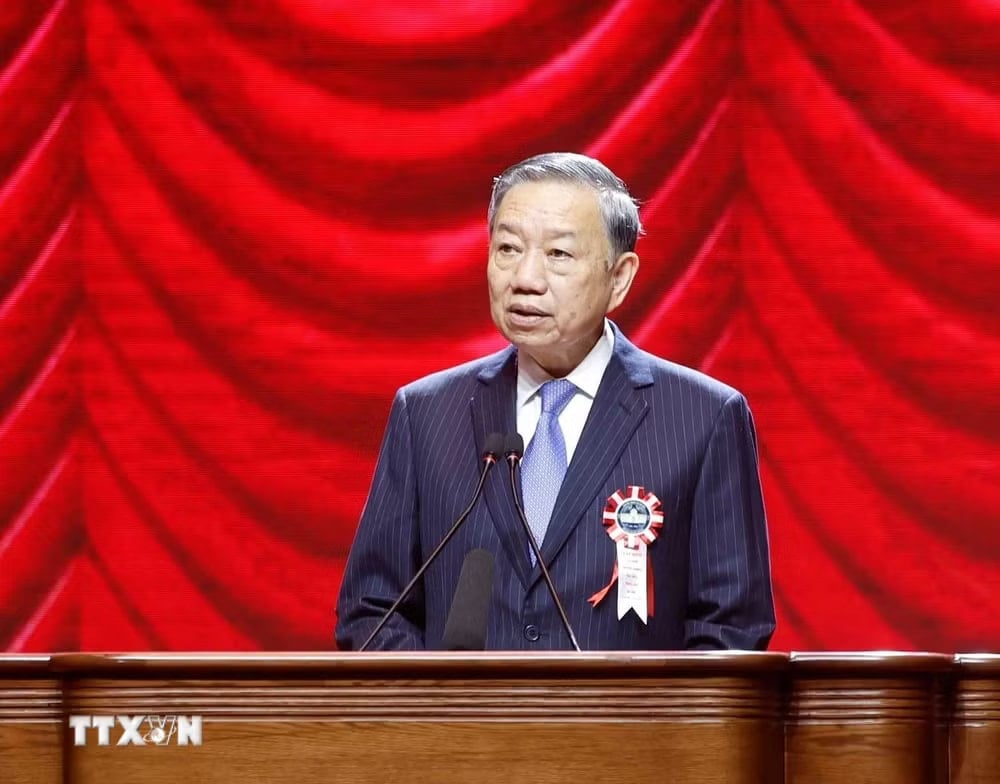
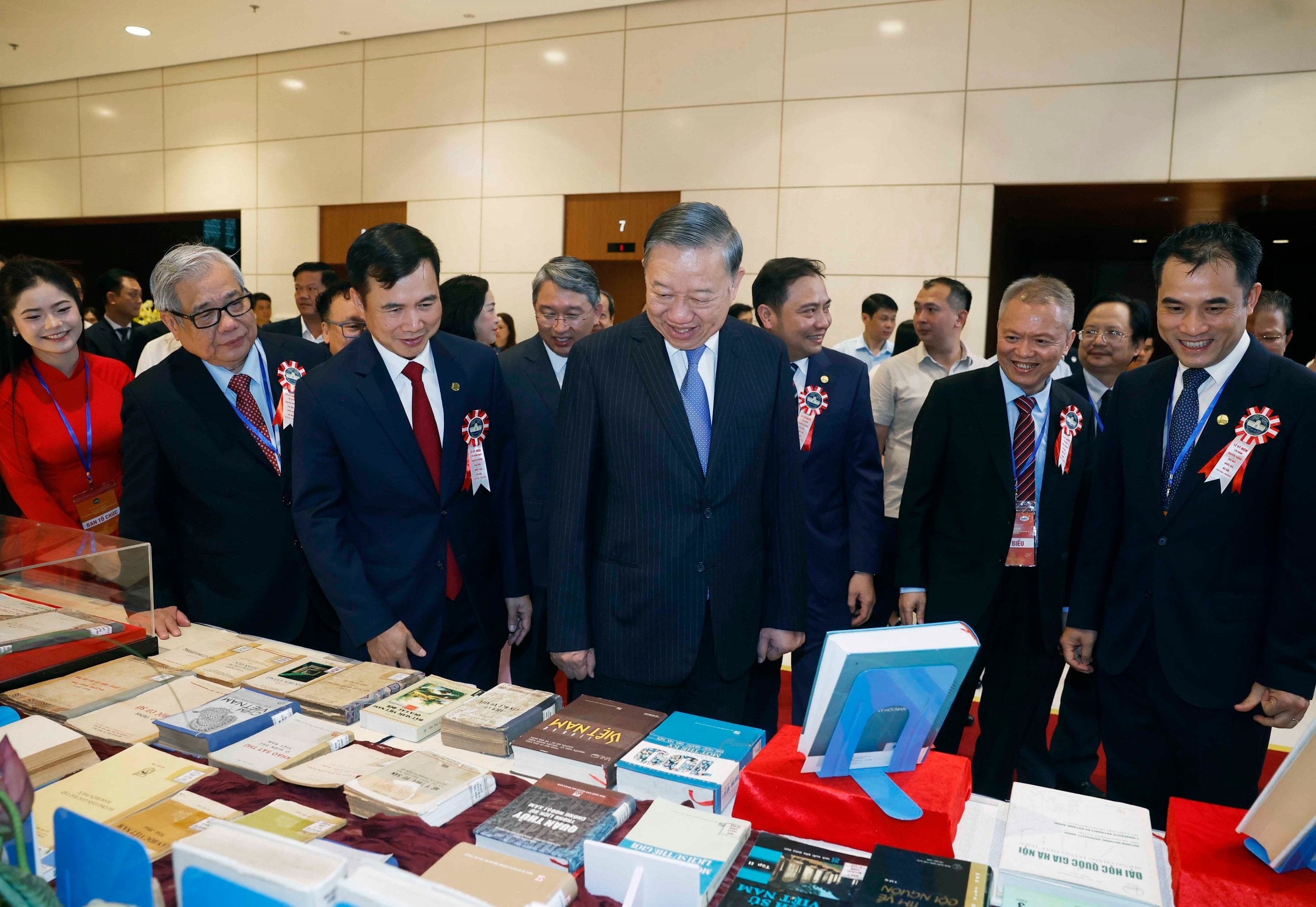
In his speech at the ceremony, General Secretary and President To Lam placed Hanoi National University within that historical context. It is noteworthy that the General Secretary and President viewed this tradition as a source of energy for progress. The greater the tradition, the greater the responsibility. The deeper the history, the stronger the demand for innovation. A university that has spanned 120 years must continue to demonstrate its role in the country's new tasks and must enter the center of the national development strategy.
The General Secretary and President emphasized the word "national" in the name of Hanoi National University as a sacred reminder of the responsibility, honor, and mission of serving the country. "National" is not just an organizational level, but a measure of stature, a standard, and a duty. A national university cannot measure itself solely by the number of students, the area of its facilities, or the number of scientific publications, but must measure itself by its ability to contribute to major national issues; by its capacity to cultivate talent; by its ability to provide scientific arguments for strategic policy decisions; by its leading role in the higher education system; by its academic prestige and its ability to spread Vietnamese culture to the world.
From that perspective, university lecture halls are no longer just places for imparting knowledge. They are places where a new generation of citizens is formed – individuals with specialized knowledge, strong character, integrity, a sense of responsibility, creativity, a desire to contribute, and a commitment to serving the nation. A nation striving for progress cannot do without such individuals. And nowhere plays a more direct role in shaping high-quality human resources than universities.
Our ancestors have long affirmed that "talented individuals are the lifeblood of the nation." President Ho Chi Minh also once advised: "An ignorant nation is a weak nation." In today's context, that teaching remains valid, but its meaning has broadened. The "ignorance" of the new era is not just a lack of literacy and education, but also backwardness in science, technology, management, strategic thinking, digital capabilities, innovation, and the ability to integrate. A nation that cannot master new knowledge, new technologies, and new development models will easily fall into a passive, dependent position and lose opportunities for advancement.
Therefore, when speaking about Hanoi National University, the General Secretary and President are addressing a broader issue: the position of universities in the nation's destiny. While in the past we might have thought of universities primarily as places for training human resources for society, today we must view them as a strategic engine of national development. Universities must contribute to creating new knowledge, new technologies, new management methods, new competitiveness, and renewed confidence in the intellectual strength of Vietnam.
In this new era of development, strong nations are not only those with abundant resources, labor, and investment capital, but also those that know how to transform knowledge into power, science and technology into productivity, creativity into value, culture into soft power, and people at the center of development. For a country to progress, universities must go further. For a nation to have a future, universities must prepare for the future starting today.
From academic knowledge to national development capacity
A very important message in the speech by the General Secretary and President was a warning about the risk of falling behind. In today's era, global competition has shifted to competition in core technologies, data, artificial intelligence, semiconductors, biotechnology, new energy, new materials, green economy, digital economy, and institutional quality... Countries that lag behind in knowledge will lag behind in development; countries that are weaker in science and technology will be weaker in self-reliance; and countries that lack strong universities will find it difficult to have a strong economy.
Therefore, the requirement for Hanoi National University, as well as other leading universities in Vietnam, is not only to teach better, conduct more research, and publish more, but also to make more practical contributions to the country's development capacity. Knowledge cannot remain confined to lecture halls. Research cannot be limited to laboratories. Scientific publications cannot be merely academic achievements. Ultimately, all valuable knowledge must be transformed into better policies, more useful technologies, stronger businesses, more developed localities, and a better life for the people.
This is a very important new point in thinking about universities. We are not devaluing basic science, nor are we pragmaticizing higher education. But we need to ask: What do universities contribute to the country's major problems? How do universities help in transforming the growth model? How do universities participate in the national digital transformation? What can universities contribute to institutional reform, urban governance, cultural development, environmental protection, climate change adaptation, the development of the cultural industry, and the building of Vietnamese people in the new era?
A major university must be able to answer those questions. And the answer must be demonstrated through innovative training programs, strong laboratories, outstanding research groups, technological products, patents, startups, policy consulting, international cooperation, modern governance models, and a workforce capable of working in new fields.
In this new era, we need universities that dare to set high goals, dare to compete with the region and the world, dare to venture into challenging fields, dare to establish centers of excellence in research, dare to attract talent from both within and outside the country, and dare to create a free, creative, honest, and service-oriented academic environment.
Therefore, when the General Secretary and President set the goal for Hanoi National University to develop into a modern, elite, multidisciplinary university with a high position in the region and the world, it was not just the goal of one university alone. It was a new standard for the development of Vietnamese higher education. Vietnamese universities cannot forever compare themselves to their own past selves. We must dare to compare ourselves to international standards, not to chase rankings in a superficial way, but to understand where we stand, what we lack, what needs to be reformed, and what path we must take to improve.
The new era of national development demands such development. We need spaces where universities, research institutes, businesses, the State, and local authorities can all collaborate. We need mechanisms to ensure that research results are not left forgotten in drawers. We need policies to ensure that scientists are respected, receive fair compensation, and work in a creative environment. We need programs that allow students to learn through practice, participate in solving real societal problems, start businesses from scientific ideas, and cultivate a spirit of service.
Universities, therefore, must become part of national capacity. Not as an auxiliary capacity, but as a core capacity. A nation with strong universities will be able to produce better human resources, better policies, better technology, better businesses, and more sustainable competitiveness. From the lecture hall to the destiny of the nation is such a journey: a journey of transforming knowledge into a driving force for development.
Universities are a source of soft power in the new era.
Universities are where society finds faith in the power of knowledge, science, and Vietnamese education. This is especially important in the digital age, where information is abundant but knowledge is not necessarily abundant; media noise is loud but scientific truth is not always respected; degrees may be more numerous, but academic culture and a spirit of openness still need to be nurtured. A great university must uphold scientific standards, academic integrity, a culture of debate, and a spirit of creative freedom. These are the core values that constitute the dignity of a university.
The speech by the General Secretary and President also opened up a very noteworthy dimension: universities as a national soft power. The General Secretary and President requested that Hanoi National University become a leading institution of Vietnamese academic diplomacy. This is a very modern way of thinking. Vietnam's soft power comes not only from its cultural heritage, art, cuisine, tourism, or historical traditions, but also from Vietnamese intellect, from the prestige of Vietnamese universities, from the quality of Vietnamese scientists, and from Vietnamese students who are confident, civilized, creative, integrated, and rich in identity.
Every lecturer, every scientist, every student, when stepping out into the world, carries with them the image of Vietnam. A valuable scientific paper, a research project recognized internationally, an invention beneficial to humanity, an outstanding Vietnamese student in a global environment, a high-quality academic cooperation program... - all contribute to telling the story of Vietnam through the language of intellect. This is a sustainable, profound, and highly persuasive soft power.
In this new era of development, Vietnam needs to tell the world a new story about itself: not just as a heroic nation in war, not just as a country rich in heritage, not just as a dynamic economy, but also as a nation of knowledge, creativity, technology, culture, and responsibility. To tell that story, we need strong universities, strong research centers, great intellectuals, and generations of students with great aspirations.
Conversely, universities must also be places that preserve Vietnamese cultural identity during the integration process. A modern university must help students access global knowledge while deeply understanding national culture; possess the capacity to work globally while being responsible to the country; have an open-minded mindset while having a solid foundation of ethics and character.
This is the meeting point between education and culture. Universities not only cultivate intellect but also nurture character. They not only provide skills but also shape ideals. They not only prepare for careers but also foster civic responsibility. A country aiming for sustainable development cannot have only highly skilled professionals lacking culture, ethics, and social responsibility. And a great university cannot simply produce manpower for the market; it must contribute to shaping the people of the nation.
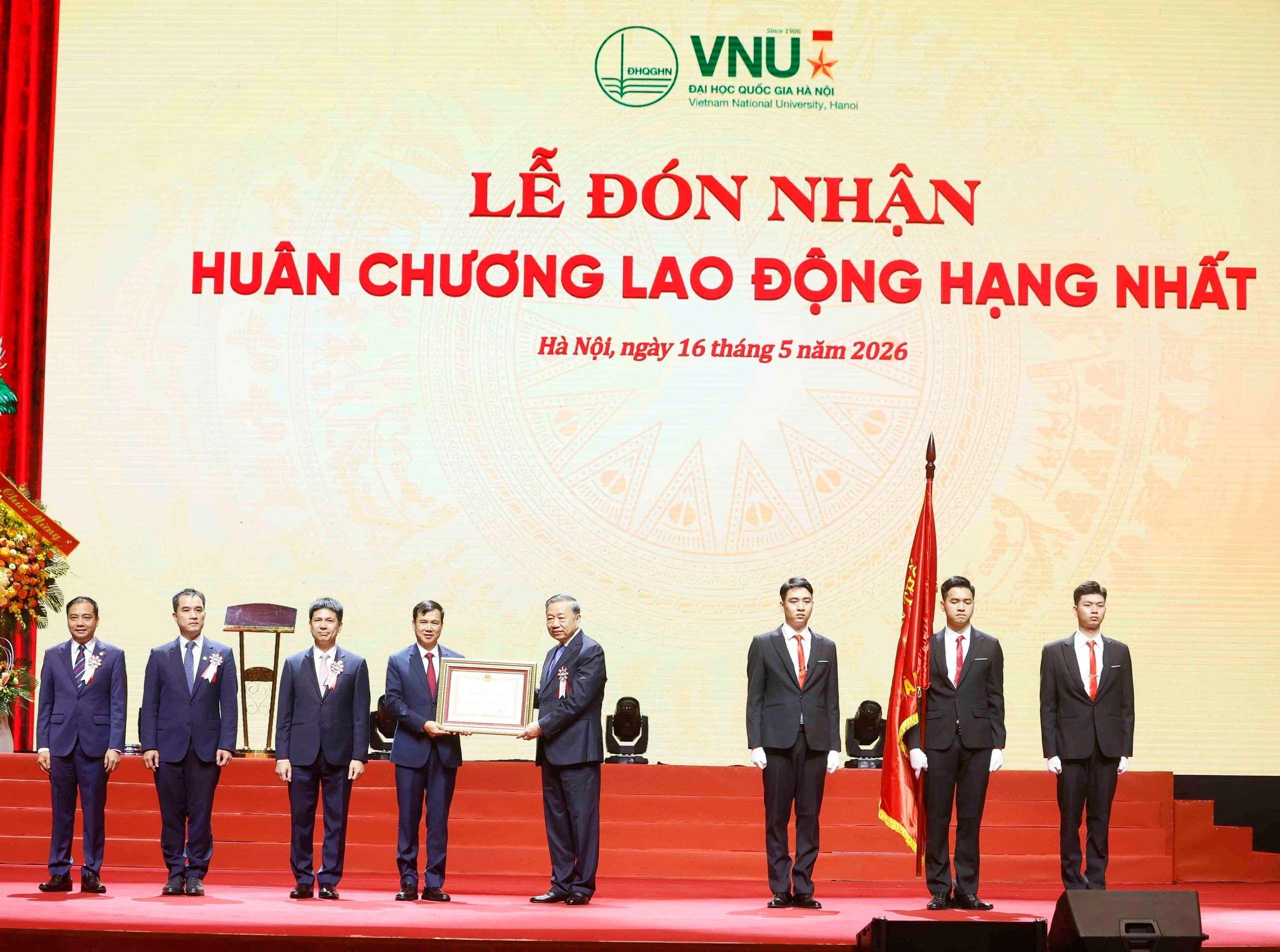
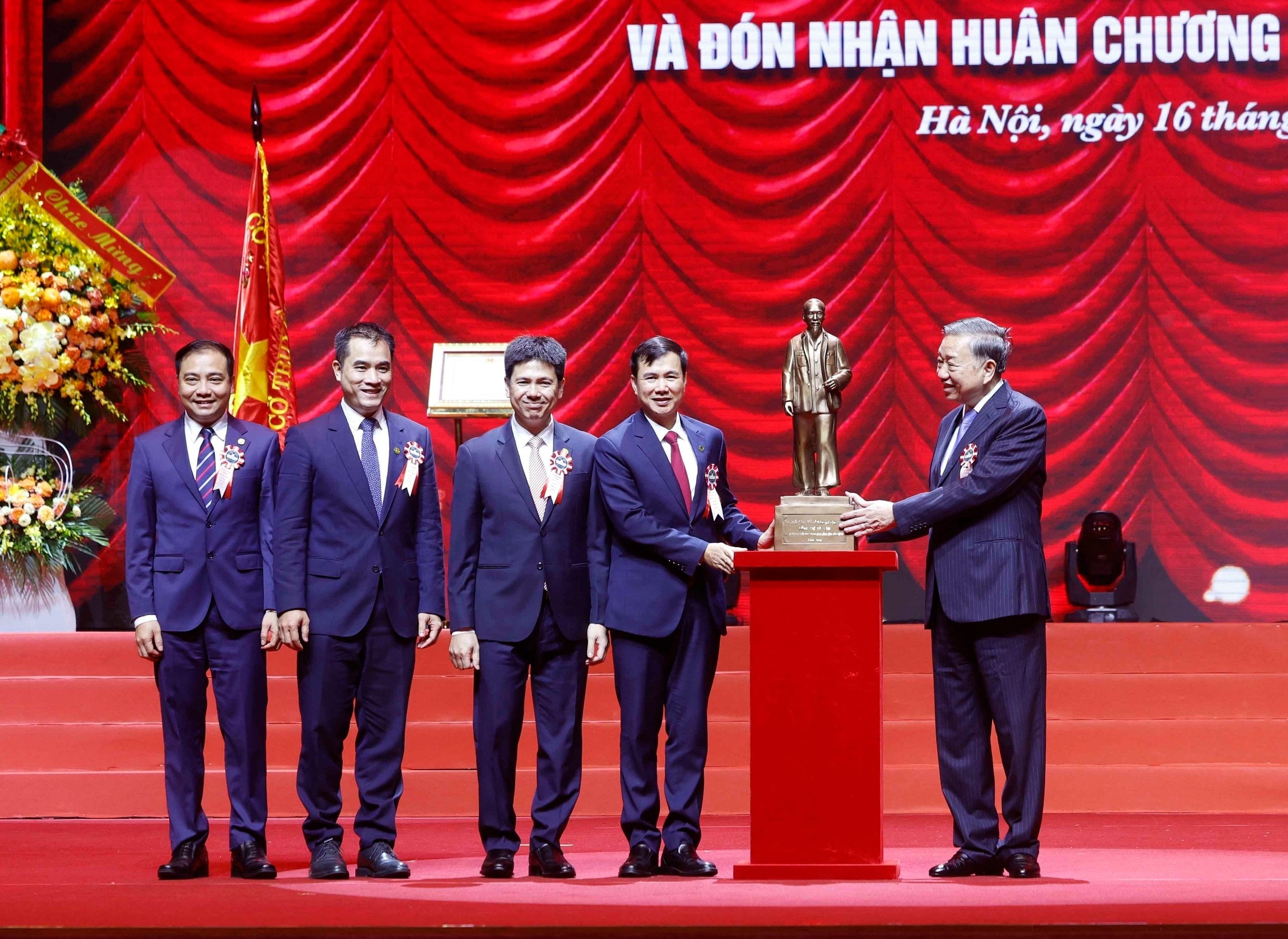
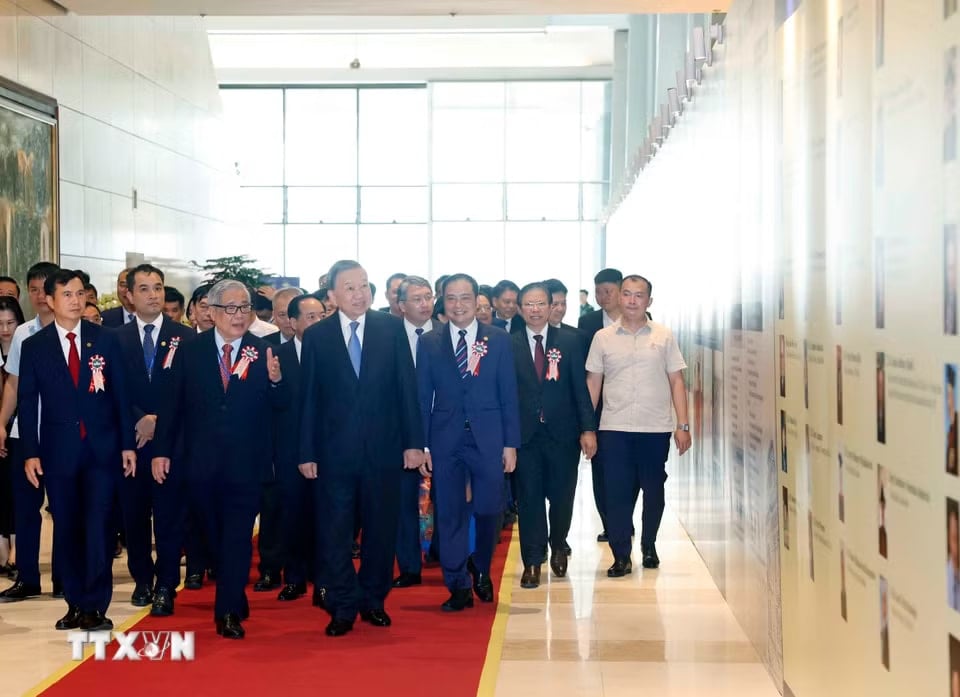
From the lecture hall to the nation's destiny is the path of knowledge entering life, of talent entering the common cause, of science entering development, of culture entering character, and of individual aspirations merging with national aspirations. The speech by the General Secretary and President at the 120th anniversary celebration of Hanoi National University, therefore, is not only a piece of advice for a university, but also a reminder to the entire Vietnamese higher education system: it is time for universities to rise to a new level, with new responsibilities, new standards, and new aspirations.
The new era of national development is opening up many opportunities, but also posing unprecedented challenges. Our ability to move faster, further, and more steadily depends greatly on the quality of the Vietnamese people, on our scientific and technological capabilities, on our capacity for innovation, and on the power of knowledge. These things don't develop naturally. They must be cultivated, nurtured, and tested within an environment of education, research, and creativity – with universities at their center.
When a lecture hall is illuminated by a desire for service, it is not merely the beginning of a lesson, but potentially the beginning of a future. When a student is nurtured with knowledge, culture, and responsibility, it is not only the maturation of an individual, but also the preparation of national resources. When a university dares to strive to become an elite, innovative, integrated, and service-oriented institution, it is not only the success of an educational institution, but a step forward for the nation on its path of development.
From the lecture hall to the destiny of the nation, the distance seems vast, but in reality, it begins with each hour of serious study, each conscientious research project, each nurtured creative aspiration, each policy of valuing talent implemented, and each Vietnamese person prepared to step into the future with courage, intelligence, and patriotism. That is the profound spirit conveyed in the speech by General Secretary and President To Lam. And it is also a reminder to us: if we want Vietnam to thrive in the new era, let's start by elevating the level of universities, elevating knowledge, and elevating the level of the Vietnamese people.
Source: https://daibieunhandan.vn/tu-giang-duong-den-van-menh-quoc-gia-10417170.html






















































































Comment (0)