

Lessons not included in the lesson plan.
Early childhood education is essentially a journey of laying the first bricks in building a child's character. At Mai Dong Kindergarten, that journey is not confined to the classroom with familiar lessons, but is also realized through small, concrete actions – such as teaching a child how to give.
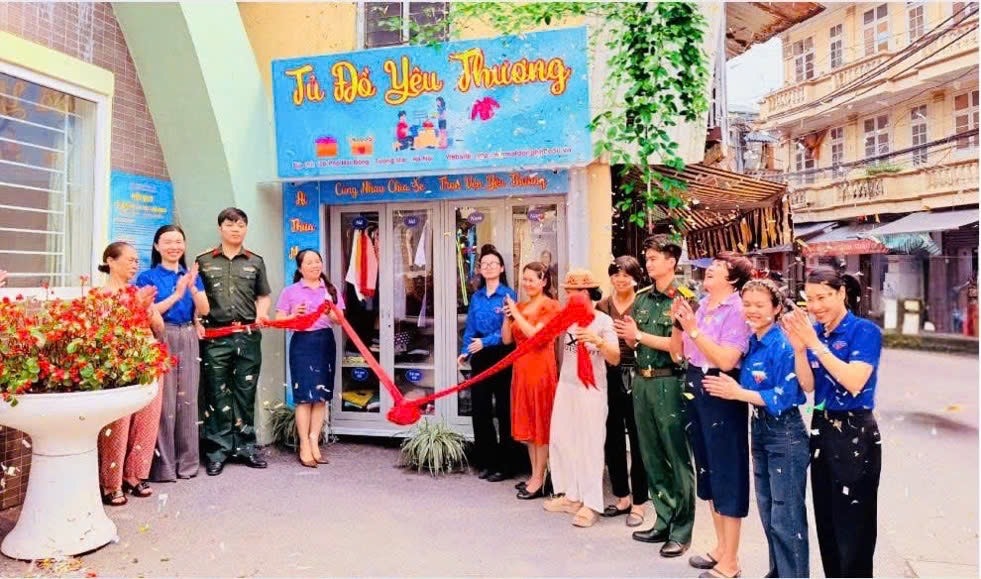
The teachers at the school often say to each other that teaching children to love cannot be done solely through lectures following a lesson plan. At this age, children may not fully understand grand concepts like "compassion" or "community responsibility," but they will directly experience the spirit of mutual support when they personally give away an item they own. From this simple idea, the "Charity Cabinet" model was born. The cabinet is not elaborate in design; it's just a small, neatly arranged space by the school gate, where anyone passing by can see it. The operating principle is very simple: "Those who have extra can donate - Those who need can share."
Ms. Ly Ngan, the school's Vice Principal, shared: "In the early days of implementation, the school didn't focus on the target number of clothes collected. What we cared more about was helping children understand the meaning of the action they were taking." During class time, teachers told the children stories about children in the highlands, where winters are bitterly cold but not everyone has enough warm clothes. These simple, relatable stories gradually helped the children imagine a world different from their own.
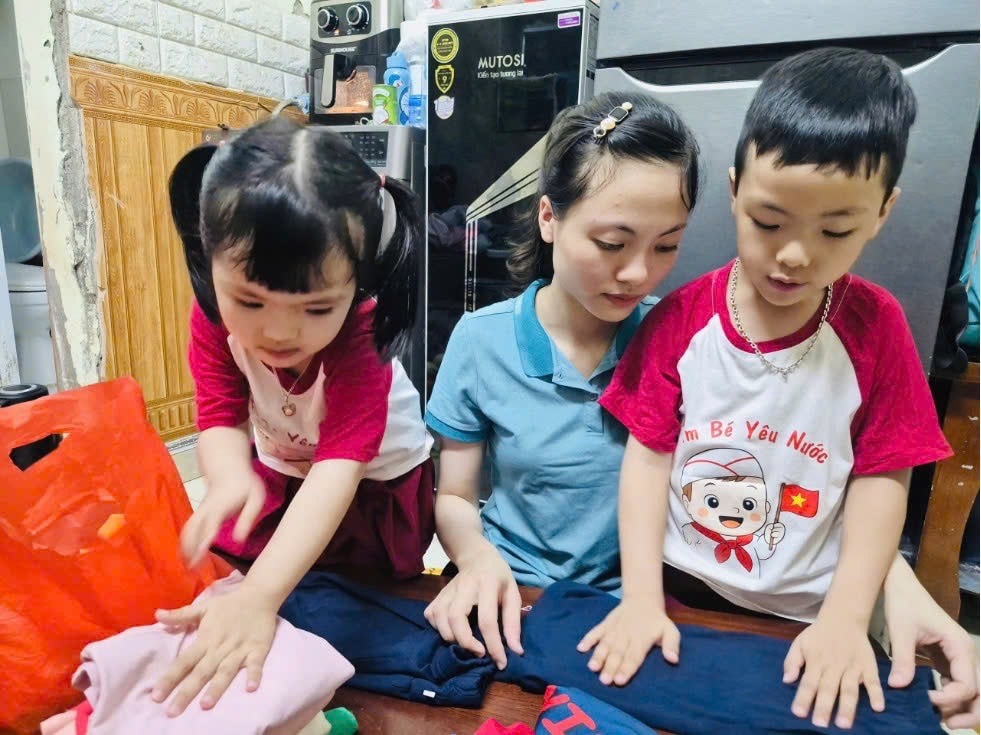
Then one day, the children were invited to bring clothes that were still in good condition to class. There was no requirement to bring a lot or a little. Some brought a sweater that was too small, others brought a jacket they used to really like. The children were directly involved in the entire process with the support of their parents: sorting, folding, arranging, and then putting them in the closet.
Some classes even organize "small gift-giving sessions," where children take turns bringing items and expressing their feelings in a very innocent and sincere way: "I'm giving this to you," "Wear this to keep warm," "Here's my favorite shirt for you"... It is in these moments that the meaning of "giving" becomes concrete and vivid in the hearts of children.
A small model with multiple layers of meaning.
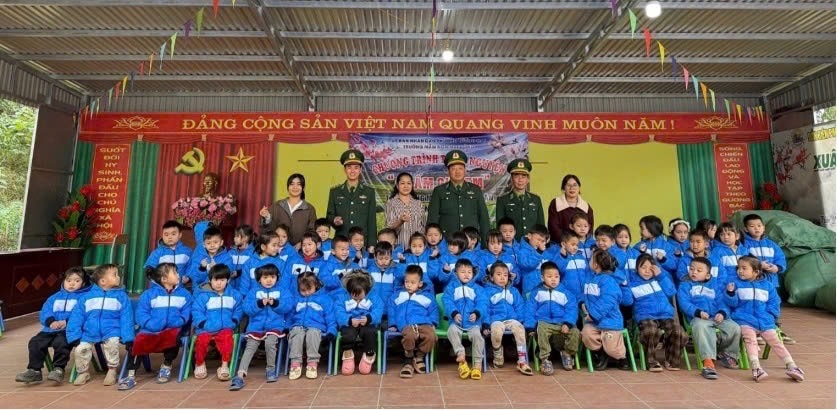
Not limited to the school's boundaries, the clothes from the "Clothing of Love" program have followed the "Warm Clothes for Children" program to remote areas of the country... During the past school year, the school's staff, teachers, and parents donated tens of millions of VND to support people in areas affected by natural disasters. Specifically for Tet 2026, over 40 million VND along with many warm clothes were sent to Tan Xuan Kindergarten (Xuan Nha commune, Son La province) - a school in a border area facing many difficulties, through the support of the Chieng Son border guard force.
Each warm jacket and pair of trousers that reaches the children not only helps them withstand the cold in the Northwest mountainous region and welcome a warm Tet holiday, but also carries a message from the teachers and students of Mai Dong Kindergarten: "Many people are still thinking of you!"
What makes the "Clothing of Love" initiative a model is not just its charitable value. More importantly, it's how this model simultaneously addresses multiple educational challenges. For children, it's a method of learning through experience: learning to care for others, learning to share, and learning to take responsibility for their actions. For parents, it's an opportunity to collaborate with the school in educating their children through concrete actions, rather than just lectures. And for the community, the model contributes to spreading a sustainable lifestyle: minimizing waste from old clothes while creating a "cycle" of sharing.
Notably, the school also experimented with bringing this activity to a digital environment. An online platform was built to update support needs, track the donation and distribution process, and share small stories from students, parents, and teachers. There, each shirt is no longer an anonymous item, but is connected to a specific story.
After a period of implementation, the model has yielded significant results: Hundreds of clothing items were donated within just one month; Over 85% of parents participated in supporting the initiative; 100% of children aged 4-5 and above directly participated in the activity; Dozens of donations were made to needy individuals both inside and outside the school.
But what's even more significant are the small changes in children's behavior – results that can't be measured by statistics: learning to share toys, asking about their friends' well-being, paying attention to the feelings of those around them, etc. They might forget which shirt they gave away later. But the feeling of putting that shirt in the closet, the feeling of having done something good, can linger for a long time, contributing to shaping who they are.
And who knows, perhaps it is from those "small garments" that a larger foundation of character is quietly being nurtured and taking shape.
Source: https://hanoimoi.vn/tu-manh-ao-nho-den-nhung-bai-hoc-lon-747462.html













































































Comment (0)