

The Rise of AI
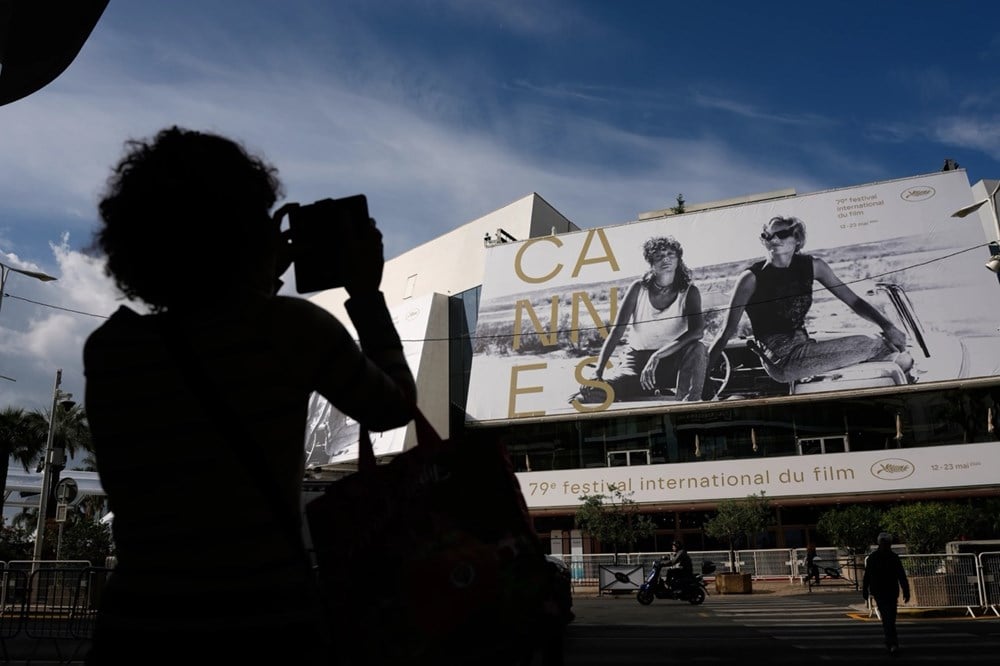
The 79th Cannes Film Festival may be remembered as the first time the world's most prestigious film festival confronted the rise of AI.
The film festival's arrival was felt like a "tsunami" across the French Riviera. The potential of AI to reshape the film industry, for better or worse, has been a subject of ongoing debate since the festival's opening.
"The atmosphere in Cannes, and in global cinema in general, is showing a pivotal shift," said Scott Mann, co-CEO of Flawless, a company specializing in AI tools for post-production.
Both on screen and in real life, AI is becoming increasingly evident.
For the first time, the Cannes Film Festival has partnered with Meta in a multi-year agreement. The technology giant Meta recently announced a multi-year sponsorship deal with the Cannes International Film Festival, marking a new step for AI giants at the heart of the global film industry.
Meta's AI tools were also used to support the production of director Steven Soderbergh's film , John Lennon: The Last Interview, which entered the John Lennon Film Festival. In the film, director Soderbergh used Meta's AI programs to create surreal graphic images.
That choice drew criticism from many critics at the Cannes Film Festival, but Steven Soderbergh, a filmmaker known for his innovative spirit and who has previously filmed with an iPhone, argued that such experiments were necessary at some point.
“We haven’t yet seen anyone with the creative credibility to truly fully commit to AI and see how people react. I think that’s necessary. How do you know where the line is if no one has crossed it yet?” director Soderbergh said in an interview.
Directors, actors, and many other figures at this year's Cannes Film Festival are setting their own "boundaries," or at least expressing their views, on AI.
Peter Jackson, a recipient of the Honorary Palme d'Or, once said: "I don't hate AI at all. To me, it's just a special effect, like one of the techniques in film."
Director James Gray, who directed the family drama Paper Tiger. He said he wasn't too worried about the film.
“In some cases, this can be a very useful tool. I don’t think in our lifetime, or even in the lifetime of our children and grandchildren, AI will come close to the only infinite thing that humans know of. That is the soul,” Gray said in an interview.
From the Oscars to Cannes, the film industry landscape is changing rapidly.
The Cannes Film Festival took place shortly after a series of significant developments related to AI in Hollywood.
Earlier this month, the Academy of Motion Picture Arts and Sciences announced new guidelines stipulating that only performances “proven to be performed by humans with their consent” will be eligible for nomination in acting categories.
However, the Oscar organizers insist that AI tools neither increase nor decrease the chances of being nominated.
The Screen Actors Guild – the American Federation of Television and Radio Artists – recently reached a preliminary agreement with studios to define “protective barriers” related to AI, including the use of digital clones and synthetic characters.
Some of these advancements have caused concern in Hollywood. The debut of Tilly Norwood – an actress entirely created by AI – sparked controversy in the industry. Earlier this year, the first images of an AI-generated resurrected version of the late actor Val Kilmer for a film made with his family's consent further fueled debate.
While more extreme applications of generative AI continue to raise concerns, other forms of application are gradually gaining acceptance and expanding their influence.
“AI will become a part of our business. This tool will help reduce production costs. Perhaps in just a few years, we could create something that looks like a Marvel movie right in our basement,” said Kent Sanderson, CEO of Bleecker Street, during a discussion.
Source: https://baovanhoa.vn/nghe-thuat/tuong-lai-dien-anh-trong-thoi-dai-ai-229400.html











































































































Comment (0)