

The UAE's withdrawal from OPEC would weaken OPEC's control over global oil supply and widen the rift between the UAE and its neighbor Saudi Arabia, which is the de facto leader of OPEC.
This could also help the UAE increase its output when exporting through the Gulf region, as it will no longer be bound by OPEC quotas.
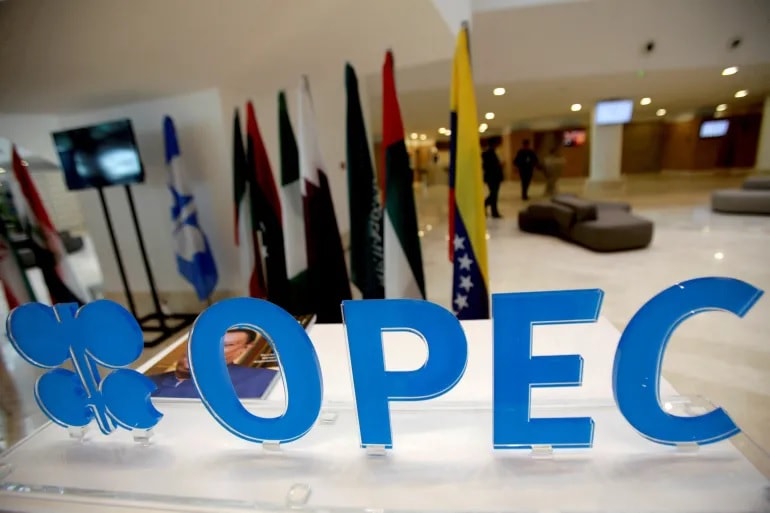
The Organization of Petroleum Exporting Countries (OPEC) was founded on September 14, 1960, in Baghdad, Iraq, by five initial members: Iran, Iraq, Kuwait, Saudi Arabia, and Venezuela. This organization, comprising 12 member states (including the UAE), accounted for 38% of global oil production in 2022. An estimated 79.5% of the world 's proven oil reserves are located within OPEC countries, with the Middle East alone accounting for 67.2% of OPEC's total reserves.
Will falling oil prices lead to increased supply?
Reuters quoted UAE Energy Minister Suhail Mohamed al-Mazrouei as saying that the decision was made after reviewing the country's energy strategies.
Mr. Mazrouei stated that the world will need more energy, implying that the UAE would be in a position to meet that demand. Oil prices on international markets pared their gains on Tuesday after the UAE announced it would leave OPEC and OPEC+ on May 1st.
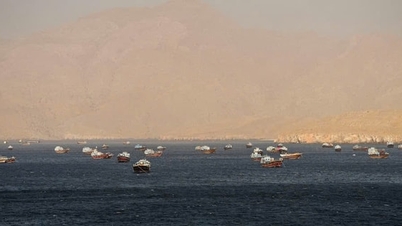
OPEC Gulf oil producers are struggling to transport exports through the Strait of Hormuz, which typically carries one-fifth of the world's crude oil and liquefied natural gas, due to threats from ongoing conflicts between the US, Israel, and Iran.
Due to disruptions in oil supply from the Gulf region, the International Energy Agency reported that OPEC+'s share of global oil production fell to 44% in March. This figure is likely to continue to decline in April as production shutdowns become more pronounced – and then further in May as the fourth-largest producer leaves the group.
The UAE's departure from OPEC is expected to have a positive impact on consumers and the economy as a whole. "This opens up opportunities for the UAE to gain global market share once geopolitical conditions return to normal," said Monica Malik, chief economist at ADCB.
Jorge Leon, an analyst at Rystad, noted the importance of the UAE as one of the few OPEC members, besides Saudi Arabia, that has surplus production capacity allowing it to add more oil to the market.
"If it were outside this group, the UAE would have both the incentive and the capacity to increase production, which raises broader questions about the sustainability of Saudi Arabia's role as a central market stabilizer," he said.
Tensions with Saudi Arabia
Once staunch allies, the UAE and Saudi Arabia have now developed a simmering competitive relationship, clashing over issues ranging from oil policy and regional geopolitics to the race for talent and foreign investment.
The UAE is a regional business and financial hub and one of the United States' most important allies. It pursues an assertive foreign policy and has forged its own sphere of influence across the Middle East and Africa.
Particularly after being attacked during the Iran war, the UAE has strengthened its relations with the US and Israel, two countries with which it established ties under the Abraham Accords in 2020. The UAE views its relationship with Israel as a lever for exerting influence in the region and a crucial channel of communication with the US.
Source: https://congluan.vn/uae-bat-ngo-roi-opec-vi-sao-10339798.html




























































































Comment (0)