

The art of metaphor
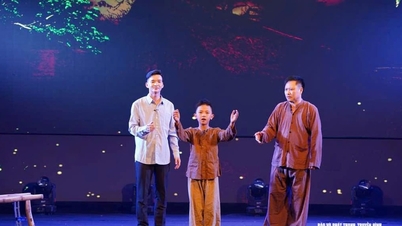
Recognized as a National Intangible Cultural Heritage in 2015, the Co Tu people's "speaking and singing of folk songs" is preserved with great pride, appearing naturally in many settings, from weddings and village festivals to gatherings between hamlets. There is no fixed script or pre-built stage; everything is formed from flexible improvisation, based on life experiences and a deep understanding of the community's culture.
According to researchers of mountain culture, the language in the art of folk singing and reciting is rich in metaphorical imagery, often borrowing from mountains, forests, rivers, streams, fields, trees, birds, and animals to convey messages about life and how people interact with each other. Through this, speech becomes a form of verbal art, both close to life and imbued with cultural depth.
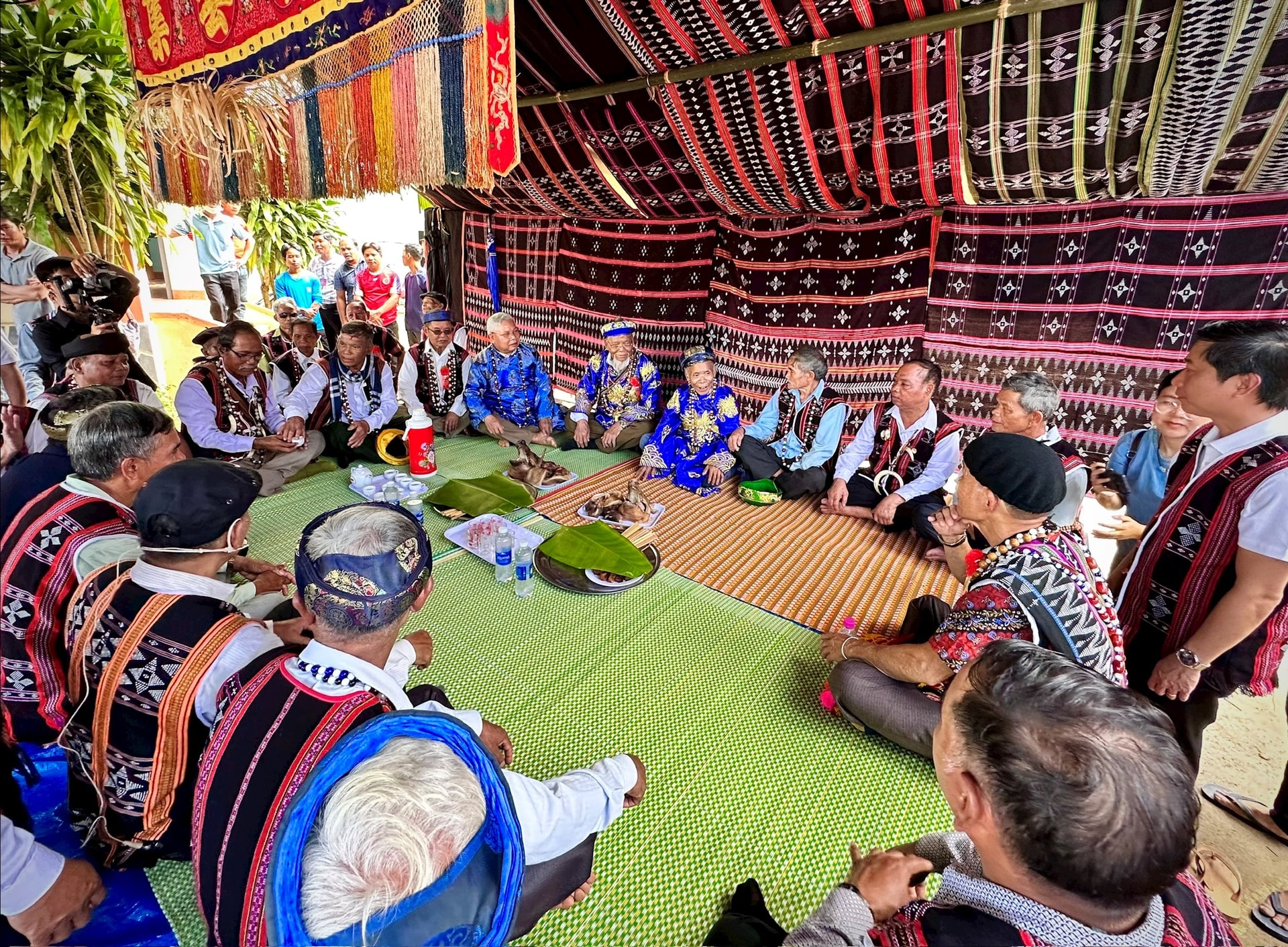
At the recent first Co Tu traditional culture festival in Song Kon commune, the practice of reciting and singing folk songs was clearly demonstrated in the community's brotherhood ceremony. Before the ceremony began, the council of village elders from Ra Lang, Ra Dung, and Ra Nuoi villages prepared offerings, seeking permission from the spirits and ancestors to hold the "Pr'ngooch" brotherhood ceremony between the former Jo Ngay community and the former A Ting and Song Kon communes. This event took place in the context of the three communes merging into the new Song Kon commune, serving as an occasion to further strengthen the bonds of brotherhood among the Co Tu people.
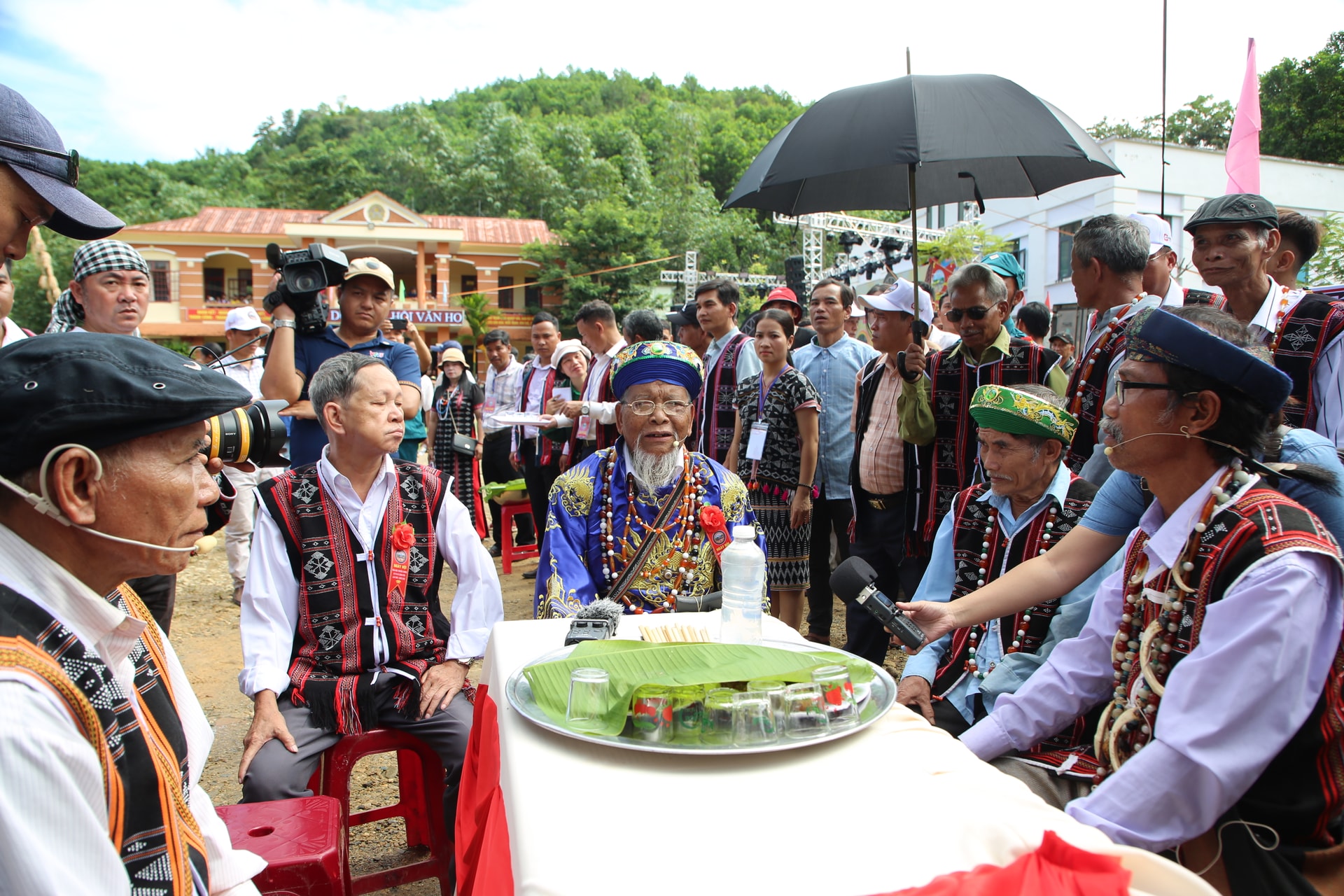
Representing the former Jơ Ngây commune community, village elder Alăng Chúc (Ra Lang village) opened the folk song performance with vivid imagery, using the stream, the forest, and the intersecting roads to speak of the meeting and harmony between the Cơ Tu villages. More than just a greeting, the folk song sung by Elder Chúc expressed faith, acceptance, and sharing within the community's new shared cultural space.
"Even when placed next to each other, these jars never break," Elder Alăng Chúc concluded, using the image of jars, implying that the Cơ Tu people living in the same environment always remain close, without animosity or disunity.
As soon as Elder Alang Chuc finished his verse, he immediately received a response from an elder across the hall. In the courtyard, a group of people brought traditional offerings such as baskets of sticky rice cooked in bamboo tubes, buffalo horn-shaped cakes, sticky rice, rice, grilled fish in bamboo tubes, rice wine, and woven mats to contribute to the ceremony. A "welcome" feast was laid out, covered with banana leaves. The elders took turns improvising verses and songs, expressing a shared story of brotherhood and friendship, stating that from now on all animosities would be set aside, and the Co Tu people of all regions would be one, living together in harmony.
A story about character and living.
Elder Clâu Blao (Voong village, Hung Son commune) said that the Co Tu people are always proud of their folk singing and storytelling, especially after this art form was recognized as a National Intangible Cultural Heritage in 2015. This unique form of impromptu art serves to convey stories and events, introduce topics, or resolve internal conflicts through metaphorical imagery that is subtle and discreet. Each folk song contains many layers of profound meaning, reflecting the community's living space in the highlands, connected to nature and beliefs.
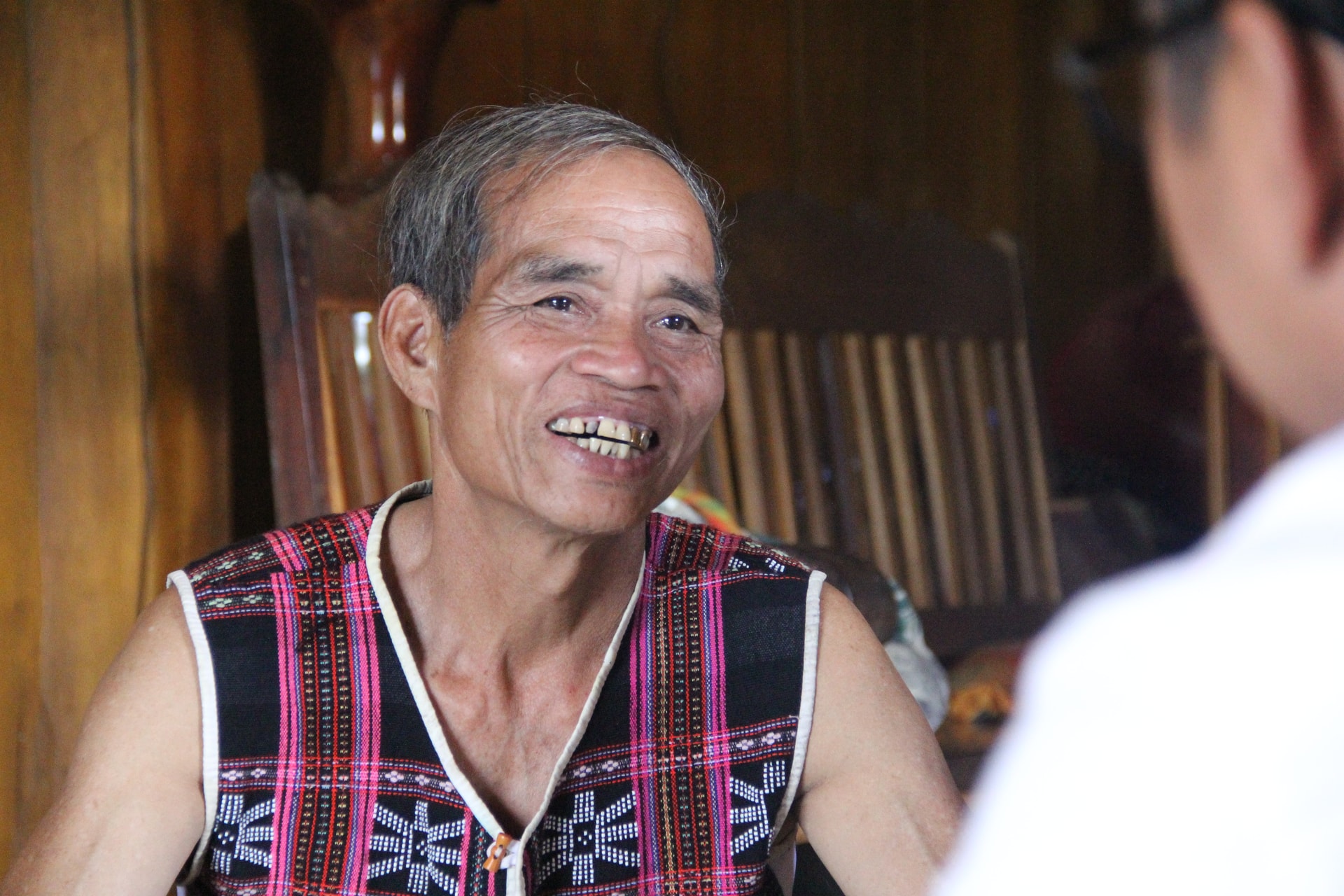
According to the elder Clâu Blao, the value of the art of reciting and singing folk songs lies in the ability to reason and the depth of thought. The more layers of meaning a folk song has, the more it demonstrates the intelligence and skill of the speaker. To understand it correctly, the listener must deduce the meaning themselves; it cannot be understood simply.
“The beauty of reciting and singing folk songs lies in the way the Co Tu people uphold justice and maintain community spirit. In these folk songs, the elders advise their descendants on how to live, behave, and live harmoniously within the community. However, nowadays, young people have few opportunities to learn, while this art form relies heavily on improvisational skills and life experience,” shared elder Clâu Blao.
According to Do Huu Tung, Chairman of the People's Committee of Song Kon commune, the art of reciting and singing folk songs is widely practiced in the cultural life of the Co Tu community. It is considered an art form of "competition" between elders from different villages, between hosts and guests; and even used in resolving internal conflicts. Folk songs have an effective role in social education , presenting highly persuasive arguments that compel others to acknowledge and follow them.
“The spoken and sung verses of the Co Tu people often have multiple layers of meaning. The deeper and more subtle the meaning, the more the opponent cannot ‘compete’ with it, proving the talent of the singer. However, the difficulty is that there is no common model to learn; it depends entirely on the improvisational ability, skill level, and experience of each artist. Therefore, for many years, when we were still a district-level locality, we established many spoken and sung verse clubs. Through regular activities, village elders and artists directly taught, giving young people the opportunity to access and learn,” Mr. Tung said.
Folk songs resolve village disputes.
Elder Bh'ling Hạnh, from Công Dồn village (Nam Giang commune), said that the art of reciting and singing folk songs is clearly evident in community life, where many conflicts and disputes between villages and families are resolved through these songs. Instead of directly analyzing or explaining events, these songs use similes and personification to convey messages, helping listeners discern right from wrong. According to Elder Bh'ling Hạnh, practitioners need an expressive voice and the ability to select imagery, express ideas concisely, and adapt to the context in order to preserve the oral tradition of this unique art form.
Source: https://baodanang.vn/vang-dieu-ly-tren-ngan-3336894.html
















































![[Photo] Hue: Admire the 2.4 trillion VND sea bridge, the longest in Central Vietnam.](https://vphoto.vietnam.vn/thumb/402x226/vietnam/resource/IMAGE/2026/05/24/1779614018347_anh-man-hinh-2026-05-24-luc-16-13-29.png)


























Comment (0)