

|
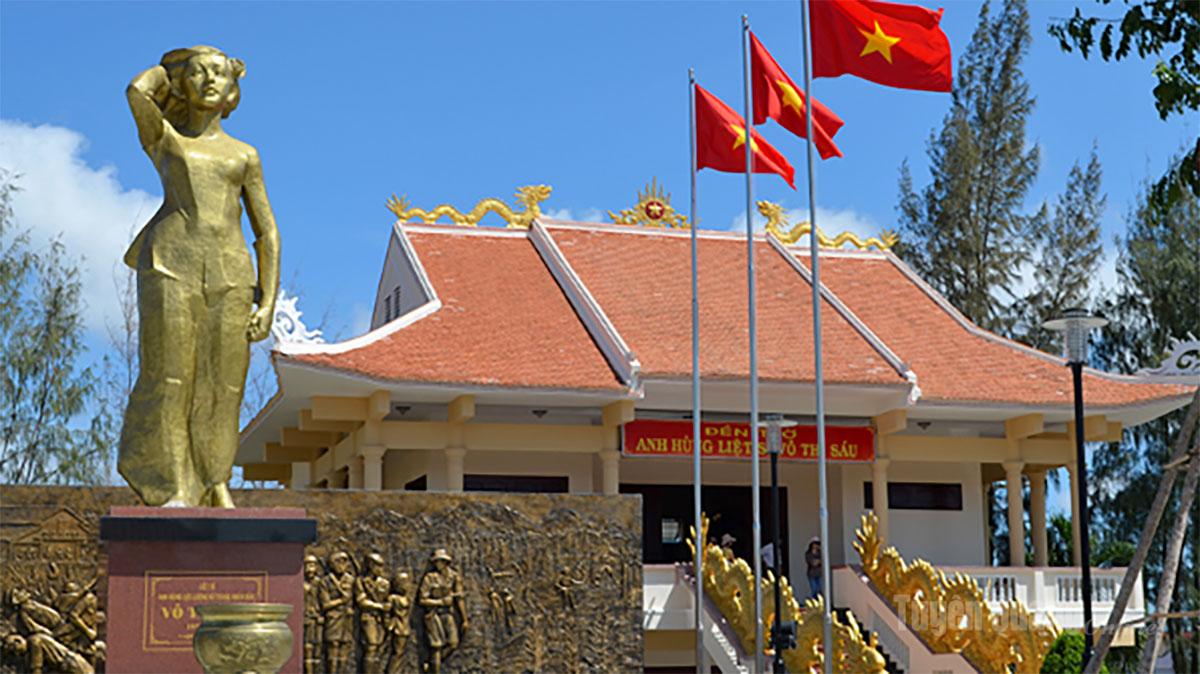
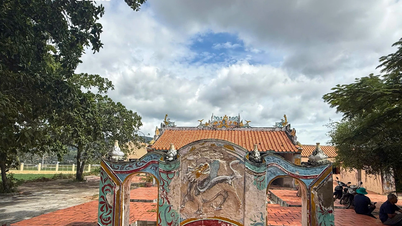
The Vo Thi Sau Memorial House is located in Ba Ria Ward, Ho Chi Minh City. |
Artistic emotions from flowers
To date, there are no original historical documents or reliable testimonies confirming that Vo Thi Sau wore a sapodilla flower in her hair before her execution in Con Dao in 1952. However, many witnesses and documents agree that she remained calm on the way to the execution grounds, refused to be blindfolded, continued to sing, and maintained her defiant spirit until the very end.
It is noteworthy that although Sister Sáu sacrificed her life in 1952, it was only three years later that the "le-ki-ma flower" truly entered the story of this female hero.
In 1955, the poet Phùng Quán wrote the novel *Escape from Côn Đảo* and the epic poem *The Song in the Hell of Côn Đảo*. The epic poem dramatically depicted Võ Thị Sáu's final days on Côn Đảo with details such as her singing revolutionary songs in prison, recalling her turbulent childhood in the resistance, and pinning a sprig of leekima flower in her hair. The poem was widely received and won national literary awards. Phùng Quán's powerful verses about the soldier who refused to be blindfolded during her execution deeply touched the hearts of contemporaries, leaving them forever remembering the resilient young woman who died at the tender age of sixteen, with a sprig of leekima flower from her homeland of Đất Đỏ pinned to her hair.
Interestingly, Phùng Quán himself had never been to Côn Đảo at that time, nor did he really know what a sapodilla tree looked like in real life. In his collection of essays, *Nonsensical Life Stories*, writer Nguyễn Quang Lập recounts a time when he visited Hanoi and shared a room with the poet Phùng Quán, hearing him tell the story of composing the epic poem about Võ Thị Sáu: “I didn’t know what a sapodilla tree was; hearing the beautiful name, I imagined its flowers must be very beautiful. Later I learned that sapodilla is actually an egg-shaped fruit tree, its flowers are ugly and full of sap; ‘picking a branch to put in your hair’ would be crazy.”
|
The sapodilla flower has found its way into poetry, music , and even oral traditions about the heroine Vo Thi Sau. |
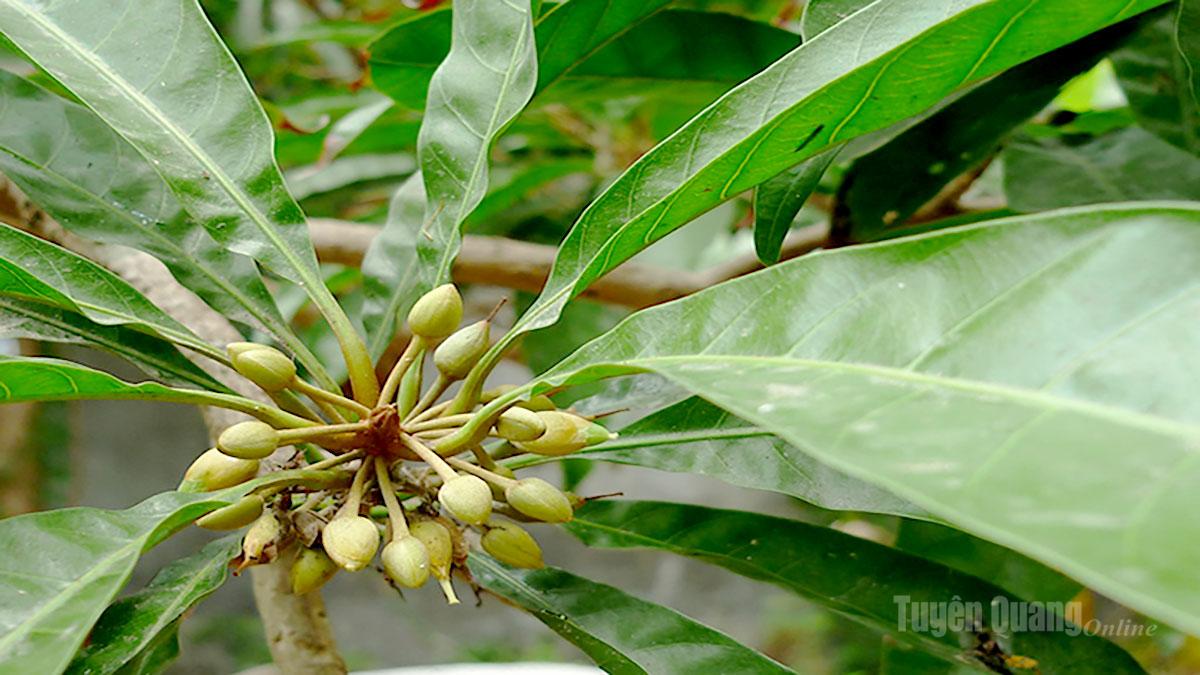
Thus, Phùng Quán heard the name "le-ki-ma" (sleepy pear) and thought it beautiful and poetic, so he imagined that its flowers must also be very beautiful, and therefore included it in his work as an artistic detail.
Later, composer Nguyen Duc Toan read Phung Quan's work and wrote the famous song "Gratitude to Sister Vo Thi Sau" with lines that many people love and know by heart: "The season when the Le Ki Ma flowers bloom/In our homeland, the Red Land region… The rivers and mountains of the country are grateful to the hero/Who died for the season when the Le Ki Ma flowers bloom…".
Composer Nguyen Duc Toan himself confessed that when he wrote the song, he didn't know much about the sapodilla tree. But through artistic inspiration, "the sapodilla blossom season" entered the music and lives on in the public consciousness. From then on, many people implicitly believed that Vo Thi Sau actually wore sapodilla flowers in her hair in her final moments.
Spiritual truth
This is a fairly common phenomenon in Vietnamese revolutionary literature: an artistic detail that may not initially be entirely historical fact gradually becomes a "spiritual truth" in the collective memory.
Similar to the imagery in Lê Anh Xuân's poem "The Stance of Vietnam":
"He fell on the runway at Tan Son Nhat."
But he struggled to his feet, leaning his rifle against the wreckage of the helicopter…”
It's difficult to verify whether a soldier actually died in that exact posture. But that "stance" has become a spiritual symbol for the entire nation during the war.
Or take Gia Dung's "Song of Truong Son":
"Oh, Truong Son!"
There wasn't a single footprint on the road we traveled.
There was a golden deer tilting its ears in bewilderment.
Stop halfway up the mountain pass and listen to the stream singing.
"Let's pick a wildflower and put it on our hats as we go..."
|
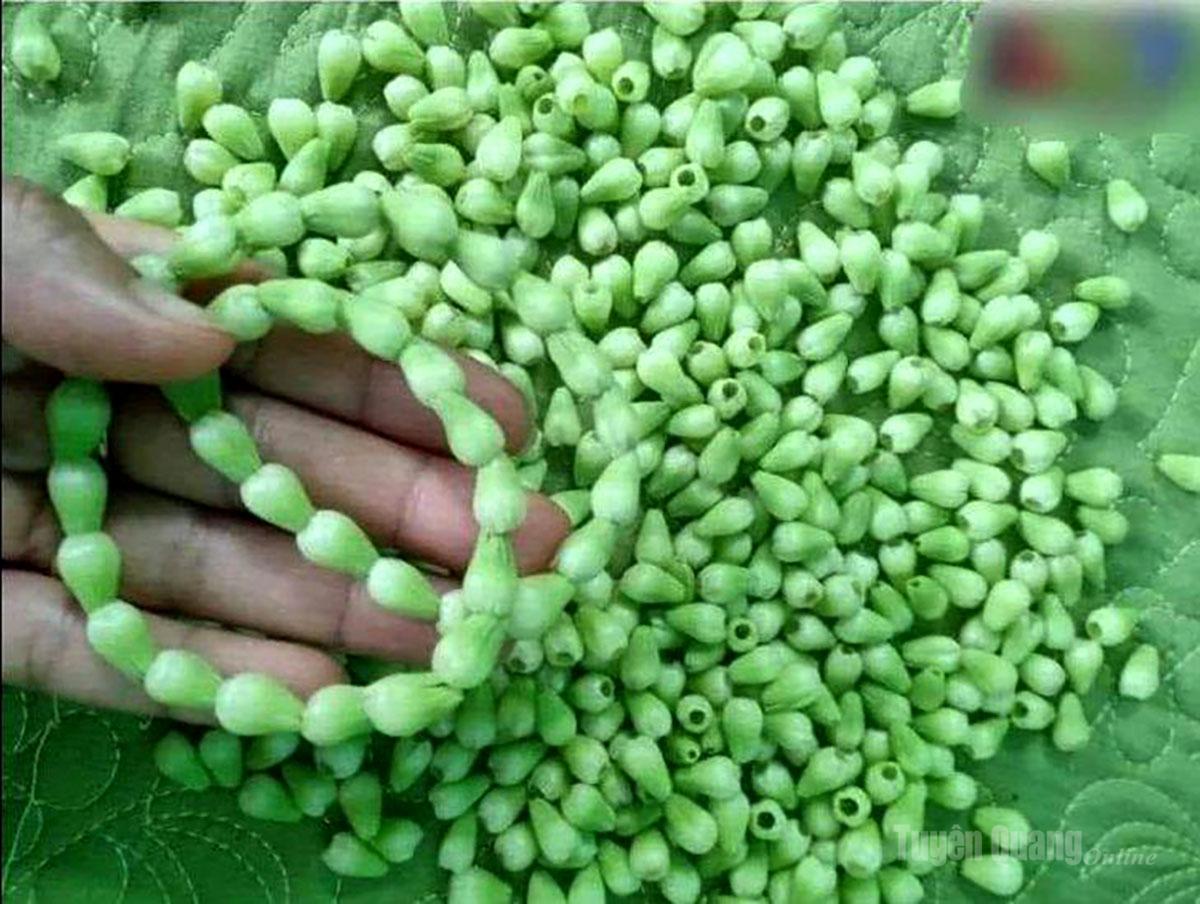
The tiny sapodilla flowers have been woven into bracelets for generations of children. |
The Trường Sơn battlefield was incredibly harsh, filled with bombs, bullets, malaria, and sacrifice. But poetry chose to portray the optimistic spirit and ideals of an entire generation.
In the case of Vo Thi Sau, the sapodilla flower is no longer simply a flower, but has become a symbol of youth, of pure beauty, and of sacrifice for the country. The public may not remember the exact historical documents about the trial or the sentence, but they will remember the image of the sapodilla blossoms for a very long time.
Therefore, strictly from a historical perspective, it cannot be definitively stated that Vo Thi Sau wore a sapodilla flower in her hair. And anyone familiar with the tiny sapodilla blossoms often used in childhood to make bracelets and necklaces knows that it would be difficult to wear a single flower in one's hair.
But viewed from the perspective of cultural life and community memory, that image has become a beautiful part of the soul of many generations of Vietnamese people - a "spiritual truth" created by literature, music, and gratitude towards the sixteen-year-old heroine.
According to Baotuyenquang.com.vn
Source: https://baoangiang.com.vn/ve-mot-nhanh-hoa-le-ki-ma-a486575.html























































































Comment (0)