

Major Le Ngon, a retired police officer from Binh Thuan province, now lives in Tanh Linh district. He's originally from Quang Nam province and considers Quang Nam noodles a close friend. Although he's lived in his hometown for almost his entire life, whenever we meet, the noodles remain a constant topic of conversation. Since this dish has been recognized as a national intangible cultural heritage, he called and invited me to Tanh Linh to meet up with our former comrades in arms.
A reunion of people from Quang Nam province.
Two brothers, former soldiers in their youth, hadn't had a chance to share a drink in a long time. They greeted each other warmly, shaking hands and exchanging pleasantries. While waiting for their friends to arrive at the appointed time, he pulled me into a Quang Nam noodle shop. Sitting at a table, he asked the owner for a pot of tea and, in his distinctive Quang Nam accent, reminisced, "In the old days, tens of thousands of people from Quang Nam and Quang Ngai were brought in by the old regime to settle in Hoai Duc and Tanh Linh districts between 1957 and 1965. Back then, these impoverished migrants lived along the roadsides, near the edge of the forest, with houses only 50 meters apart. I remember my grandparents and parents, thin and frail, doing everything to make ends meet after the government cut off their financial support for six months. Life as a migrant was like family; whenever we needed help harvesting rice, building houses, or attending a memorial service or housewarming, Quang Nam noodles were always served. It's a favorite dish, and it carries the soul of home for those far from home."
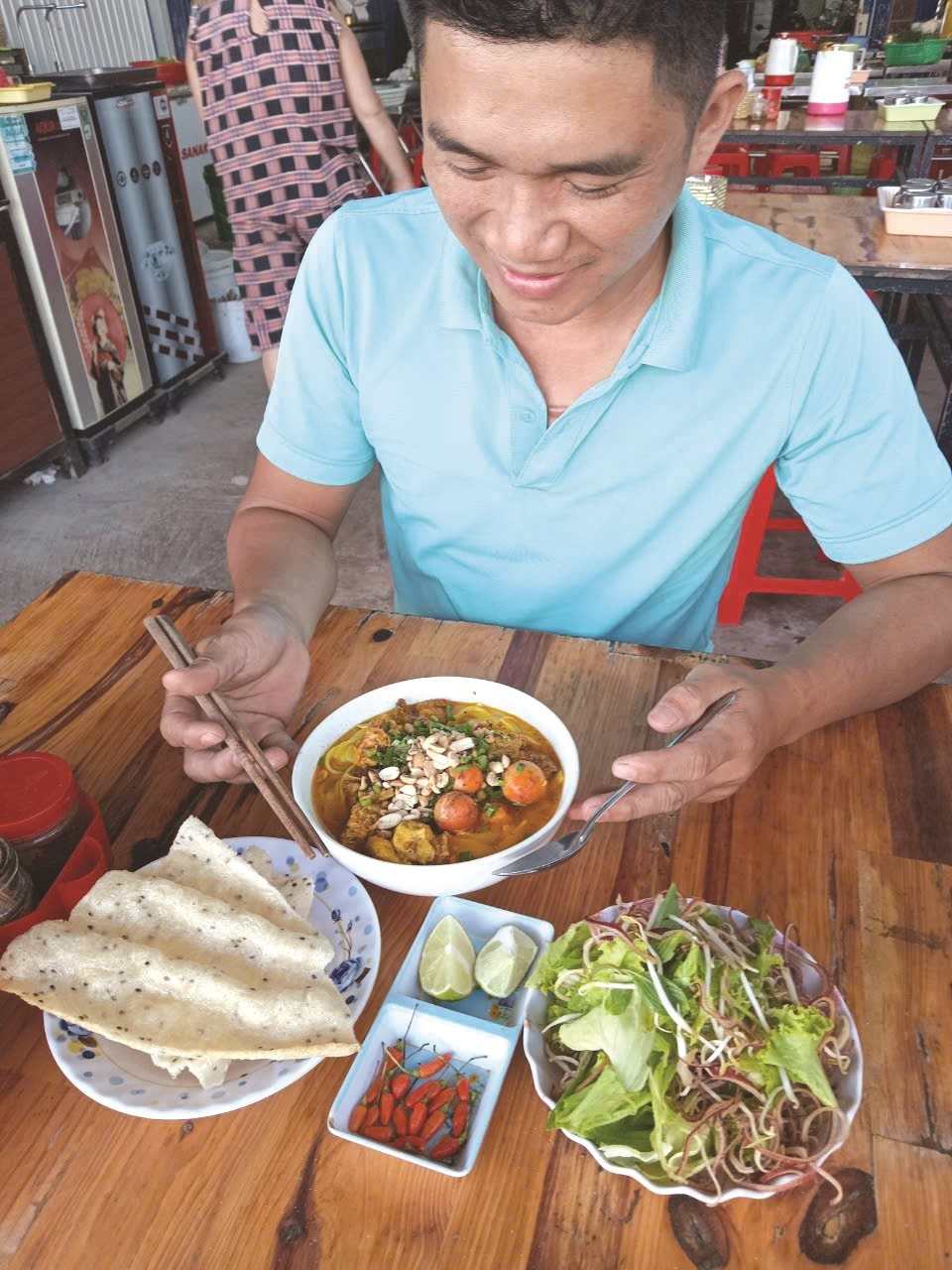
Seeing that we were waiting for our friend for a while and speaking in the Quang Nam dialect, Ms. Thanh Huong made two cups of hot coffee and placed them on the table. She then smiled and recited a poem to introduce herself: “I am a girl from Quang Nam / My mother’s clear voice / My father’s deep voice / Years of traveling far and wide / Remembering the kitchen smoke, remembering the pickled eggplant / Remembering the lingering August moon / Tears often well up beside the Quang Nam noodle dish.” After hearing the owner’s self-reflective poem, I burst out laughing and asked why there were tears while eating Quang Nam noodles! She explained: "In my hometown, we cook rice using straw. During the rainy season, when the straw gets wet, we have to lie down and blow on it to cool it down. The kitchen is always filled with the smoky aroma, the smoke wafting around the house, and even at mealtime, it's always permeated with the distinctive smell of straw smoke. Quang noodles are a specialty of my hometown; every family knows how to make them. The noodles in my hometown are made with rich peanut oil, fragrant shallots, very spicy chili peppers, and thick noodles. Most importantly, you need a huge bowl to mix in the fresh herbs – mint, coriander, thinly sliced banana blossoms – and a plate of broth. Imagine the smoky atmosphere and the pungent chili; how could you not shed tears? I've been away from home for many years, eating Quang noodles all over the country, and I realized that the slurping, slurping way of eating of the working people in my hometown isn't suitable for the refined people of Hue or the sophisticated people of Hanoi. Therefore, Quang noodles couldn't cross the Hai Van Pass; they had to follow the footsteps of those who migrated to the South, adapting to the local palate. The bowl of noodles here is what it is." "Many more countries. In Tánh Linh, I opened a noodle shop to make a living and also to have the opportunity to meet people from my hometown and hear the Quang Nam accent. It's been 25 years already. You see, under this sky, even birds remember their nests and return to their roots, but sometimes people don't. Every time I sprinkle peanuts on a bowl of noodles next to a huge plate of vegetables, I remember my mother sitting there roasting peanuts and slicing banana blossoms thinly to prepare Quang Nam noodles. But when she passed away, I couldn't go back because I had just given birth to a baby." Ms. Thanh Huong covered her face and cried, apologizing for being overcome with nostalgia for her mother and hometown when people from her hometown came to visit.
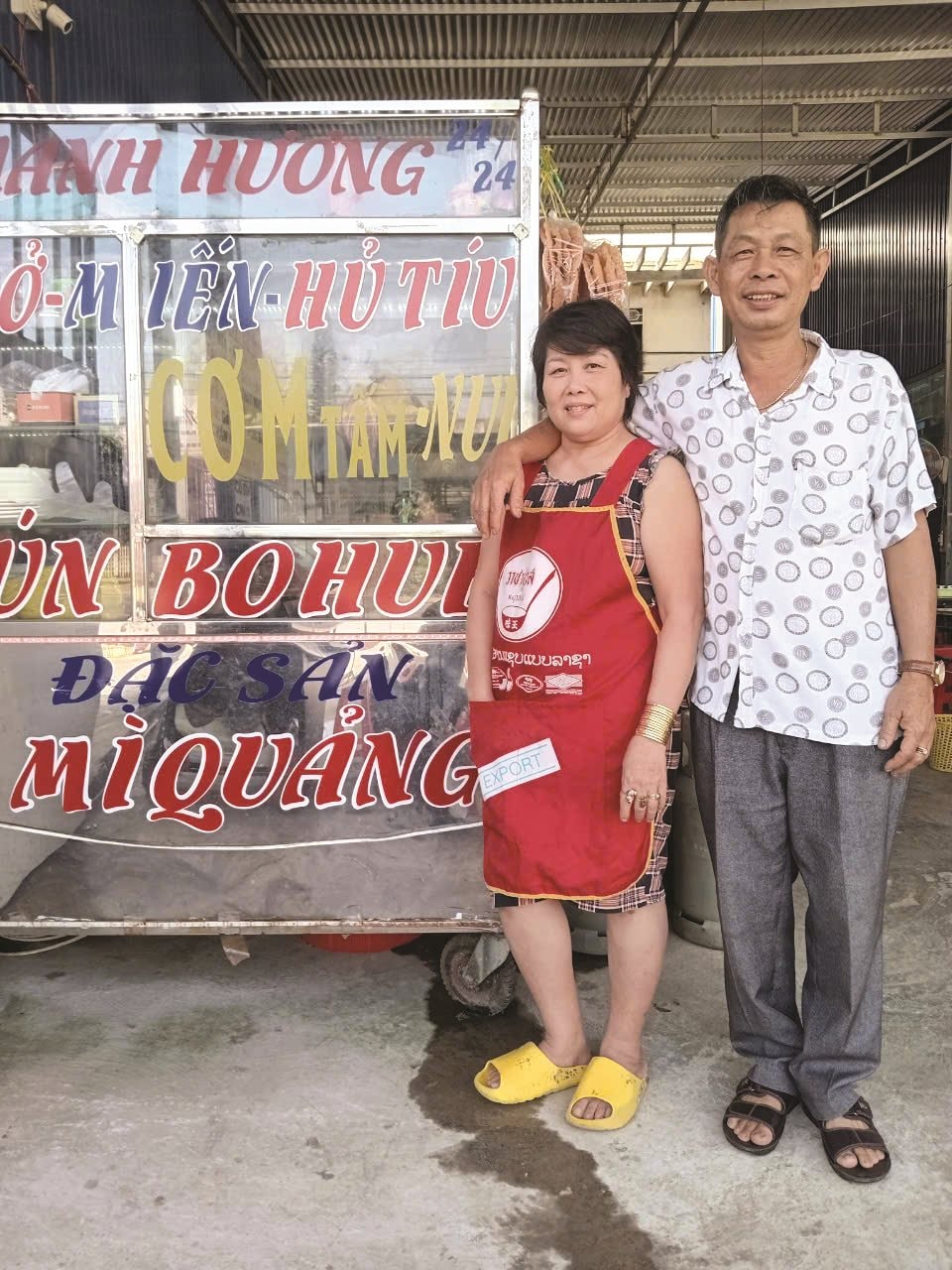
Thanh Huong Noodle Shop: A place that preserves the soul of the countryside.
The reunion of friends from Quang Nam became more lively when they met at Thanh Huong restaurant. Seeing a stranger, a woman turned to me and asked, "Are you from over there?" As planned, the owner brought out six bowls of chicken noodle soup with fresh vegetables and broth, presented in an eye-catching manner. Le Ngon introduced a few more fellow countrymen and announced that the topic for this morning wouldn't be about chopping or tearing the chicken meat, but rather about the soul and spirit of the land and people surrounding a bowl of Quang Nam noodle soup.
Before us were bowls of noodles imbued with the spirit of Quang Nam province, surrounded by a variety of vegetables and grilled rice paper, all evoking the image and essence of our homeland through its tumultuous history of southward expansion. Toan, a former literature teacher from Tam Ky who drifted to Tanh Linh, held up a bowl of dipping sauce and shared: "Noodles are like people; without dipping sauce or someone to motivate them, they can't take flight. The Chinese make soy sauce from plants like soybeans, while in our country, we make dipping sauces from animals like fish, shrimp, and crabs... into various fish sauces, shrimp pastes, and prawn pastes... each with its own unique flavor, but they must meet the standard of sour, bitter, salty, and sweet, like a person's life. The dipping sauce mixed with the noodles creates the soul of the countryside and evokes nostalgia. The simple raw vegetables have many flavors, each with its own medicinal properties that are lost if cooked. Vegetables accompanying noodles are not just for eating but also have medicinal properties. Quang noodles are not just for eating; they must satisfy all five senses. The eyes see the beauty, the nose smells the desire, the ears hear the sounds of people from the same land, and the mouth always enjoys the taste. A dish alone cannot satisfy all five senses, so it must combine many things to create a variety of flavors and colors." "Only then can a sense of feeling become a national intangible asset."
Ms. Thanh Huong, the owner of the restaurant, listened to his insightful analysis and pulled up a chair to join in: “My restaurant is a meeting place for people from Quang Nam province. Every time we meet and listen to their conversations, I learn a lot. I remember a few months ago, some gentlemen came to the restaurant and said that people from Quang Nam migrated to the South over many periods and for many different reasons, and along with them came noodles, like a close friend, a deep and loyal companion. In a foreign land, this dish is not only the food of their homeland but has become a source of nostalgia for many who are far from home. My restaurant has become a meeting place for those of Quang Nam origin living abroad. They come here as if searching for the soul of their homeland, for people who share the same accent. Looking at a bowl of noodles filled with so much affection, it also serves as a reminder for their descendants to remember their ancestral home, because Quang Nam noodles, with their salty, sweet, sour, and spicy flavors, and the genuine nature of the people of Quang Nam, always evoke memories in our hearts. That's why there's a folk saying, 'Even if mountains and rivers separate us, a bowl of Quang Nam noodles is like returning home.' People from Quang Nam living in the countryside like me are truly down-to-earth.” "It was so authentic, like biting into a green chili pepper, chewing on raw vegetables with a crunching sound, and slurping the noodle broth with a loud gulp—that was the Quang Nam people of yesteryear. But things have changed now; people eat more elegantly. To have a bowl of Quang Nam noodles in hand, there are many steps involved in the preparation: some sauté the garlic in peanut oil, others chop bananas for the raw vegetables, and still others peel garlic and pound it into a dipping sauce. The image of a small community from the same hometown, now eating a bowl of Quang Nam noodles, sounds so delicious. You see, the gentle land of Tanh Linh always welcomes those from afar with sincerity, generous people who have left their hometowns and come here without distinction of region. Under this sky, everyone is the same; there are drinking parties with tables full of Thanh Hoa fermented pork rolls, plates of offal with shrimp paste in the Northern style, and plates of dried fish from the Mekong Delta. Everyone contributes what they have, clinking glasses and laughing happily like close friends alongside the rich and flavorful Quang Nam noodles that evoke so many memories..."
***
As we were about to part ways, Le Ngon introduced me to his fellow countrymen, saying, "This guy is a fellow soldier of mine. He's from Binh Thuan, not Quang Nam like us, but he's a writer invited to meet with us and raise a glass to celebrate our Quang Nam noodles being recognized as a national intangible cultural heritage." Le Ngon shook my hand and said, "I reminded you that in the electronics stores in Tanh Linh, there's a sign hanging prominently: 'Where there's electricity, there's Dien Quang.' Now, please replace that in your article with: 'Where there are people from Quang Nam, there's Quang Nam noodles!'"
Source: https://baobinhthuan.com.vn/ve-tanh-linh-gap-ban-be-mi-quang-123953.html













































































Comment (0)