

Vietnam has become a favorite destination for Indian tourists, not only because of its majestic natural landscapes but also because of its rich and unique culture. On this journey of discovery, cuisine serves as a subtle bridge, enhancing understanding and connection between the two countries. The increasing number of Indian restaurants in Vietnam is vivid evidence of the strong trend of cultural and tourism exchange between the two nations.
In Hanoi , a small restaurant located on Hang Phen Street is one of the typical establishments. The restaurant was founded and is run by Raza, an Indian citizen who has lived in Vietnam for over 15 years. Although it only opened in 2024, it has become a familiar destination for many Vietnamese diners wanting to experience Indian cuisine.
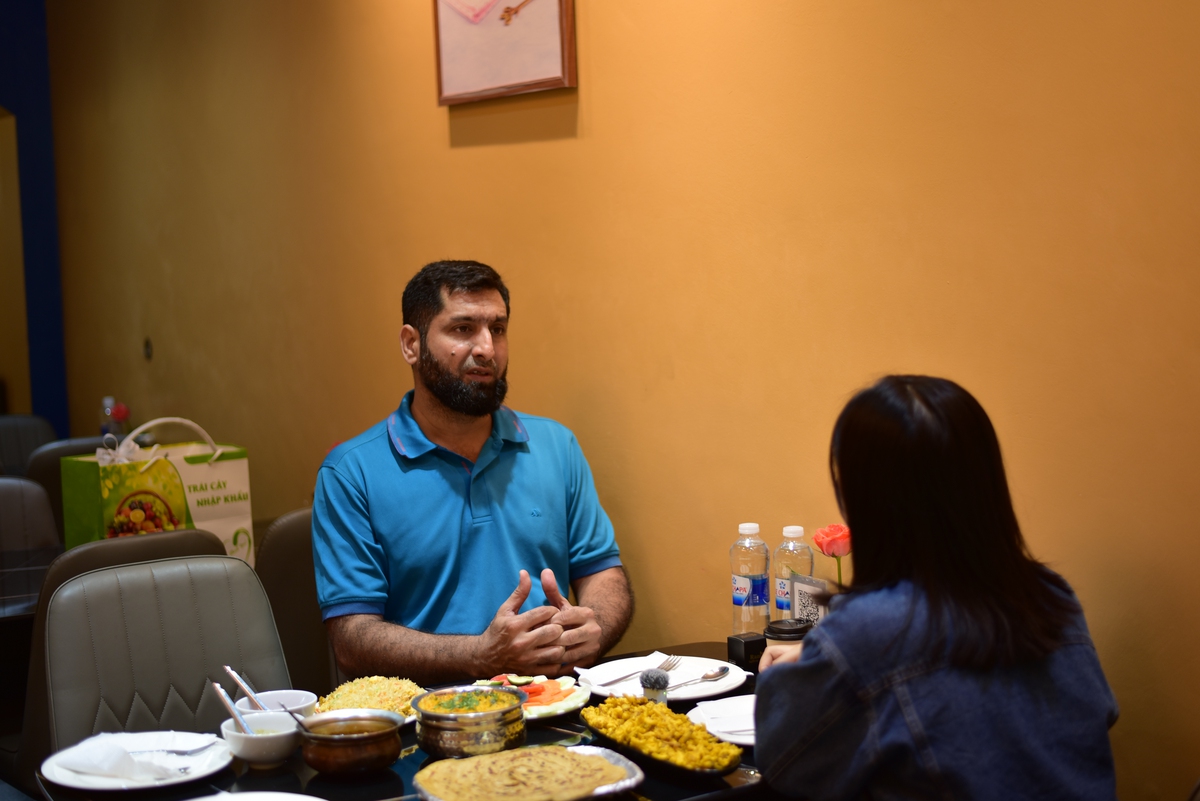
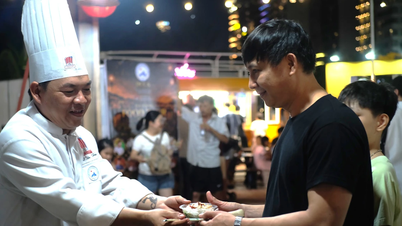
Raza shares his story about Indian cuisine in Vietnam.
In an Indian-inspired setting, Raza shared that previously, most of the restaurant's customers were Indian tourists or those following a Halal diet. However, recently, the number of Vietnamese customers has increased significantly, reflecting a change in culinary trends. Raza recalled that in his early days in Vietnam, finding a restaurant serving Halal or Indian food was not easy.
However, these models are now widespread, especially in major cities like Hanoi, Ho Chi Minh City, and Da Nang , demonstrating the significant development of the market and the increasingly diverse needs of diners. Previously, when mentioning foreign cuisine, most Vietnamese people, especially young people, often thought of Korea, China, or Japan due to the strong cultural influence of these countries.
Meanwhile, the prevailing perception of Indian food is often stereotyped as "too spicy," "too strong," or "difficult to eat." However, this view is gradually changing through real-life experiences. Indian cuisine is emerging as a breath of fresh air for diners seeking unique culinary experiences. This is prime evidence that Indian cuisine in particular, and Indian culture in general, is increasingly making an impression on Vietnamese diners, while also demonstrating the curiosity and openness of Vietnamese people towards international culinary culture. This acceptance is a positive sign indicating the potential for the development of Indian cuisine in Vietnam.


Some typical Indian dishes
Sharing his thoughts on these positive signs, Mr. Raza believes that Vietnamese diners' interest extends beyond the taste of the food, also reflected in their proactive engagement with activities related to Indian cuisine. These cultural interactions are sometimes expressed through small but vivid details, such as the enthusiastic experience of many diners trying to eat with their hands – a distinctive feature of Indian cuisine. According to him, these experiences contribute to a natural and enjoyable cultural exchange.
For Indians, the habit of eating with hands has long existed in the lives of the indigenous people. This is also a characteristic feature of Indian culture and leaves many special impressions on diners. As someone passionate about exploring international cuisine, Ms. Bao Hoa (Hanoi) said that, contrary to the common perception of inconvenience or lack of hygiene, eating with hands is considered a way to fully experience food through touch, while also reflecting the cultural identity and distinctive culinary philosophy of India. "I tried eating with my hands, and I found it very clean and it gave me a very unique flavor, just like when I eat sticky rice or boiled chicken in Vietnam," Ms. Bao Hoa shared.
According to Ms. Hoa, one of the things that makes Indian cuisine leave a deep impression on Vietnamese diners is the skillful way Indians combine spices, especially the distinctive masala flavor, to create distinct layers of taste. Through this, cuisine becomes a gateway for many Vietnamese people to better understand the customs, life, and cultural identity of this South Asian nation. For Ms. Hoa, "the shortest path to the heart is through the stomach," and it is through food that people from different cultures can easily find common ground and connection.

Ms. Bao Hoa shared her experience of enjoying Indian cuisine.
Beyond the culinary aspect, enjoying Indian food also gives many people the opportunity to discover interesting differences between the two cultures, leading to a closer and more open perspective. Conversely, traditional Vietnamese dishes like pho and bun cha are also popular with Indian tourists.
It can be seen that, compared to conventional promotional activities, cuisine not only serves the need for food but is also playing an effective and accessible role as a form of "cultural diplomacy." The story of Indian cuisine in Vietnam shows that cultural exchange is not something distant; sometimes it can originate from everyday meals. This simplicity has contributed to bringing Vietnamese and Indian cultures closer together. At the same time, it also affirms that cuisine is not just a taste experience but also one of the most natural and intimate ways to connect people from different cultures.
Source: https://phunuvietnam.vn/vi-an-gan-gui-voi-thuc-khach-viet-238260511145647469.htm


















































































Comment (0)