

Returning to Vietnam after 1 year participating in the Vietnam - Cuba Rice Production Development Cooperation Project, Phase 5 (2019 - 2025), Dr. Tran Vu Hai - an expert from the Mekong Delta Rice Institute, has returned to his daily work at the Department of Genetics and Breeding.
I had the opportunity to meet him on the occasion of the 65th Anniversary of the establishment of relations between Vietnam and Cuba. The first thing he shared was the good news: 4 Vietnamese rice varieties: OM8017, OM6976, OM5451 and LTH31 were recognized by Cuba and allowed to be put into mass production. Among them, 3 rice varieties of the Mekong Delta Rice Research Institute: OM8017, OM6976 and OM5451 were selected and created by Dr. Tran Thi Cuc Hoa and her collaborators.
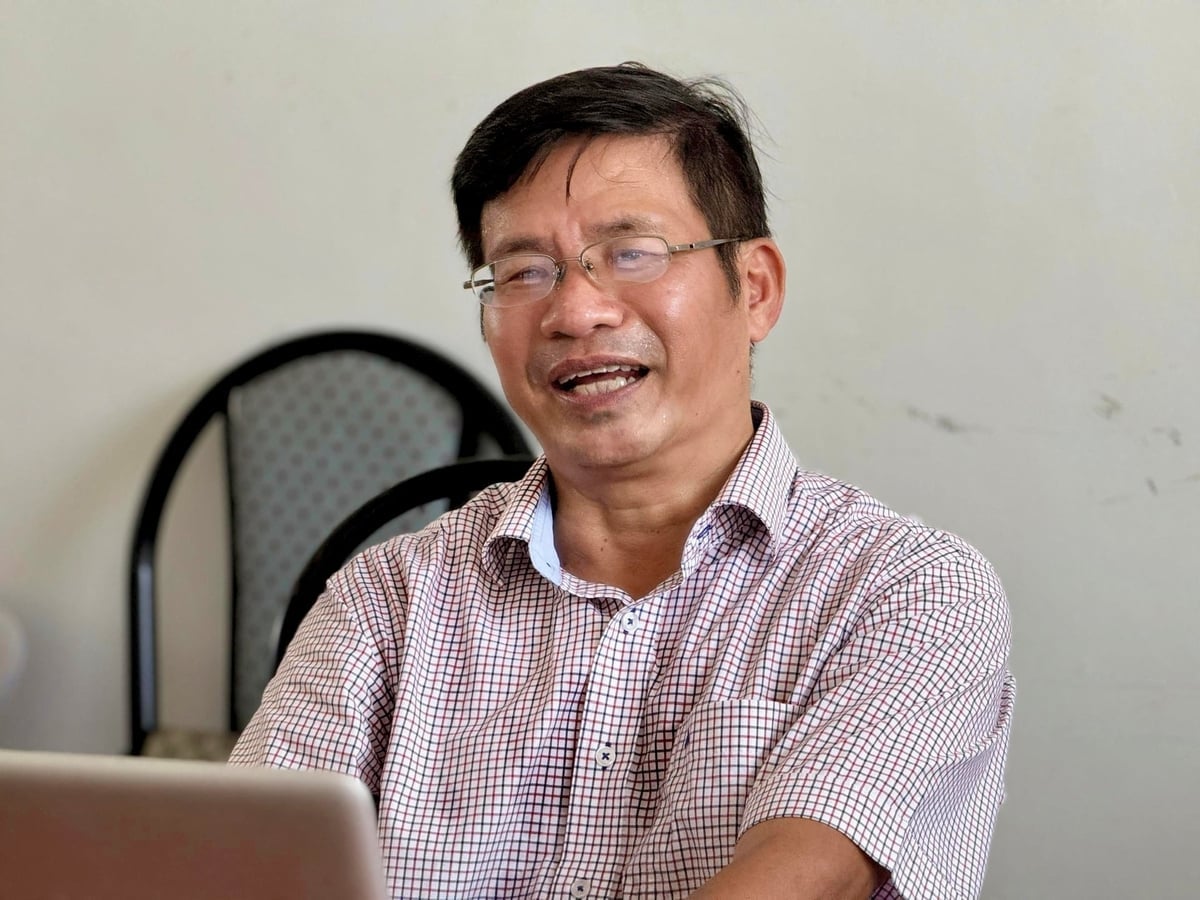
Dr. Tran Vu Hai, working at the Department of Genetics and Breeding (Mekong Delta Rice Research Institute), is one of three experts from the Institute participating in the Vietnam - Cuba Rice Production Development Cooperation Project for the period 2019-2025. Photo: Kim Anh.
These rice varieties are distinguished by their high yield, short growth period, good resistance to pests and diseases and adaptability to Cuba's unfavorable climatic conditions such as hot sun and heavy rain. In particular, the varieties produce delicious rice, suitable for consumer tastes.
Dr. Hai said that within the framework of the Vietnam - Cuba Rice Production Development Cooperation Project, Phase 5 (2019 - 2025), the Vietnam Academy of Agricultural Sciences (VAAS) has transferred 25 rice varieties to Cuba since 2019 for testing in many different ecological regions across Cuba, stretching from the East to the West.
After a rigorous evaluation process, four Vietnamese rice varieties have proven to be suitable for the ecological and soil conditions in Cuba and have been recognized by Cuba for mass production in June 2025. To facilitate the dissemination and commercialization process, the Cuban side has given these varieties new names, VIBA17, VIBA76, VIBA51 and VIBA31, respectively.
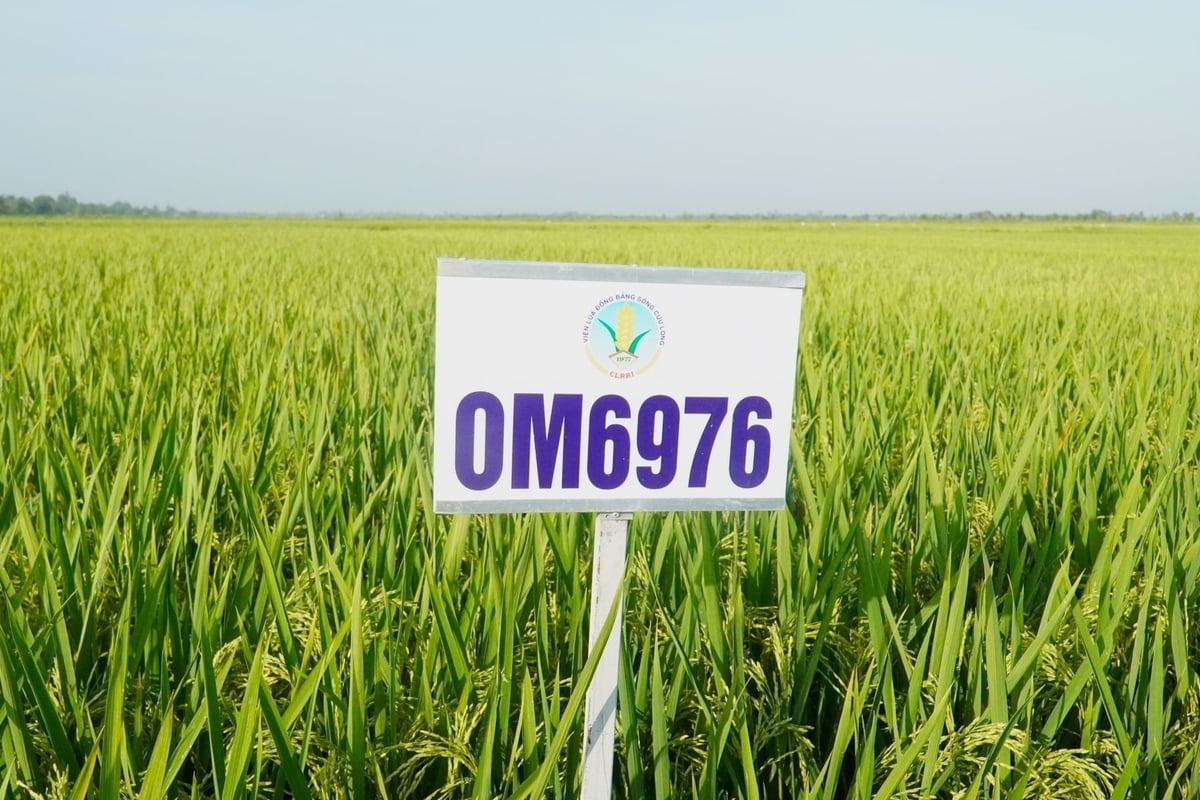
OM6976 is one of three rice varieties of the Mekong Delta Rice Institute recognized by Cuba and put into mass production. Photo: Kim Anh.
The name VIBA is a combination of VI (Vietnam) and BA (Cuba), symbolizing the connection in rice variety selection and demonstrating the traditional friendship between the two countries. At the same time, VIBA also marks a sustainable cooperation in the agricultural sector and joint efforts towards food security and sustainable development. This is also an important milestone affirming the quality of Vietnamese rice varieties in the international arena.
This is also the result of many years of hard work by Vietnamese experts and local farmers on the windy fields of Central Cuba. They not only brought high-yield rice varieties, but also brought with them the sincerity, dedication and international solidarity that has united the two peoples of Vietnam and Cuba for many decades.
In the context of Cuba facing many difficulties in food security due to harsh climate conditions, saline soil and prolonged drought, bringing Vietnamese rice varieties for testing here is considered a strategic step.
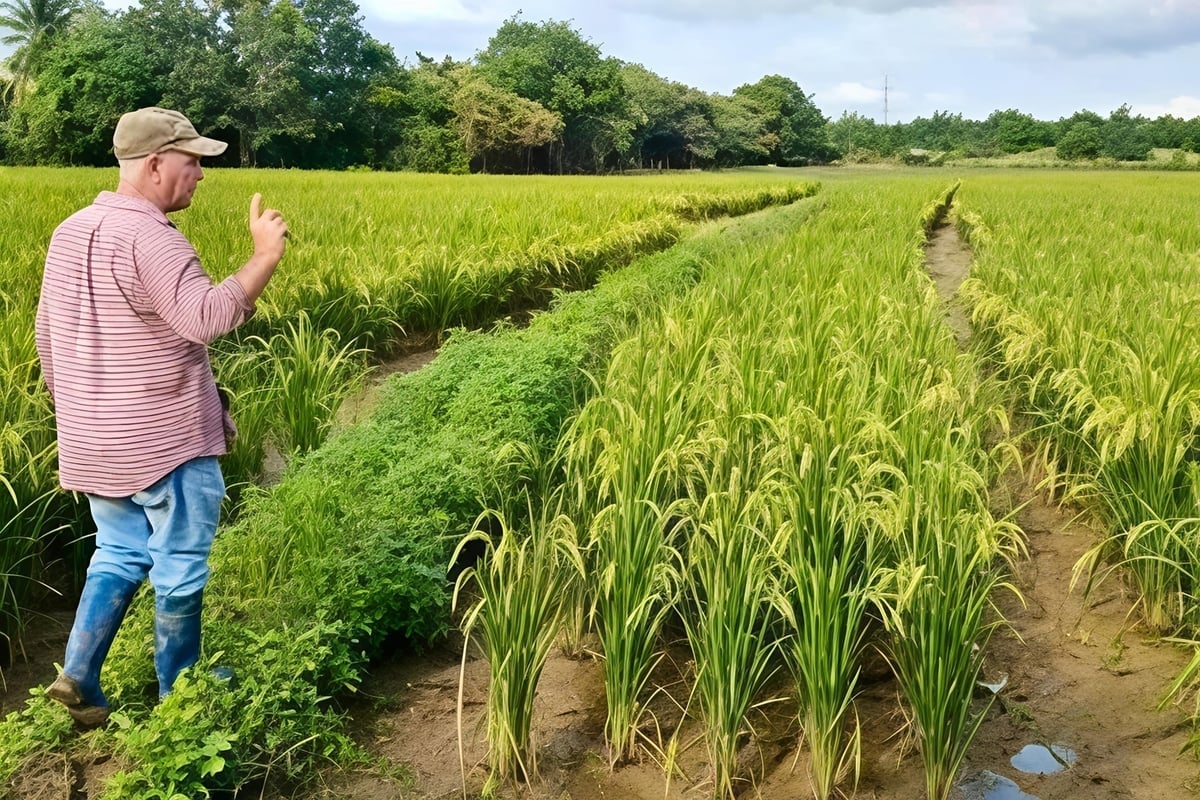
Vietnamese rice varieties have been tested and grown well at farmer Lionel's household in Calimete district, Matanzas province (Cuba). Photo: Provided by the character.
The report of the Cuban Nut Crops Research Institute at the 5th International Online Fair on Agricultural and Food Biodiversity from October 11 to October 16, 2025 shows that the VIBA17 variety gives a winter crop yield of 8.28 tons/ha and a spring crop yield of 7.13 tons/ha. The VIBA76 variety gives a winter crop yield of about 9.14 tons/ha and a spring crop yield of 7 tons/ha. The VIBA51 variety gives a winter crop yield of 7.18 tons/ha and a spring crop yield of 5.56 tons/ha.
In the Matanzas region - where Dr. Hai used to work, the three rice varieties showed outstanding productivity and high disease resistance when tested in the provinces of Matanzas, Cienfuegos and Mayabeque. Many farmers in Matanzas province expressed their surprise and joy to him when the experimental crop yielded 20-30% higher than the local varieties.
Specifically, rice varieties VIBA17, VIBA76 and VIBA51 have an average yield of 6.15 tons/ha, three times higher than the average national yield of Cuba in 2025 (about 2.12 tons/ha).
Interestingly, these rice varieties have a growing period of only 100-110 days, significantly shorter than the native Cuban rice varieties which take 120-125 days to harvest. The shortened production period has helped Cuban farmers reduce cultivation costs, reduce the risk of yield loss when faced with adverse weather conditions. At the same time, it has helped farmers increase the number of crops planted per year and improve land use efficiency.
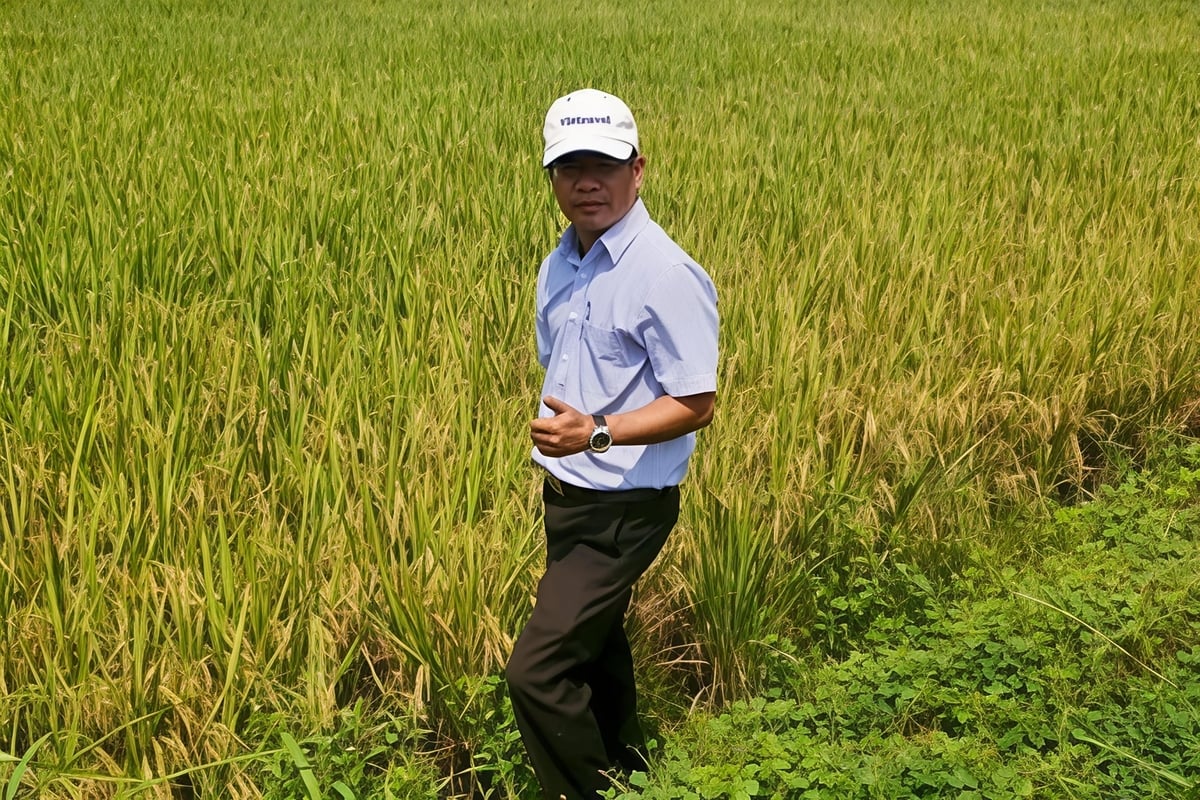
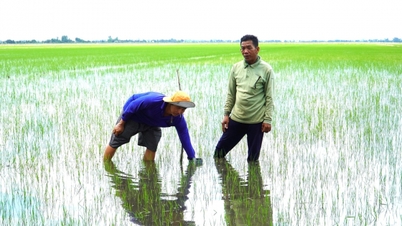
Dr. Tran Vu Hai surveys the VIBA17 rice field in Matanzas province (Cuba). Photo: Provided by the character.
The difference in yield and growth time shows the great potential of Vietnamese rice varieties in ensuring food security for Cuba, with a population of about 10 million people.
According to Dr. Hai, the recognition and mass production of four Vietnamese rice varieties in Cuba will open up opportunities for businesses to export rice to Caribbean countries and transfer agricultural technology. At the same time, it demonstrates the effectiveness of the Rice Cooperation Project in particular and the agricultural project in general in Cuba.
In particular, the transfer of rice varieties is not only part of the two countries' broad cooperation program, but also has a meaning beyond the agricultural sector. He confided that in many experimental growing areas, Cuban people have proactively set up teams to support harvesting, cook traditional dishes and invite Vietnamese experts. Some families even consider Vietnamese engineers as their own children. The images of green rice fields in the dry tropical climate of Cuba have become a symbol of the blossoming of "Vietnam - Cuba Friendship".
Source: https://nongnghiepmoitruong.vn/viba--hat-vang-cua-tinh-huu-nghi-viet-nam--cuba-d787764.html

![[Photo] Worshiping the Tuyet Son statue - a nearly 400-year-old treasure at Keo Pagoda](/_next/image?url=https%3A%2F%2Fvphoto.vietnam.vn%2Fthumb%2F1200x675%2Fvietnam%2Fresource%2FIMAGE%2F2025%2F12%2F02%2F1764679323086_ndo_br_tempimageomw0hi-4884-jpg.webp&w=3840&q=75)


![[Photo] Parade to celebrate the 50th anniversary of Laos' National Day](/_next/image?url=https%3A%2F%2Fvphoto.vietnam.vn%2Fthumb%2F1200x675%2Fvietnam%2Fresource%2FIMAGE%2F2025%2F12%2F02%2F1764691918289_ndo_br_0-jpg.webp&w=3840&q=75)




















































Comment (0)