

The Prime Minister issued Decision 2597/QD-TTg in 2025. Accordingly, by 2026, the application of BIM will be mandatory for projects of level II and above using public investment capital.
In Decision 258/QD-TTg of 2023, the Prime Minister approved the roadmap for applying Building Information Modeling (BIM) as follows:
"- Phase 2: From 2025, mandatory BIM application will be applied to Grade II and higher construction projects of new investment projects using public investment capital, non-public investment state capital, and public-private partnership investment methods that begin project preparation work."
- For projects and construction works that are required to apply BIM , BIM files are a component of the construction design documents and the project completion documents. The investor or the investment preparation unit is responsible for providing BIM files along with other required documents when appraising feasibility studies, appraising detailed construction designs after the basic design phase, applying for construction permits, and accepting the project.
- For construction projects under new investment projects using other sources of capital, the Investor shall provide BIM files when conducting feasibility study appraisals, detailed construction design following the basic design phase, applying for construction permits, and project acceptance according to the following schedule: Class I and special class projects from 2024; from 2026, Class II projects will be added.
- The content and level of detail of the BIM model are determined by the project owner.
- From 2023, for projects applying BIM, state management agencies will use the BIM model to support the process of appraising feasibility studies, appraising construction designs after the basic design phase, granting construction permits, and inspecting acceptance testing.
- Project owners implementing BIM according to the prescribed roadmap are responsible for organizing the updating of BIM models to serve the management, operation, and maintenance of the projects.
h) Encourage businesses to adopt building information models in construction activities earlier than the timeframe stipulated in the roadmap.”
The roadmap for BIM implementation began on March 17, 2023, according to Decision No. 258/QD-TTg of the Prime Minister. During the appraisal process, investors must submit both the BIM model and the paper documentation. Vietnam has not yet officially launched a one-stop information portal for projects and constructions applying BIM; it is currently developing and perfecting the system.
According to current regulations, state management agencies only refer to BIM during the appraisal process, not conduct appraisals using BIM models. Point e, Clause 3 of Decision No. 258/QD-TTg stipulates that, from 2023, for projects applying BIM, state management agencies will use BIM models to support the appraisal of feasibility studies, the appraisal of construction designs following the basic design phase, construction permits, and acceptance testing.
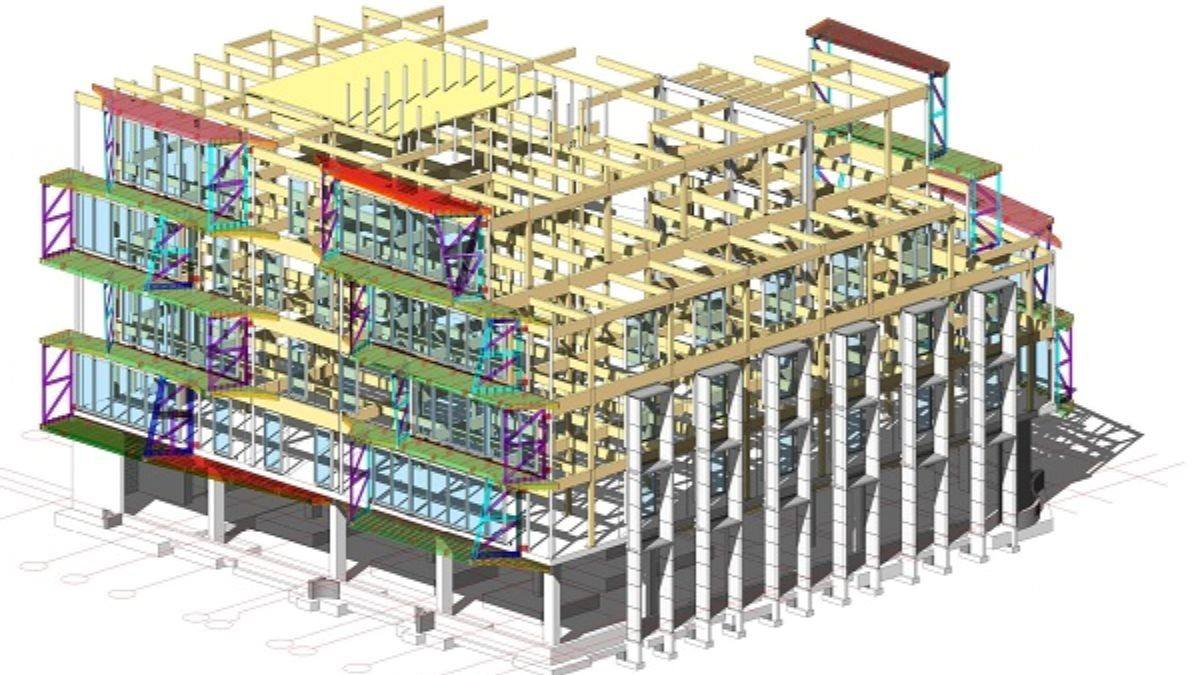
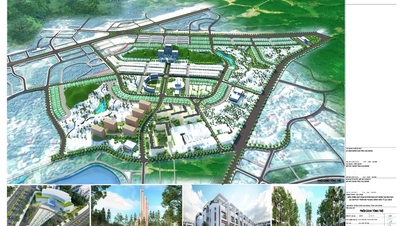
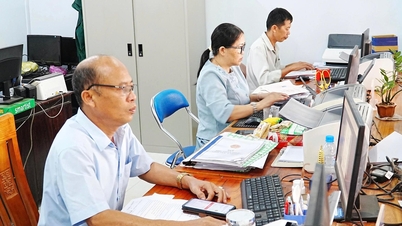
Currently, government agencies do not conduct assessments using BIM models; they only use BIM models to support the assessment process. (Illustrative image.)
Therefore, when submitting BIM models, the submission of paper documents for appraisal, as before, still exists in parallel. The investor or the investment preparation unit is responsible for providing the BIM file along with other required documents when appraising the feasibility study report, appraising the detailed construction design after the basic design, applying for construction permits, and accepting the project.
Currently, the information requirements for a BIM-applied project are stipulated in Decision No. 348/QD-BXD dated April 2, 2021, on the Announcement of General Guidelines for the Application of the BIM Model. However, from the perspective of state management agencies conducting appraisal work, only some information necessary for the appraisal process is required.
For example, during the review process by state management agencies, there is an assessment of the project's conformity with the planning, such as evaluating building density, floor height, number of floors, and land use coefficient. This requires the BIM model to contain this information for verification, comparison, and evaluation against the parameters in the approved plan. If the project area is planned with a building density of 40%, a land use coefficient of 20%, a height of 150m, and permission to build 30 floors, then the BIM model must contain that information to compare with the planning parameters to see if the design documents comply with the plan...
These information requirements are being updated by the Ministry of Construction during the process of building and perfecting the platform for planning management, construction management according to planning, and technical infrastructure management for projects and works applying BIM…
When submitting BIM documents electronically, it is entirely possible to submit them through the public service portal (within the allowed file size limits), where the state management agency can gradually integrate the number of input documents into the dossier. Initially, only online submissions are required to reduce travel; later, additional content verification and lists of submitted documents can be gradually integrated according to the state management agency's assessment requirements; and later, more in-depth information within the BIM model can be added, such as checking the geometric dimensions of the structure, cross-referencing, etc.
From the perspective of a few leading consultants and contractors with years of experience in BIM implementation, eSubmission is feasible. However, from the perspective of other consultants and localities, where the regulations apply universally, the feasibility is not high. Therefore, in Vietnam, a certain period of time is needed for all relevant parties to acquire sufficient knowledge, skills, and experience in BIM.
This phase also allows time for Vietnam's BIM model management portal in construction to conduct trial runs and summarize its results before it can be put into operation to serve projects and constructions applying BIM. We can aim to achieve this within the next 5-10 years.
References:
[1] “Decision No. 258/QD-TTg dated March 17, 2023 of the Prime Minister on approving the roadmap for applying Building Information Modeling (BIM) in construction activities”.
[2] “Decision No. 2597/QD-TTg dated November 27, 2025 of the Prime Minister on approving the Project on digital transformation in construction, management and exploitation of construction infrastructure”.
Source: https://soxaydung.caobang.gov.vn/tin-tuc-su-kien/viec-ap-dung-mo-hinh-thong-tin-cong-trinh-bim-1052073





























































































Comment (0)