

On Tuesday noon, boarding the Metro Line 1 train from Ben Thanh Station to Thu Duc Station (Ho Chi Minh City), we were quite surprised to find the station much more crowded than expected, even though it was already 10:30 AM, past the morning rush hour. Under the scorching sun of Ho Chi Minh City during these intensely hot days, the hurried footsteps rushing into the cool underground station felt like a giant refrigerator in the middle of a "furnace." From students and senior citizens to quite a few foreigners… most of them skillfully swiped their monthly passes or scanned their national ID cards at the ticket gates, a stark contrast to the awkwardness of their first days using the train.
Switch to public transport to avoid rising prices and the heat.
On the train returning to the city center from Thu Duc station, the number of people standing in front of the platform waiting for the train was even greater than the number of people going there. This was when students were starting their afternoon classes. Gently removing her headphones when she saw us intending to ask questions, Ngoc Quynh (a second-year student at the Ho Chi Minh City University of Law) said that in her first year, she rented a room on Nguyen Tat Thanh Street (formerly District 4), near the school, so she went to class every day on foot, without worrying about transportation. In her second year, Ngoc Quynh moved to her sister's house in Binh Tho Ward (formerly Thu Duc) to save on rent. However, after Tet (Lunar New Year), gasoline prices skyrocketed, making each gas refill painful, so the young woman switched to using the metro.
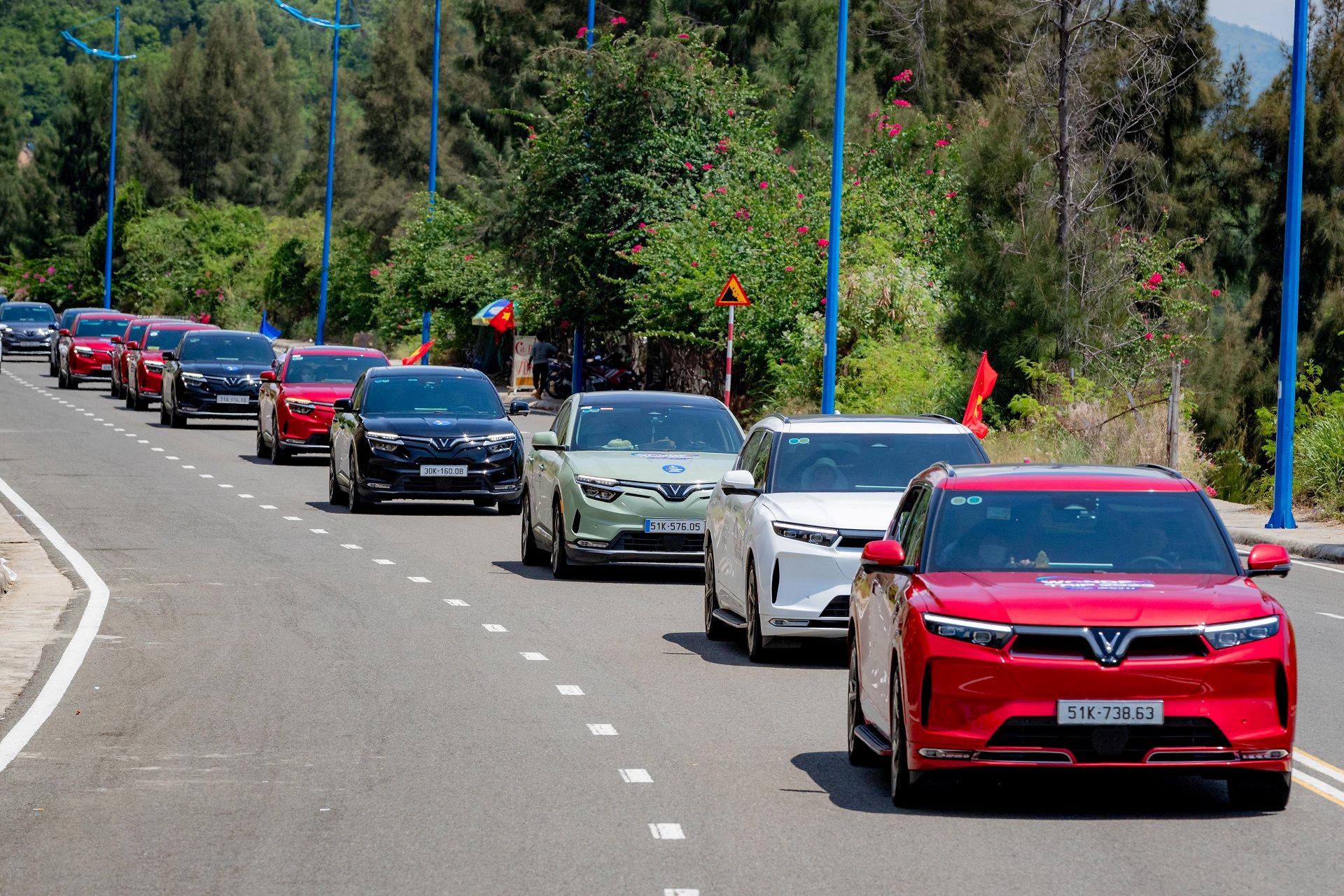
Vietnam is facing a golden opportunity to accelerate the development of green transportation.
PHOTO: VF
"It only takes 5 minutes to walk from my sister's house to Thu Duc station, then about 20 minutes by train to Ben Thanh station. Right nearby is a bus transfer station; you can take route 155 or D4 and there's an electric bus that takes you right to the school. Students like us use monthly passes, so it's very cheap, saving us a million dong in gas compared to riding a motorbike. Actually, at first I just thought of taking the metro train to save money, but 'once you try it, you're hooked.' On the cool train, I can just relax, listen to music, read a book, and not worry about traffic jams or dust like before. On these hot days, going anywhere by metro is the best. I chose the train to avoid the 'gas price storm' and then chose to stay to avoid the heat and dust," Ngoc Quynh said humorously.
Sitting next to Ngoc Quynh, Ms. Loan (around 60 years old) also agreed that the metro is both cool and clean. Every day she takes the metro from her home near Binh Thai station to Van Thanh Park station, then takes a ride-hailing motorbike taxi or calls her daughter to pick her up to visit her granddaughter. "When the metro first came out, my husband and I tried it out, but the most troublesome part was buying tickets. I'm old now, and slow, so I always have to go anywhere with my daughter or husband. Since the metro started using ID cards, I just swipe them and go. The city only has one line so I don't have to worry about getting on the wrong train. Every day I go to help my daughter look after her granddaughter, and when my husband is busy, I can go alone without any problems. A monthly pass is cheaper than driving or calling a motorbike taxi," Ms. Loan shared.
Never before have people in Ho Chi Minh City been so enthusiastic about public transportation as they are now. Previously, persuading people to abandon their private vehicles and switch to buses or trains always faced psychological barriers and concerns about convenience. Now, however, the pressure of their wallets has become the driving force behind this change.
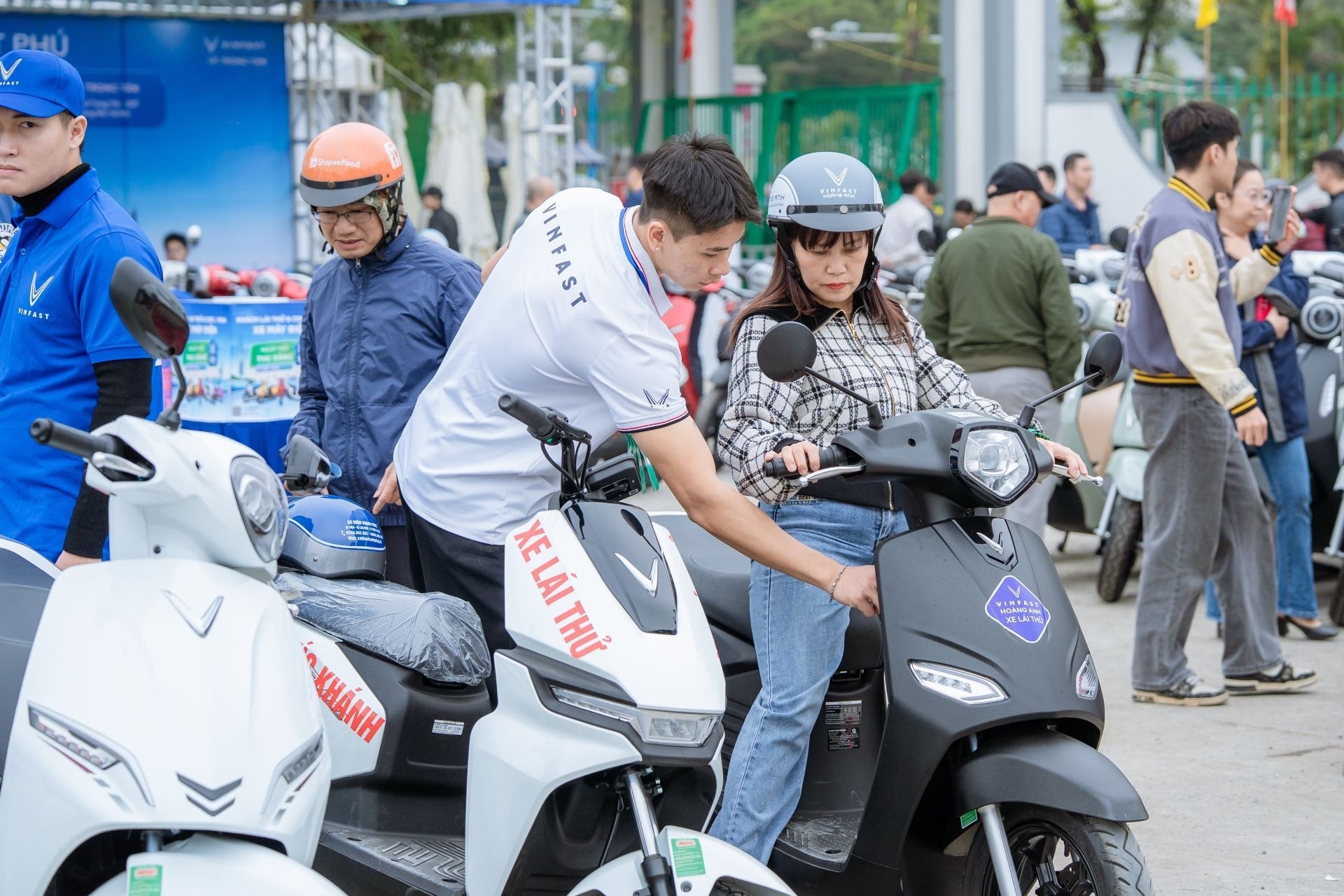
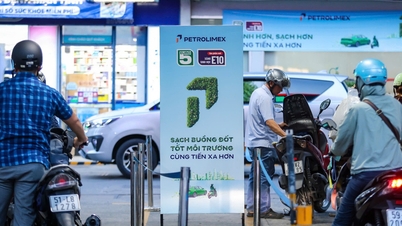
People are increasingly switching to electric vehicles.
PHOTO: TN
According to the Ho Chi Minh City Metro Line 1 Company, passenger traffic on Metro Line 1 has surged since the beginning of March and has remained stable until now. Each day, Metro Line 1 serves nearly 70,000 passengers. Not only the metro, but the Ho Chi Minh City Public Transport Management Center also recorded a sharp increase in bus demand following the rise in gasoline prices due to the Middle East conflict. Overall, including both metro and bus services, an average of 340,000 people in Ho Chi Minh City use public transport daily, a 35% increase compared to the end of February and 12% higher than the same period in 2025.
Notably, the proportion of passengers using monthly passes and cashless payment methods has surged, accounting for over 60% of the total passenger volume, indicating a demand for frequent, long-term travel.
In Hanoi , the Cat Linh - Ha Dong metro line is also following this trend, maintaining a stable passenger volume of 35,000-40,000 per day on weekdays and increasing sharply on weekends. In total, during the first three months of the year, the urban railway system in both regions transported over 6 million passengers, a figure far exceeding even the most optimistic forecasts of the previous period.
The dramatic shift from gasoline cars to electric cars.
In the personal vehicle segment, the "storm" of rising fuel prices is also creating the biggest vehicle conversion wave in the past decade: people everywhere are abandoning internal combustion engine vehicles in favor of electric cars.
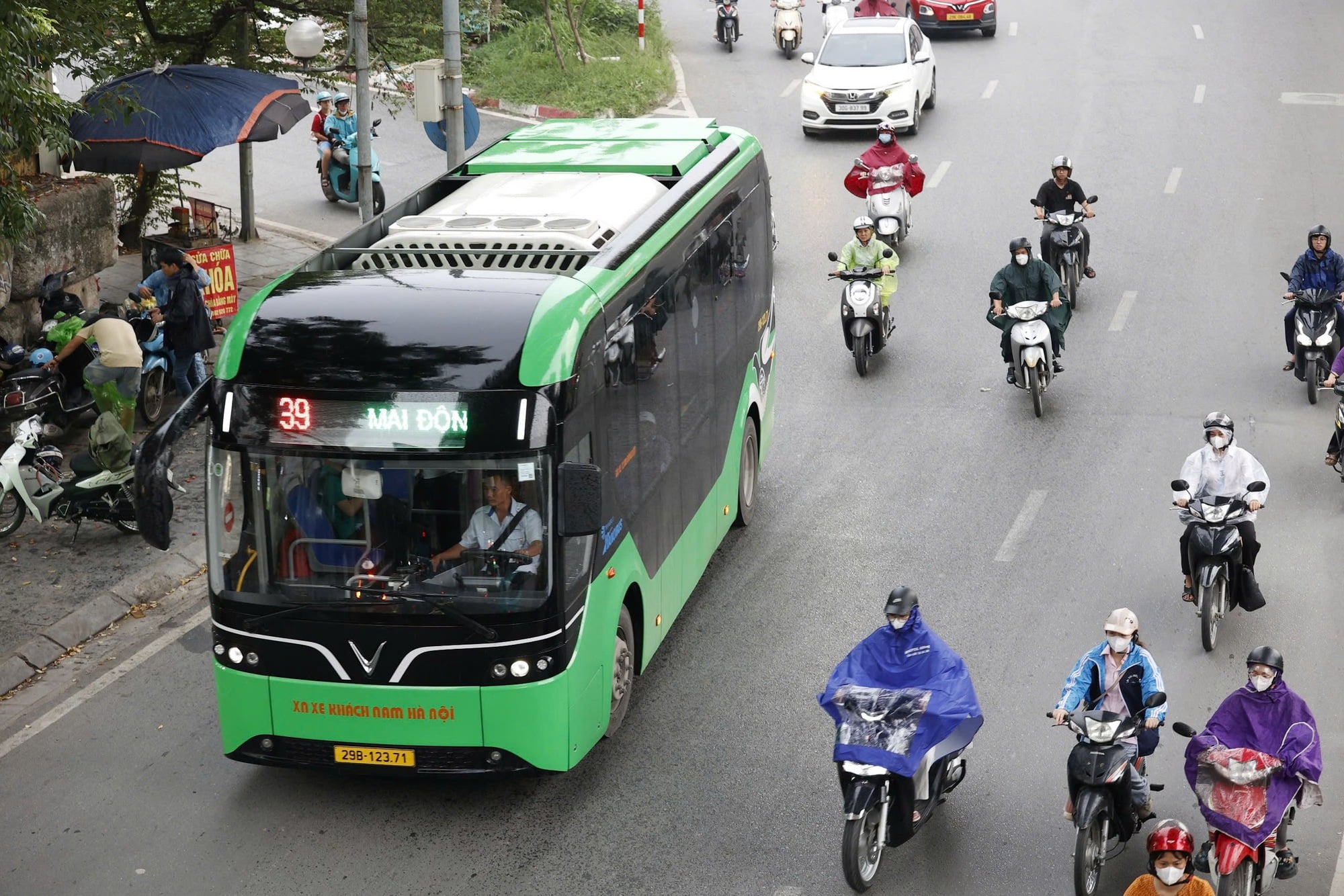
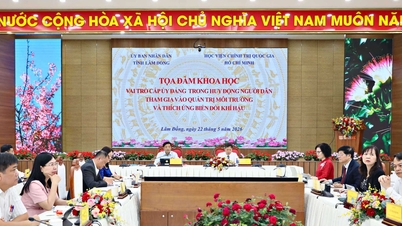
Major cities in Vietnam are implementing a range of solutions to promote the transition to green transportation.
PHOTO: TUAN MINH
Statistics show that the number of users searching for the keyword "compare the cost of electric and gasoline vehicles" has skyrocketed by 60% in just the past two months, especially for electric motorcycles. Prominent names such as VinFast , Yadea, Pega, Selex Motors, Dat Bike, Before All... have not only entered the market but are also rapidly expanding their scale and increasing their coverage in both product lines and distribution networks.
These companies are continuously launching new models, while also investing systematically in production and accompanying infrastructure such as charging stations, battery swapping stations, dealer networks, and after-sales service. As a result, electric motorcycles are gradually moving beyond their niche image, reaching a diverse range of customers, from individual users to businesses operating delivery and logistics services. Recently, VinFast recorded over 135,000 orders and shipped over 93,000 electric motorcycles in March, the highest number ever.
According to electric motorcycle dealers, the recent surge in demand is due to a combination of factors. Besides the soaring fuel prices, consumers in Hanoi are increasingly buying electric vehicles because, starting July 1st, many inner-city roads will prohibit gasoline-powered motorcycles during certain hours. Switching to electric vehicles at this time saves significant costs and refueling time, and eliminates the need to adapt to stricter emission regulations in the near future. Furthermore, even amidst the fuel price surge, VinFast has launched attractive programs to support people in switching to electric vehicles more quickly and easily than ever before.
A stroll through the parking lots of office buildings in the former District 1 or large apartment complexes in the former District 7 of Ho Chi Minh City reveals a dense concentration of electric motorbikes and electric cars, both domestically produced and imported.
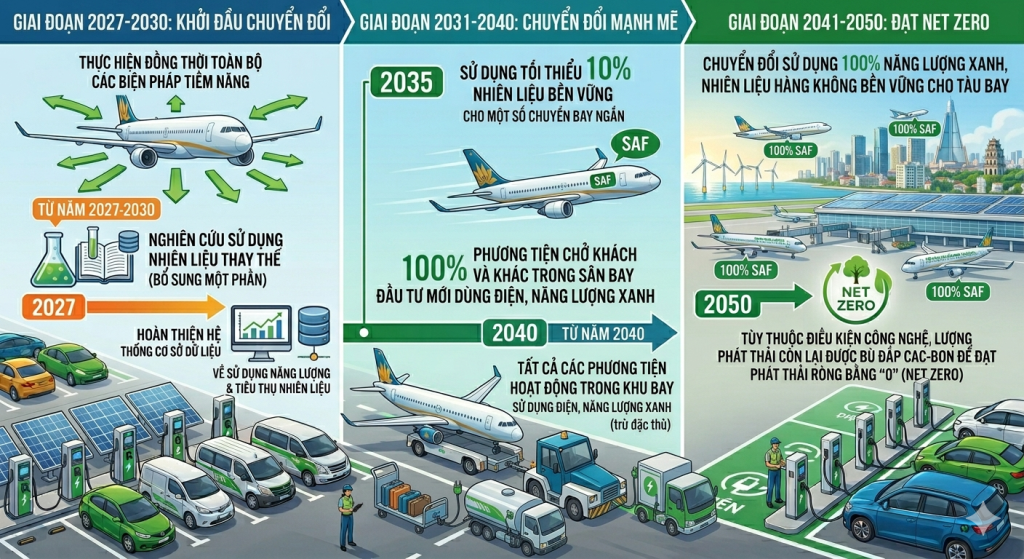
Roadmap for the aviation industry's transition to electric and green fuel-based vehicles.
Source: Vietnam Civil Aviation Authority
According to calculations, with the fluctuating fuel prices in recent times, the average cost to operate an electric motorbike is only about 10,000 - 15,000 VND per 100 km, while gasoline-powered vehicles consume 5-7 times more. For electric cars, this difference is even more pronounced when combined with the government's policies of exempting registration fees and reducing special consumption tax to encourage green vehicles.
In particular, unlike public transport, where a rapid network expansion is necessary to maximize convenience and retain passengers—leading people to still prioritize private vehicles—when someone decides to abandon their gasoline car for an electric one, this transition signifies a long-term, sustainable commitment to green transportation.
Seize the "golden" opportunity to accelerate.
Seizing the historic opportunity arising from the booming demand, the authorities in Ho Chi Minh City and Hanoi are focusing their efforts on implementing a series of policies aimed at building new commuting habits for their citizens.
For example, Hanoi, the capital city, has been aggressively implementing low-emission zones since July 1st, gradually restricting gasoline-powered vehicles according to a roadmap, creating a stepping stone towards controlling private vehicles. Simultaneously, it has been strongly promoting the electric bus network – putting into operation 10 electric bus routes with a total of 288 vehicles from April 1st, marking a significant step forward in the city's green public transport development roadmap. The city government has also set a goal of converting all taxis to use electricity or other environmentally friendly energy sources by 2030.
To promote this process, the Hanoi Department of Construction is developing support policies to facilitate transportation businesses, including interest rate subsidies for loans, preferential rates on vehicle parking fees, and the development of electric vehicle charging stations.
In Ho Chi Minh City, although plans to restrict vehicles from entering the inner city are still in the proposal stage, the city has proactively implemented a "softer" approach by strengthening the feeder bus network. As of early March, Ho Chi Minh City had put into operation an additional 169 new electric buses (30-60 seat capacity) on 9 routes, operated by VinBus. Overall, the city's public transport system currently has approximately 47 electric bus routes with 627 vehicles and 18 CNG bus routes with 449 vehicles, accounting for over 56% of clean energy, covering a wide area from alleyways to metro stations. The city is also studying the pilot implementation of priority areas for green vehicles in heritage cores, while extending public bicycle routes to create a complete transport ecosystem.
Support policies have also been continuously implemented, ranging from free tickets for eligible individuals and significant discounts on combined monthly passes to the deployment of free or low-cost motorbike parking areas around metro stations. All these efforts aim not only to address traffic congestion but also to take full advantage of the boost from rising gasoline prices to establish new commuting habits.
Not only the road transport sector, but the aviation industry is also responding to the government's call to save energy amidst the fuel price surge by developing a plan to transition to electric and green fuel-powered vehicles.
The roadmap set by the Vietnam Civil Aviation Authority (CAA) is to research the use of alternative fuels to supplement a portion of aviation fuel from 2027 to 2030; and to complete the database system on energy use and fuel consumption of aviation enterprises. From 2035, the CA requires a minimum of 10% sustainable fuel use for some short-haul flights; and 100% of newly invested passenger vehicles and other airport vehicles to use electricity and green energy.
Similarly, in the maritime industry, port businesses are also striving for green transformation to "cool down" costs. Modern ports at Cai Mep and Lach Huyen have already achieved a high rate of electrification in their shore cranes and gantry cranes, and are trying to transition to their fleet of tractor-trailers.
Associate Professor Nguyen Thuong Lang (Senior Lecturer at the Institute of International Trade and Economics, National Economics University) believes that the sharp fluctuations in fuel prices present a great opportunity to promote the transition to green transportation. When fuel prices rise, people's travel costs are significantly affected, especially for those who travel frequently. Therefore, they will tend to adjust some daily habits to save fuel, such as limiting unnecessary trips; prioritizing walking or cycling for short distances; and increasing the use of public transportation such as buses or urban trains if conditions permit. In particular, with a series of preferential policies from both the government and businesses, the use of electric vehicles is increasingly demonstrating superior cost savings in operation. After a period of transition, people will feel many long-term benefits such as improved health and less urban pollution.
From a business perspective, reducing the use of fossil fuels and switching to green energy vehicles will significantly contribute to lowering production costs and stabilizing business operations amidst temporary market fluctuations. In the long term, this aligns with global green development requirements and creates a competitive advantage in the international arena.
The advantage of electric vehicles is the opportunity to accelerate green transportation.
If the central and local governments, and green vehicle manufacturers can seize this opportunity to demonstrate the absolute advantages of green transportation to the public, while providing timely support to businesses, the pace of transition could accelerate significantly. This is the opportune time for Vietnam to implement a more comprehensive and decisive green transportation transition strategy, expanding across multiple sectors and industries. A specific action plan could be developed, for example, aiming to achieve a certain conversion rate within six months or a year, while simultaneously inventorying and controlling emissions from all transportation activities.
Associate Professor Dr. Nguyen Thuong Lang (Senior Lecturer at the Institute of International Trade and Economics, National Economics University)
Aviation is moving towards using green energy.
From 2040, all vehicles operating within the airport area will use electricity and green energy (except for specialized vehicles that do not yet use electricity). After 2050, the transition will be to 100% green energy and sustainable aviation fuels for aircraft to minimize greenhouse gas emissions. Depending on technological conditions, remaining emissions will be offset by carbon offsetting to achieve net zero emissions.
According to the Vietnam Civil Aviation Authority
Source: https://thanhnien.vn/viet-nam-but-toc-giao-thong-xanh-185260411215157015.htm
























































































Comment (0)