

Adding capital mobilization channels, limiting underground flows in the economy
Resolution No. 05/2025 of the Government on the pilot implementation of the Vietnamese crypto-asset market took effect from September 9. It clearly states that businesses will be allowed to provide services to organize trading markets, offer and issue crypto-assets, etc. This is a historic milestone when Vietnam officially has a legal corridor in this field. From now on, businesses and individual investors will have more investment channels without having to worry or be hesitant like before.
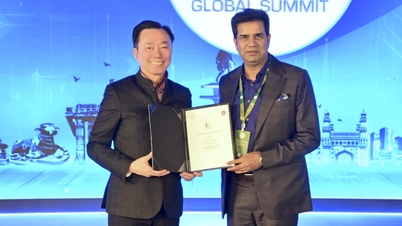
Mr. Phan Duc Trung, Chairman of the Vietnam Blockchain and Digital Asset Association (VBA), said that the pilot policy on the crypto asset market marks the first implementation milestone under the law after the Law on Digital Technology Industry was passed in June.
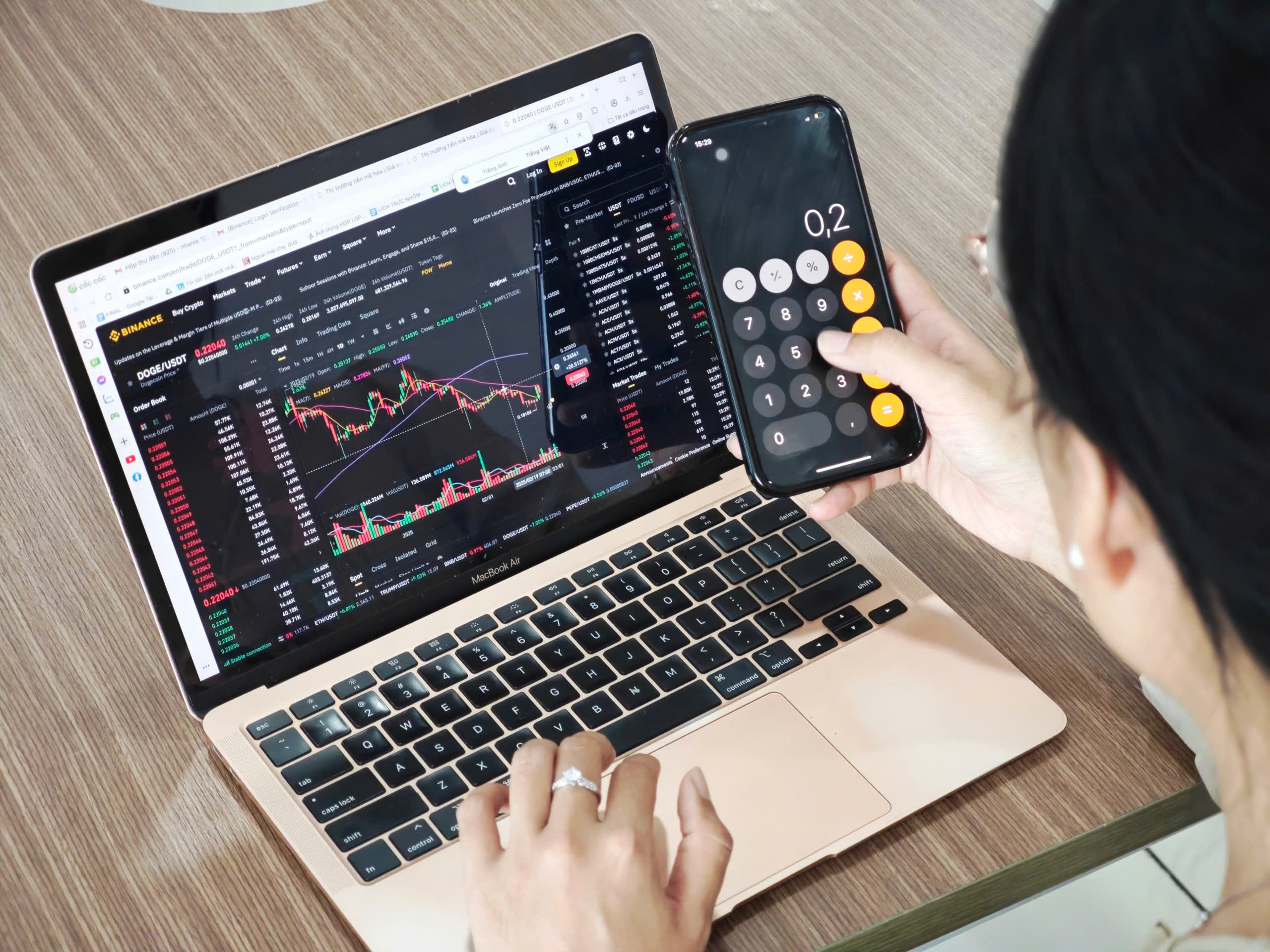
Photo: Dao Ngoc Thach
"The issuance of Resolution 05/2025 brings a great advantage because this is the stage when the global crypto asset market has matured strongly. The Resolution helps Vietnam to legitimately enter the global trading market, while limiting financial fraud and creating a transparent market. The State has management and tax collection tools, and businesses have additional capital mobilization channels. This is also an opportunity to attract foreign currency through international capital flows, while limiting underground flows in the economy and reducing the risk of fraud for people," Mr. Phan Duc Trung shared.
The pilot launch of the crypto-asset market creates a legal corridor, the first step for crypto-assets. However, it currently only stops at regulations on the establishment and management of trading floors. These regulations are necessary but not enough for a real crypto-asset market, which must create a large ecosystem and not stop at buying and selling activities.
Associate Professor, Dr. Nguyen Huu Huan (Ho Chi Minh City University of Economics)
Sharing the same view, financial market expert Phan Dung Khanh commented that while many countries still prohibit or have no regulations on the crypto asset market, Vietnam's promulgation of a legal framework is more prominent. When crypto asset transactions in general are recognized and put into management, Vietnam will become a bright spot attracting the attention of domestic and international investors. Not only that, businesses that want to develop many services on the blockchain platform, web3... will also have more options to come to Vietnam. At that time, it will attract a number of investors who want to invest in companies that develop this new technology.
Mr. Khanh emphasized: "Without going into the technical details and regulations for market development, just the policy of opening the crypto-asset market has shown openness and promoted innovation in Vietnam. This will bring Vietnam great attention not only from domestic investors but also globally. Specific policies can be implemented and amended because many countries are currently building a related legal framework, so there is no complete set of laws for us to follow."
Who can open a crypto asset exchange?
According to regulations, only Vietnamese enterprises with a minimum charter capital of VND 10,000 billion are licensed to provide services of organizing crypto-asset trading markets. Of which, at least 65% of the charter capital must be contributed by shareholders and members who are organizations, with over 35% of the charter capital contributed by at least 2 organizations such as commercial banks, securities companies, fund management companies, insurance companies, and enterprises operating in the technology sector. The organization contributing capital to establish an enterprise to open a trading floor must have profitable business operations for 2 consecutive years before the year of requesting the license; the financial statements of the 2 consecutive years before the year of requesting the license must be audited and the audit opinion is an opinion of full approval. In addition, the capital contribution of foreign investors to this enterprise must not exceed 49% of the charter capital.
Need to clarify the penalty regulations
Resolution 05/2025 stipulates that after 6 months from the date the first crypto asset service provider is licensed, domestic investors trading crypto assets without going through a crypto asset service provider licensed by the Ministry of Finance, depending on the nature and severity of the violation, will be subject to administrative sanctions or criminal prosecution according to the law. This provision needs more detailed guidance or clarification. For example, investors who own digital assets on wallets on many international exchanges and hold them for many years (without transactions) and transfer them to a domestic exchange after 6 months will be fined, which is inappropriate because crypto assets are not centrally custodial. Even investors currently have a mechanism to self-transact, transfer ownership of crypto assets from personal wallets to personal wallets as well as transfer money to each other. Therefore, I think it is necessary to consider a regulation that only penalizes investors when they transfer crypto assets without going through a licensed domestic exchange. This regulation still helps state management agencies collect tax on transactions while being consistent with the nature of the crypto asset market.
Financial market expert Phan Dung Khanh
Before the Government's Resolution 05/2025 was issued, a number of companies and banks had already started to participate in this field. For example, in mid-August, the Military Commercial Joint Stock Bank (MBBank) started by signing a memorandum of understanding (MoU) with Dunamu Group (Korea) to cooperate in deploying the first domestic digital asset trading floor in Vietnam. According to the agreement, Dunamu will be a strategic partner, supporting MBBank in building a digital asset trading infrastructure that complies with international standards, perfecting the legal framework and management mechanism, and developing solutions to protect investors.
Similarly, VPBank also made a move to show that it would not stay out of the game. At the 2025 Annual General Meeting of Shareholders in April, in response to a shareholder's question about whether the bank would participate in the pilot project to develop a crypto-asset market floor, Mr. Nguyen Duc Vinh - General Director of VPBank - affirmed: VPBank is ready to participate and is in the process of evaluating, analyzing, and contacting partners while waiting for the competent authority to approve the pilot project. In the market, a number of large securities companies such as SSI , Techcombank, VIX... also have joint activities, forming alliances to establish units related to this activity.
Associate Professor Dr. Nguyen Huu Huan (Ho Chi Minh City University of Economics) assessed that the crypto-asset market has attracted the attention of tens of millions of Vietnamese people in recent times with a very large number of holders. According to statistics from a number of foreign organizations, there are about 20 million Vietnamese people owning crypto-assets on international exchanges. However, in recent times, Vietnam has not had a legal framework, so there have been cases of fraud and loss of assets in the market. Having an official legal framework will help the market develop and limit negativity.
On the other hand, according to Mr. Nguyen Huu Huan, the regulation that the charter capital of an enterprise allowed to establish an exchange must be from 10,000 billion VND or more does not encourage startups, especially technology startups that are unlikely to meet this condition. To fully exploit the benefits of the crypto-asset market, it is necessary to build a more open playground where fintechs can participate in the ecosystem in a transparent, controlled but unconstrained manner. From there, the crypto-asset market in Vietnam will truly become a place to incubate innovation and a launching pad for startups to reach out to the world.
"The pilot launch of the crypto-asset market creates a legal corridor, the first step for crypto-assets. However, currently it only stops at regulations on the establishment and management of trading floors. These regulations are necessary but not enough for a real crypto-asset market, which must create a large ecosystem, not just buying and selling activities. That is an ecosystem including decentralized financial models (DeFi), peer-to-peer lending services based on crypto-assets, real estate tokenization activities or carbon credits and especially safe custody services to protect investors", Associate Professor, Dr. Nguyen Huu Huan shared.
Need to solve human resource problem
During the pilot phase, the biggest challenge is the human resource problem. We need a team of qualified, well-trained and experienced personnel, from management and supervision agencies to businesses directly involved in operating and developing the market. At the same time, Vietnam also needs to invest in education, training and communication to raise public awareness and increase the attractiveness of the market when integrating globally.
Mr. Phan Duc Trung (Chairman of Vietnam Blockchain and Digital Asset Association)
Mr. Phan Duc Trung agrees that the minimum charter capital requirement of VND 10,000 billion for a business to be allowed to open a crypto-asset trading floor is different from many other countries and territories. Many places focus more on standards for technology investment, insurance and anti-money laundering. In Vietnam, the focus on capital scale in the first testing phase is to ensure safety. However, there are still many issues that need to be clarified such as regulations on custody, separation of proprietary trading and customer transactions, also known as hot wallets - cold wallets.
"To effectively implement in the pilot phase, there are no more than 3 exchanges with sufficient capacity. Even for those who obtain licenses, effective operation (serving investors, generating revenue and contributing to the common goal) is not easy. Particularly for information security regulations, the requirement that the information technology system must meet level 4 security standards demonstrates the seriousness that companies need to implement when establishing exchanges. This is not a concern for companies with charter capital of 10,000 billion VND," Mr. Trung commented.
Vietnamese enterprises are allowed to issue crypto assets
One of the provisions set out in the Resolution is that domestic enterprises are allowed to issue and offer crypto assets. Specifically, crypto assets can only be issued based on real assets (except securities and legal currency) and transactions and payments must be made in VND. The Resolution also stipulates that crypto assets can only be offered and issued to foreign investors. Crypto assets can only be traded between foreign investors through crypto asset service providers licensed by the Ministry of Finance.
Regarding these regulations, Associate Professor Dr. Nguyen Huu Huan is concerned about the more than 20 million accounts of Vietnamese people opened on foreign exchanges when transferred back to the country, will there only be a selling direction but no buying direction or what? Moreover, the transaction currency is VND, not connected with the world, so it also raises the issue of liquidity of these crypto assets. Mr. Huan recommends considering giving authority to the International Finance Center, which is about to be established in Ho Chi Minh City, to develop and manage the sandbox testing mechanism for crypto assets. As a focal point for testing new financial products and services, the center can become an incubator for innovative models, from custody services, crypto asset mortgages to tokenization platforms and DeFi solutions. When the sandbox is located within the framework of an international financial center, the experimentation will be both centralized and closely monitored, ensuring that risks are controlled while still opening up enough space for innovation.
Regarding this issue, Mr. Phan Duc Trung also said that the regulation that crypto assets issued by domestic enterprises can only be offered and issued to foreign investors has the advantage of protecting the foreign exchange market when there is no connection with the domestic market. However, it may reduce the attractiveness of the market in the initial stage. This is also a challenge for creators and businesses to have a plan to increase the attractiveness of the Vietnamese crypto asset market compared to other domestic and international investment markets. During the testing process, the policy needs to balance the interests of the management agency and investors and market participants.
"The current desire of the Government in promoting the issuance of crypto assets is to attract capital flows from abroad through regulations that only foreigners can buy crypto assets. However, the problem is whether those assets are attractive to international investors or not, and at the same time, whether the maturity of the market creates a large enough playing field or not. The global crypto asset market is still young compared to the stock market, which has a history of development of hundreds of years. This is both an opportunity and a challenge. We need at least 3-5 years for the market to mature, learning from more than a decade of experience of the global digital asset market," Mr. Phan Duc Trung added.
Thanhnien.vn
Source: https://thanhnien.vn/viet-nam-chinh-thuc-thi-diem-thi-truong-ma-hoa-185250914222415488.htm





![[Photo] Urgently help people soon have a place to live and stabilize their lives](/_next/image?url=https%3A%2F%2Fvphoto.vietnam.vn%2Fthumb%2F1200x675%2Fvietnam%2Fresource%2FIMAGE%2F2025%2F12%2F09%2F1765248230297_c-jpg.webp&w=3840&q=75)




















































![[Photo] General Secretary To Lam works with the Standing Committees of the 14th Party Congress Subcommittees](https://vphoto.vietnam.vn/thumb/402x226/vietnam/resource/IMAGE/2025/12/09/1765265023554_image.jpeg)























Comment (0)