Adding a series of "newcomers" amidst sluggish demand at many airports.
According to the recently updated Decision on adjusting the overall master plan for the national airport system, the list of airports from now until 2030 has been increased from 30 to 32, including 15 international airports and 17 domestic airports. The vision for 2050 is to further expand this network to 34 airports. The Ministry of Construction aims for over 95% of the country's population to have access to air travel services within a radius of just 100 km by 2030.
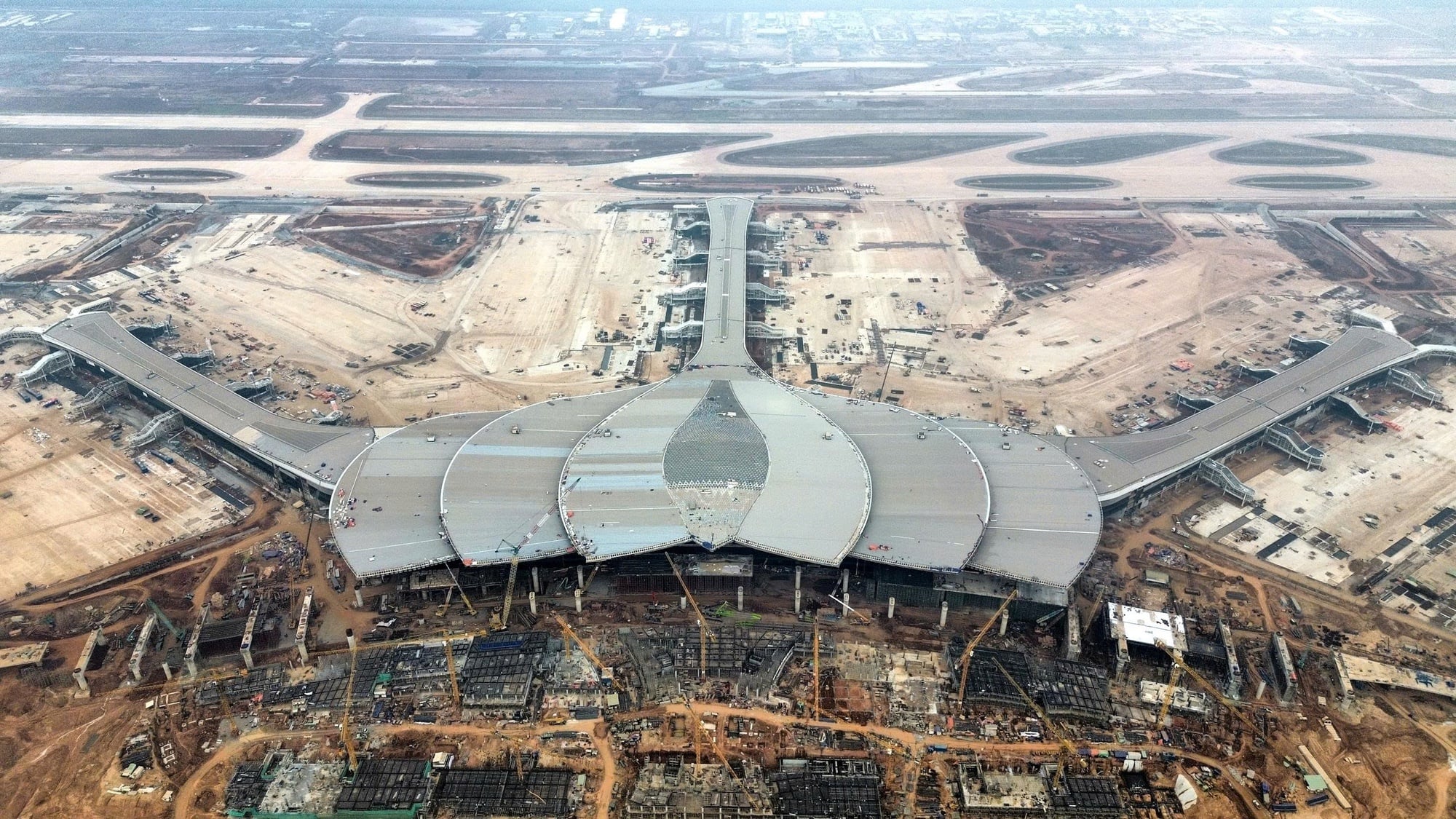
Construction site of Long Thanh Airport, Vietnam's future largest international airport.
Photo: Le Lam
A highlight of this latest addition is the inclusion of Gia Binh International Airport ( Bac Ninh ). Initially intended as a dedicated airport, Gia Binh has been upgraded to a dual-use international airport, reaching a 4E scale. This is a strategic project, not only playing a role in supporting national defense and security but also boosting logistics infrastructure for the entire northern industrial triangle, easing the transportation burden on Noi Bai Airport.
In addition, a series of other "newcomers" have also officially emerged in the planning until 2030. Notably, the conversion of the Biên Hòa (Đồng Nai) and Thành Sơn (Khánh Hòa) airports from purely military to dual-use purposes has been finalized. In the group of new domestic airports, projects such as Quảng Trị, Sa Pa, Phan Thiết, Lai Châu, and the Thổ Chu island airport (Kiên Giang) have also been approved. Looking ahead to 2050, Cao Bằng airport and a second airport to alleviate congestion in the capital region will also be added to the list.
Notably, if completed according to plan, Khanh Hoa and Kien Giang will have up to three commercial airports.
Although aviation development is identified as a driver of tourism and macroeconomic growth, similar to previous planning updates, the addition of numerous "newcomers" raises concerns about operational efficiency, especially since many existing airports are still struggling to operate at a loss. Can Tho International Airport is a prime example.
Despite receiving trillions of dong in investment with the expectation of becoming a launching pad for the entire Mekong Delta region, this airport has never escaped its slump over the past decade. Designed to handle 3 million passengers per year, the latest figures from the Vietnam Airports Corporation (ACV) show that Can Tho Airport's passenger volume is only a meager 1.1 million (less than 40% of its capacity). Even more disheartening, the spacious international terminal is almost devoid of direct commercial flights. As Mr. Truong Canh Tuyen, Chairman of the People's Committee of Can Tho City, stated in a recent meeting with ACV, "It's very sad for the locality that an international airport doesn't have any international flights all year!"
Not only Can Tho Airport, but ACV's 2025 financial report indicates that out of the 21 airports currently operating civil aviation services nationwide, 11 local airports are consistently experiencing deficits, with revenue failing to cover expenses. More than half of these are mountainous or short-distance airports such as Dien Bien, Ca Mau, and Rach Gia. In addition, airports in Central Vietnam such as Tho Xuan (Thanh Hoa), Vinh (Nghe An), and Dong Hoi (Quang Binh) are struggling due to fluctuating passenger numbers seasonally, while operating and depreciation costs must be paid regularly every day. The Tuy Hoa, Pleiku, and Chu Lai airports face intense competition from neighboring international airports due to their proximity.
The group of highly profitable airports remains concentrated in the bustling international gateways, including Tan Son Nhat (Ho Chi Minh City), Noi Bai (Hanoi), Da Nang, and Cam Ranh (Khanh Hoa). These are the "gold mines" that generate the main revenue stream from fees for serving international passengers, non-aviation commercial services, and landing and takeoff fees, shouldering the losses of the 11 local airports.
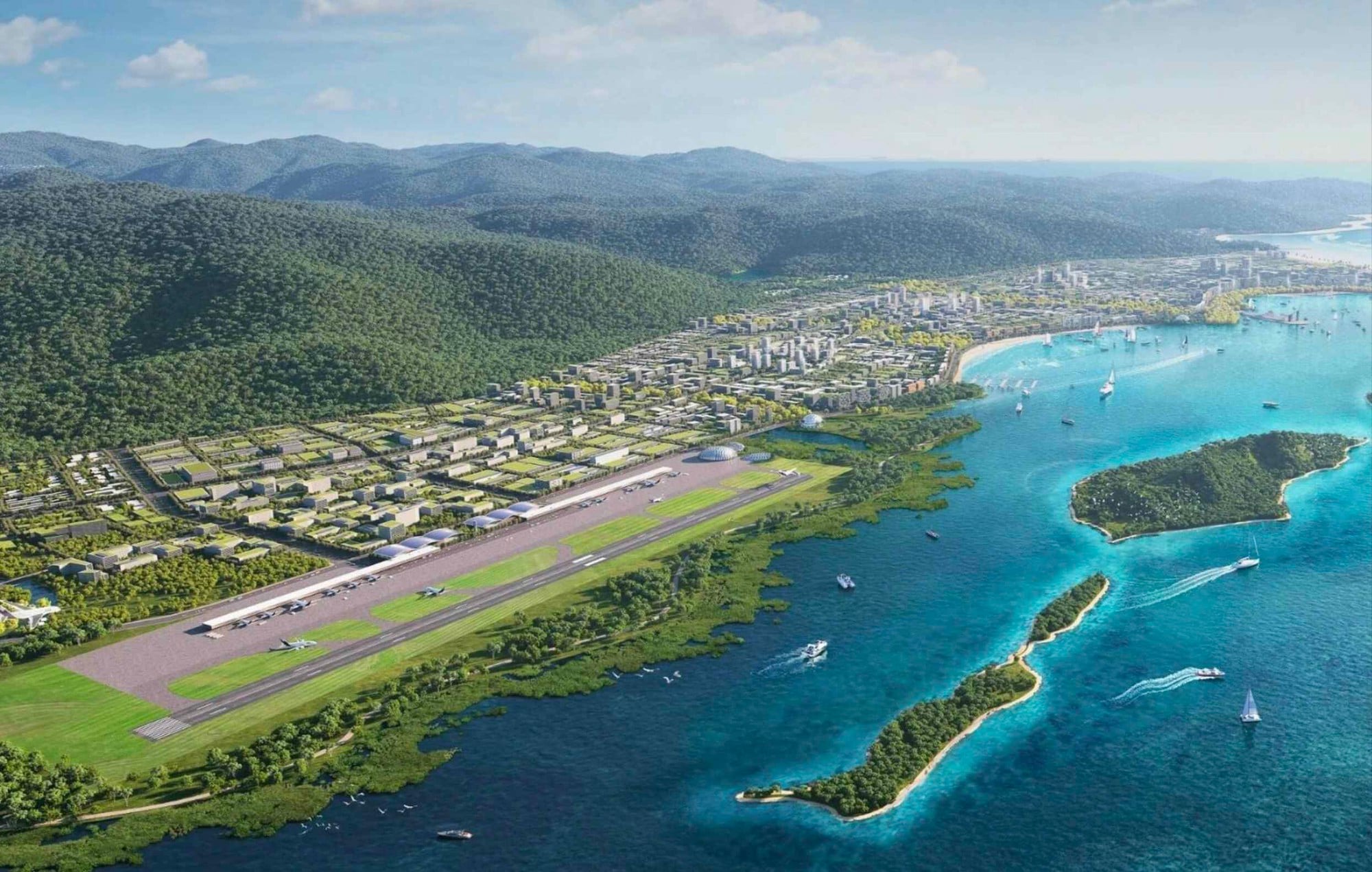
Perspective view of Van Phong Airport (Khanh Hoa), to be built on the waterfront, which has recently been included in the planning.
Photo: Ministry of Construction
The hole is not due to excess.
Explaining the paradox of many airports operating at a loss while the list of planned airports continues to grow, aviation and tourism expert Luong Hoai Nam pointed out that the profitability of airports must be viewed from the root: Who is investing the money? If an airport is built with state funds, its effectiveness can only be assessed by the number of passengers and revenue from direct operations at the airport. However, if it is invested in by private enterprises, they will consider the ripple effect of the project. Even if the airport operates at a loss or doesn't make much profit, if their tourism development projects in the area have good development opportunities, then it is still economically viable.
The presence of an airport, when considered a necessary condition for local tourism investment projects with better development potential, allows businesses to offset losses, incurring a small loss here but gaining benefits in accommodation, entertainment areas, real estate development , etc. In this case, the concept of "efficiency" for an airport project invested in by a private enterprise will be much broader than that of a project built through public investment, thanks to its synergy with the ecosystem of tourism investment and real estate development projects.
This also partly explains why Can Tho Airport, despite massive investment, has consistently incurred losses. According to Mr. Luong Hoai Nam, an international airport alone is not enough to guarantee international flight operations. If Can Tho and surrounding localities fail to create an attractive environment for international tourism, it will be very difficult for an airport to truly become an international port and effectively handle passenger traffic.
On the other hand, a high frequency of airports doesn't necessarily mean low efficiency. "I just flew to the US, to San Francisco Airport, and only 17 km away is Oakland Airport; both are international airports and are always busy. Japan is also operating Osaka Itami Airport and Kobe Airport simultaneously and efficiently, even though they are only about 34 km apart by road. Therefore, the important issue when planning airports is not the distance between them, but rather the attractiveness of each airport and who is providing the funding. Assessing the efficiency of an airport requires considering the development of the ecosystem and the attractiveness of the local tourism market in the surrounding area," emphasized Dr. Luong Hoai Nam.
Also responding to Thanh Nien newspaper from the US, Dr. Huynh The Du (Fulbright School of Public Policy and Management Vietnam) assessed that the expansion of Vietnam's airport network by 2030 reflects the right development thinking: Aviation infrastructure is not only a transportation issue but also a tool for opening up economic space, tourism, and regional connectivity. For a country with a long, mountainous, and island topography like Vietnam, having people accessible airports within a 100 km radius is a major step forward in terms of development opportunities.
However, building an airport doesn't automatically guarantee high passenger numbers. Some airports succeed because they possess all three key elements: a stable passenger base, a developed tourism and service ecosystem, and strong economic connectivity. For example, Phu Quoc, Cam Ranh, and Van Don initially experienced booms in tourism, resort real estate, and international visitors. Conversely, some airports, like Can Tho, struggle due to a lack of a comprehensive ecosystem, not just a shortage of flights. The Mekong Delta has high travel demand but is heavily reliant on Ho Chi Minh City due to its denser flight network, more competitive fares, and passengers accustomed to transiting through Tan Son Nhat Airport .
Network stratification, forming an airport ecosystem.
While supporting the continued expansion of aviation infrastructure, Dr. Huynh The Du cautioned against pursuing a "one large airport per province" mindset. The solution is to stratify the network: central airports acting as hubs; smaller airports serving tourism, specialized logistics, rescue operations, defense, or niche aviation. Simultaneously, mechanisms are needed to allow for more flexible private investment and operation, reducing the burden on the budget and avoiding the mindset that every locality wants a "miniature Tan Son Nhat."
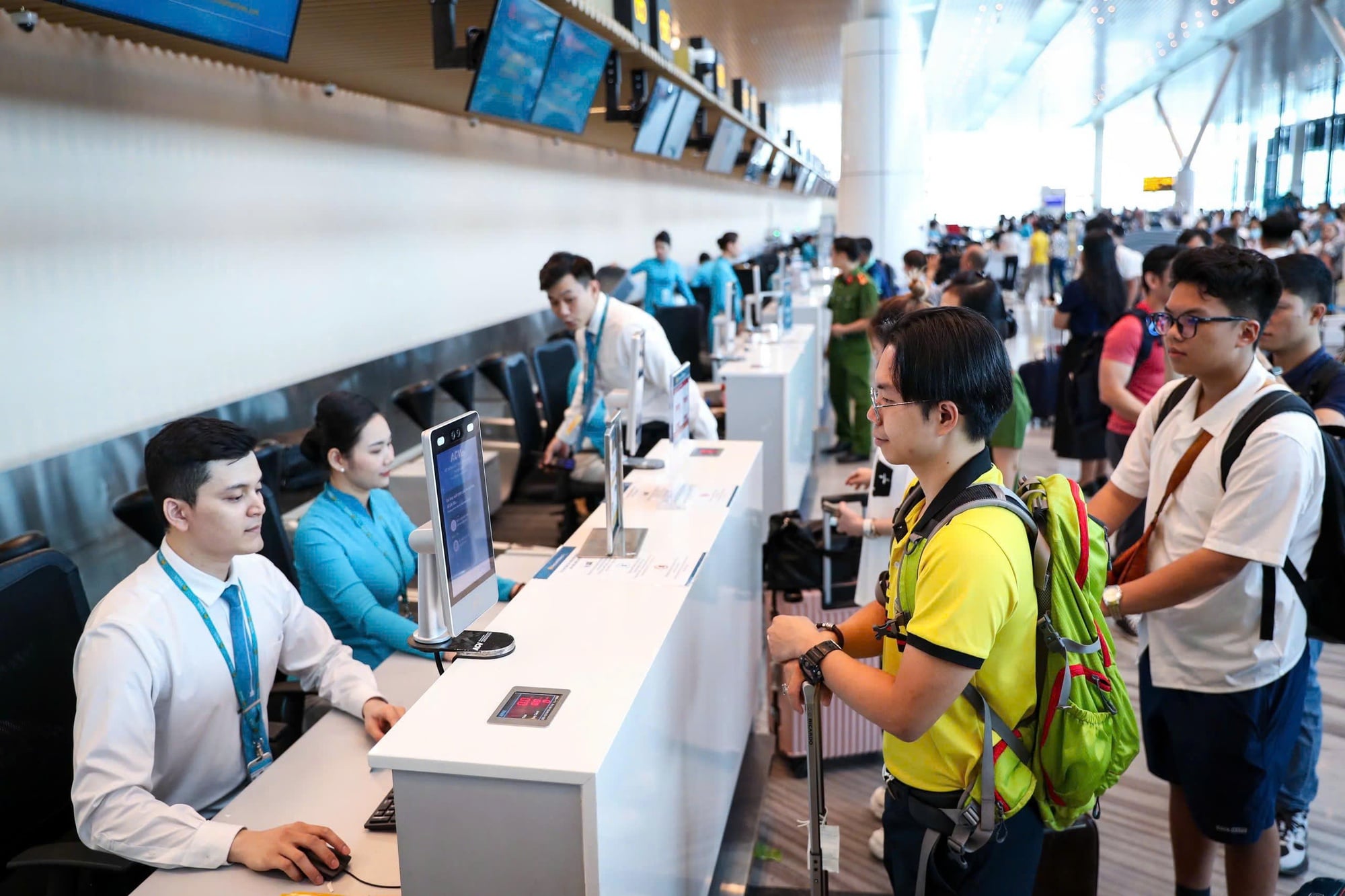
Encouraging the socialization of infrastructure will promote competition in services and operations among airports.
Photo: Nhat Thinh
The proposal to stratify the airport network, with each airport having its own business model and KPIs for passenger and cargo volume, and non-aviation revenue, was also put forward by Mr. Tran Anh Tung (University of Economics and Finance, Ho Chi Minh City). According to Mr. Tung, not every airport automatically generates growth. An airport is effective when it has a "real customer base," meaning tourism, industry, FDI, services, satellite cities, or specific connectivity needs. Phu Quoc , Cam Ranh, Da Nang, and Van Don can thrive because they have destinations, hotels, resorts, services, and destination marketing strategies behind them. Conversely, the lesson from Can Tho airport shows that aviation infrastructure, if standing alone, will have excess capacity and may even become a "dormant asset."
This expert cites the example of Norway, which currently maintains dozens of small-scale STOL airports (specifically designed for aircraft taking off and landing on short runways) in mountainous, island, and sparsely populated areas. While many of these airports operate at a loss individually, the government accepts them due to the greater socio-economic benefits, including population retention, tourism development, emergency medical connections, and local logistics. Japan follows a similar approach, but using PPP and Concession models. These small airports don't rely solely on landing fees but on a combination of revenue streams from commerce, real estate, logistics, outlets, tourism, and airport cities. In this model, the airport becomes an economic hub, not just a place where planes land and take off.
In Vietnam, a small airport with a capacity of 1-2 million passengers per year currently requires an investment of approximately 8,000-15,000 billion VND, depending on the technical level. If the actual operating capacity only reaches 20-30%, aviation revenue will struggle to cover depreciation and operating costs. For example, an airport with a designed capacity of 2 million passengers but only handles 500,000 passengers per year, with average revenue of 250,000-300,000 VND per passenger from airport fees, services, and retail, would generate total revenue of only about 125-150 billion VND per year, while operating, security, maintenance, and depreciation costs could amount to several hundred billion VND. This is why many airports are in a state of "having infrastructure but lacking passenger flow."
Conversely, if an airport is located within a tourism- logistics -urban ecosystem , the ripple effect is enormous. For example, Phu Quoc, after its airport expansion in 2017-2018, experienced an average annual tourism growth of over 40% before the Covid-19 pandemic, contributing to a local economic growth of over 27% annually for several consecutive years. In that case, the benefits lie not in airport revenue but in increased land value, increased hotel capacity, FDI in tourism, local government revenue, and service industry jobs.
"Therefore, the question isn't whether or not to build a small airport, but rather which model to follow. If private investment and operation bear market risks, then it should be encouraged. However, the state needs to set clear conditions: the airport must be integrated with tourism, logistics, urban development, healthcare, education, or specialized economic planning. You can't build an airport and then wait to find passengers," suggested Master's student Tran Anh Tung.
Encouraging and diversifying forms of socialized investment in airports not only ensures efficient operation for each airport but also creates a certain level of competition among airport projects nationwide. Entrusting airport operation and management to private enterprises means state-owned enterprises must also enter the race for infrastructure and quality. Similar to the aviation market, the more airlines there are, the greater the competition, and the more the public benefits. The same applies to aviation infrastructure: the more stakeholders involved, the higher the quality, the better the operational efficiency, and ultimately, the greater the public's benefit.
Dr. Luong Hoai Nam
Airports should be viewed as a link in the regional development strategy, not as standalone structures. Smaller airports should still be developed, especially as the trends of electric aircraft, flying taxis, and short-haul aviation are emerging.
Dr. Huynh The Du
Source: https://thanhnien.vn/viet-nam-thua-hay-thieu-san-bay-185260519205904157.htm






































































































Comment (0)